

TL;DR:
- Home modifications like ramps and non-slip flooring enhance safety for disabled pet owners and dogs.
- Adaptive tools and communication devices support independent, confident pet care routines.
- Regular assessment and customization of safety solutions are essential as needs and living conditions change.
Many people assume that owning a dog is simply too risky once mobility, vision, or other challenges enter the picture. That assumption is outdated. Today, home modifications like ramps and non-slip flooring dramatically increase safety for disabled pet owners and their dogs, and that is just the beginning. From smart communication buttons to properly fitted mobility aids, the tools available in 2026 have transformed what independent pet ownership looks like. This guide walks you through every major category of safety solution, so you can make confident, informed choices that work for your life and your dog.
Table of Contents
- Creating a safer living space for you and your dog
- Adaptive equipment for safer, easier care routines
- Mobility aids for dogs and owners: When and how to use them
- Communication aids: Technology and strategies that empower dog-owner connection
- The impact and limitations of service and companion dogs for disabled owners
- A fresh perspective: Why safety is about adaptation, not limitation
- Find more resources and solutions for safer, independent pet care
- Frequently asked questions
Key Takeaways
| Point | Details |
|---|---|
| Prioritize home safety | Simple home modifications like ramps and non-slip flooring help prevent accidents for both you and your dog. |
| Use adaptive tools | Assistive pet care equipment reduces strain and increases independence for disabled owners. |
| Test mobility aids carefully | Properly fitted devices are essential to prevent injury in both pets and owners. |
| Invest in quality communication | High-quality audio and visual signals significantly improve dog–owner interactions and overall safety. |
| Service dogs offer support | Service and companion dogs provide crucial emotional backing, though physical safety gains vary. |
Creating a safer living space for you and your dog
Your home environment is the foundation of safe pet ownership. Before adding any gadget or device, it pays to walk through your space and spot the hazards that most people overlook.
Common risks include slippery hardwood or tile floors, uneven door thresholds, cluttered hallways, and open staircases. For a dog with limited mobility or vision loss, these hazards are just as dangerous as they are for an owner using a walker or wheelchair. The good news is that most fixes are affordable and fast to install.
Key home modifications to prioritize:
- Install rubber-backed non-slip mats in kitchens, bathrooms, and hallways
- Add ramps over stairs and raised thresholds for both owner and dog access
- Keep furniture layouts consistent so blind pets can navigate by memory
- Use baby gates or door blockers to close off dangerous areas like basements
- Secure loose rugs with grip tape to prevent sliding
Here is a quick look at how these changes translate into real safety gains:
| Area | Before modification | After modification |
|---|---|---|
| Hallway floors | Slippery tile, fall risk | Non-slip mats, stable footing |
| Stairs | Open staircase, injury risk | Ramp installed, safe access |
| Feeding area | Raised bowls on uneven surface | No-bend bowl on flat, gripped mat |
| Doorways | Uneven threshold, tripping hazard | Threshold ramp, smooth transition |
| Hazardous rooms | Open access | Blocked with gate |
These changes benefit both you and your dog, especially when both of you face mobility challenges. A dog that slips and injures itself creates an emergency that puts you at risk too. Preventing that chain reaction is the whole point.
For more ideas tailored to older animals, check out these senior pet safety tips and explore how disability and pet care safety intersect in practical ways.
Pro Tip: When choosing non-slip mats or ramp surfaces, pick materials that wipe clean easily. Mats with raised edges or thick borders can become tripping hazards themselves, so go flat and grippy.
Adaptive equipment for safer, easier care routines
With your living space optimized, the next step for safer, more independent pet care is using the right adaptive equipment. The right tools reduce physical strain, lower fall risk, and make daily routines manageable without relying on outside help.
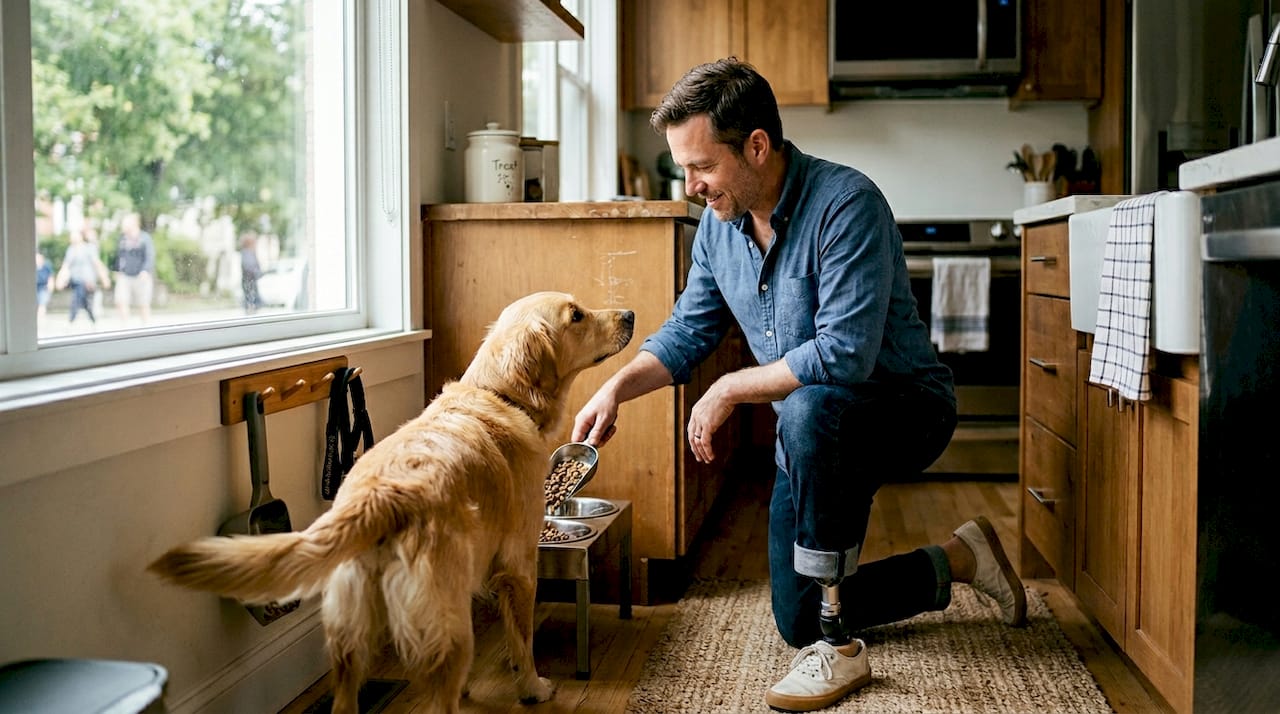
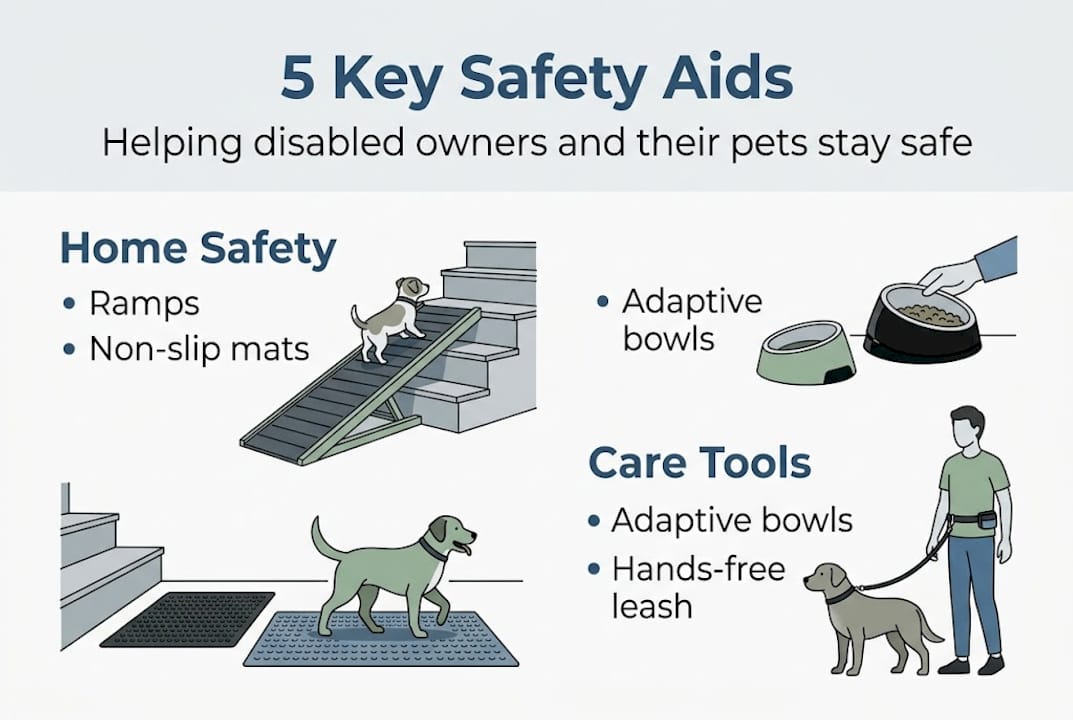
Adaptive equipment for disabled owners includes items like the Handiscoop, folding ramps, no-bend bowls, hands-free leashes, and automatic feeders and waterers. Each one targets a specific pain point in the daily care routine.
| Equipment | Best for |
|---|---|
| Automatic feeder/waterer | Owners with limited hand strength or fatigue |
| Folding ramp | Getting dogs in/out of vehicles or onto furniture |
| Hands-free leash | Owners using mobility aids like walkers or canes |
| No-bend food and water bowls | Owners with back, hip, or knee limitations |
| Long-handled grooming tools | Reducing reach and bending during grooming |
Setting up a safer daily routine does not have to be complicated. Here is a simple process to follow:
- Assess your daily tasks. Write down every care task: feeding, walking, grooming, and bathroom breaks.
- Identify your biggest strain points. Where do you risk falling, overreaching, or losing grip?
- Match one tool to each strain point. Start with the highest-risk task first.
- Test the equipment at home. Most adaptive tools need a short adjustment period for both you and your dog.
- Refine over time. What works in week one may need tweaking by week four.
For a deeper look at tools designed specifically for your situation, the guide on tools for disabled owners covers product comparisons and real-world usage tips.
Pro Tip: Always ask for a demo or check for a return policy before buying adaptive equipment. What works perfectly for one disability profile may be awkward or unsafe for another. Your specific grip strength, range of motion, and stamina all matter.
Mobility aids for dogs and owners: When and how to use them
Adaptive tools support your independence, but mobility aids can be essential for pets and sometimes owners facing mobility issues. Knowing when to introduce them and how to fit them correctly is critical.
Mobility aids for dogs cover a wide range:
- Wheelchairs and carts: Support dogs with hind-leg paralysis or weakness
- Slings and support harnesses: Help owners lift or guide dogs with limited mobility
- Orthopedic braces: Stabilize injured or arthritic joints
- Traction socks: Provide grip on slippery floors for dogs with coordination issues
- Ramps and steps: Reduce joint strain when accessing furniture or vehicles
For owners, support canes, grabber tools, and stabilized harnesses reduce the physical effort of managing a dog during walks or veterinary visits.
Proper fitting is not optional. Poorly fitted mobility aids can cause pressure sores, restricted circulation, abnormal gait, and long-term joint damage in dogs. This is why one-size-fits-all devices are a real risk. Always measure your dog carefully and consult your veterinarian before purchasing.
Introducing a mobility aid should be gradual. Start with short sessions of five to ten minutes and watch closely for signs of discomfort: whining, resistance, skin redness, or changes in posture. Increase usage time only when your dog is relaxed and moving naturally in the device.
For a full breakdown of options, the resource on disability aids for dogs covers both dog and owner perspectives in detail.
Communication aids: Technology and strategies that empower dog-owner connection
Ensuring you and your dog can communicate clearly is just as critical to safety as mobility and environment. Communication aids range from simple button systems to visual and tactile signals, and choosing the right setup can genuinely change how safe and confident you both feel.
Communication buttons work by recording a short audio message that your dog learns to associate with a specific need or action. When pressed, the button plays back the message, signaling to you what your dog wants. They are especially useful for alerting owners to bathroom needs, which is exactly what the iPupPee device is designed to address.
Signals and strategies for dogs with sensory challenges:
- Use vibrating collar signals for dogs with hearing loss
- Use scent markers or textured floor cues for dogs with vision impairment
- Combine hand signals with verbal commands for dogs with partial hearing
- Use consistent light patterns to signal routine changes
Research published in Scientific Reports found that audio playback quality significantly impacts a dog’s ability to recognize and respond to recorded commands. Poor sound quality reduces recognition rates and can cause confusion or missed responses, which is a real safety issue when the button is meant to alert you to an urgent need.
“High-quality audio playback is not a luxury in dog communication devices. It is a functional requirement for reliable responses.”
For practical guidance, explore communication tools for disabilities, review essential communication tips for daily use, and check the updated communication devices guide for 2026 product recommendations.
Pro Tip: Test your communication setup every few weeks. Dogs’ responses can drift over time if the button sound degrades or the routine changes. A quick re-training session keeps everything sharp.
The impact and limitations of service and companion dogs for disabled owners
Finally, let’s explore how service and companion dogs fit into the broader safety picture for disabled pet owners. They offer real value, but they are not a complete solution on their own.
Core benefits of service and companion dogs:
- Emotional support and reduced loneliness
- Increased confidence in daily activities
- Structured routines that support mental health
- Practical task assistance for trained service dogs
Service dogs provide strong psychosocial benefits including emotional support and reduced loneliness, but they also come with real drawbacks: added daily responsibility, public access denials, and the social burden of invisible disability stigma.
The empirical picture on physical safety is more complicated. Canine companions may reduce emotional difficulties in conditions like hypermobile Ehlers-Danlos syndrome, but studies show no broad physical function benefits and no association with physical maintenance gains in hospitalized seniors.
“Service dog fraud and invisible disability stigma create real barriers. Owners with non-visible conditions often face skepticism in public spaces, adding stress rather than reducing it.”
This does not mean service or companion dogs are not worth pursuing. It means you should evaluate your specific needs honestly. A dog trained to alert you to a medical event is different from a general companion animal. Match the dog’s training and temperament to your actual daily challenges, and work with a certified trainer rather than relying on informal arrangements.
For a realistic picture of both benefits and challenges, read about the role of service dogs and the specific service dog handler challenges that many owners face but rarely discuss openly.
A fresh perspective: Why safety is about adaptation, not limitation
Here is what most safety guides get wrong: they frame the conversation around what disabled or senior pet owners cannot do. That framing is not just unhelpful, it is inaccurate.
True safety is less about avoiding risks and more about securing the right support and tools for your specific life. The evidence on service dogs actually illustrates this well. Emotional empowerment and confidence matter as much as physical safety metrics, sometimes more.
The owners who thrive are not the ones who found a perfect system. They are the ones who kept adapting. They tried a ramp, adjusted the placement, swapped it for a different model, and eventually found what worked. That process is not failure. It is exactly how good safety solutions get built.
Empowerment grows when disabled owners move from fear or passive accommodation to proactive, creative adaptation. If you invest time in evaluating, testing, and customizing solutions, you will get far more independence than any single product can promise. Explore dog training challenges to see how this mindset applies to training too.
Find more resources and solutions for safer, independent pet care
Ready to take the next steps toward safer, more confident pet care? At iPupPee, we have built a resource hub specifically for disabled pet owners, seniors, and service dog handlers who want practical tools, not generic advice.
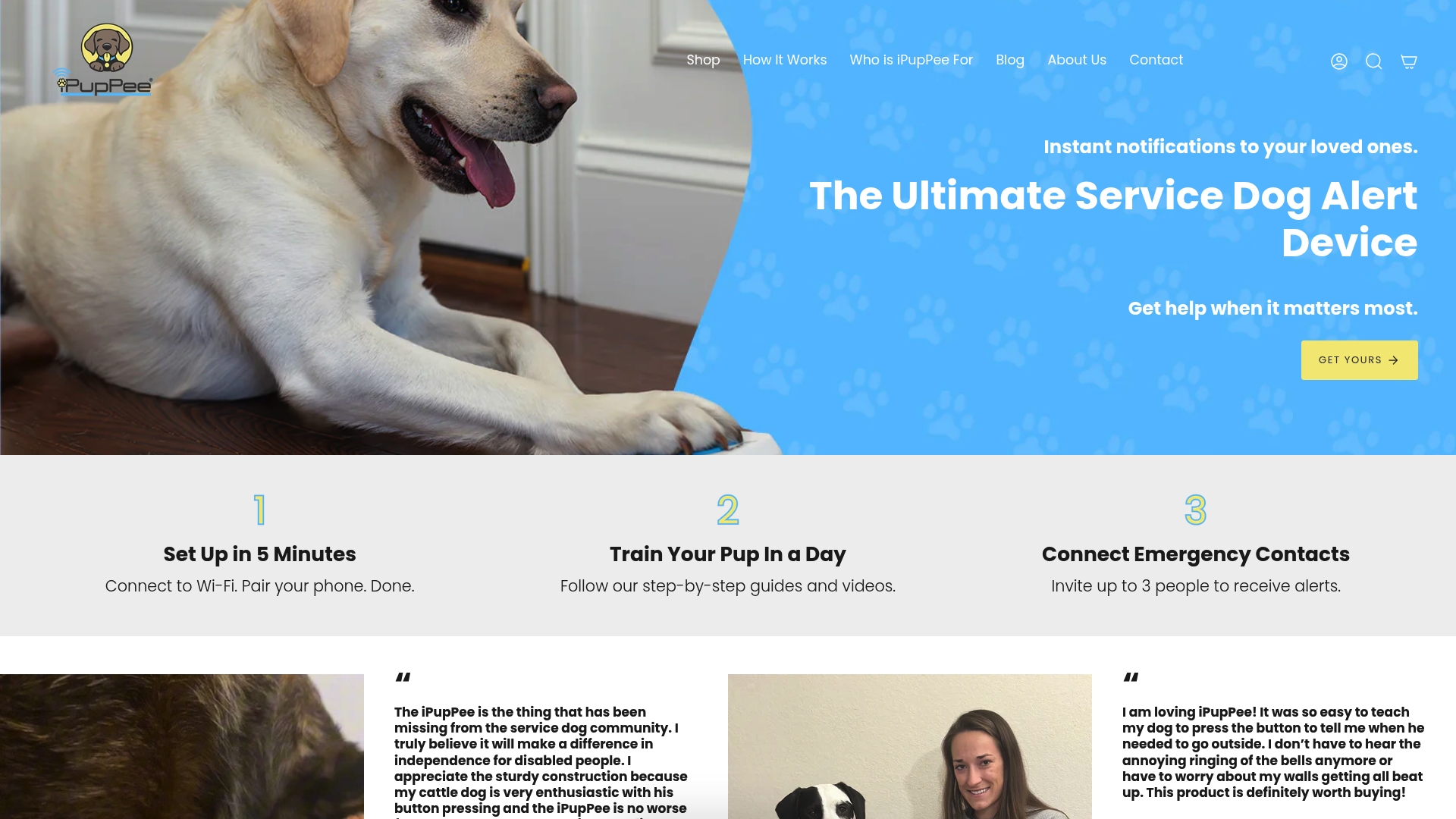
From the iPupPee alert button that lets your dog signal bathroom needs with a single press, to curated guides on adaptive equipment and communication strategies, iPupPee solutions are designed around real independence. Browse our product pages, read owner stories, and find the tools that match your specific needs. Your dog deserves a safe, connected life with you, and so do you.
Frequently asked questions
What are the most effective home modifications for disabled pet owners?
Non-slip flooring, ramps, and blocking hazardous areas are highly effective for improving safety for both owners and pets. Consistent furniture layouts also help blind pets navigate independently.
Can communication buttons help disabled pet owners and their dogs?
Yes, communication buttons improve interaction and safety when paired with high-quality audio, but poor sound quality reduces a dog’s recognition and response rate. Invest in devices with clear playback.
Do service dogs increase physical safety for disabled owners?
Service dogs offer strong emotional and confidence benefits, but limited physical safety gains are shown in studies. Their value depends heavily on specific training and the owner’s individual needs.
What are common pitfalls to avoid when selecting safety aids?
Poorly fitted mobility aids and low-quality communication devices are the most common mistakes. Both can reduce safety rather than improve it, so always verify fit and audio quality before committing.
How can disabled owners ensure ongoing safety as their needs change?
Regularly reassess your home setup and equipment, and consult with your veterinarian and an occupational therapist for tailored updates. Evolving needs require evolving solutions, so build in a review every six months.