

Most people assume disability aids for dogs are only for animals that can’t walk at all. That’s a narrow view that leaves a lot of dogs underserved. Modern aids cover a wide spectrum, from rear-support harnesses for dogs with partial mobility to paw-press communication buttons that let your dog tell you exactly what they need. Whether you’re managing a dog with degenerative myelopathy, recovering from spinal surgery, or supporting a service dog partner, today’s tools can dramatically improve both your dog’s quality of life and your daily bond. Understanding what’s available is the first step toward real change.
Table of Contents
- Understanding dog disability aids: Types and purposes
- Comparing wheelchairs and harnesses: Custom vs adjustable solutions
- Communication aids: Buttons and beyond for disabled dogs
- Practical tips for maximizing independence and safety
- Innovative and specialized solutions for unique needs
- Explore more resources and personalized support
- Frequently asked questions
Key Takeaways
| Point | Details |
|---|---|
| Choose aids by diagnosis | Wheelchairs, harnesses, and communication devices should be matched to your dog’s specific needs and condition. |
| Vet fitting is essential | Expert fitting minimizes risks, ensures comfort, and helps you adapt devices as your dog’s needs change. |
| Communication tools boost independence | Buttons and cues empower dogs to express needs, but quality and training matter most for disabled pets. |
| Reassess and adapt | Frequent reassessment ensures aids continue to support mobility, safety, and quality of life for your dog. |
| Community resources support owners | Connecting with fellow caretakers and experts helps you stay informed and confident in managing dog disabilities. |
Understanding dog disability aids: Types and purposes
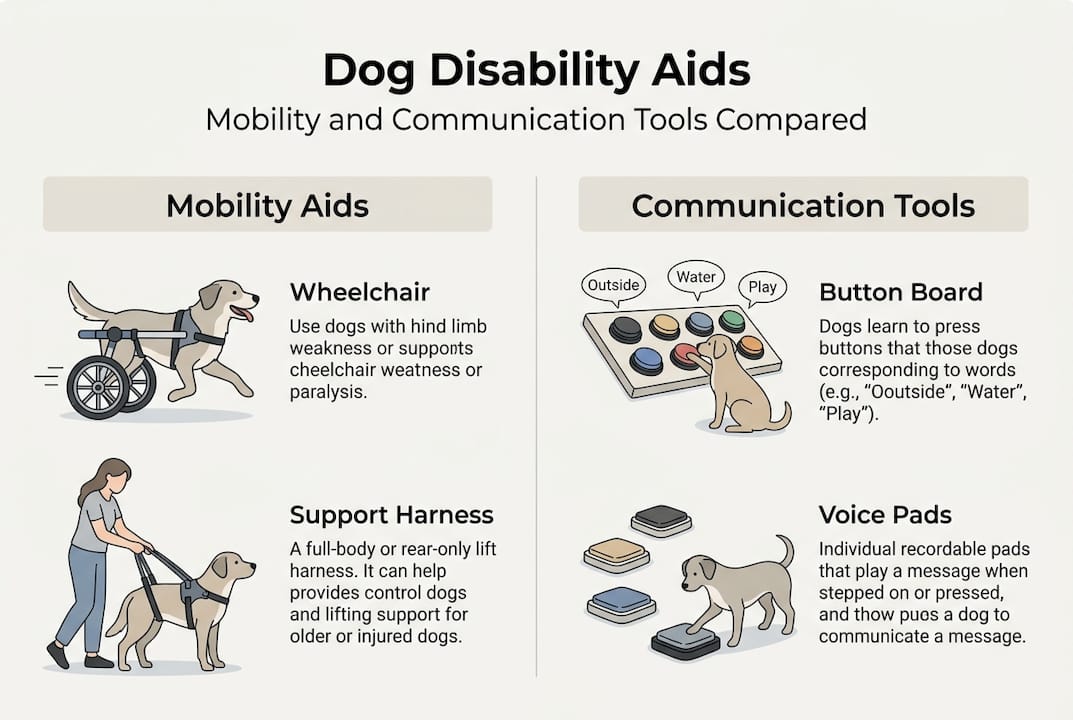
Dog disability aids fall into three main categories: mobility devices, support harnesses, and communication tools. Each serves a distinct purpose, and many dogs benefit from more than one type at the same time.
Mobility devices like wheelchairs restore movement for dogs with rear-leg paralysis or weakness. Fitting matters enormously. A proper wheelchair fitting guide involves measuring rear leg height and armpit-to-rump length, then selecting adjustable struts or custom saddles based on the dog’s condition and growth trajectory. Custom carts offer precise ergonomic saddles, while adjustable slings can sag over time.
Support harnesses like the Walkin’ Warrior or Bold Lead Designs provide rear lift via padded straps around the hind legs and abdomen. Service dog harnesses with rigid handles, such as balance and mobility support harnesses, give handlers physical stability during movement. These are compatible with wheelchairs and ideal for transitional rehab phases.
Communication tools like paw-press buttons open a new channel between you and your dog. If you’re new to this concept, the dog communication disabilities resource explains how dogs with physical limitations can still express needs clearly. For practical strategies, communication tips for disabled pet owners offers a solid starting point.
| Aid type | Primary function | Best for |
|---|---|---|
| Rear wheelchair | Restore mobility | Paralysis, DM, post-surgery |
| Support harness | Lift and stabilize | Partial weakness, rehab |
| Service dog harness | Handler balance support | Mobility-impaired handlers |
| Communication buttons | Express needs | Any dog, especially vocal breeds |
Now that you understand the scope of modern dog disability aids, let’s explore how each device compares and what matters most for your dog’s safety and comfort.
Comparing wheelchairs and harnesses: Custom vs adjustable solutions
Choosing between a custom and an adjustable wheelchair is one of the most consequential decisions you’ll make for a mobility-impaired dog. Both work, but they serve different situations.
Adjustable wheelchairs like the Walkin’ Wheels are easier to source and less expensive. They work well for dogs in early or mid-stage conditions. However, adjustable models are less stable than custom builds like Eddie’s Wheels or K9 Carts, which are engineered to the dog’s exact measurements. For dogs with complex anatomies or deformities, custom is almost always the better choice.
Edge cases matter a lot. Small and teacup breeds need narrow saddles and lightweight frames. Dogs with intervertebral disc disease (IVDD) or degenerative myelopathy (DM) need rear support prioritized. Progressive conditions favor adjustable carts because the device can be reconfigured as the dog’s needs change.
| Feature | Adjustable wheelchair | Custom wheelchair |
|---|---|---|
| Cost | Lower | Higher |
| Fit precision | Moderate | High |
| Turnaround time | Fast | Weeks |
| Best for | Early/mid conditions | Complex anatomy, deformities |
| Adaptability | High | Low |
Pro Tip: Before purchasing any wheelchair, ask your vet or a canine rehabilitation therapist to take measurements. A poorly fitted cart can cause pressure sores within days, turning a helpful tool into a health hazard.
For owners navigating dog training challenges alongside mobility issues, integrating a wheelchair into daily routines takes patience and consistency. And if you’re considering adding communication tools to the mix, the dog button communication guide walks you through the process step by step.
Once you’ve identified which type of aid suits your dog’s condition, the next step is understanding communication tools that bridge the gap between owner and pet.
Communication aids: Buttons and beyond for disabled dogs
Dog communication buttons, sometimes called augmentative interspecies communication (AIC) devices or soundboards, are recordable paw-press tools. You record words like “outside” or “play,” and your dog learns to press the button to express that need. Training works through modeling, where you press the button yourself while performing the action, so the dog connects sound to meaning.
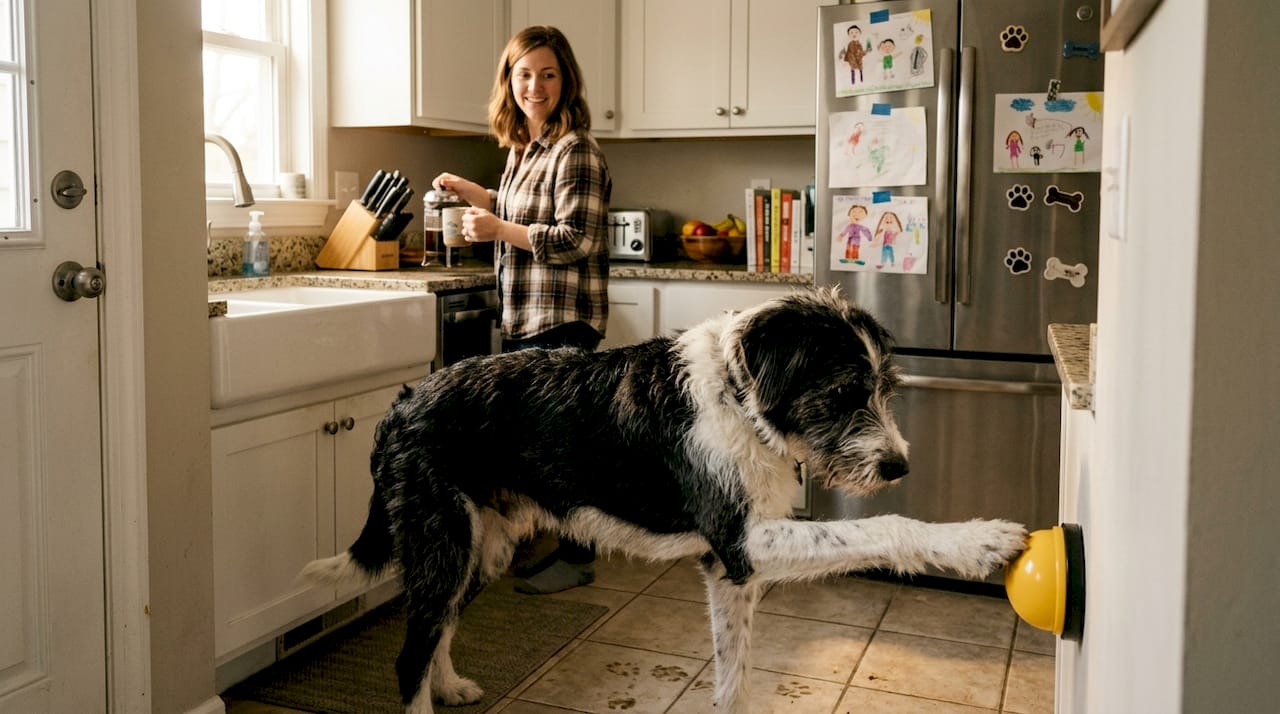
The research is genuinely surprising. A 260,000-press study found that dogs form intentional two-word combinations like “outside potty” that go beyond simple imitation. That’s not just mimicry. It suggests dogs can use these tools to communicate novel needs.
But there’s a real limitation you need to know about. Dogs respond only 30% of the time to button playback, compared to 100% for live speech and 70% for smartphone audio. Poor sound quality in many consumer buttons degrades recognition significantly. For disabled or service dogs who need precise, reliable signals, this gap matters.
“Buttons foster bond and reduce frustration via need expression, but sound limits true communication. Use live cues for disabled and service contexts.” — Research on dog button playbacks
Here’s a practical numbered approach to introducing buttons:
- Start with one button for the highest-value need (usually “outside” or “water”).
- Model the button press yourself every time you perform the action.
- Wait for spontaneous presses before adding a second button.
- Combine buttons only after your dog uses each one reliably alone.
- Use live verbal cues alongside buttons for any safety-critical commands.
For deeper guidance, communication training for independence and safety covers how to build a full routine. The training communication buttons for dogs resource and the teaching dogs buttons guide both offer step-by-step frameworks you can start using today.
With a clear grasp of how communication tools can empower your dog’s voice, let’s look at practical strategies and expert tips for maximizing independence and safety every day.
Practical tips for maximizing independence and safety
The biggest mistake owners make is treating disability aids as set-and-forget solutions. They’re not. Your dog’s needs will shift, and the devices need to shift with them.
A 2024 study published in Frontiers in Veterinary Science confirmed that wheelchairs improve quality of life for dogs with myelopathy, but also noted complications including pressure wounds. The study used pressure walkways to measure gait variability, correlating results with neurological severity scores. The takeaway: outcomes are better when devices are properly fitted and regularly reassessed.
Here’s what a strong daily routine looks like:
- Vet or rehab fitting first. Never skip professional measurement for wheelchairs or harnesses. A proper fitting protocol reduces the risk of sores and joint strain significantly.
- Check skin contact points daily. Look for redness, hair loss, or swelling anywhere the device touches skin.
- Integrate communication training into existing routines. Button practice during feeding, walks, and play builds faster associations.
- Reassess every 3 months. Progressive conditions like DM change quickly. What fits in January may cause harm by April.
- Balance tech with live cues. Buttons and devices support communication, but your voice and physical cues remain the most reliable signals for safety-critical moments.
Pro Tip: Keep a simple log of your dog’s device use, any skin changes, and communication button presses. Patterns in that data will tell you when it’s time to adjust before a problem becomes serious.
For a broader look at what’s available, communication devices for disabled owners covers the latest options in 2026. And if you’re just starting out, how to introduce devices to your dog gives you a calm, low-stress approach.
You now have a solid framework for choosing and integrating dog disability aids. For those looking to further personalize their dog’s care, specialized solutions and community resources can make all the difference.
Innovative and specialized solutions for unique needs
Some dogs don’t fit neatly into standard categories, and that’s where specialized solutions become essential. A Chihuahua with IVDD has completely different needs than a German Shepherd with DM. Off-the-shelf products often fail these dogs.
Ultra-custom solutions for small breeds include narrow saddles, featherweight aluminum frames, and harness systems scaled to tiny bodies. For dogs with congenital deformities, custom fabricators can build devices that accommodate asymmetrical limb lengths or unusual spinal curvatures.
Multi-pet homes add another layer of complexity. When one dog uses a wheelchair and another doesn’t, feeding stations, doorways, and resting areas all need to be reconfigured. Clear routines and physical separation during device use prevent accidents and reduce stress for all animals involved.
Community support is genuinely underrated. Here’s where to look:
- Facebook groups dedicated to specific conditions like DM or IVDD connect you with owners who’ve already solved the problems you’re facing.
- Reddit communities like r/disableddogs offer real-time advice and product reviews from experienced caregivers.
- Breed-specific forums often have threads on mobility aids tailored to that breed’s anatomy.
- Nonprofit organizations focused on canine rehabilitation sometimes offer device lending programs or subsidized fittings.
Understanding why training for communication devices matters helps you commit to the process even when progress feels slow. The investment pays off in reduced frustration for both you and your dog.
Explore more resources and personalized support
Finding the right combination of mobility aids, communication tools, and training strategies takes time, but you don’t have to figure it out alone. At iPupPee, we’ve built a platform specifically for pet owners who need more than generic advice.
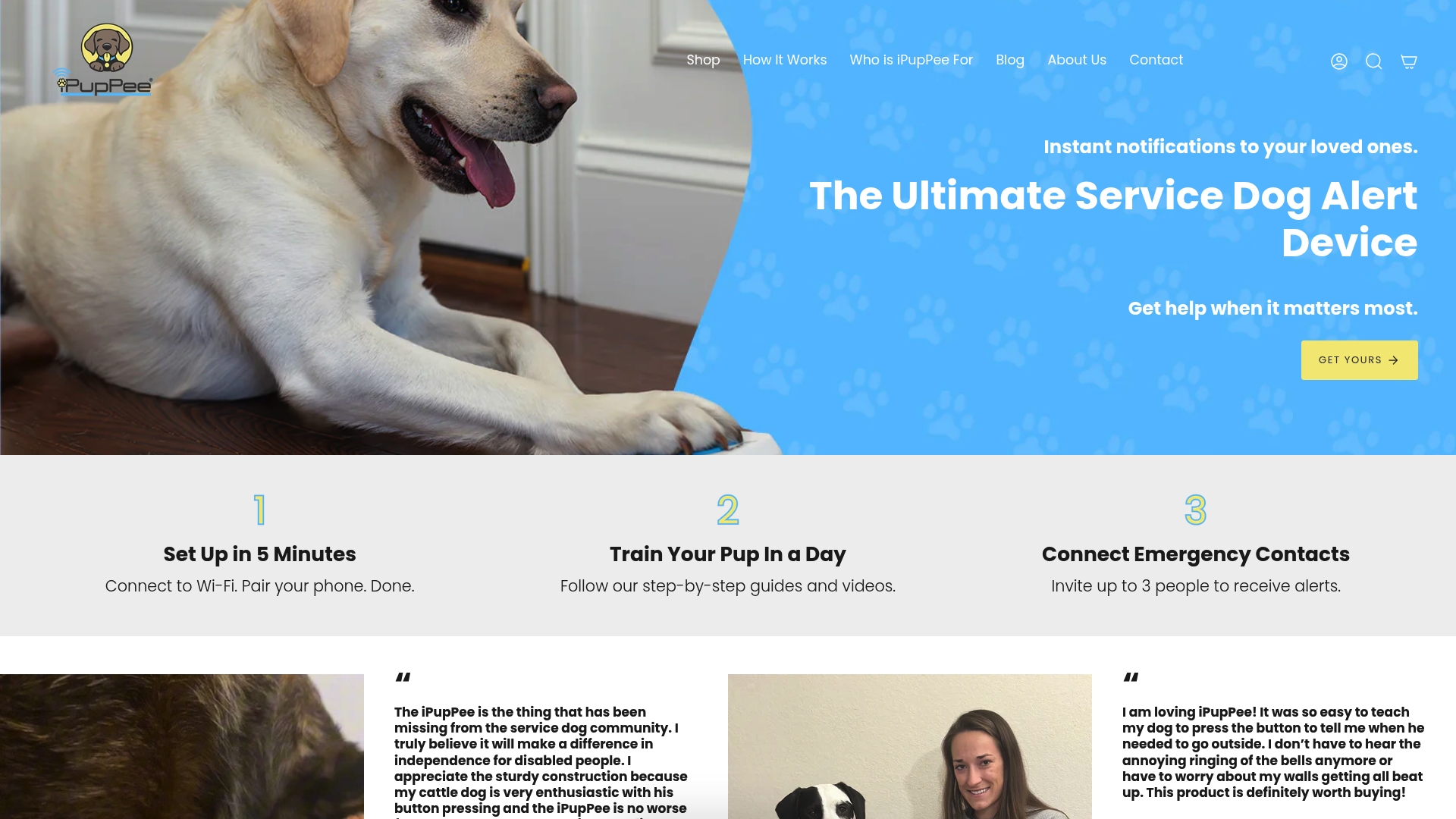
Our resources cover everything from device selection to step-by-step communication training, with a focus on safety and independence for dogs and their owners. Whether your dog is just starting with a rear-support harness or you’re ready to build a full button communication system, dog disability aids and training at iPupPee gives you the tools, guidance, and community to move forward with confidence. Explore our blog, product guides, and expert-backed training resources to find what fits your dog’s unique situation.
Frequently asked questions
How do I know which disability aid is right for my dog?
The ideal aid depends on your dog’s diagnosis, size, and mobility needs. A vet or canine rehab specialist can guide you through selecting and fitting the best device to prevent complications.
Are dog communication buttons effective for disabled dogs?
Buttons help dogs express needs and strengthen the human-dog bond, but dogs respond only 30% of the time to button audio versus 100% for live speech, making live cues more reliable for safety-critical communication.
How often should I reassess my dog’s aids?
Review devices at least every three months, or sooner if your dog’s condition changes. Adjustable devices are especially useful for progressive conditions because they can be reconfigured as needs evolve.
Is there a downside to custom wheelchairs?
Custom wheelchairs provide the best ergonomic fit for complex cases, but they cost more and take longer to produce. Adjustable models are easier to source quickly and work well for dogs in earlier stages of mobility loss.
Where can I find community support for disabled dogs?
Online forums, Facebook groups dedicated to specific conditions, and breed-specific communities offer real-world advice and shared experiences from owners who understand exactly what you’re going through.