

More than 61 million American adults live with a disability, making effective support tools crucial for daily living. For many, service dogs are not just companions but vital partners who rely on advanced communication methods. Understanding how dogs and people interact through specialized signals opens the door to stronger independence and better wellbeing. This guide will outline the science behind dog communication for disabilities, highlight innovative tools, and reveal what makes these American partnerships so unique.
Table of Contents
- Defining Dog Communication For Disabilities
- Types Of Communication Tools And Signals
- How Dogs Use Visual And Button Signals
- Requirements For Communication Training
- Risks And Misunderstandings In Interaction
Key Takeaways
| Point | Details |
|---|---|
| Importance of Dog Communication | Effective communication between individuals with disabilities and their service dogs relies on specialized verbal and nonverbal signals, fostering a deeper connection. |
| Technological Innovations | Advancements in communication technology, like button systems, enable dogs to express needs more clearly, enhancing interactions. |
| Training Requirements | Successful service dog training requires tailored approaches focusing on consistent skill development and understanding each dog’s unique learning style. |
| Risks in Interactions | Awareness of potential misunderstandings in dog-human interactions is essential to reduce stress and enhance the supportive relationship. |
Defining Dog Communication For Disabilities
Dog communication represents a sophisticated system of interactions that extends far beyond simple barking or tail wagging. Specialized communication methods are particularly critical for individuals with disabilities who rely on assistance dogs as partners in daily life. Dog communication techniques encompass intricate verbal and nonverbal signals that enable meaningful exchanges between humans and canine companions.
For people with disabilities, understanding and developing advanced communication strategies with service dogs becomes essential. These communication pathways involve complex interactions including body language, vocal signals, touch-based cues, and increasingly sophisticated technological tools. Service dogs must interpret subtle human signals while simultaneously communicating their own observations and potential alerts about environmental conditions or medical situations.
The core of effective dog communication for disabilities centers on building a deep, nuanced relationship of mutual understanding. Assistance Dogs International highlights that successful communication requires intensive training and an almost intuitive connection between the dog and handler. This connection allows service dogs to perform critical tasks such as:- Detecting medical emergencies- Providing physical support and navigation- Alerting to potential sensory challenges- Offering emotional and psychological stabilization
Modern approaches to dog communication for disabilities have expanded dramatically, incorporating technological innovations that bridge communication gaps. These developments empower individuals with disabilities to develop more sophisticated interaction methods with their canine partners, transforming traditional service dog relationships into dynamic, responsive partnerships.
Types Of Communication Tools And Signals
Communication tools for individuals with disabilities and their service dogs have evolved dramatically, incorporating sophisticated technologies and nuanced signal systems. BowLingual technology represents an early breakthrough in understanding canine communication, demonstrating how technological innovations can bridge understanding between humans and dogs.
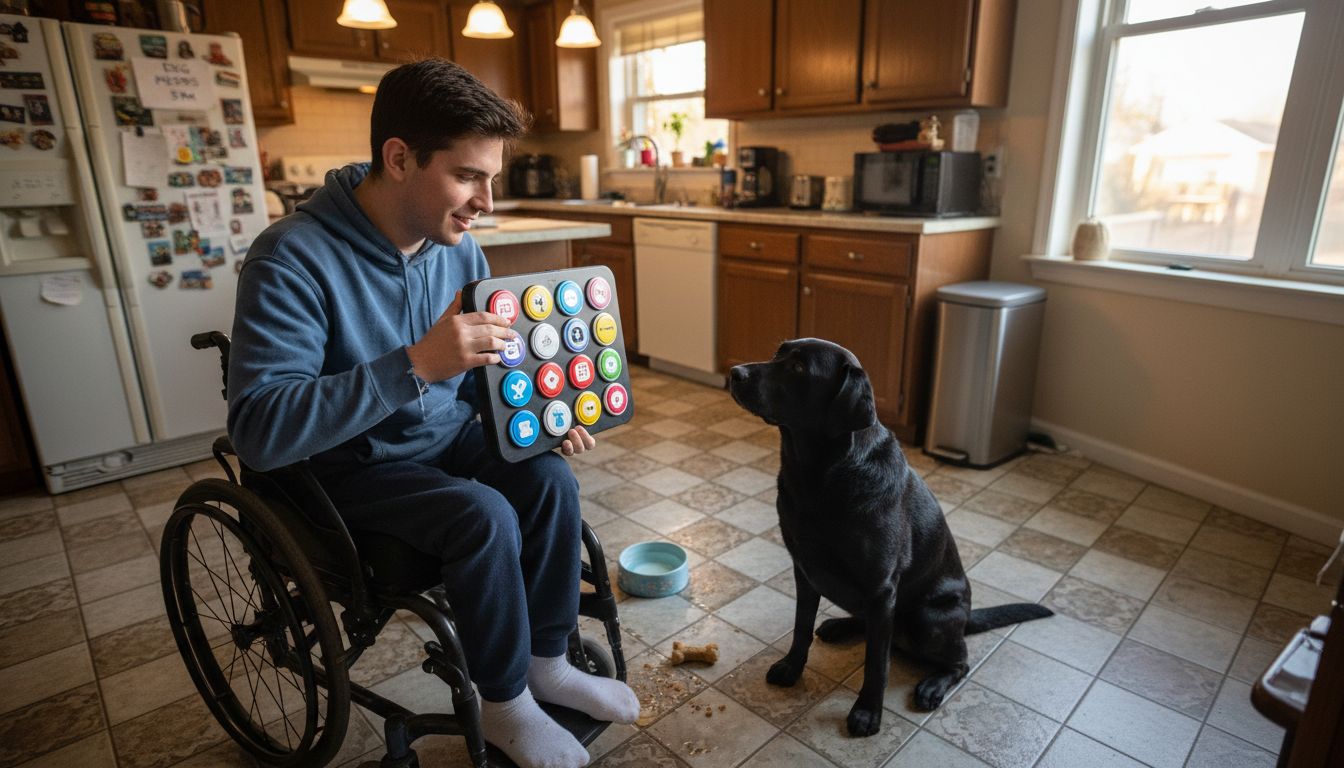
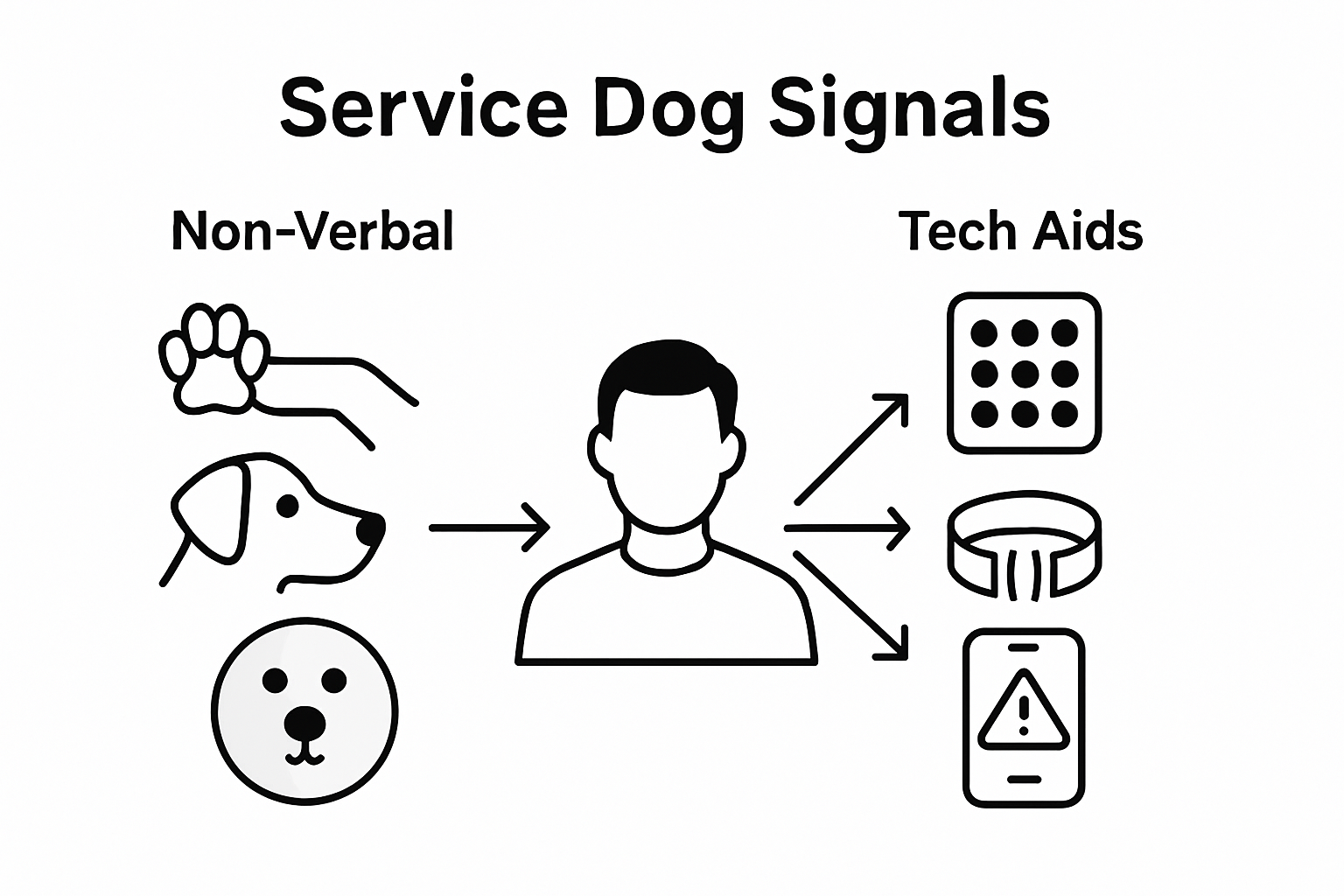
Modern communication tools and signals fall into several critical categories that enable more effective interactions. Verbal signals include specific voice commands and tonal variations, while non-verbal signals encompass hand gestures, body positioning, and tactile cues. Research on human body language emphasizes that consistent and clear signals are essential for successful dog-handler communication.
Key communication tools and signals include:
- Visual hand signals for directional guidance
- Specialized tactile communication methods
- Electronic communication devices
- Proximity-based interaction signals
- Auditory cue systems
Technological advancements have further expanded communication possibilities, introducing innovative tools that transform traditional service dog interactions. These tools range from sophisticated alert systems to communication buttons that allow dogs to express complex needs, ultimately empowering individuals with disabilities to develop more responsive and dynamic partnerships with their canine companions.
How Dogs Use Visual And Button Signals
Dogs have developed remarkably sophisticated methods of communication, particularly when assisting individuals with disabilities. Advanced vocalization research suggests that dogs can be trained to use specific signals and sounds to convey complex messages, transforming how they interact with their human partners. Visual signals play a crucial role in this communication ecosystem, allowing dogs to provide critical information through intentional body movements, gestures, and carefully learned responses.
Button communication represents a groundbreaking approach to canine interaction. Dog button communication techniques enable dogs to press specialized buttons corresponding to specific needs, wants, or observations. These communication tools typically include buttons for core concepts like:
- Requesting food
- Signaling bathroom needs
- Indicating physical discomfort
- Expressing desire for attention
- Alerting to potential environmental challenges
Visual signals complement button communication, creating a comprehensive interaction system. Hand gestures, body positioning, and subtle physical cues allow dogs to communicate complex information quickly and precisely. Service dogs, in particular, develop an intricate language of movement that can signal everything from medical emergencies to navigational guidance, ultimately providing unprecedented levels of support and independence for individuals with disabilities.
Requirements For Communication Training
Communication training for service dogs represents a sophisticated and nuanced process that demands precision, patience, and specialized techniques. Structured training interventions are critical in developing reliable communication pathways between dogs and individuals with disabilities, ensuring that each interaction meets specific functional needs.
Key requirements for effective communication training include:
- Consistent and repetitive skill development
- Individualized training approaches
- Clear reward and reinforcement systems
- Specialized sensory and signal recognition techniques
- Adaptive learning methodologies
- Regular performance assessments
Training service dog signals requires a comprehensive approach that goes beyond traditional obedience training. Trainers must focus on developing sophisticated cognitive and communication skills that enable dogs to interpret complex human needs and respond with precision. This process involves understanding each dog’s unique learning style, potential strengths, and potential communication challenges.
Successful communication training ultimately transforms service dogs into sophisticated communication partners. By implementing systematic, scientifically-informed training methodologies, handlers can develop dogs capable of providing nuanced support that goes far beyond basic assistance, creating genuine collaborative relationships that enhance independence and quality of life for individuals with disabilities.
Risks And Misunderstandings In Interaction
Interaction risks between service dogs and individuals with disabilities represent a critical area of concern that demands careful understanding and proactive management. Misinterpretations of body language can create significant communication barriers, potentially leading to stress and behavioral complications that undermine the collaborative relationship between dogs and their handlers.
Common risks and misunderstandings in dog-human interactions include:
- Inconsistent signal interpretation
- Unintentional stress triggers
- Misaligned communication expectations
- Sensory overstimulation
- Inappropriate response recognition
- Boundary confusion
Dog-assisted interventions require meticulous attention to individual needs and communication styles. Handlers must develop keen awareness of their dog’s subtle behavioral cues, understanding that each interaction represents a complex exchange of physical and emotional signals. Successful communication demands continuous learning, adaptability, and a willingness to recognize and address potential misunderstandings proactively.
Ultimately, mitigating interaction risks involves developing a nuanced, empathetic approach to communication. By creating structured training environments that prioritize mutual understanding, clear boundaries, and consistent reinforcement, handlers can build robust communication frameworks that minimize misunderstandings and maximize the supportive potential of service dog relationships.
Enhance Your Service Dog’s Communication and Independence Today
Navigating the challenges of effective dog communication for disabilities requires innovative solutions that go beyond traditional training. The article highlights how sophisticated signals like button communication and visual cues empower service dogs to alert handlers to critical needs and emergencies. If you are seeking reliable tools to bridge this communication gap, discover how the iPupPee device transforms canine interactions into clear, actionable messages that improve safety and independence.
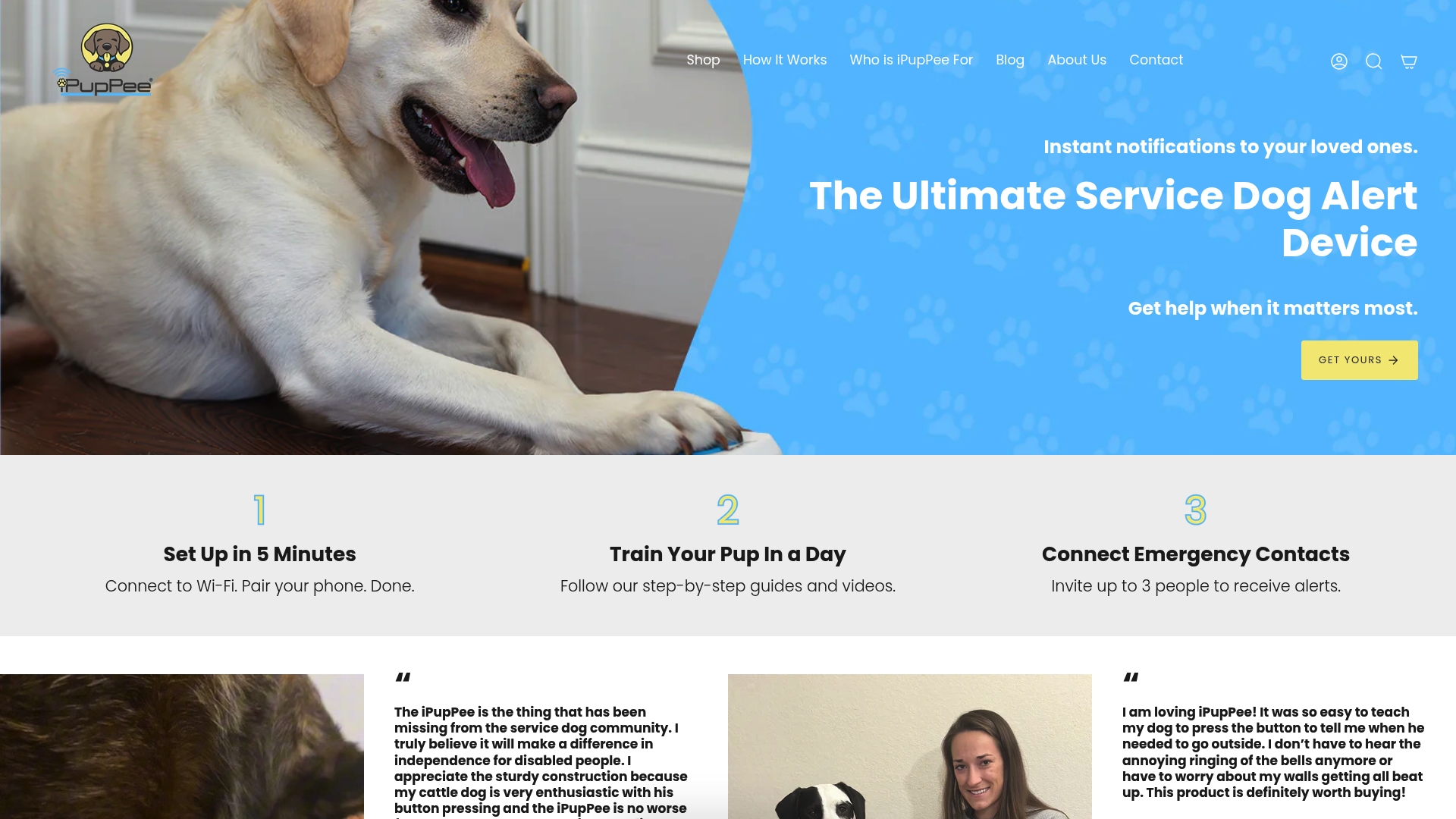
Experience the difference with our unique communication alert system designed specifically for service dogs and their handlers. Visit iPupPee now to learn how our device supports advanced communication, enhances safety, and fosters a deeper bond. Don’t wait to empower your service dog with proven technology that aligns perfectly with modern training methods and the goals outlined in the article. Explore detailed training instructions and real user stories to take the next step toward seamless dog-to-human communication.
Frequently Asked Questions
What are the main communication methods between service dogs and individuals with disabilities?
Service dogs utilize a combination of verbal signals, non-verbal signals, and technological tools to communicate effectively with their handlers. This includes vocal cues, body language, visual hand signals, and specialized communication devices.
How can button communication improve interactions between service dogs and their handlers?
Button communication allows dogs to press buttons that correspond to specific needs or observations, facilitating a clearer understanding of what the dog wants or needs, such as requesting food or indicating discomfort, thereby enhancing interaction.
What training is required for service dogs to develop effective communication skills?
Effective communication training for service dogs requires consistent skill development, individualized approaches, clear reinforcement systems, and specialized techniques in sensory and signal recognition to ensure reliable interaction with their handlers.
What are potential risks in communication between service dogs and their handlers?
Potential risks include misinterpretations of body language, inconsistent signal interpretation, sensory overstimulation, and boundary confusion, which can lead to stress and undermine the collaborative relationship between service dogs and their handlers.
Recommended
- Mastering Training Disabled Dogs for Better Communication – iPupPee
- Dog Signal Training Guide 2025: Teach Your Dog with Hand Signals – iPupPee
- Puppy Training for Disabilities: Effective Tips for 2025 – iPupPee
- Dog Button Communication: Guide for Owners and Trainers 2025 – iPupPee
- Bearded Dragon Tail Waving: Complete Behavior Guide
- Understanding the Importance of Customer Communication – My WordPress