

TL;DR:
- Adaptive tools and training methods make dog care accessible for owners with disabilities.
- Prioritizing safety, environment modifications, and clear communication enhances independence.
- Building honest routines and support networks fosters strong relationships and effective care.
Managing daily dog care when you live with a disability is not a minor inconvenience. It can be physically demanding, emotionally draining, and sometimes genuinely unsafe. The good news is that a growing range of adaptive tools, training methods, and support networks are making dog ownership more accessible than ever before. Whether you use a wheelchair, have limited hand strength, or face communication challenges, practical solutions exist that fit your actual life. This article walks you through how to assess your needs, pick the right products, build safer routines, and communicate more effectively with your dog.
Table of Contents
- Evaluating your dog care needs and criteria
- Essential tools and adaptive products for easier dog care
- Safety and independence strategies for dog owners with disabilities
- Adapting communication and training for disabled dog owners
- Choosing the right dog and support network
- Our perspective: What truly empowers disabled dog owners
- Explore more support and solutions with iPupPee
- Frequently asked questions
Key Takeaways
| Point | Details |
|---|---|
| Personalize your care | Assess your own abilities and prioritize accessible solutions tailored to your daily dog care tasks. |
| Leverage adaptive products | Specialized feeders, leashes, and grabbers can make dog care more manageable and independent. |
| Prioritize safety and training | Establish clear routines, use adaptive training cues, and make your environment safer for both you and your dog. |
| Build a support network | Connect with family, friends, and dog care resources for backup and community support. |
| Adopt a flexible mindset | Experiment with products and techniques to find what works best for your unique needs and your dog’s personality. |
Evaluating your dog care needs and criteria
Before you buy a single product or change a single routine, take an honest look at what your daily dog care actually involves and where the friction points are. This step saves you money and frustration later.
Start by mapping your physical limitations against your daily tasks. Mobility issues affect walking, bending, and reaching. Limited dexterity makes clipping leashes, opening bags, and grooming harder. Communication challenges can make voice commands difficult or inconsistent. Each of these calls for a different set of solutions.
Here are the core daily tasks to evaluate:
- Feeding: Can you bend to floor level? Can you open packaging easily?
- Walking and leashing: Do you need both hands free? Is your dog strong enough to pull you off balance?
- Grooming: Can you hold brushes, nail clippers, or towels steadily?
- Emergency response: Can you call for help or signal your dog quickly if something goes wrong?
- General interaction: Can your dog come to you, or do you always need to go to them?
Your dog’s size, temperament, and current training level also matter a lot here. A large, untrained dog creates very different challenges than a calm, mid-sized dog who already knows basic commands. For more on this topic, check out our guide on caring for your disabled dog to understand the full picture before making changes.
As wheelchair users can train dogs to jump onto laps for easier interaction, the goal is always to adapt the environment and behavior to fit your needs, not the other way around.
Pro Tip: Write down every dog care task you do in a week. Rate each one from 1 to 5 based on difficulty. Focus your product research on the tasks rated 4 or 5 first.
Essential tools and adaptive products for easier dog care
With your needs mapped out, you can start matching products to problems. The adaptive pet product market has grown significantly, and the best tools are practical, durable, and genuinely designed with disabled users in mind.
Here is a quick breakdown of the most effective categories:
- Elevated feeding platforms: Bring the bowl up to a reachable height, reducing bending and strain.
- Automatic feeders: Dispense food on a schedule, removing the need for daily manual feeding.
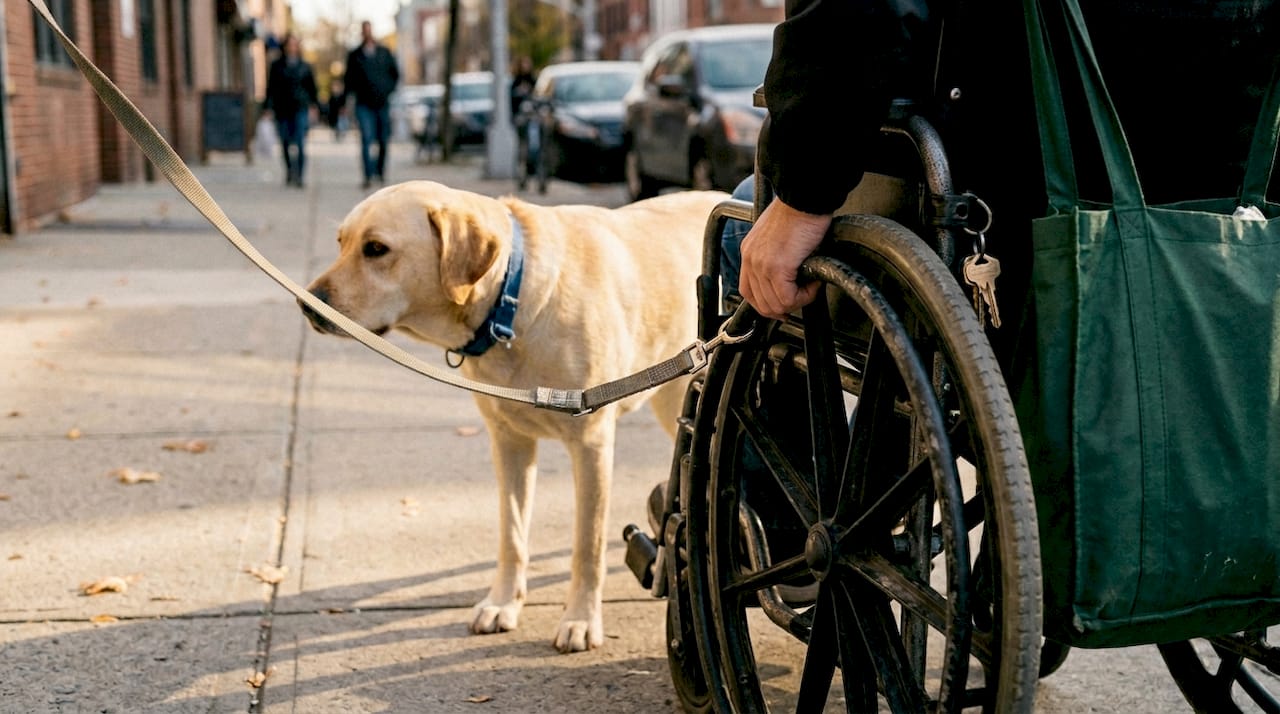
- Hands-free leashes: Attach to your wheelchair or waist, keeping your hands available for other tasks.
- Long-handle grabbers: Help pick up toys, leashes, or waste bags without bending.
- Collar bells: Alert you to your dog’s location, reducing the risk of rolling over them.
For dog disability aids that go beyond basic equipment, communication devices like alert buttons are changing how disabled owners and their dogs interact in real time.
Here is a comparison of the main adaptive products:
| Product | Key benefit | Price range | Ease of use |
|---|---|---|---|
| Elevated feeder | Reduces bending | $20 to $80 | Very easy |
| Automatic feeder | Removes daily task | $40 to $150 | Easy |
| Hands-free leash | Frees both hands | $15 to $50 | Easy |
| Long-handle grabber | Extends reach | $10 to $30 | Very easy |
| Collar bell | Tracks dog location | $5 to $20 | Very easy |
| Alert button device | Dog-to-owner signal | $50 to $120 | Moderate |
For a broader look at how these tools fit into daily life, the resource on living with disabilities and dogs covers real-world scenarios in detail.
Pro Tip: Before buying an automatic feeder, test your dog’s reaction to the sound it makes. Some dogs are startled by mechanical dispensers, which can create anxiety around mealtimes.
Remember that elevated platforms and hands-free leashes are among the most consistently recommended tools for wheelchair users, and they work just as well for owners with other mobility challenges.
Safety and independence strategies for dog owners with disabilities
Having the right products is only part of the equation. How you use them and how you structure your environment matters just as much.
Here are the most effective safety strategies, in order of priority:
- Check before you move. Always look down before moving a wheelchair or mobility device. This single habit prevents the most common dog-related injuries at home.
- Use leashes with glove attachments. These keep the leash secured to your hand even if your grip slips, which is critical during walks.
- Install collar bells. A small bell on your dog’s collar gives you constant audio feedback on their location.
- Train basic commands first. Sit, stay, come, and leave it are not optional. They are your primary safety tools.
- Modify your home. Clear pathways, install ramps where needed, and use baby gates to create safe zones.
“Safety tips include checking under wheelchairs before moving, using leashes with glove attachments, training dogs to basic commands like sit, stay, and come, and using collar bells to avoid running over pets.”
For more on building safer routines, our article on enhancing safety and connection goes deeper into home modification strategies.
Home modifications do not need to be expensive. Non-slip mats, repositioned furniture, and clear floor space cost very little but dramatically reduce fall and collision risks. The investment in top tips for disabled pet owners is really an investment in daily confidence and independence.
One often overlooked strategy is building a predictable daily schedule. Dogs thrive on routine, and a consistent schedule means your dog is less likely to behave unpredictably, which reduces safety risks for you.
Adapting communication and training for disabled dog owners
Clear communication between you and your dog is not just about convenience. It is a safety issue and a relationship issue. The good news is that training methods are highly adaptable.
Here is what works best depending on your situation:
- Voice commands: Best for owners with limited hand mobility. Use short, distinct words and a consistent tone.
- Clicker training: Works well if you have hand strength but not voice consistency. The click is precise and emotionally neutral.
- Remote training tools: Useful for owners who cannot always be physically close to their dog during training.
- High-value treats: These speed up learning significantly, especially during short sessions.
Short, frequent training sessions using positive reinforcement with high-value treats are the most effective approach for disabled owners, since they reduce physical fatigue while keeping the dog engaged.
Research also shows that sound symbolism aids dog communication, meaning higher-pitched cues work better for upward movements and lower-pitched cues for downward ones. This is useful when you are designing your own command vocabulary.
Here is a summary of training adaptations and their effectiveness:
| Adaptation | Best for | Effectiveness |
|---|---|---|
| Voice commands | Limited hand mobility | High |
| Clicker training | Limited voice consistency | High |
| Remote tools | Distance or fatigue | Moderate to high |
| Short sessions | All disabilities | Very high |
| High-value treats | Motivation and focus | Very high |
For more practical guidance, our dog communication tips resource covers real scenarios, and our dog training solutions page addresses common obstacles.
Pro Tip: Record a short video of your training sessions. Watching it back helps you spot inconsistencies in your cues that you might not notice in the moment.
Choosing the right dog and support network
The right dog for a disabled owner is not necessarily the most beautiful or the most popular breed. It is the one that fits your physical capacity, your home, and your lifestyle.
Key factors to consider when choosing a dog:
- Size: Small to medium dogs are generally safer for wheelchair users, reducing tangling and injury risk.
- Temperament: Calm, trainable dogs adapt better to non-standard routines and environments.
- Energy level: High-energy dogs need more exercise, which may not be manageable without support.
- Trainability: Dogs that respond quickly to positive reinforcement reduce the physical effort required for training.
- Age: Adult dogs from shelters often have basic training already, which can be a significant advantage.
Service dogs are another option worth exploring. Organizations that specialize in matching service dogs to disabled owners provide animals trained for specific tasks like alerting, retrieving, and guiding. Our service dog guide covers how to navigate this process.
Building a support network is equally important. Family, friends, professional trainers, and community groups all play a role. Vets recommend stable environments for dogs with special needs, and the same principle applies to owners. Stability in your support system creates stability in your dog’s behavior.
Pro Tip: Connect with online communities of disabled dog owners. The practical tips shared in these spaces are often more relevant and specific than anything you will find in a general dog care book.
Our perspective: What truly empowers disabled dog owners
Here is something most guides will not tell you directly. The products help, but they are not the foundation. The foundation is your mindset and your willingness to adapt without apology.
We have seen disabled owners build extraordinary relationships with their dogs by letting go of the idea that dog care has to look a certain way. Feeding your dog from an elevated platform is not a compromise. It is a smart solution. Training in short five-minute sessions is not cutting corners. It is actually more effective for most dogs.
The research on dogs reducing stress and loneliness is real, but it depends heavily on the quality of the relationship, not just the presence of the dog. That quality comes from consistent communication, realistic expectations, and a willingness to ask for help when you need it.
Self-advocacy matters here too. Tell your vet about your limitations. Tell your trainer what you can and cannot do physically. The more honest you are about your needs, the better the support you will receive. And when something is not working, look at our training challenges for disabled owners resource before assuming the problem is you or your dog.
The owners who thrive are not the ones with the most products. They are the ones who build flexible, honest, and consistent routines.
Explore more support and solutions with iPupPee
If you are looking for adaptive tools that genuinely address the communication gap between you and your dog, iPupPee is built for exactly that. The iPupPee alert device lets your dog signal you with a simple button press, which is a practical, low-effort solution for disabled owners who need reliable communication without constant supervision.
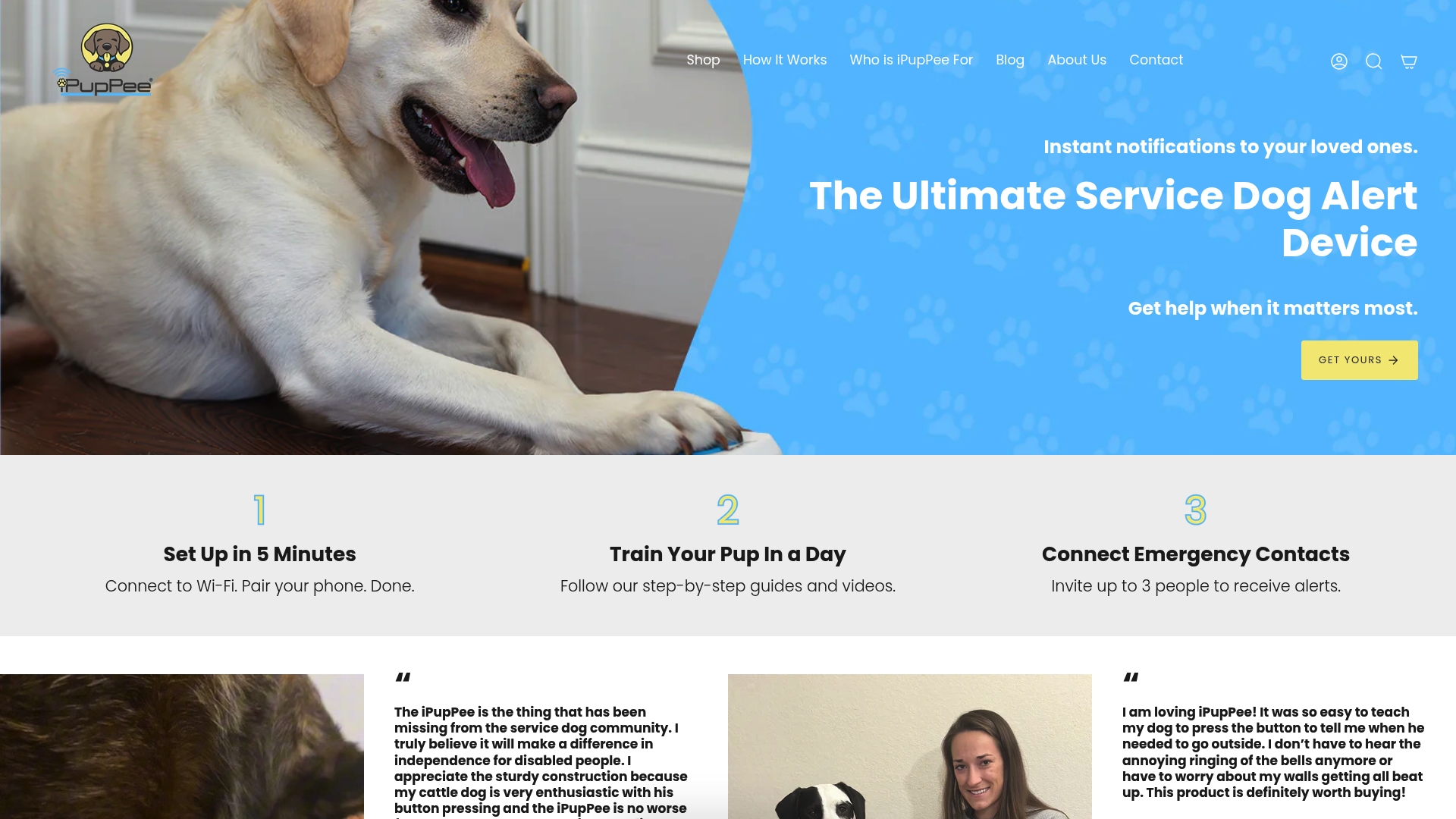
Beyond the device itself, the iPupPee platform offers guides, product recommendations, and community resources tailored to disabled pet owners. Whether you are just starting out or refining a system that already works, our tips for disabled pet owners page is a strong next step. You deserve tools and information that actually fit your life.
Frequently asked questions
What are the best dog care products for wheelchair users?
Elevated feeding stations, automatic feeders, hands-free leashes, long-handle grabbers, and collar bells are the most consistently recommended products for wheelchair users. Each one addresses a specific daily challenge without requiring significant physical effort.
How can disabled owners adapt dog training methods?
Voice commands, remote tools, positive reinforcement with high-value treats, and short frequent sessions are the most effective adaptations. These methods reduce physical strain while maintaining consistent, clear communication with your dog.
Are dogs able to adapt to their owner’s disability?
Yes. With consistent cues and patient training, most dogs adapt well. Research shows that sound symbolism aids communication, so using pitch variation in your commands can speed up this adaptation process.
What size dog is best for people with mobility issues?
Small to medium-sized dogs are generally the safest choice for wheelchair users and owners with limited mobility, as they reduce the risk of tangling, pulling, and accidental injury during daily routines.
What support networks exist for disabled pet owners?
Support includes family, friends, certified trainers, online communities, and organizations that provide service dogs for advanced tasks. Building a mix of personal and professional support gives you the most flexibility and resilience in your dog care routine.
Recommended
- Top tips for disabled pet owners: manage, communicate, thrive – iPupPee
- Dog disability aids: Enhance independence and communication – iPupPee
- How to care for your disabled dog safely in 2026 – iPupPee
- 7 Solutions for Dog Training Challenges Disabled Owners Face – iPupPee
- Four Paws Magic Coat® Professional Series Large Nail Trimmer For Dogs – Mindful Botany Market