

Finding ways to stay independent and safe can feel challenging for many American pet owners with disabilities. Service dogs are more than companions—they perform trained tasks that empower their handlers to participate in daily life. Understanding the difference between pets, emotional support animals, and service dogs matters because only service dogs with specialized training gain legal access and deliver vital support. This article highlights key communication solutions to ensure your dog responds reliably, enhancing your confidence and control.
Table of Contents
- Service Dogs For Disabilities Explained
- Types Of Service Dogs And Their Training
- How Service Dogs Improve Daily Living
- Legal Rights For Service Dog Handlers In The Us
- Enhancing Safety With Communication Devices
Key Takeaways
| Point | Details |
|---|---|
| Service Dog Definition | Service dogs are trained working animals that perform specific tasks to assist individuals with disabilities, distinguishing them from pets and emotional support animals. |
| Legal Rights | Under the Americans with Disabilities Act (ADA), service dogs have legal access to public spaces, which is not granted to emotional support animals or therapy dogs. |
| Training Requirements | Service dogs undergo specialized training, typically lasting 18 to 24 months, with costs ranging from $15,000 to $30,000 for professional training programs. |
| Impact on Independence | Service dogs enhance independence for individuals by enabling them to perform daily tasks and participate actively in life, significantly improving their quality of life. |
Service Dogs for Disabilities Explained
Service dogs are not pets—they’re trained working animals that perform specific tasks to mitigate a person’s disability. Understanding what qualifies as a service dog, how they differ from other animals, and their role in daily independence is crucial for anyone considering one.
What Makes a Service Dog Different
The key distinction lies in task training. A service animal is trained to perform specific tasks directly related to a person’s disability. This could be guiding someone who is blind, alerting a deaf person to sounds, or preventing seizure-related injuries. Emotional support animals, therapy dogs, and pets don’t have this specialized training requirement.
Service dogs gain legal access to public spaces where regular pets cannot go—restaurants, shops, hospitals, schools, hotels, and housing. This access exists because they perform genuine work that directly enables independence for their handlers.
Here’s a quick comparison of service dogs, emotional support animals, and therapy dogs:
| Feature | Service Dog | Emotional Support Animal | Therapy Dog |
|---|---|---|---|
| Training Level | Task-specific advanced training | Basic obedience or none | Basic obedience |
| Legal Public Access | Protected under ADA | Not protected | Limited, by arrangement |
| Handler’s Rights | Access to most public spaces | Housing only | Visits by invitation |
| Main Role | Assists with disabilities | Provides comfort and support | Offers comfort to others |
| Certification Required | Often needed for public access | Not legally required | May be required for programs |
Types of Service Dogs
Different disabilities require different skill sets. Here’s what service dogs can do:
- Guide dogs assist visually impaired individuals with navigation and obstacle detection
- Hearing dogs alert deaf and hard-of-hearing people to sounds like doorbells or alarms
- Mobility assistance dogs help people with physical disabilities retrieve items and provide balance support
- Medical response dogs detect changes in blood sugar, blood pressure, or oncoming seizures
- Psychiatric assistance dogs interrupt anxiety spirals, create personal space in crowds, or apply deep pressure during distress
- Autism assistance dogs provide grounding during sensory overload and prevent elopement
Each type undergoes rigorous training tailored to the handler’s specific needs.
Training and Certification
Service dogs may be trained by professional organizations, specialized trainers, or handlers themselves depending on location and disability type. Only dogs certified by recognized official organizations receive legal protection and public access rights. Training typically takes 18 to 24 months and costs between $15,000 and $30,000, though some organizations provide dogs at no cost to handlers.
The Independence Factor
Service dogs fundamentally change what’s possible. A person with mobility limitations can access their community independently. Someone deaf receives auditory information automatically. A person with psychiatric disabilities can leave their home knowing they have backup support. This isn’t about companionship—it’s about autonomy.
Service dogs allow people with disabilities to accomplish daily tasks, work, and participate in community life with greater confidence and reduced barriers.
Effective communication between handler and dog is absolutely vital. When a service dog doesn’t understand commands or can’t alert to problems, the handler’s independence suffers. That’s why clear, consistent signals matter more than you might realize.
Pro tip: If you’re considering a service dog, start by documenting your specific disability-related tasks and which ones genuinely require a trained dog versus adaptive equipment or personal assistance—this clarity will guide which type of dog actually fits your needs.
Types of Service Dogs and Their Training
Not all service dogs are created equal. Different disabilities demand different skill sets, and the training path varies depending on the dog’s role and your location. Knowing which type fits your needs is the first step toward independence.
Understanding Different Service Dog Types
Service dogs fall into distinct categories, each addressing specific disability needs. Here’s what each type does:
- Guide dogs help people who are blind or have low vision navigate safely and avoid obstacles
- Hearing dogs alert deaf and hard-of-hearing individuals to important sounds like alarms or doorbells
- Mobility assistance dogs retrieve items, open doors, and provide balance support for people with physical disabilities
- Medical response dogs detect changes in blood sugar, blood pressure, or oncoming seizures
- Psychiatric assistance dogs interrupt panic attacks, create personal space in crowds, or apply pressure during distress
- Autism assistance dogs prevent elopement and provide grounding during sensory overload
Each category requires specialized training tailored to the handler’s specific needs.
How Training Works
Service dog training involves far more than basic obedience. Dogs undergo socialization and desensitization to various environments so they remain focused while working in restaurants, hospitals, airports, and busy streets. They learn to ignore distractions while responding instantly to their handler’s signals.
Training typically takes 18 to 24 months through professional organizations, specialized trainers, or owner-training programs depending on your location. Some countries allow handlers to train their own dogs, but certification by recognized programs remains essential for legal protection and public access rights.
Professional vs. Owner Training
You have options for getting a trained service dog. Professional organizations handle everything but often have long waiting lists and higher costs. Owner-training gives you control over the process and strengthens your bond with the dog from day one.
The training method you choose should match your capability, timeline, and the complexity of tasks your dog needs to perform.
Owner-training requires significant commitment, knowledge, and access to good instruction. Some handlers succeed brilliantly; others struggle without professional guidance. Be honest about your capacity before choosing this path.
What Dogs Can Be Service Dogs
Any breed or size of dog can become a service dog if properly trained. There’s no official requirement for specific breeds, though larger dogs often work better for mobility assistance and smaller dogs excel at alert tasks.
The dog’s temperament matters more than its pedigree. Service dogs need confidence, focus, and the ability to ignore distractions. A nervous or reactive dog won’t succeed no matter the breed.
Pro tip: If you’re considering owner-training, start by connecting with an experienced handler in your disability community who can mentor you through the process and help you avoid costly mistakes.
How Service Dogs Improve Daily Living
Service dogs transform what’s possible in everyday life. They handle tasks that would otherwise require constant assistance, allowing handlers to work, socialize, and participate in their communities with genuine independence. The improvements go far beyond convenience.
Physical Independence and Mobility
For people with mobility challenges, a service dog becomes a reliable partner. Dogs can provide stability for people with mobility challenges, retrieve dropped items, open doors, and navigate crowded spaces. These tasks might seem small individually, but together they unlock the ability to live alone, work full-time, or simply leave the house without depending on someone else.
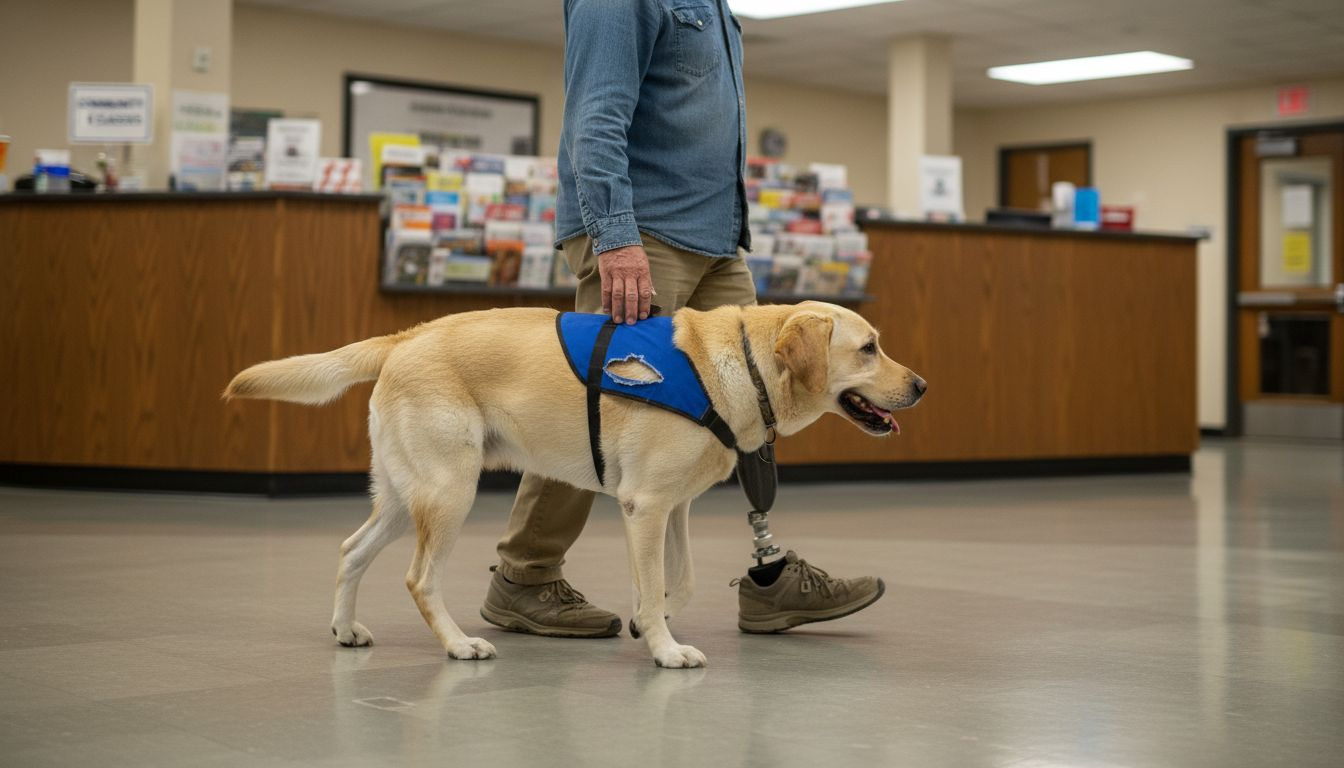
A person using a wheelchair gains the freedom to accomplish tasks independently. Someone with balance issues can confidently move through their home knowing their dog will steady them. That autonomy matters profoundly.
Safety and Alert Systems
Service dogs literally save lives by detecting changes humans miss. Medical alert dogs sense blood sugar drops or blood pressure spikes before symptoms appear. Hearing dogs alert deaf individuals to doorbells, smoke alarms, or oncoming danger.
For people with autism, service dogs prevent elopement—the dangerous wandering that terrifies families. Psychiatric service dogs alert to anxiety spirals or panic attacks, giving handlers time to use coping strategies before crisis hits.
Reducing Reliance on Others
Independence means more than physical capability. It means not needing to ask for help constantly. Service dogs eliminate that dependency for many daily tasks:
- Retrieving medications or phones
- Opening cabinets and drawers
- Turning on lights
- Answering doors
- Creating personal space in crowds
- Interrupting harmful behaviors
Many handlers describe their service dog as the difference between managing their disability and actually living with it.
Quality of Life Impact
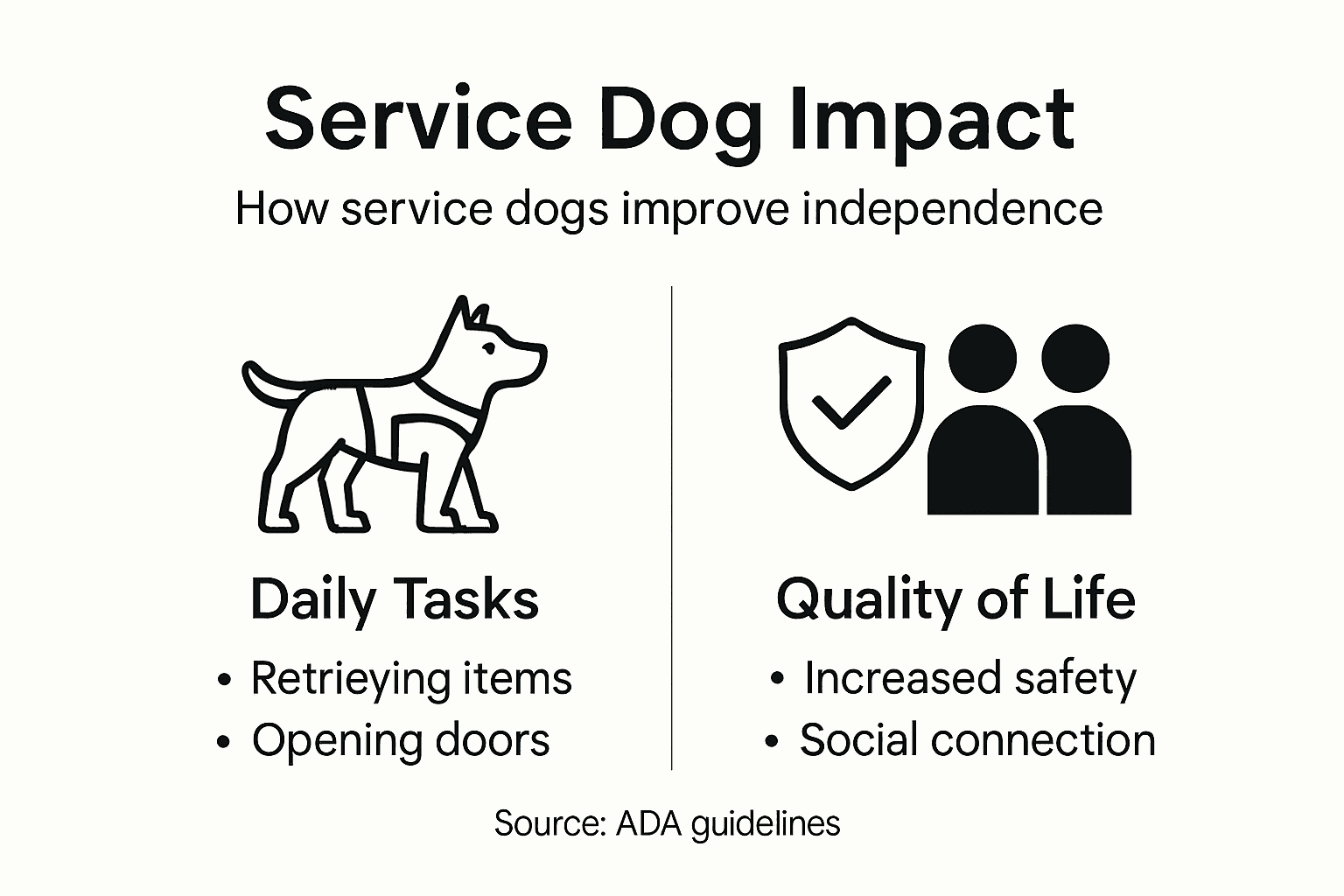
The real benefit isn’t just task completion. Service dogs support independence and improve the quality of life by enabling participation in activities that felt impossible before. Handlers return to work, attend social events, and pursue interests they’d abandoned.
This isn’t therapy or emotional support in the traditional sense. Service dogs perform measurable work that directly reduces disability-related barriers.
Service dogs work best alongside evidence-based treatment and disability management strategies, not as replacements for them.
A service dog paired with therapy, medication, or adaptive equipment creates a comprehensive approach to disability management. The dog handles what it does best while other supports address other needs.
Pro tip: Before committing to a service dog, clearly document which daily tasks genuinely require a trained dog versus which could be solved through adaptive equipment or habit changes—this clarity prevents investing time and resources into a dog for tasks a different solution handles better.
Legal Rights for Service Dog Handlers in the US
Your service dog isn’t a pet—it’s a working animal with legal protections. Understanding your rights prevents uncomfortable confrontations and ensures you can access the spaces and services you need without discrimination.
The Americans with Disabilities Act (ADA) Foundation
The ADA is your strongest legal tool. Under this federal law, service dogs are legally recognized as working animals, not pets. Handlers have the right to be accompanied by their service dogs in all areas open to the public, even where regular pets are prohibited.
This means restaurants, shops, hospitals, schools, airports, and hotels must allow your service dog. It’s not a courtesy—it’s a legal requirement.
Public Access Rights
Businesses and state/local governments must make reasonable accommodations for service dogs. They cannot charge extra fees, require special documentation, or demand certification. Your dog’s public access right comes from the work it performs, not paperwork.
However, businesses can exclude service dogs that are out of control or not housebroken. A dog that’s aggressive, barking constantly, or having accidents loses access rights. This standard applies equally to all handlers.
Housing and Fair Housing Act Protection
Housing discrimination is illegal. Multiple federal laws including the Fair Housing Act provide assistance animal access in housing. Landlords cannot refuse to rent to you because of your service dog, cannot charge pet fees or deposits, and cannot restrict your dog to certain areas.
This applies to apartments, condos, single-family homes, and most housing situations. Fair Housing Act protections actually extend beyond service dogs to include assistance animals more broadly.
Air Travel and Transportation
The Air Carrier Access Act protects your right to fly with your service dog. Airlines must allow your dog in the cabin at no charge. They may ask about the dog’s training and behavior, but cannot demand certification or proof of training.
Service dogs also receive protections under state transportation laws. Different states have varying requirements, so know the rules where you live.
What You Don’t Have to Provide
You are not required to:
- Carry certification papers or identification vests
- Provide proof of professional training
- Show medical documentation
- Answer questions beyond what tasks your dog performs
- Allow people to pet or distract your dog
Businesses can ask two questions: Is this a service dog? What tasks does it perform? That’s it. Detailed medical questions are off-limits.
State Laws and Additional Protections
Your state may offer protections beyond federal law. Some states add requirements or provide broader definitions of assistance animals. Research your specific state’s laws to understand your complete rights.
Knowing your rights prevents uncertainty and gives you confidence to advocate for yourself when access is wrongly denied.
Prepare for confrontation by staying calm and knowing exactly what the law says. Many handlers find that simply stating the law clearly resolves the situation.
Pro tip: Carry a simple one-page document summarizing ADA service dog rights to show skeptical businesses—many conflicts dissolve when businesses understand the legal requirement.
Enhancing Safety With Communication Devices
Clear communication between you and your service dog is literally a matter of safety. When your dog misunderstands a command or fails to alert you to danger, independence becomes risky. Communication devices bridge this gap, ensuring your dog understands exactly what you need and can respond reliably.
Why Communication Matters With Service Dogs
Service dogs perform life-critical tasks. A mobility dog that doesn’t understand “retrieve” leaves you stranded. A psychiatric dog that misses signals fails when you need it most. A medical alert dog that doesn’t recognize your distress won’t warn you before danger strikes.
Effective communication transforms your dog from a companion into a true working partner. Your dog learns to read subtle cues and respond with precision.
Communication Device Options
Several tools help improve clarity between handler and dog:
- Button alert systems allow your dog to communicate needs back to you
- Vibration collars provide tactile signals in noisy environments
- Voice markers and clickers reinforce desired behaviors consistently
- LED light indicators help handlers give visual cues from distance
- Portable speakers amplify commands when environmental noise is high
The right device depends on your specific disability, your dog’s training level, and your environment.
Below is a summary of communication devices and their ideal uses for service dog handlers:
| Device Type | Typical Use Case | Benefit for Handler |
|---|---|---|
| Button alert | Dog initiates communication | Allows dog to signal needs |
| Vibration collar | Noisy, crowded environments | Provides tactile nonverbal cue |
| Clicker/voice marker | Reinforcing training signals | Offers consistency in commands |
| LED light indicator | Visual cues at a distance | Helps in low-light or public spaces |
| Portable speaker | Amplifying handler’s commands | Ensures commands are heard clearly |
Building Reliable Alert Systems
For dogs trained to alert to medical events or psychiatric symptoms, consistent signals are non-negotiable. Advanced communication devices help establish reliable alert systems that work reliably whether you’re home alone or in public.
Your dog needs to know that a specific behavior—like pawing at you, jumping, or nosing your hand—will get your immediate attention. When your dog understands this connection clearly, alerts happen faster and more reliably.
Communication in Different Environments
Your service dog needs consistent signals everywhere. What works at home must work at the grocery store, at work, and during emergencies. This consistency prevents confusion and ensures your dog responds reliably when stakes are highest.
Environmental factors complicate communication. Loud restaurants make voice commands harder. Crowded spaces increase distraction. Good communication devices work across all these situations.
Accessibility and Legal Standards
Effective communication is recognized as a fundamental requirement under federal law. This principle applies to human-to-dog communication as well—ensuring handlers can give commands and receive alerts clearly through whatever methods work best for them.
Your right to communicate effectively with your service dog is protected because communication directly enables independence.
Clear communication between handler and dog prevents misunderstandings that could compromise safety and effectiveness.
A dog that doesn’t understand commands becomes a liability instead of an asset. That’s why investing time in establishing clear communication signals pays dividends for years.
Pro tip: Test any communication device in low-stress environments first—at home or in quiet spaces—so you and your dog build confidence together before relying on it during critical moments or in public settings.
Enhance Your Independence with Trusted Service Dog Communication Tools
Living with a service dog means overcoming everyday challenges through clear, reliable communication. This article highlights the critical need for effective alert systems and communication devices that help your service dog respond instantly and safely. If you are seeking ways to strengthen your bond and improve your dog’s ability to assist you, understanding the importance of precise signals and dependable alerts is essential.
At iPupPee, we specialize in innovative communication devices designed to support service dogs and their handlers. Our unique alert button allows your dog to communicate important needs with a simple press, enhancing safety and independence whether at home or in public. Accessible training resources and proven user testimonials make adopting iPupPee seamless and effective.
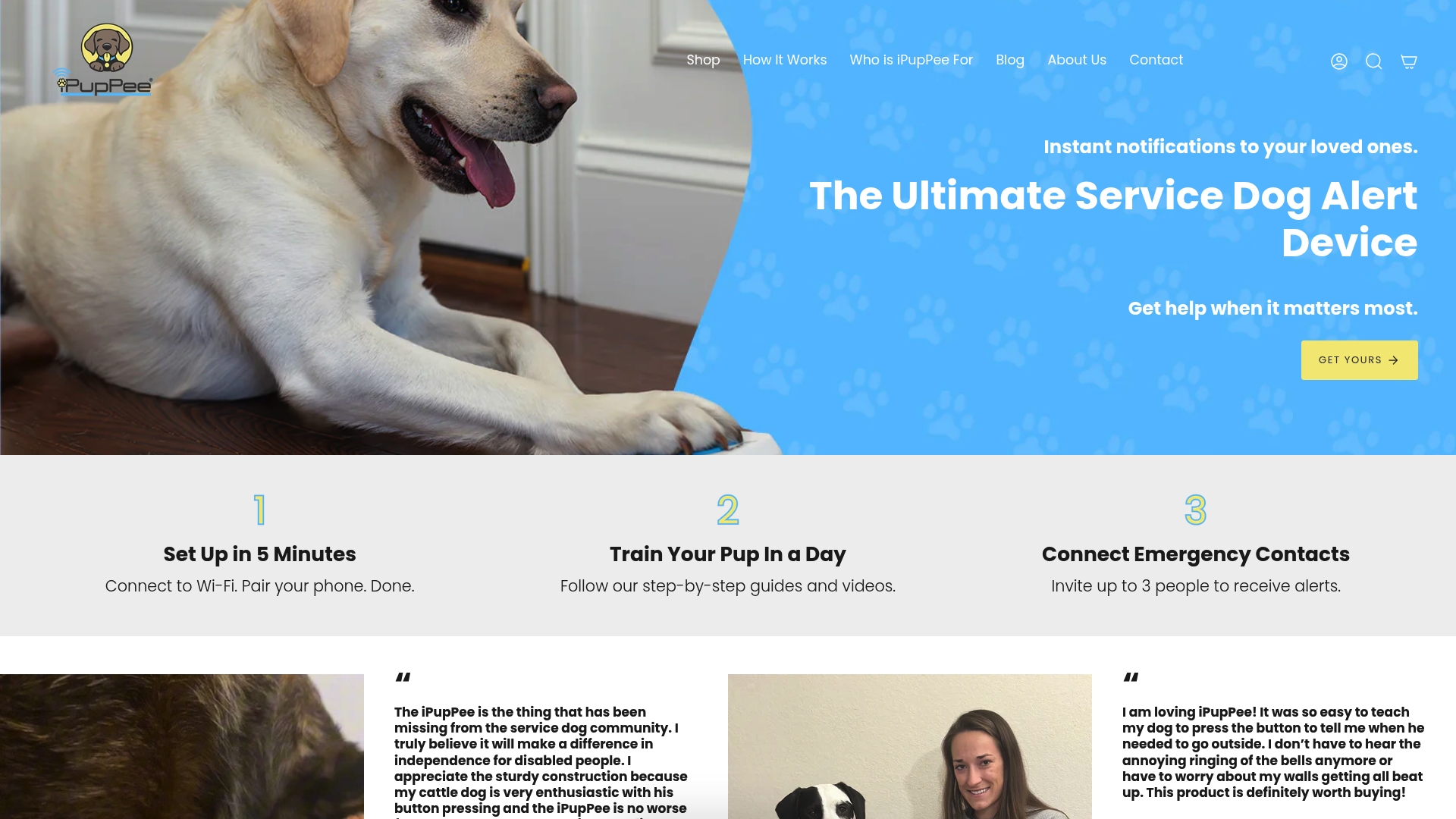
Discover how the right technology can transform your daily life by empowering your service dog to alert you faster and more clearly. Visit iPupPee main site now to explore our products and learn practical training methods that will unlock your service dog’s full potential. Don’t wait to take control of your safety and independence today.
Learn more about effective communication for service dogs at iPupPee and start improving your partnership now.
Frequently Asked Questions
What is the main difference between a service dog and an emotional support animal?
Service dogs are trained to perform specific tasks to assist individuals with disabilities, while emotional support animals provide comfort and support but do not have specialized training for particular tasks.
How long does it typically take to train a service dog?
Training a service dog usually takes 18 to 24 months, depending on the tasks the dog needs to learn and the methods used for training.
What types of disabilities can service dogs assist with?
Service dogs can assist with a range of disabilities, including visual impairments, hearing loss, mobility challenges, medical conditions such as diabetes or epilepsy, and psychiatric conditions like PTSD or anxiety.
Are there any legal protections for service dogs in public accommodations?
Yes, under the Americans with Disabilities Act (ADA), service dogs have legal access to public spaces where regular pets are not allowed. This includes restaurants, stores, and healthcare facilities.
Recommended
- Dogs and Disability Independence: Enhancing Daily Life – iPupPee
- Independence With Service Dogs: Complete Guide – iPupPee
- Benefits of Service Dogs: Independence and Safety – iPupPee
- Disability Assistance Dogs: Enabling Safety and Independence – iPupPee
- Improving Website Accessibility for Better User Experience|BM
- CPACC IAAP Certi… Free Certification Sample Questions (2026)