

TL;DR:
- Dogs communicate primarily through body language, facial expressions, tail movement, ear position, and vocalizations. Misreading signals, especially tail wagging, can lead to misunderstandings, as wagging indicates arousal not happiness. Technology tools like haptic vests, button boards, and IMU collars can enhance communication but should be combined with understanding natural signals.
Most dog owners assume a wagging tail means a happy dog. That single assumption causes more miscommunication between dogs and humans than almost anything else. Tail wagging signals arousal, not happiness, and the direction, speed, and position of that wag each tell a different story. Misreading these signals can lead to missed warnings, failed training moments, and even bites that seemed to come out of nowhere. Whether you own a family pet, a rescue, or a service dog, understanding what your dog is actually saying changes everything about your relationship.
Table of Contents
- How dogs communicate: A language beyond words
- Decoding common dog signals and their meanings
- Modern tools: Enhancing communication with devices
- From confusion to connection: Applying signal knowledge in daily life
- Why real understanding beats rote training: Our take
- Enhance your communication journey with iPupPee
- Frequently asked questions
Key Takeaways
| Point | Details |
|---|---|
| Signal clusters matter | Dogs communicate with groups of signals, not just single cues. |
| Technology as a tool | Modern devices can enhance understanding, especially for special needs, but don’t replace body language. |
| Tail wag isn’t simple | Tail wag speed, direction, and position show many emotions, not only happiness. |
| Breed and context | Dog signals must always be interpreted with context and breed differences in mind. |
| Apply knowledge daily | Using this understanding in real life builds trust and strengthens your bond with your dog. |
How dogs communicate: A language beyond words
Dogs do not have words, but they have an incredibly rich vocabulary built from movement, posture, and sound. The mistake most owners make is focusing on one signal at a time. A wagging tail means nothing on its own. A growl means nothing without the rest of the body. Dogs send messages through clusters of signals, and reading those clusters in context is the only way to understand what they are truly saying.
The main channels dogs use to communicate include:
- Body posture: Upright and stiff signals alertness or tension. Crouched and low signals submission or fear.
- Facial expression: Relaxed mouth, soft eyes, and loose jaw indicate comfort. Tight lips, hard eyes, and a wrinkled muzzle signal stress or threat.
- Tail position and movement: High and stiff versus low and loose tells very different stories.
- Ear position: Forward ears show focus or excitement. Pinned back ears often signal fear or submission.
- Vocalizations: Barks, whines, growls, and yips each carry specific emotional tones depending on pitch and rhythm.
“Dogs communicate through integrated signals involving the body, face, tail, ears, and vocals. Reading clusters of cues in context, not individual signals in isolation, is what leads to accurate understanding.”
Breed differences matter too. A Siberian Husky carries its tail high by default, while a Greyhound naturally holds its tail low. Judging either dog by a universal standard leads to misinterpretation. Context matters just as much as the signal itself. A dog growling during play is communicating something completely different from a dog growling while guarding food.
One important myth worth dropping: the idea that dominant or submissive behavior explains everything. Teaching dog communication works far better when you focus on what the dog is feeling and trying to express, rather than trying to rank yourself above them in some imagined hierarchy. Dogs respond to clarity, not dominance.
Pro Tip: When you observe your dog, scan from nose to tail before reacting. Take in the whole picture before deciding what the signal means.
Decoding common dog signals and their meanings
With the basic mechanics in mind, let’s look at the most common dog signals and their meanings.
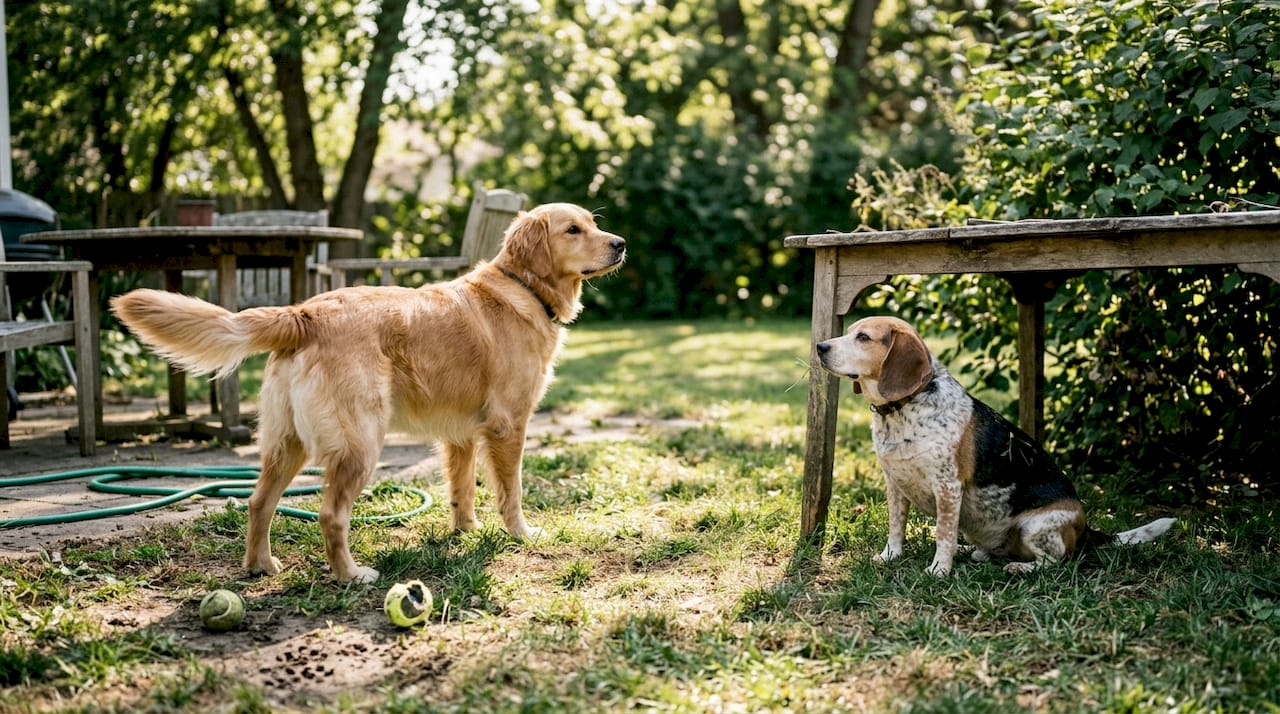
Tail position and movement are among the most misread signals in the dog world. A right-biased tail wag is associated with positive emotions, while a left-biased wag can indicate negative arousal. Speed matters too. A slow, stiff wag often signals caution or threat, while a loose, fast wag usually signals excitement or friendliness.
| Signal | What it typically means | Common misread |
|---|---|---|
| High, stiff tail wag | Alert, tense, or dominant | Assumed to be happy |
| Low, slow tail wag | Insecure or cautious | Assumed to be calm |
| Play bow | Invitation to play | Ignored or missed |
| Whale eye (whites visible) | Stress or discomfort | Assumed to be cute |
| Raised hackles | Arousal or stress | Assumed to mean aggression |
| Ears pinned back | Fear or submission | Assumed to mean guilt |
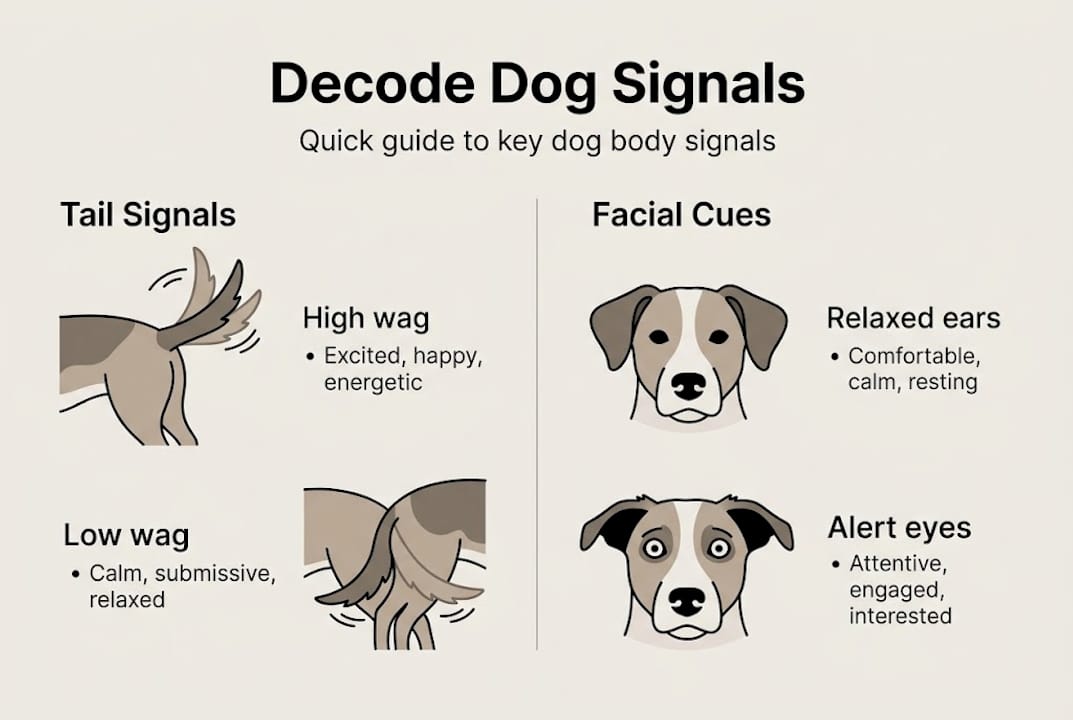
Whale eye is the term for when you can see the whites of a dog’s eyes. It almost always signals that the dog is uncomfortable and needs space. Piloerection, or raised hackles along the spine, is a reflex the dog cannot control. It signals heightened arousal, which could be excitement or stress, not automatically aggression.
Here are the highest-risk misinterpretations owners make:
- Assuming a growl is always a threat (it is often a warning asking for space)
- Reading a stiff, high tail wag as happiness (it is often tension)
- Interpreting a dog rolling over as an invitation for belly rubs (it can be a stress response)
- Treating a yawn as tiredness (yawning is a common calming signal in dogs)
For a deeper look at building your own signal system with your dog, the guide on creating dog signals offers practical frameworks. The full AKC body language guide is also an excellent reference for visual breakdowns of each signal type.
Modern tools: Enhancing communication with devices
Understanding natural signals is crucial, but technology can give some owners an edge in communication. For people with disabilities, seniors living alone, or service dog handlers managing complex tasks, devices bridge gaps that body language alone cannot always fill.
Three main types of devices are changing how owners and dogs interact:
- Haptic vests: These wearable devices deliver vibration patterns to the dog, allowing handlers to give silent directional cues. They are especially useful in loud environments or for handlers who cannot use voice commands.
- Button boards: Recordable buttons that dogs can press to communicate basic needs like going outside, wanting food, or seeking attention. Dogs learn to associate each button with a specific meaning through repetition.
- IMU collars: Inertial measurement unit collars track movement patterns. IMU collars detect alert behaviors like spins or specific posture changes that service dogs use to signal medical events, allowing the device to send alerts to a caregiver’s phone.
| Device | Best use case | Key strength | Limitation |
|---|---|---|---|
| Haptic vest | Service dog handling | Silent, precise cues | Requires training time |
| Button board | Home communication | Dog-initiated signaling | Limited vocabulary range |
| IMU collar | Medical alert support | Automated event detection | Needs calibration per dog |
For owners with mobility limitations or hearing loss, these tools are not just convenient. They can be genuinely life-changing. The best dog communication devices available in 2026 have become more affordable and easier to set up than earlier versions. If you are new to this space, start with the guide on introducing devices to your dog before buying anything.
Pro Tip: Always pair a new device with positive reinforcement. The device should feel like a reward opportunity to your dog, not a confusing interruption.
Devices work best when they layer on top of solid body language awareness. They are not a shortcut around understanding your dog. For a broader look at how technology fits into a safety-focused communication plan, the guide on advanced communication tools for safety covers the full picture.
From confusion to connection: Applying signal knowledge in daily life
Now let’s explore how to confidently use this understanding and new tech in everyday moments.
Knowing what a signal means is only half the work. The other half is responding in a way your dog understands. Here is a practical framework for applying signal knowledge in real situations:
- During play: Watch for the play bow, where the front end goes low and the rear stays high. This is a clear invitation and a sign your dog feels safe. Match the energy and keep play sessions loose and fun.
- During training: If your dog starts yawning, looking away, or licking its lips, those are stress signals. Pause, reduce pressure, and reward small wins. Pushing through stress signals teaches your dog that training is uncomfortable.
- In public or around strangers: Watch for stiffening, whale eye, or a high stiff tail. These are early warning signals. Move your dog away before the situation escalates. Early intervention prevents most bite incidents.
- For service tasks: If your dog is trained to alert you to a medical event, know what its alert behavior looks like in full detail. Devices like IMU collars can back up your observation, but your own signal literacy is the foundation.
“The goal is not to control your dog. The goal is to understand them well enough that control becomes unnecessary.”
For service dog handlers especially, signal knowledge directly affects safety. Missing an alert because you misread a behavior is a real risk. The guide on mastering dog communication methods goes deep on this topic with scenarios specific to service dog work.
Pro Tip: Keep a short journal for one week. Note one signal your dog gave each day and what happened next. Patterns will emerge faster than you expect.
Strengthening the owner-dog bond is not about spending more time together. It is about the quality of attention you bring to the time you already have. When your dog knows you are listening, their stress levels drop, their training improves, and the relationship becomes genuinely collaborative.
Why real understanding beats rote training: Our take
There is a version of dog ownership that looks like success from the outside. The dog sits on command, walks on a loose leash, and performs tricks on cue. But if the owner cannot tell when their dog is stressed, scared, or overwhelmed, that is not communication. It is performance.
We believe the most important skill any dog owner can develop is the ability to read their dog’s emotional state in real time. Commands and devices are tools, and good tools help. But tools without understanding are just noise. A dog pressing a button board is only useful if the owner actually responds. A haptic vest only works if the handler knows when to use it.
The owners who report the deepest bonds with their dogs are not the ones with the most gadgets. They are the ones who learned to pay attention. That is especially true for people who rely on dog alert communication for safety. When you understand your dog’s natural signals, every device you add becomes more powerful, not less.
Rote training produces a dog that follows rules. Real understanding produces a dog that trusts you. That difference matters every single day.
Enhance your communication journey with iPupPee
Ready to improve your communication even further? Here’s where to start.
At iPupPee, we focus on giving dog owners the tools and knowledge they need to build genuine two-way communication with their dogs. Whether you are exploring button boards, looking into alert devices, or just starting to learn about body language, we have resources built specifically for your situation.
Our blog covers everything from beginner signal reading to advanced service dog communication setups. If you want to go deeper on the technology side, our guide on dog communication technology breaks down the latest options with honest comparisons. The right tool, paired with real understanding, makes every interaction with your dog more meaningful and more safe.
Frequently asked questions
Why does my dog wag its tail when it’s not happy?
Tail wagging reflects arousal and can signify excitement, stress, or even tension. The direction, speed, and position of the wag tell you far more than the wag itself.
What does it mean if my dog’s hackles are raised?
Raised hackles signal arousal or stress, which does not automatically mean aggression. It is an involuntary reflex that tells you your dog’s nervous system is activated.
How do communication devices help dogs and owners interact?
Devices like haptic vests and button boards allow clearer or alternative signaling, especially for service dog handlers or owners with disabilities who need reliable, hands-free communication options.
Can I rely solely on gadgets to understand my dog?
No. Devices augment natural signals but cannot replace body language literacy. Reading your dog’s physical cues alongside using devices is essential for full, accurate communication.
What does the play bow signal mean?
A play bow signals an invitation to play and indicates your dog feels safe and comfortable. The front end goes low while the rear stays elevated.