

More than 60 million American households share their lives with a dog, yet most owners admit they miss important signals from their pets each day. Understanding what your dog is truly trying to communicate is not just about convenience, it builds trust and strengthens your connection. By exploring proven communication strategies, you can unlock new ways to interact with your dog and help them express their needs confidently.
Table of Contents
- Step 1: Assess Your Dog’s Needs And Abilities
- Step 2: Select Appropriate Communication Tools And Signals
- Step 3: Introduce Devices And Demonstrate Signals
- Step 4: Reinforce Understanding With Consistent Training
- Step 5: Verify Reliability And Strengthen Signal Responses
Quick Summary
| Key Point | Explanation |
|---|---|
| 1. Assess Your Dog’s Unique Needs | Understand your dog’s skills and limitations to design effective communication strategies. Tailor methods based on age, temperament, and learning capabilities. |
| 2. Choose Suitable Communication Tools | Select tools like hand signals or button systems that align with your dog’s communication style and cognitive abilities. Experiment to find what works best. |
| 3. Introduce Devices Gradually | Familiarize your dog with new communication devices in a comfortable setting, encouraging interaction through positive reinforcement and play. |
| 4. Maintain Consistent Training Practices | Regular, short training sessions help solidify communication methods. Use varied environments to reinforce understanding and adaptability to signals. |
| 5. Verify Signal Effectiveness Regularly | Test and document your dog’s use of communication signals, ensuring they respond accurately in different contexts and reinforcing consistent behaviors. |
Step 1: Assess Your Dog’s Needs and Abilities
Successfully creating communication signals begins with understanding your unique dog’s individual capabilities and potential limitations. Before designing any communication approach, you need a comprehensive assessment of your dog’s current skills, personality, and learning potential.
Start by observing your dog’s existing communication patterns and natural behaviors. Watch how they currently signal needs like wanting to go outside, requesting food, or seeking attention. Some dogs are naturally more expressive through body language, while others might require more structured training. Understanding dog care for special needs can provide deeper insights into recognizing subtle communication cues.
Carefully evaluate your dog’s cognitive abilities, physical capacity, and temperament. Not every communication method works universally dogs have distinct learning curves and comfort levels. Consider factors like age, prior training experience, sensory capabilities, and potential mobility restrictions. Younger dogs might learn signals faster, while senior dogs might need more patient, repetitive instruction. Pay attention to how quickly your dog picks up new commands and their overall motivation during training sessions.
Professional Tip: Start with short, positive training sessions that last no more than 5 to 10 minutes to maintain your dog’s engagement and prevent mental fatigue during communication skills development.
Step 2: Select Appropriate Communication Tools and Signals
Selecting the right communication tools and signals is crucial for establishing effective interaction between you and your dog. This step involves understanding your dog’s unique communication style and identifying tools that complement their natural behaviors and learning capabilities.
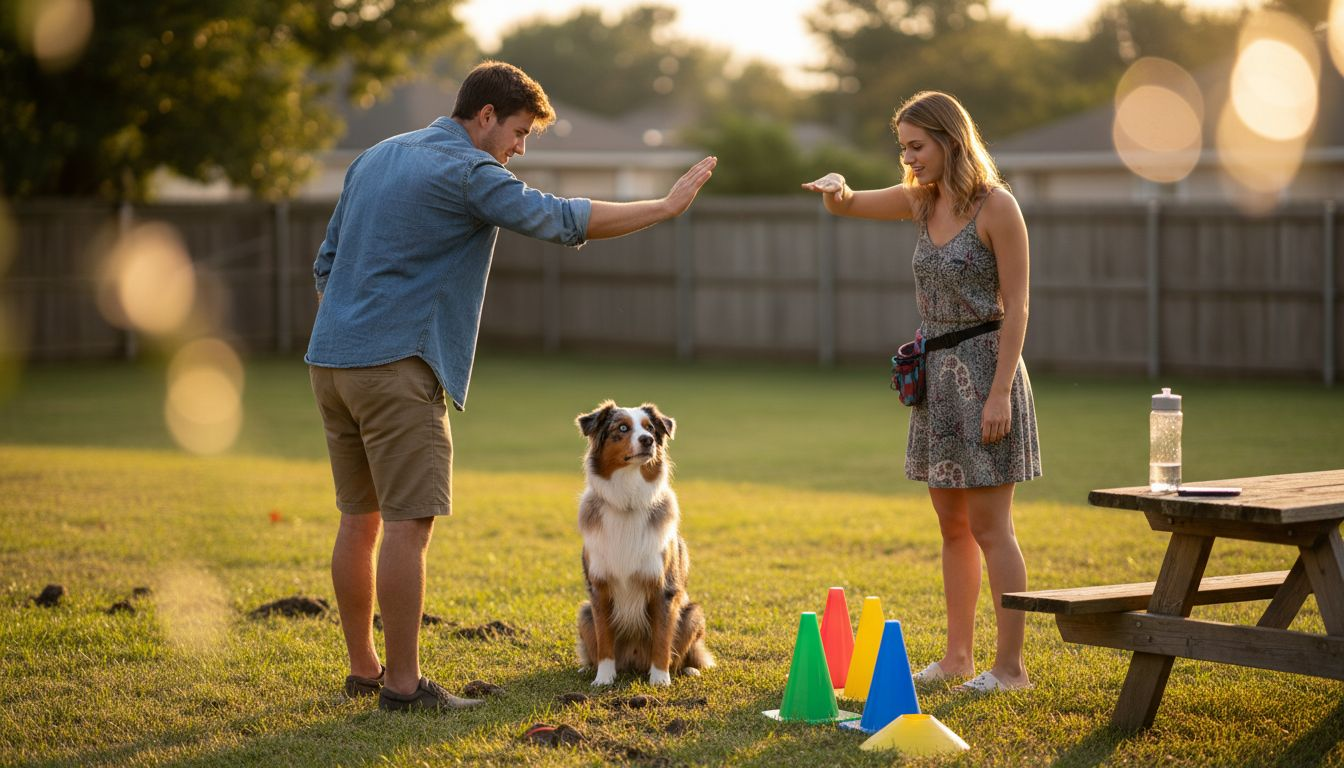
Research reveals that dogs use multiple referential signaling gestures to communicate their needs, which provides valuable insights into designing communication strategies. When choosing communication tools, consider options like hand signals, button systems, vocal cues, and body language markers that match your dog’s cognitive abilities and physical limitations. Dog signal training guides can offer structured approaches to introducing these communication methods systematically.
Pay close attention to your dog’s responsiveness and comfort level with different communication techniques. Some dogs might quickly adapt to button press systems, while others might prefer visual hand signals or specific vocal commands. Experiment with multiple approaches, always using positive reinforcement to encourage learning. Consider your dog’s age, previous training experience, and individual temperament when selecting communication tools.
Professional Tip: Create a consistent training environment with minimal distractions and use high value treats to reward your dog’s successful communication attempts, which will help reinforce the learning process and maintain their motivation.
Here’s a quick comparison of common dog communication tools and their best-use scenarios:
| Communication Tool | Ideal For | Dog Requirements |
|---|---|---|
| Hand Signals | Hearing-impaired or older dogs | Visual attention, basic mobility |
| Button Systems | Engaged, curious dogs | Paw coordination, cognitive focus |
| Vocal Cues | Young, sound-responsive dogs | Normal hearing, attention span |
| Body Language Markers | Dogs sensitive to owner movements | Visual tracking, emotional bond |
Step 3: Introduce Devices and Demonstrate Signals
Introducing communication devices requires a strategic and patient approach that helps your dog understand and engage with new interaction tools. Your goal is to transform these devices from unfamiliar objects into meaningful communication channels.
Smart computing technologies for animal interaction offer innovative approaches to enhancing communication between dogs and their owners. Start by familiarizing your dog with the communication device gradually. Place the device in neutral spaces where your dog feels comfortable and allow them to investigate it naturally. For button systems or signal devices, begin with short introductory sessions that make interaction feel like a fun game rather than a structured training exercise. Dog alert button training guides can provide additional insights into systematic device introduction.
Consistency and positive reinforcement are critical when demonstrating communication signals. Use clear hand movements, vocal cues, or button press techniques with exaggerated motions to help your dog understand the connection between the signal and its intended meaning. Practice each signal multiple times in different contexts, always rewarding successful attempts with treats, praise, or playtime. Pay attention to your dog’s body language and adjust your approach if they seem confused or stressed.
Professional Tip: Create a dedicated training space with minimal distractions and use high value treats that your dog finds irresistible to maintain their motivation and engagement during signal learning sessions.
Step 4: Reinforce Understanding with Consistent Training
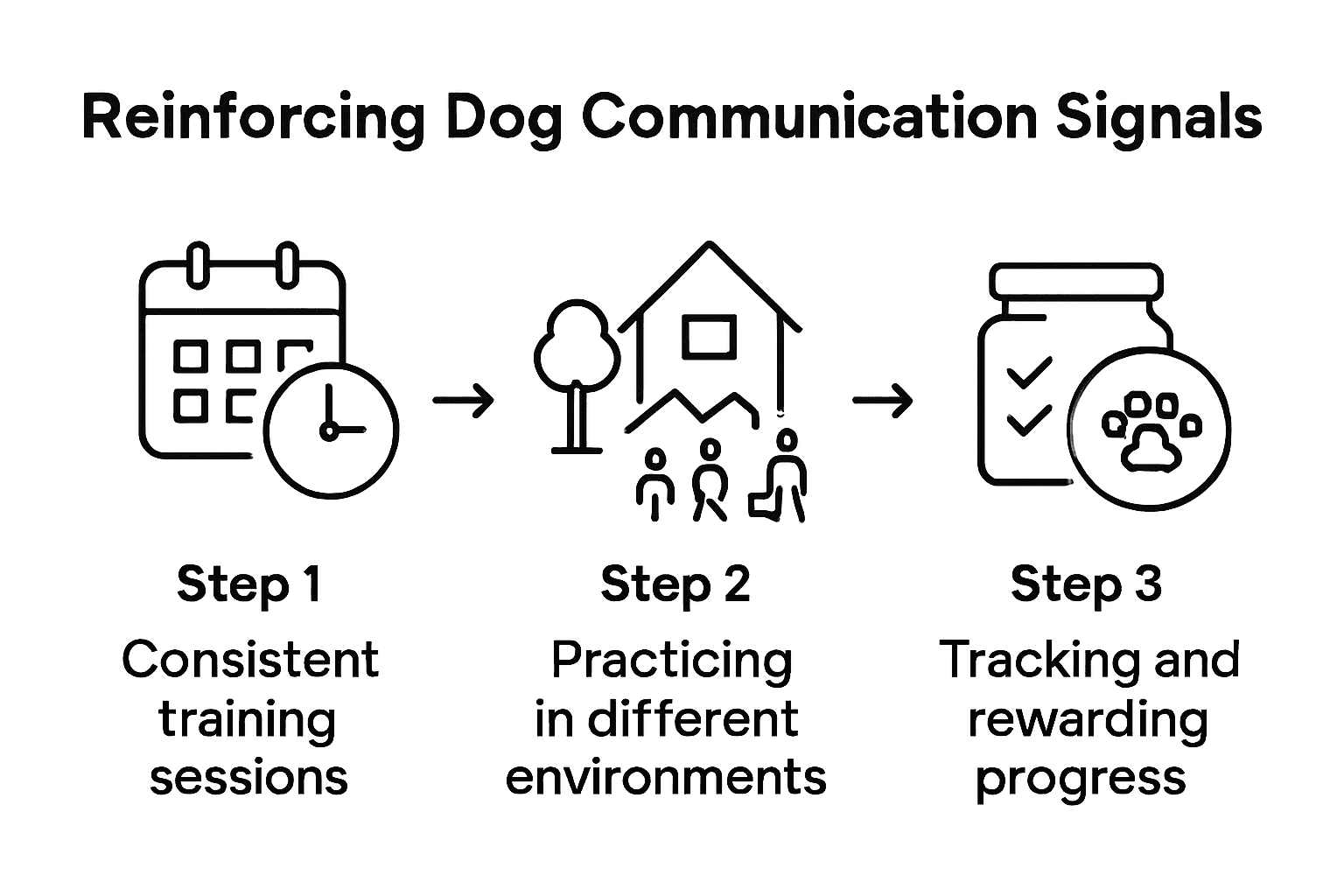
Consistent training is the cornerstone of developing effective communication signals with your dog. This step focuses on creating a structured approach that helps your dog learn and retain new communication methods through repetition and positive reinforcement.
Communication skills research with service dogs highlights the importance of systematic training approaches. Develop a regular training schedule that includes short but frequent practice sessions lasting 5 to 10 minutes. Dog training consistency guides emphasize the significance of maintaining a predictable routine that helps your dog build muscle memory and understanding of communication signals.
Use varied environments and contexts to reinforce learning and ensure your dog can understand and respond to communication signals in different situations. Start in a quiet space with minimal distractions and gradually introduce more challenging environments. Always use the same hand signals, vocal cues, or button press techniques to maintain clarity. Monitor your dog’s progress and be patient if they struggle some days. Some dogs learn faster than others, and individual learning curves can vary significantly.
This summary highlights benefits of varied training environments for reinforcing new communication signals:
| Environment Type | Benefits for Training | Potential Challenges |
|---|---|---|
| Quiet Home Setting | Reduces distractions, builds basics | May not generalize skills well |
| Outdoor/Open Spaces | Prepares for real-life situations | More distractions, harder to control |
| Around Other Animals | Tests focus with peer presence | Possible overstimulation or anxiety |
Professional Tip: Record your training sessions on video to track progress and identify areas where your dog might need additional support or a different approach to learning communication signals.
Step 5: Verify Reliability and Strengthen Signal Responses
Verifying and strengthening your dog’s communication signals requires a methodical approach that tests their understanding and reinforces their ability to communicate consistently across different scenarios. This step focuses on evaluating the accuracy and reliability of the communication methods you have developed.
Research on dogs’ concept manipulation skills suggests that dogs have remarkable social cognitive abilities that can be enhanced through targeted training. Develop a systematic testing protocol that challenges your dog to use communication signals in varied contexts. Start by creating scenarios that require different types of communication needs such as requesting food, signaling a need to go outside, or expressing discomfort. Interspecies communication techniques emphasize the importance of consistent practice and gradual complexity in signal training.
Pay close attention to your dog’s response accuracy and consistency. Use randomized testing methods where you mix up environments, timing, and signal requirements to ensure your dog truly understands the communication system. Reward precise and correct signal usage while gently redirecting any incorrect or inconsistent attempts. Some dogs might need more repetition or alternative training approaches to solidify their communication skills.
Professional Tip: Create a tracking log to document your dog’s progress, noting specific improvements, challenges, and breakthrough moments in their communication signal development.
Enhance Your Dog’s Communication with Innovative Tools
Understanding your dog’s unique communication needs and abilities is the first essential step toward building an effective interaction system. The journey from assessing your dog’s skills to reinforcing communication signals can be challenging, especially when you want clear, reliable cues that strengthen the bond between you and your dog. If you are looking to transform natural gestures or signals into consistent communication, the right tools can make all the difference.
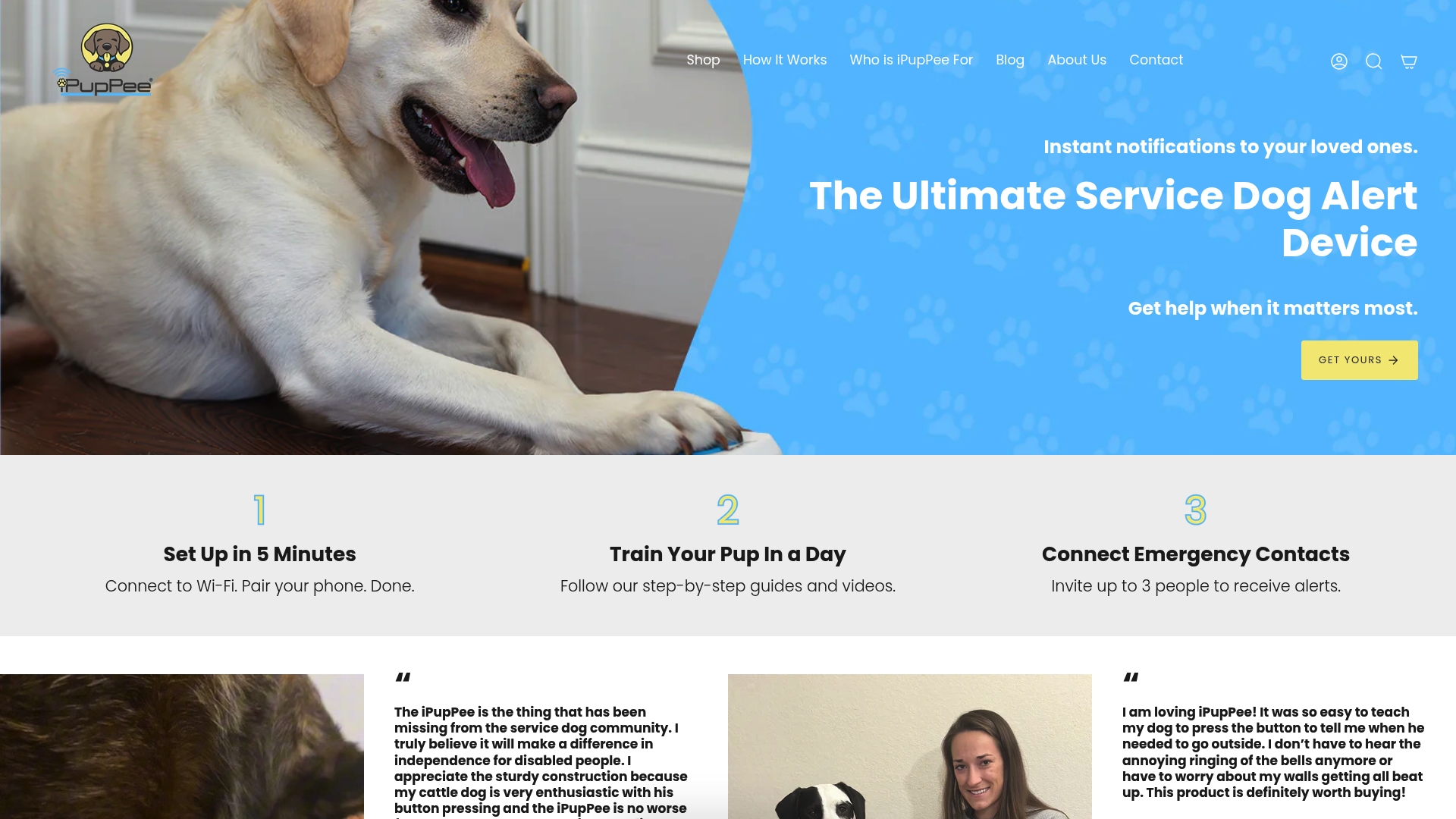
Discover how the iPupPee alert device simplifies this process by providing an easy button press system that helps dogs convey their needs clearly and consistently. Designed with special needs and service dogs in mind, this innovative device supports your goal of creating strong, reliable signals while encouraging your dog’s independence and safety. Visit iPupPee today to explore detailed training instructions and benefits that align perfectly with the communication techniques discussed in the article. Empower your communication with proven solutions crafted specifically for dogs requiring extra support. Take the next step now to enhance interaction and safety by exploring the iPupPee device and giving your dog the voice they deserve.
Frequently Asked Questions
How do I assess my dog’s needs and abilities for communication signals?
To assess your dog’s needs and abilities, observe their existing communication patterns and natural behaviors. Take note of how they signal their needs, such as wanting food or going outside, and evaluate factors like their age, training experience, and temperament.
What communication tools and signals are best for my dog?
Select communication tools that match your dog’s learning style and abilities, such as hand signals, vocal cues, or button systems. Experiment with different methods to see which ones your dog responds to best, and use positive reinforcement during training.
How can I introduce new communication devices to my dog?
Introduce new communication devices gradually by allowing your dog to explore them in a familiar environment. Use clear demonstrations and maintain a fun, relaxed atmosphere, rewarding your dog for any successful interactions with the devices.
What should I include in a consistent training schedule for my dog?
Create a training schedule that includes short practice sessions lasting 5 to 10 minutes, focusing on reinforcing specific communication signals. Aim to practice daily, and vary the training environments to improve your dog’s understanding in different contexts.
How can I verify if my dog’s communication signals are reliable?
Verify your dog’s communication signals by conducting testing in various environments and situations. Monitor their response accuracy, reward correct signals, and gently guide them through any incorrect attempts to solidify their understanding.
What should I do if my dog struggles with learning new communication signals?
If your dog struggles with learning new communication signals, remain patient and adjust your training approach. Consider repeating sessions, simplifying commands, or changing the type of signal used until your dog becomes more comfortable.
Recommended
- Dog Signal Training Guide 2025: Teach Your Dog with Hand Signals – iPupPee
- Understanding the Benefits of Dog Communication – iPupPee
- Top Tips for Pet Communication in 2025: Simple Methods for Success – iPupPee
- How Dogs Express Needs: Complete Communication Guide – iPupPee
- Why Do Bearded Dragons Wave? Behavioral Meaning Explained