

Most American pet owners now look for smarter ways to connect with their dogs, and dog communication technology is leading this transformation. With over 63 million households in the United States owning at least one dog, the need for better understanding is real. Today’s devices offer insights that improve both canine welfare and human relationships, moving past old training routines. Discover how innovative tech is changing american experiences with their beloved pets.
Table of Contents
- Defining Dog Communication Technology Today
- Types of Dog-Human Communication Devices
- How Dog Alert Devices Function
- Training Dogs to Use Communication Tech
- Safety, Costs, and Common Pitfalls
Key Takeaways
| Point | Details |
|---|---|
| Understanding Technological Advancements | Dog communication technology utilizes sensors and machine learning to interpret canine signals, improving interaction between dogs and humans. |
| Types of Communication Devices | Various devices, including alert buttons and bark translation tools, enhance the understanding of canine needs and emotions. |
| Training for Communication | Successfully training dogs to use communication technology requires patience and a methodical approach, focusing on basic associations and gradual complexity. |
| Safety and Compatibility | Always consider device safety, reliability, and compatibility with the dog’s unique needs before implementing communication technology. |
Defining Dog Communication Technology Today
Dog communication technology represents a groundbreaking approach to understanding and enhancing interactions between humans and canines. Modern innovations are transforming how we interpret and respond to our four-legged companions’ signals, moving far beyond traditional training methods. Innovative systems now employ body sensors and haptic devices that facilitate two-way communication, particularly beneficial in specialized environments like search and rescue missions.
At its core, dog communication technology integrates advanced sensors, machine learning algorithms, and behavioral analysis to decode canine body language, vocalizations, and physiological responses. Dog communication devices can now translate subtle cues that were previously indecipherable to humans. Dogs utilize an extensive repertoire of visual, acoustic, and olfactory signals for communication, and these emerging technologies help bridge the understanding gap between species.
The technological landscape includes several key innovations:
- Wearable sensors that monitor dog behavior and emotional states
- Audio-recognition systems that analyze bark frequencies and patterns
- Biometric tracking devices that interpret physiological changes
- Machine learning algorithms designed to understand canine communication signals
Pro Tip: Research and Select Wisely: Before investing in any dog communication technology, carefully evaluate the device’s accuracy, compatibility with your specific dog’s needs, and the manufacturer’s scientific validation process.
Understanding how dogs communicate with humans requires a nuanced approach that combines technological innovation with deep respect for animal behavior. As research continues to advance, these communication technologies promise to create more meaningful, responsive relationships between humans and their canine companions.
Types of Dog-Human Communication Devices
Modern dog-human communication devices represent a sophisticated technological frontier, offering innovative solutions for understanding and interacting with our canine companions. These devices range from simple alert systems to complex translation technologies that help bridge the communication gap between humans and dogs. Devices like BowLingual analyze dog barks to interpret emotional states, providing insights into canine feelings that were previously inaccessible to pet owners.
The landscape of communication technologies includes several key device categories:
- Alert Buttons: Specialized devices that allow dogs to signal specific needs or emergencies
- Bark Translation Devices: Technologies that attempt to interpret the meaning behind different bark types
- Wearable Sensors: Advanced trackers that monitor physiological and behavioral signals
- Training Communication Systems: Tools that facilitate more precise human-dog interaction
Communication technologies extend beyond simple translation. Dog whistles that emit ultrasonic sounds demonstrate how specialized devices can create unique interaction channels between humans and dogs. These ultrasonic tools are particularly effective in training scenarios, allowing handlers to communicate commands at frequencies only dogs can perceive.
Advanced communication devices now incorporate machine learning algorithms, biometric tracking, and sophisticated sensor technologies to provide increasingly nuanced insights into canine behavior and emotional states. Creating effective dog communication signals requires understanding both technological capabilities and canine behavioral patterns.
Here’s a comparison of leading dog-human communication device types by key characteristics:
| Device Type | Main Purpose | Typical Use Case | Technological Complexity |
|---|---|---|---|
| Alert Buttons | Communicate specific needs | Assistance dogs signaling | Low |
| Bark Translation Devices | Detect and interpret emotions | Emotional monitoring | Medium |
| Wearable Sensors | Track behavior and physiology | Activity and health tracking | High |
| Training Communication Systems | Enable nuanced training | Advanced obedience work | Medium |
Pro Tip: Device Selection Strategy: Research communication devices thoroughly, prioritizing those with scientifically validated accuracy and compatibility with your specific dog’s breed, age, and individual communication needs.
How Dog Alert Devices Function
Dog alert devices represent a critical technological bridge between canine communication and human understanding, offering sophisticated mechanisms for detecting and signaling important information. Body sensors attached to dogs can detect specific postures or movements, transmitting crucial signals that help handlers understand their dog’s immediate needs, potential health issues, or environmental challenges.
The core functionality of alert devices typically involves several key technological components:
- Motion Sensors: Track physical movement patterns
- Biometric Monitors: Measure heart rate, temperature, and stress indicators
- Geolocation Trackers: Provide real-time positioning information
- Communication Modules: Enable immediate signal transmission to designated handlers
While some communication technologies utilize intrusive methods, modern alert devices prioritize non-invasive approaches. Unlike controversial shock collar technologies that deliver electrical stimuli, contemporary devices focus on supportive, humane communication strategies. Understanding how dog alerts work requires recognizing the nuanced ways these technologies interpret canine signals.

Advanced alert systems now integrate machine learning algorithms that can distinguish between different types of alerts, from medical emergencies to environmental warnings. These intelligent systems learn and adapt to individual dog behaviors, creating personalized communication profiles that enhance safety and understanding.
Pro Tip: Device Compatibility Check: Always test alert devices with your specific dog, ensuring the technology matches their unique behavioral patterns and communication style.
Training Dogs to Use Communication Tech
Training dogs to utilize communication technology represents a groundbreaking approach to understanding canine interaction and enhancing human-dog relationships. Studies demonstrate that dogs can be trained to use soundboard buttons to ‘speak’, pressing buttons associated with specific words to communicate desires or complex observations. This innovative training method transforms traditional communication barriers between humans and their canine companions.
The training process for communication technologies involves several critical stages:
- Foundational Conditioning: Establishing basic associations between buttons and actions
- Consistent Reinforcement: Rewarding accurate button presses
- Gradual Complexity: Introducing more nuanced communication options
- Patient Skill Building: Allowing dogs to develop communication confidence
The phenomenon of dogs using soundboards has gained significant cultural significance, with researchers exploring the profound implications of these communication technologies. Dog alert device training requires a methodical approach that respects each dog’s unique learning capabilities and communication potential.
Successful communication technology training demands understanding individual dog personalities, learning styles, and cognitive capabilities. Advanced training techniques incorporate positive reinforcement, repetitive practice, and gradual skill progression, allowing dogs to develop increasingly sophisticated communication skills through technological interfaces.
Pro Tip: Patience and Persistence: Start with simple, single-purpose buttons and gradually increase complexity, always maintaining a supportive and encouraging training environment.
Safety, Costs, and Common Pitfalls
Navigating the landscape of dog communication technologies requires careful consideration of safety, financial investment, and potential challenges. Implementing advanced communication technologies for dogs involves nuanced considerations of cost and potential technical issues, ensuring that devices do not cause unnecessary stress or discomfort to the animal.
Key safety and financial considerations include:
- Device Reliability: Ensuring consistent and accurate performance
- Technological Compatibility: Matching devices to specific dog breeds and communication needs
- Budget Range: Understanding pricing from entry-level to professional-grade technologies
- Potential Technical Limitations: Recognizing potential communication gaps
The use of invasive communication technologies raises significant animal welfare concerns, particularly with devices that might cause physical or psychological distress. Exploring comprehensive dog safety strategies becomes crucial when selecting communication technologies.
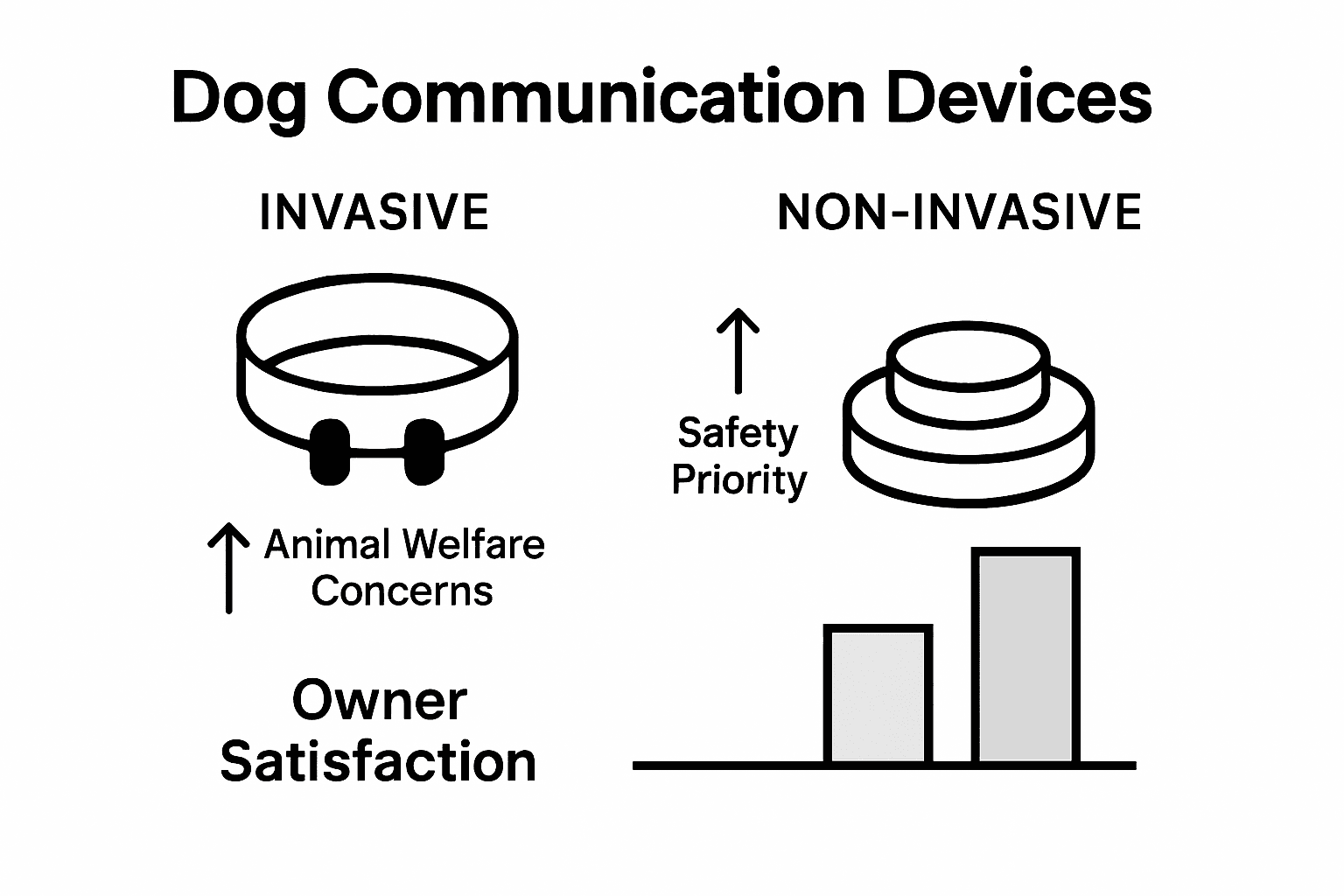
Successful technology implementation demands a holistic approach that prioritizes the dog’s comfort, learning capabilities, and individual personality. This means carefully evaluating each device’s design, understanding its potential impact, and maintaining a flexible approach to technology adoption.
These are key safety and cost-related considerations when evaluating dog communication technologies:
| Consideration | Explanation | Why It Matters |
|---|---|---|
| Device Reliability | Consistent performance in varied scenarios | Prevents missed signals |
| Comfort/Safety | Designed for non-intrusive interaction | Maintains animal well-being |
| Price Range | Costs from affordable to professional-grade | Aligns with owner’s budget |
| Veterinary Approval | Endorsement from pet health experts | Ensures ethical adoption |
Pro Tip: Risk Assessment Strategy: Always consult with veterinary professionals and animal behavior experts before implementing new communication technologies, ensuring the chosen device aligns with your dog’s specific needs and temperament.
Enhance Safety and Independence with Proven Dog Communication Solutions
The article highlights the vital challenge of bridging the communication gap between dogs and humans to enhance safety and independence, especially for service dogs, seniors, and pets with special needs. Key pain points include the difficulty in understanding canine alerts quickly and accurately as well as the need for non-invasive, reliable technology to support meaningful two-way communication. This is where dog alert devices like the ones discussed can transform daily life.
At iPupPee, we understand how important it is to empower your dog to communicate critical needs through simple button presses that anyone can recognize. Our unique device is designed to be intuitive and safe, providing peace of mind and promoting independence for you and your furry companion. If you want to learn more about effective dog alert device training or discover how to improve communication strategies, our educational resources can help you get started easily.

Take control of your dog’s safety today by equipping them with technology that listens and responds to their needs. Visit iPupPee’s main site and explore reliable, humane communication tools that bring you closer to your dog than ever before. Don’t wait to foster greater independence and confidence—your dog deserves to be heard now.
Frequently Asked Questions
What are dog communication technologies?
Dog communication technologies are specialized devices and systems designed to improve interactions between humans and dogs by interpreting canine signals, including body language and vocalizations, to enhance mutual understanding.
How do alert devices for dogs function?
Alert devices track and monitor various aspects of a dog’s behavior and physiological states. They often include motion sensors, biometric monitors, communication modules, and geolocation tracking to signal important information to dog handlers.
Can dogs be trained to use communication devices effectively?
Yes, dogs can be trained to use communication devices such as soundboard buttons. Training involves establishing associations between buttons and meanings, consistent reinforcement, and gradually introducing more complex communication options.
What should I consider before investing in dog communication technology?
Key considerations include device reliability, compatibility with your dog’s breed and communication needs, budget range, and potential technical limitations. Consulting with veterinary professionals can also help ensure ethical and safe usage.