

Every American dog owner faces moments of uncertainty when their pet suddenly behaves out of character. Dogs rely on non-verbal messages to signal everything from minor discomfort to life-threatening emergencies, yet over 60% of owners miss subtle warning signs until it is too late. Understanding these critical emergency signals helps you respond quickly, protect your dog’s wellbeing, and confidently handle urgent situations before they escalate.
Table of Contents
- What Are Dog Emergency Signals
- Medical Emergency Signs In Dogs
- Behavioral Distress And Warning Cues
- How Dogs Alert Humans In Crises
- When To Act Or Get Help
Key Takeaways
| Point | Details |
|---|---|
| Recognizing Dog Signals | Dogs use non-verbal signals to communicate health emergencies, making observation essential for understanding their needs. |
| Medical Emergency Indicators | Symptoms like pale gums, difficulty breathing, and extreme lethargy are critical signals that require immediate veterinary attention. |
| Understanding Behavioral Distress | Behavioral cues such as raised hackles and prolonged staring reveal emotional distress and can prevent potential conflicts. |
| When to Seek Help | Act swiftly if your dog shows concerning signs like continuous vomiting or severe pain, ensuring timely veterinary intervention. |
What Are Dog Emergency Signals
Dogs communicate critical health and safety information through complex non-verbal signals that can indicate potential emergencies or significant distress. Recognizing canine communication patterns involves understanding their body language, vocal cues, and behavioral changes that serve as essential warning systems.
These emergency signals range from subtle behavioral shifts to more pronounced physical manifestations. Common signals include specific body postures, repetitive actions like yawning or lip licking, sudden changes in movement, and distinctive vocalizations. According to the American Kennel Club, dogs may demonstrate distress through actions such as turning their head away, excessive ground sniffing, or displaying unusual tension in their muscular structure.
Key Dog Emergency Signals Include:
- Persistent whimpering or unusual vocalization
- Rapid, shallow breathing
- Trembling or shaking
- Sudden immobility or hiding
- Extreme restlessness
- Exaggerated bodily tension
Understanding these signals requires careful observation and knowledge of your specific dog’s normal behavior patterns. Each dog communicates differently, making it crucial for owners to develop a nuanced understanding of their pet’s unique communication style. By recognizing these emergency signals early, owners can potentially prevent serious health complications or address underlying issues before they escalate.
Medical Emergency Signs In Dogs
Recognizing medical emergencies in dogs requires understanding the subtle and sometimes dramatic signs of potential health crises. Respiratory distress indicators represent some of the most critical warning signals that demand immediate veterinary attention.

Medical emergencies can manifest through multiple physiological and behavioral changes. Critical warning signs from veterinary experts include significant symptoms that signal urgent health concerns:
Urgent Medical Emergency Signs:
- Pale or discolored gums
- Difficulty breathing or rapid breathing
- Sudden collapse or extreme weakness
- Uncontrolled bleeding
- Severe and persistent vomiting
- Extreme lethargy or unresponsiveness
- Suspected poisoning or toxic exposure
Dogs cannot verbally communicate their medical distress, making it crucial for owners to develop keen observational skills. Understanding your dog’s baseline health, tracking subtle changes in behavior, and maintaining regular veterinary check-ups can help detect potential emergencies before they become life-threatening. Quick recognition and prompt professional intervention can significantly improve treatment outcomes and potentially save your dog’s life.
Behavioral Distress And Warning Cues
Understanding canine behavioral distress requires keen observation and recognition of subtle communication signals that dogs use to express their emotional state. Aggressive body language indicators reveal critical information about a dog’s psychological and physiological condition, providing essential insights into potential escalating tensions.
Key Behavioral Distress Warning Signs:
- Intense, prolonged staring
- Raised hackles or stiff body posture
- Showing teeth or low growling
- Ears pinned back against the head
- Whale eye (showing whites of eyes)
- Excessive lip licking or yawning
- Tucked tail or lowered body position
Canine communication research demonstrates that dogs communicate distress through complex combinations of physical and behavioral signals. These warning cues serve as sophisticated communication mechanisms, allowing dogs to express discomfort, fear, or potential aggression before resorting to more direct confrontational behaviors.
Recognizing these signals requires patience, consistent observation, and an understanding of your individual dog’s unique communication style. Context matters significantly - what appears threatening in one situation might be a playful signal in another. Dog owners who develop sensitivity to these nuanced behavioral cues can prevent potential conflicts, reduce stress for their pets, and create a more harmonious relationship built on mutual understanding and respect.
How Dogs Alert Humans In Crises
Service dogs demonstrate extraordinary abilities to detect and respond to human medical emergencies through incredibly sophisticated sensory mechanisms. Their capacity to recognize subtle physiological changes allows them to provide critical early warning systems for various health and psychological conditions.
Key Ways Dogs Alert Humans During Crises:
- Physical contact or nudging
- Persistent barking
- Retrieving medication or emergency devices
- Positioning themselves between human and potential danger
- Activating specialized alert buttons or communication systems
- Seeking immediate human intervention
- Demonstrating unusual, focused behavior
Canine crisis response research reveals that dogs can detect minute changes in human breath, body chemistry, and emotional states, enabling them to provide proactive support during potential medical or psychological emergencies. Their sensory capabilities extend far beyond human perception, allowing them to recognize signs of impending health events before traditional medical monitoring systems.
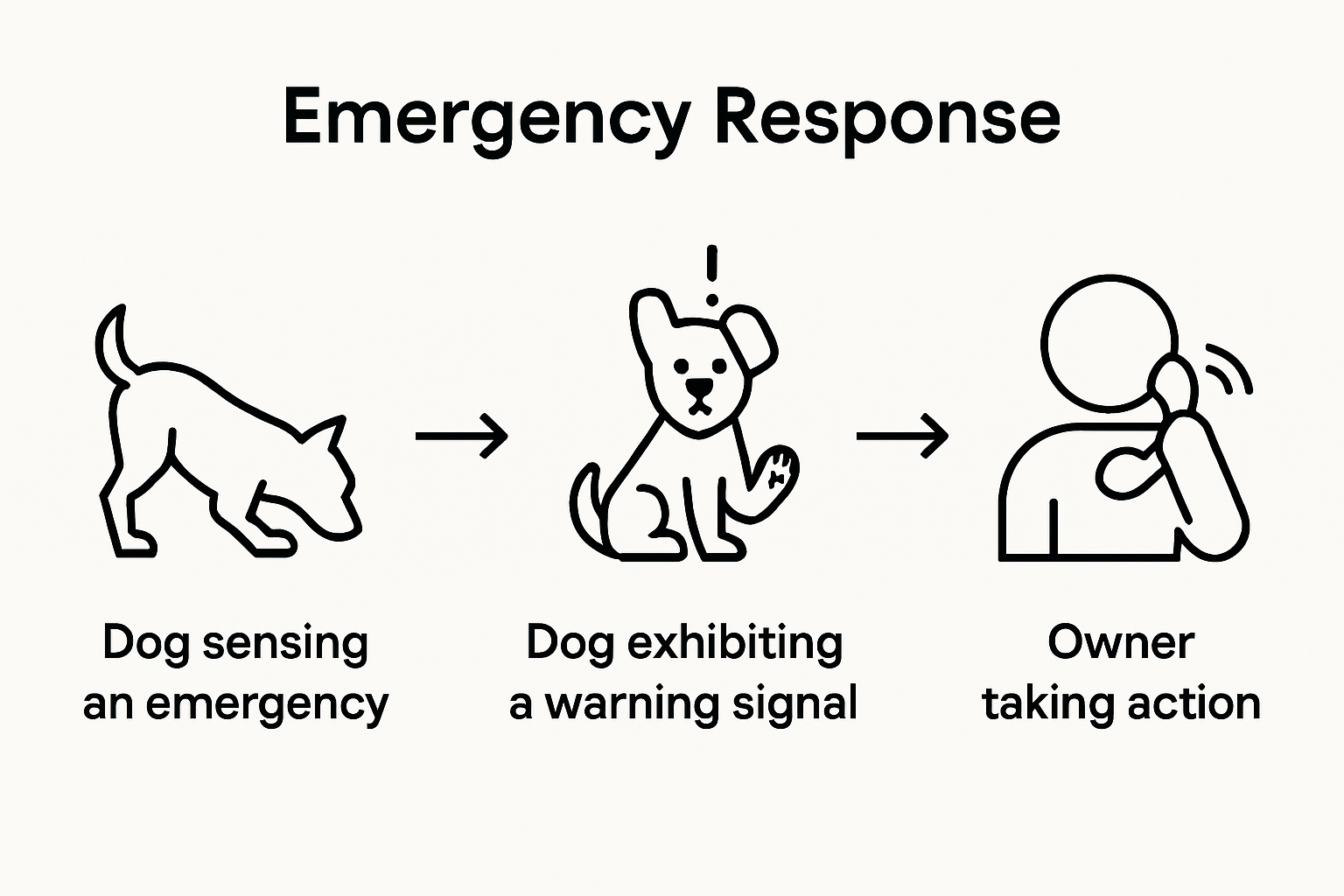
Dogs possess an intricate understanding of human physiological and emotional signals that enables them to become powerful medical alert and support companions. By consistently monitoring their handlers’ physical and emotional states, these remarkable animals can prevent potentially life-threatening situations through early detection, timely intervention, and immediate communication of emerging health risks.
When To Act Or Get Help
Emergency veterinary response guidelines emphasize the critical importance of recognizing when a dog’s condition requires immediate professional medical intervention. Understanding the difference between a minor issue and a life-threatening emergency can mean the difference between rapid recovery and potential tragedy.
Urgent Veterinary Consultation Triggers:
- Continuous vomiting or diarrhea
- Difficulty breathing or extreme respiratory distress
- Uncontrolled bleeding
- Suspected poisoning or toxic exposure
- Severe lethargy or unresponsiveness
- Persistent seizures
- Obvious signs of extreme pain
- Sudden collapse or inability to stand
Veterinary medical experts recommend swift action when observing significant changes in your dog’s normal behavior or physical condition. Prompt communication with a veterinary professional involves providing clear, concise information about symptoms, potential exposure to hazards, and the dog’s recent medical history.
Preparing for potential emergencies involves maintaining a readily accessible emergency contact list, knowing your nearest 24-hour veterinary clinic’s location, and having basic first aid supplies specific to canine care. Understanding your dog’s baseline health and being attentive to subtle changes can help you distinguish between normal variations and genuine medical emergencies that require immediate professional assessment.
Enhance Your Dog’s Safety By Recognizing Emergency Signals
Understanding your dog’s emergency signals can truly save lives. The article highlights how crucial it is to notice signs like rapid breathing, trembling, or unusual behavior changes before a situation becomes critical. Owners face the challenge of interpreting these subtle cues accurately and acting swiftly to prevent emergencies. The iPupPee device from ipuppee.com offers an innovative solution by enabling dogs to communicate instantly with their humans through a simple button press. This is especially valuable for those managing service dogs, rescue dogs, or dogs with unique communication needs.

Take control of your dog’s safety today by equipping them with the iPupPee alert device. It empowers your dog to signal distress or emergencies clearly and calmly, enhancing response times when every second counts. Discover more about how this life-saving technology works and browse user experiences on ipuppee.com. Your dog’s well-being deserves the best communication tools available—act now to protect the bond that keeps you both safe.
Frequently Asked Questions
What are the common emergency signals in dogs?
Common emergency signals in dogs include persistent whimpering, rapid or shallow breathing, trembling or shaking, sudden immobility or hiding, extreme restlessness, and exaggerated bodily tension.
How can I tell if my dog is experiencing a medical emergency?
Signs of a medical emergency in dogs can include pale or discolored gums, difficulty breathing, sudden collapse, uncontrolled bleeding, severe vomiting, extreme lethargy, and suspected poisoning.
What behavioral signs indicate distress in dogs?
Behavioral signs of distress in dogs may include intense staring, raised hackles, showing teeth, ears pinned back, whale eye (showing whites of eyes), excessive lip licking, and a tucked tail.
How do dogs alert humans in emergencies?
Dogs alert humans during emergencies by nudging, persistent barking, retrieving medications, positioning between humans and danger, activating alert buttons, seeking human intervention, and demonstrating focused behavior.