

TL;DR:
- Wearable tech for dogs offers GPS tracking, health monitoring, and emergency communication that actively support safety and independence.
- Choosing the right device depends on your priorities, environment, and your dog’s temperament, with indoor accuracy and reliable alerts being critical for safety.
A basic collar with an ID tag feels like enough until the moment it isn’t. For seniors living alone with a companion dog, or for handlers relying on a service dog for medical alerts, the stakes are far too high to depend on passive identification alone. Wearable tech for dogs now combines GPS tracking, health monitoring, and app-based communication into devices that actively support safety and independence every single day. This guide breaks down what’s available, what the specs really mean in your home, and how to choose a device that genuinely fits your dog’s needs and your life.
Table of Contents
- What is wearable tech for dogs?
- Key features and innovations compared
- Safety and communication for service dogs and seniors
- Training, welfare, and choosing the right wearable tech
- What most people miss about wearable tech for dogs
- How to get started with smart pet safety solutions
- Frequently asked questions
Key Takeaways
| Point | Details |
|---|---|
| Integrated safety functions | Modern wearable tech provides GPS, health tracking, and real-time alerts for pet safety and communication. |
| Choose features wisely | Match your dog’s needs and context to each device option, prioritizing welfare and independence. |
| Service dog advantages | Advanced wearables can amplify trained alerts and provide new safety tools for assistance and senior dog owners. |
| Test in real life | Lab-tested accuracy and features may not guarantee real-world performance—always trial devices with your own pet. |
What is wearable tech for dogs?
Think of wearable tech for dogs as any sensor-equipped device your dog wears that collects data, sends alerts, or enables communication. It goes well beyond a standard collar. These devices are built to give you information and, in some cases, to let your dog give you information.
The major categories include:
- GPS trackers and location tags: Attached to collars or harnesses, these broadcast your dog’s real-time location to an app on your phone.
- Health and activity monitors: Similar to a fitness tracker for humans, these log steps, rest patterns, calories, and sometimes heart rate or respiratory rate.
- Communication and alert devices: Designed to let a dog signal a person, often through a button press or trained behavioral trigger that sends a notification.
- Combined or integrated systems: Devices that layer GPS, health data, and alert functionality into a single wearable, increasingly popular for service dog contexts.
The pet safety technology benefits of these devices extend well beyond peace of mind. For a senior whose dog is trained to detect a fall, low blood sugar, or a medical emergency, a wearable that bridges canine behavior and human notification can be genuinely life-changing. For an active pet owner, real-time location data can mean the difference between a quick retrieval and a frightening search.
Pro Tip: Before shopping, write down your top priority. Is it location safety, health insight, emergency communication, or daily independence support? That single answer will eliminate half the market and point you toward the right device category immediately.
Wearable tech for dogs is increasingly built around integrated alert and response features, meaning one device can now monitor your dog’s location and health while also letting your dog press a button or perform a trained behavior that triggers a notification to you or an emergency contact.
Key features and innovations compared
Now that we know what wearable tech is, let’s get specific by comparing what different devices actually offer and where each fits best.
| Feature type | Accuracy | Subscription needed | Battery life | Best for |
|---|---|---|---|---|
| GPS tracker only | 6-41 ft depending on environment | Usually yes | 12-72 hrs | Active dogs, escape-prone breeds |
| Health/activity monitor | Steps/sleep only | Sometimes | 5-14 days | Aging dogs, post-surgery recovery |
| Alert/communication device | Instant button press | Rarely | Days to weeks | Service dogs, seniors living alone |
| Integrated GPS + alert | GPS + behavior | Often yes | 12-48 hrs | Medical alert dogs, caregiving contexts |
Dog GPS and geofencing products are now mainstream, but the market is crowded and the differences between devices matter enormously depending on your situation. Subscription costs can add up quickly, particularly for live tracking features, and not every plan includes geofencing or emergency contact notifications.
Here’s where each feature type shines in real life:
- GPS trackers work best when your dog has outdoor access or a history of bolting. They give you location on demand but offer nothing when the dog is inside your home.
- Health monitors are invaluable for senior dogs or post-surgical recovery, tracking sleep disruption and reduced activity that often signals pain or illness before visible symptoms appear.
- Alert and communication devices are the standout choice when your dog performs trained behaviors like pressing a button to signal a need or alerting to a medical event. These are the tools that genuinely extend independence for their owners.
- Integrated systems pack in the most capability but also the most complexity and often the highest cost and subscription burden.
“GPS performance gaps indoors can mean up to 41 feet of error due to multipath effects. For a service dog working inside a home or facility, that margin is a real safety consideration.”
GPS accuracy in collar testing confirms that indoor environments consistently degrade location performance, which matters when evaluating whether a GPS tracker alone is sufficient for an indoor service dog scenario.
You can learn more about specific alert device safety benefits and explore the different service dog alert types that wearable tech can support or enhance.
Safety and communication for service dogs and seniors
We’ve compared major device types. Now, let’s zoom in on the serious safety and communication advantages for seniors and service dog owners.
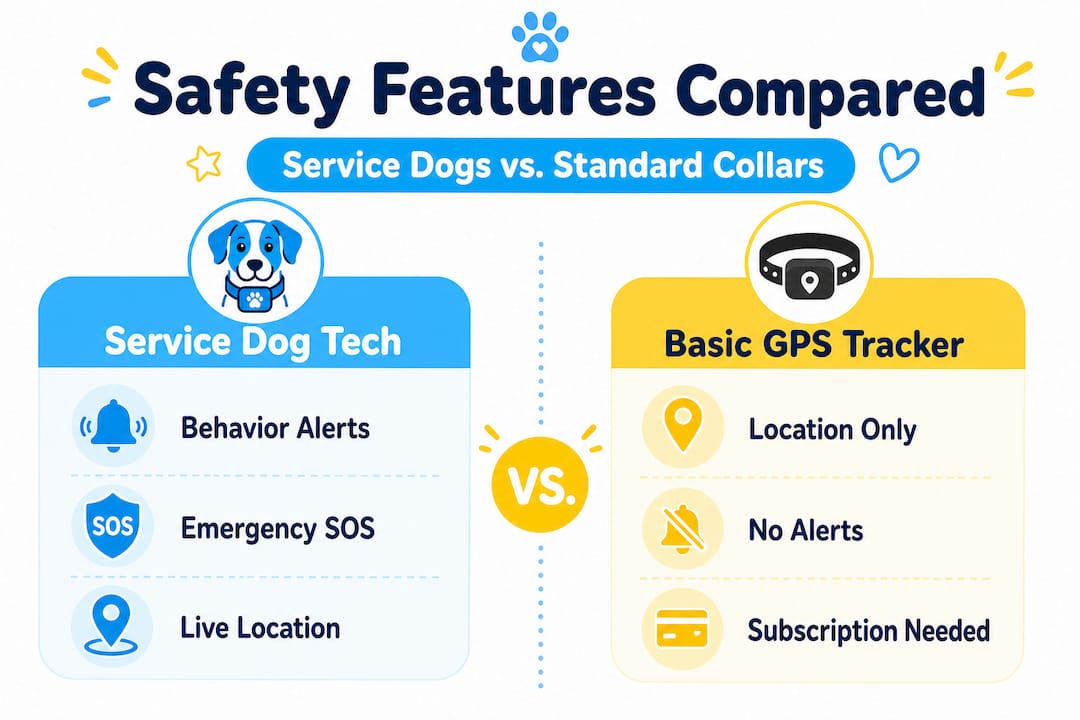
| Advanced safety device | Simple GPS tracker |
|---|---|
| Behavioral alert detection | Location only |
| Emergency SOS notification | No SOS capability |
| Caregiver app integration | Basic map display |
| Two-way confirmation | One-way data push |
| Operates effectively indoors | Limited indoor accuracy |
The most meaningful advance for service dog handlers is behavioral detection in wearable collars, where sensors detect the dog’s trained alert behavior (such as a specific body posture, nudge, or movement sequence) and trigger a notification automatically. Research into seizure-alert dogs shows this technology is moving fast, though real-world end-to-end response times are still being refined and don’t always match lab conditions.

For seniors living independently, the scenario is equally compelling. Imagine a dog trained to press a button when its owner hasn’t moved from a chair for an unusual amount of time. Connected wearable technology for dogs can loop in caregiver apps, emergency contacts, and location services simultaneously, making the dog an active link in a safety network rather than a passive companion.
Here’s a practical numbered breakdown of how an emergency alert sequence typically works:
- The dog detects an event (fall, seizure, distress) or the owner is unable to act.
- The dog performs a trained behavior, pressing a device button or triggering a sensor through movement.
- The wearable device sends a notification to the owner’s phone, caregiver app, or emergency contact.
- The caregiver receives location data and a time-stamped alert.
- Response is initiated, either remotely or in person.
Real-world gaps exist at steps 3 and 4. Notification delivery can be delayed by connectivity issues, and not all devices integrate cleanly with caregiver apps. This is why testing the alert chain in your actual environment, not just relying on the product demo, is critical.
Pro Tip: Before committing to any device for medical or critical use, run at least 20 real-world test alerts in the actual environment where the dog works. Document response times, missed notifications, and reconnect behavior after the dog moves between rooms or goes outdoors.
Explore how alert behavior technologies integrate with training, and see practical examples of how alert devices work in everyday home settings.
Training, welfare, and choosing the right wearable tech
As powerful as wearable tech can be, it’s just as important to select and train with devices that respect your dog’s welfare and unique personality.
Not all wearables are created equal from an ethics standpoint. Some devices include static correction, vibration punishment, or boundary shock features marketed as “training tools.” These deserve serious scrutiny. Government evidence reviews of e-collar use show mixed efficacy and document real welfare harms depending on device type and how it is used in real life. For service dogs and senior companions, where trust between dog and handler is everything, correction-based features carry extra risk.
When evaluating wearable tech, prioritize these welfare-safe features:
- Button-based communication: Lets the dog choose to signal, keeping the interaction positive and voluntary.
- Passive health monitoring: Collects data without delivering any stimulus to the dog.
- Audible or vibration cue alerts (handler-directed only): Used to get the dog’s attention gently, not as punishment.
- Lightweight, breathable design: Especially important for dogs wearing a device all day.
- Simple pairing and minimal setup: Reduces frustration during introduction and helps dogs adapt quickly.
- App transparency: You can see exactly what the device records and when, with no mystery data collection.
Matching a device to your dog’s temperament matters just as much as matching it to your needs. A highly sensitive dog may react poorly to any vibration feedback. A very active breed may need a ruggedized, waterproof device that can handle rough outdoor use. A senior dog may benefit most from a lightweight monitor with minimal physical profile.
Explore training with wearable devices for practical advice on introduction, and use this step-by-step training guide to build reliable alert behaviors before adding tech to the equation.
What most people miss about wearable tech for dogs
Beyond the feature lists and specs, here is what most articles and even brands rarely address about daily life with these technologies.
Lab-tested accuracy numbers don’t travel well from a controlled environment to your actual home. Indoor GPS error can reach 41 feet due to multipath effects, where signals bounce off walls and furniture before reaching the receiver. That’s not a corner case. It’s the norm for a service dog working inside a house, apartment, or care facility. A device that tracks accurately in an open field may give you almost no useful location data inside a building.
Alert detection systems face an even more specific challenge. Early research into behavioral detection collars for assistance dogs shows that lab-measured accuracy, often impressive on paper, does not automatically translate to reliable real-time response in actual caregiver environments. Variables like the dog’s coat thickness, movement patterns during alert behavior, and the physical fit of the device can all affect whether a sensor captures the intended signal accurately.
Here is what we at iPupPee have come to believe strongly: the human side of this equation matters more than most product pages acknowledge. A senior using a wearable safety system needs to receive alerts on a device they already know how to use, in a format that is immediately clear, at a volume or notification style they will notice even if they are asleep or in another room. That integration with human routine is almost never addressed in device spec sheets.
The dogs who benefit most from wearable tech are the ones whose owners have done the training work first, trialed the device carefully in their own home, and built confidence in the alert chain before depending on it in a real emergency. Tech is the amplifier. The trained behavior and the human routine are the signal. Without a strong signal, the amplifier delivers noise.
You can build that foundation with practical guidance from our alert response training insights, which addresses the real-world gaps that product demos tend to skip.
How to get started with smart pet safety solutions
If you are a service dog handler, a caregiver for a senior with a companion dog, or simply someone who wants real safety and communication beyond what a standard collar provides, the right starting point is education before purchase.
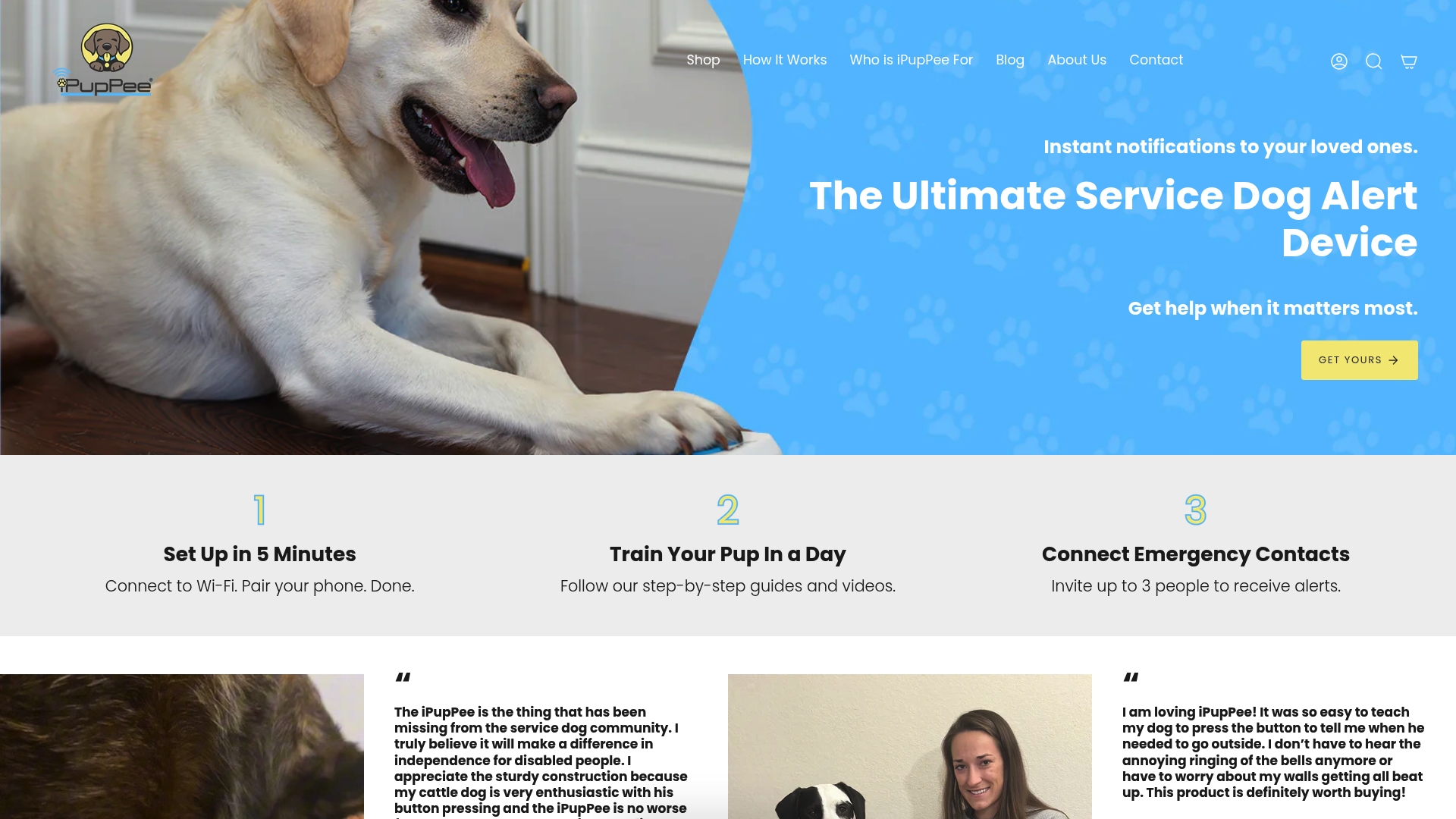
At iPupPee, we have built our platform specifically around the needs of dog owners who take safety and communication seriously. Our blog covers everything from device comparisons to step-by-step training protocols, and our alert device is designed with simplicity, reliability, and positive reinforcement at its core. Whether you are starting your research or ready to take the next step toward smarter pet safety, our resources are built for your real life, not a lab setting. Visit ipuppee.com to explore guides, device information, and the tools that make independent living safer for both you and your dog.
Frequently asked questions
How accurate is GPS in dog wearable tech indoors versus outdoors?
GPS accuracy indoors is usually far lower than outdoors, with indoor errors commonly reaching 19 to 41 feet, compared to roughly 6 to 15 feet in open outdoor environments. This gap matters significantly for service dogs that work primarily inside homes or facilities.
What features matter most for service dog wearable tech?
Behavioral alert detection and reliable, low-latency alert delivery are the most critical features for service or medical assistance dogs. GPS and health monitoring are useful additions, but the alert delivery chain is what directly supports safety in critical moments.
Are there downsides to using correction or shock features in dog wearables?
Electronic correction features carry documented welfare risks and show mixed efficacy in real-world evidence reviews. For service and companion dogs where the human-dog trust relationship is foundational, these features are best avoided entirely.
Do I need a subscription for GPS wearable tech for dogs?
Most GPS-enabled dog wearables do require ongoing subscriptions for live tracking, geofencing alerts, and advanced connectivity features. Factor that recurring cost into your total budget when comparing devices, since it can easily exceed the upfront hardware price over one to two years.