

Every service dog handler and senior living with disabilities understands the difference it makes when a dog’s alert is clear and consistent. Reliable alert behavior bridges gaps that disability or age create, providing reassurance and an extra layer of safety in everyday life. By focusing on dog alert behavior as intentional communication, you gain practical strategies for selecting, training, and reinforcing alert signals that help your dog support your independence wherever you go.
Table of Contents
- Core Definition of Dog Alert Behavior
- Types of Service Dog Alerts and Distinctions
- How Dog Alert Systems Work
- Training Dogs for Effective Communication
- Safety, Accessibility, and Legal Considerations
- Common Challenges and Mistakes to Avoid
Key Takeaways
| Point | Details |
|---|---|
| Importance of Dog Alert Behavior | Dog alert behavior is a learned response that communicates specific needs or threats, essential for service dog handlers and seniors living with disabilities. |
| Types of Service Dog Alerts | Different service dogs specialize in various alert functions, customized to meet individual needs including guiding, sound detection, and medical alerts. |
| Effective Training Techniques | Positive reinforcement and consistency are crucial for developing reliable alert behaviors, ensuring that dogs can communicate effectively during critical moments. |
| Legal and Practical Considerations | Under the Americans with Disabilities Act, service dogs can accompany their handlers in public spaces, provided they are trained for specific tasks related to disabilities. |
Core Definition of Dog Alert Behavior
Dog alert behavior is the coordinated way dogs communicate and respond to specific situations by combining their intelligence, senses, and ability to signal important information through vocalization, body posture, and facial expressions. When a dog displays alert behavior, it’s intentionally drawing your attention to something that requires action—whether that’s a potential safety threat, a scheduled task, or a change in environmental conditions. This isn’t random barking or fidgeting. It’s a purposeful, learned response that your dog uses to bridge the communication gap between canine perception and human understanding.
For service dog handlers and seniors living with disabilities, understanding how dog alerts work becomes essential to daily safety and independence. The behavior itself involves the dog detecting a trigger—this could be a sound, a physical sensation, a time interval, or even a medical change—and then performing a specific action to notify you. This action becomes the alert signal. Some dogs use paw nudges, others use vocalizations, and some use a combination of behaviors. What matters is consistency and clarity. Your dog needs to communicate the same way every single time so you understand what’s happening and can respond appropriately.
At its core, dog alert behavior relies on communication, which develops through training, reinforcement, and the natural bond between you and your dog. The complex arrangement of a dog’s senses—particularly their hearing and sense of smell—allows them to detect things humans cannot. A dog might alert you to a door knock you didn’t hear, a visitor approaching, a blood sugar change through scent, or a scheduled medication time. This is where the real value emerges. Your dog becomes an extension of your awareness, filling gaps in perception that disability or age might create. The behavior is reliable because it’s trained deliberately, reinforced consistently, and built on your dog’s natural instinct to communicate with their human pack member.
Training organizations use standardized assessment methods to evaluate alert behaviors in working dogs. These methods help determine whether a dog has the temperament, focus, and capability to perform reliable alerts in various situations. The goal is always the same: create a clear, unmistakable signal that you can trust in moments when you need it most. Whether you’re a service dog handler relying on alerts for medical safety or a senior using alerts to maintain independence, the definition remains consistent. Alert behavior is your dog’s way of saying “pay attention to this right now.” It’s learned. It’s intentional. And when trained correctly, it works reliably when you need it.
Pro tip: Start by identifying which alert signal feels most natural for your dog and most noticeable to you, then reinforce that specific behavior consistently so it becomes an automatic response in your dog’s repertoire.
Types of Service Dog Alerts and Distinctions
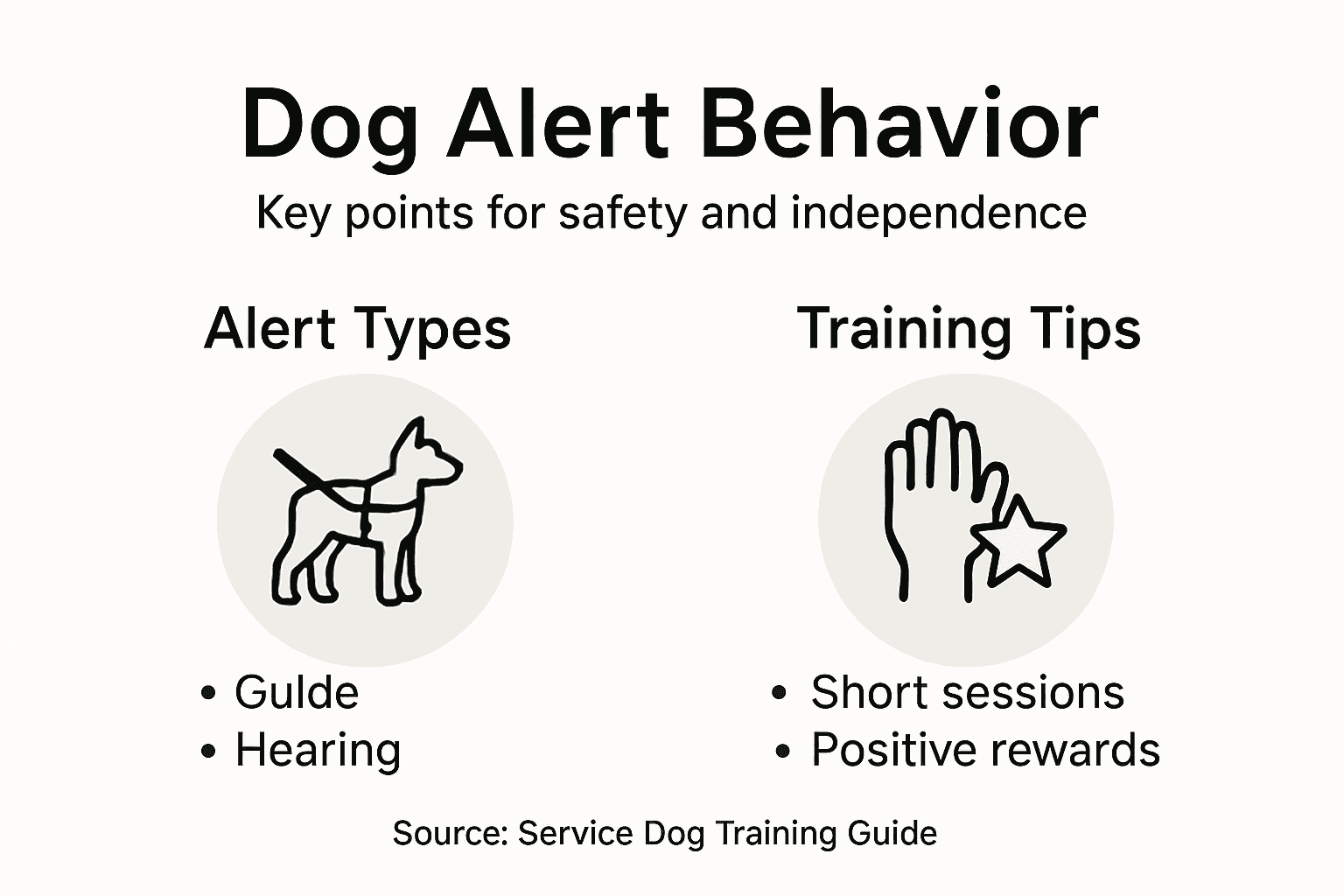
Service dog alerts fall into distinct categories based on the type of disability they address and the specific tasks the dog performs. Understanding these distinctions matters because it helps you recognize what your dog is trained to do and why that training is specific to your needs. Not all service dogs alert the same way, and not all alerts serve the same purpose. A guide dog alerts you to obstacles in your path. A hearing dog alerts you to sounds. A medical alert dog alerts you to physiological changes your body is experiencing. Each one uses different alert mechanisms because each one is responding to different information your dog detects.
The most common service dog alert categories include guide dogs for individuals who are blind or have low vision, hearing dogs for deaf or hard-of-hearing individuals, and service dogs trained for medical detection and response. Guide dogs use body positioning and directional changes to alert you to obstacles, stairs, curbs, and changes in terrain. Their alerts are physical and spatial. Hearing dogs use jumping, pawing, or nudging to alert you to specific sounds—doorbells, phones, sirens, alarms. They’re trained to discriminate between different sounds and alert differently depending on what they hear. Medical alert dogs detect changes in blood sugar, heart rate irregularities, seizure activity, or other physiological markers through scent. Their alerts might be paw nudges, specific vocalizations, or directional blocking. The distinctions exist because the information being communicated is fundamentally different.
Beyond these primary categories, service dogs also alert for psychiatric conditions, mobility assistance needs, and seizure response. A psychiatric service dog might alert you to anxiety escalation by applying deep pressure before a panic attack develops. A mobility assistance dog might alert you to fatigue or movement limitations by refusing to proceed or by repositioning themselves to provide stability. These alerts are equally valid and equally critical to your safety and independence. What makes them service dog alerts rather than general dog behavior is that they’re individually trained to perform specific tasks related to your disability. The ADA recognizes service animals as dogs individually trained to perform disability-related tasks, which means emotional support animals or comfort dogs don’t qualify as service animals even though they provide real psychological benefit. The distinction matters legally and practically because service dog alerts are reliable, task-specific, and trained deliberately rather than spontaneous or incidental.
The key difference between alert types comes down to detection method and communication channel. Some alerts rely on your dog’s sensory superiority—their hearing or smell. Some rely on learned behavior patterns your dog has been conditioned to perform. Some rely on your dog’s awareness of your physical or emotional state. What unites them all is consistency and intentionality. When you’re depending on your dog’s alert in a safety-critical moment, you need to know exactly what to expect. Your dog needs to communicate the same way every single time. That’s why understanding the specific type of alert your dog provides—and the disability category it addresses—helps you build trust in the system and respond appropriately when your dog alerts.
Here’s a comparison of the main types of service dog alert categories and how they differ:
| Alert Type | Detection Method | Communication Channel | Typical Task Example |
|---|---|---|---|
| Guide Dog | Physical obstacles/terrain | Body movement & positioning | Navigating curbs/stairs |
| Hearing Dog | Specific important sounds | Pawing/jumping/nudging | Alerting to alarms or phones |
| Medical Alert Dog | Physiological scent changes | Paw nudge/vocalization | Notifying blood sugar changes |
| Psychiatric Service Dog | Emotional state recognition | Pressure/paw/contact | Responding to escalating anxiety |
| Mobility Assistance Dog | Physical fatigue/needs | Blocking/repositioning | Assisting with standing or walking |
Pro tip: Document your dog’s specific alert signals and responses in writing, then practice recognizing and responding to them regularly so the behavior remains sharp and your reaction time stays fast when it counts.
How Dog Alert Systems Work
Dog alert systems operate through a combination of your dog’s natural sensory abilities, learned behavioral responses, and your understanding of what those responses mean. The system isn’t complicated, but it requires all three components working together. Your dog detects something through sight, sound, smell, or physical sensation. Your dog then performs a trained alert behavior. You recognize that behavior and respond appropriately. When any of these three pieces breaks down, the system fails. That’s why understanding how the mechanics work helps you troubleshoot problems and strengthen the reliability of your alerts.
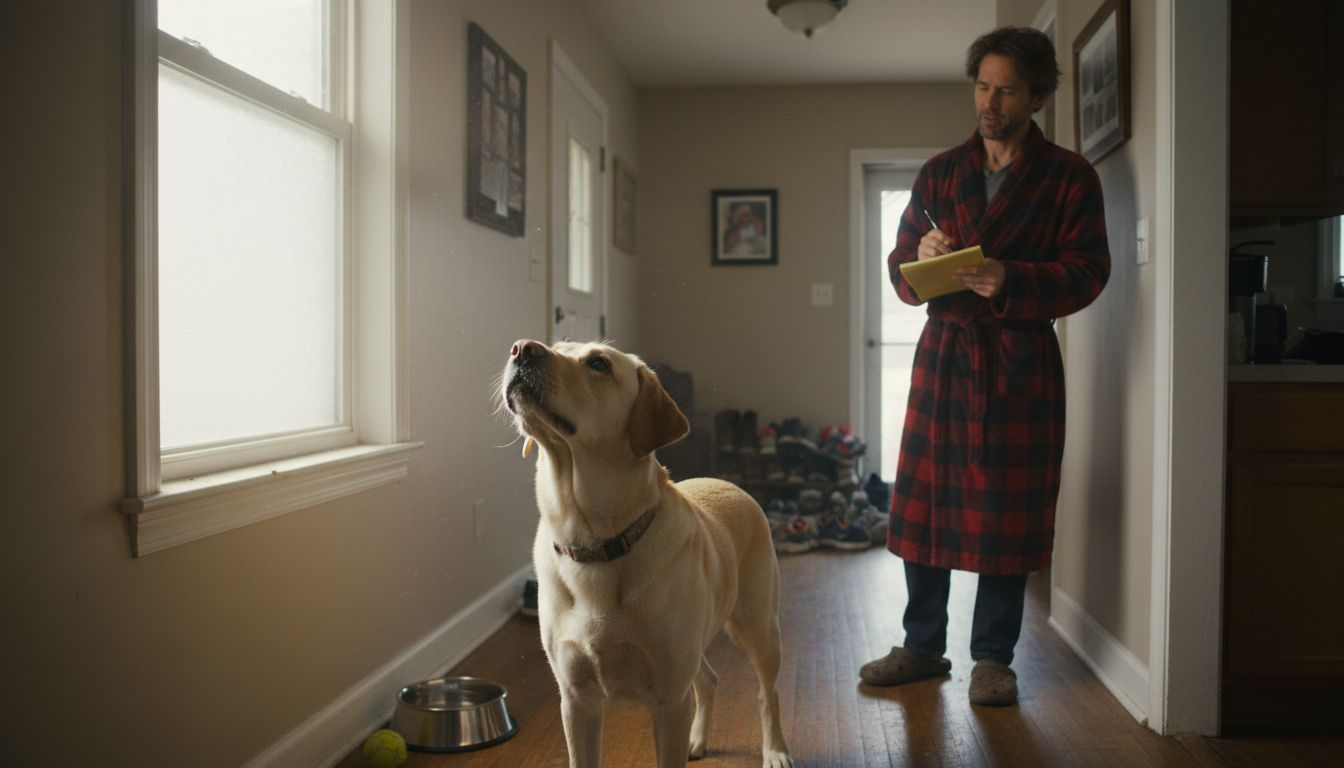
The foundation of every dog alert system rests on your dog’s extraordinary sensory capabilities. Dogs perceive their environment in ways humans simply cannot match. Their sense of smell operates at a sensitivity level roughly 10,000 to 100,000 times more powerful than human olfaction. This means a medical alert dog can detect changes in your blood chemistry before symptoms become obvious to you. A hearing dog can detect sounds at frequencies and distances humans cannot hear. A guide dog’s vision, while less acute than human sight in some ways, captures movement and spatial change differently than ours. The detection and following of specific odors) involves your dog’s highly developed olfactory system and comprises searching, assessing, and decision-making phases. This sensory superiority is the raw material your dog uses to detect something significant about your environment or health. Without this detection capability, no alert system exists.
Once your dog detects something, the second component kicks in: the trained alert behavior. This is where conditioning and consistency matter enormously. You’ve taught your dog to respond to a detection with a specific, recognizable action. It might be nudging your leg, barking a particular way, pressing against you, or blocking your path. The behavior must be consistent because you need to recognize it reliably. The behavior must be distinct because you need to differentiate it from normal dog behavior like scratching or casual greeting. The behavior must be paired with the detection consistently during training so your dog reliably performs it every time they detect the trigger. Modern research shows that behavioral and physiological signals can predict alert performance and that monitoring your dog’s readiness helps maintain system reliability. This is the bridge between your dog’s detection and your understanding.
The third component is your response. You see the alert behavior and understand what it means. You know whether it signals danger, a medical change, a scheduled task, or environmental information. You then take action based on that alert. Your response completes the circuit. If you don’t recognize the alert, if you dismiss it, or if you respond incorrectly, the entire system breaks down. That’s why practicing alerts regularly matters. That’s why maintaining clear communication with your dog matters. A dog alert system only works when all three pieces function together: detection, signaling, and response. When you understand how these pieces interact, you can identify where problems exist if your dog stops alerting reliably, becomes inconsistent, or seems less engaged.
Building a strong dog alert system also requires maintenance. Your dog needs regular reminders of what the alert behavior is and why it matters. You need regular practice recognizing and responding appropriately. The bond between you and your dog strengthens the system because your dog is motivated by your well-being and your response to their alerts. A dog who sees you respond positively to their alerts will continue alerting reliably. A dog who alerts and gets ignored will eventually stop bothering. That’s not failure. That’s your dog learning that the alert doesn’t matter to you. Understanding this human-canine partnership at the heart of alert systems helps you maintain what you’ve trained and prevents drift over time.
Pro tip: Test your dog’s alert system weekly by asking them to perform their alert behavior and immediately rewarding the correct response, which keeps the behavior sharp and reminds your dog that their alerts get your attention and approval.
Training Dogs for Effective Communication
Training your dog to communicate effectively through alert behaviors starts with understanding how dogs think and what motivates them. Dogs are not trying to communicate randomly or for attention alone. They communicate because something matters to them, and they’ve learned that a specific action gets a predictable response from you. When you train for effective communication, you’re not forcing your dog to perform tricks. You’re teaching your dog that a particular behavior reliably leads to a reward or addresses something important in their environment. The foundation of this training is positive reinforcement, which means rewarding the behavior you want to see more of.
Positive reinforcement and operant conditioning form the core training approach. Rewarding desired behaviors increases their frequency, and this method is highly effective for teaching dogs to communicate and respond reliably to cues. Here’s how it works in practice: Your dog performs an alert behavior. Immediately afterward, you provide a reward your dog values. That reward might be a treat, praise, play, or access to something your dog enjoys. Your dog begins connecting the alert behavior with the reward. Over time and with repetition, your dog performs the alert behavior more frequently because they’ve learned it produces a positive outcome. The key word is immediately. You need to reward within 2 or 3 seconds of the correct behavior so your dog understands which action earned the reward. Delaying the reward creates confusion because your dog might think something else earned it.
Effective training also requires understanding your dog’s perspective and social-cognitive abilities. Understanding dogs’ cognition and social skills helps you recognize what your dog is experiencing and adjust your training approach accordingly. Some dogs are food motivated. Others respond better to play or praise. Some dogs get stressed by loud environments and train better in quiet spaces. Some dogs learn faster with short 5-minute sessions while others benefit from longer practice periods. When you recognize these individual differences, you communicate more effectively because you’re meeting your dog where they actually are, not where you think they should be. Consistency matters enormously here. Your dog needs to learn that the same behavior in the same situation produces the same reward every single time. If you reward an alert one day and ignore it the next day, your dog gets confused and stops alerting reliably. That’s not stubbornness. That’s your dog learning an inconsistent pattern.
Building clear communication also means having a specific plan for what alert behavior you’re training. Don’t train a vague “do something when you notice a problem.” Train a specific action. Maybe it’s a nose nudge to your leg. Maybe it’s a specific bark. Maybe it’s placing their paw on you in a certain way. Pick one behavior and train that behavior consistently until it becomes automatic. Then, if needed, you can add additional alerts for different situations. Start in a low-distraction environment where your dog can focus on you. Gradually introduce distractions as your dog becomes reliable. Practice the alert behavior regularly, not just when you need it in real situations. A dog alert system that gets practiced weekly will remain sharp. A dog alert system that only happens during actual emergencies will become unreliable because your dog hasn’t maintained the behavior.
Transition from training sessions to real-world situations gradually. Your dog needs to understand that the alert behavior means the same thing whether you’re at home, in public, or in a stressful situation. This requires practicing alerts in different environments and rewarding them consistently everywhere. When your dog performs an alert in a real-world moment, celebrate it even if you already knew about the situation. Your dog doesn’t know whether you noticed it already. They just know they did their job. That positive reinforcement matters. Over time, your dog becomes a reliable communication partner because you’ve taught them clearly what you need, rewarded them for providing it, and maintained consistency through regular practice.
Pro tip: Break training into short sessions of 5 to 10 minutes with multiple practice days per week rather than one long session, which helps your dog stay mentally engaged and prevents training fatigue that leads to inconsistency.
Safety, Accessibility, and Legal Considerations
When you have a service dog with trained alert behaviors, legal protections exist to ensure you can take your dog into public spaces where you need them most. These protections matter because your dog’s alerts only help you if your dog can be present when you need them. Under the Americans with Disabilities Act, service dogs are allowed in all public areas where their handlers go, regardless of ‘no pets’ policies. This means your dog can accompany you to grocery stores, restaurants, hospitals, public transportation, workplaces, and other locations where the general public is allowed. The law doesn’t require your dog to wear a vest, carry certification, or display any special identification. Your dog simply needs to be trained to perform tasks related to your disability and be under your control. That’s it. The legal framework removes barriers that would otherwise prevent you from accessing the independence your dog provides.
Understanding what qualifies as a service dog matters because the legal definition is specific. Federal civil rights laws define service animals as trained dogs performing disability-related tasks, which means emotional support animals, comfort dogs, and therapy dogs do not have the same legal access rights even though they provide real psychological benefit. Your service dog’s alert behaviors must be trained specifically to address your disability. A dog trained to alert you to medical changes, respond to psychiatric symptoms, assist with mobility, or guide you through vision loss qualifies. A dog that simply comforts you by being present does not qualify legally, even if that presence genuinely helps you feel better. This distinction exists because service dog access laws balance the needs of people with disabilities against legitimate concerns of businesses and public spaces. When a dog is trained to perform specific disability-related tasks, the public benefit of allowing that dog to work outweighs pet policy restrictions.
Your responsibility as a service dog handler involves maintaining control of your dog in public spaces and ensuring your dog’s behavior doesn’t disrupt others. The law allows you access with your dog, but it also allows businesses to ask you to remove your dog if it’s out of control or if it poses a direct threat to safety or health. A dog that’s jumping on people, barking excessively without performing an alert, or being aggressive is a valid reason for removal. Your dog needs to be under your control at all times, which typically means on a leash or harness unless the dog performs mobility assistance tasks that require them to be unattached. You’re also responsible for cleaning up after your dog and ensuring they don’t damage property. These aren’t restrictions designed to prevent access. They’re practical expectations that allow service dogs to work alongside the general public safely. When you maintain control and your dog behaves appropriately, most people won’t even notice your dog is working.
Beyond public access rights, you should understand that service dog trainers, handlers, and organizations cannot require certification or registration as a legal prerequisite for service dog access. Some organizations offer optional registration or identification, which can be helpful when you need to explain your dog’s status to someone unfamiliar with service dog laws. However, no government entity requires certification, and be cautious about paying for official sounding registries that imply legal necessity. The only legal requirement is that your dog is trained to perform tasks related to your disability. You should keep documentation of your dog’s training and your disability diagnosis available, which can help resolve questions if they arise. You don’t need to carry papers, but having them available demonstrates your dog’s legitimacy if someone questions your right to access with your dog.
Accessibility extends beyond just legal access. It also means ensuring your dog’s alert system works reliably in the environments where you spend time. This means practicing alerts in different settings, maintaining consistent training, and ensuring your dog stays healthy and alert. A service dog with alert behaviors is a working animal, not a pet, which means your dog needs appropriate exercise, rest, and mental stimulation to perform reliably. Your dog also needs regular veterinary care, proper nutrition, and protection from overheating or cold stress. When you maintain your dog’s physical and mental well-being, your dog can reliably communicate alerts in the moments when you need them most. Legal access combined with a healthy, well-trained dog creates the foundation for genuine independence and safety.
Pro tip: Carry a brief written description of your dog’s trained tasks and a contact information card for your veterinarian, which helps clarify your dog’s service status if someone questions access and provides immediate verification of your dog’s health and training.
Common Challenges and Mistakes to Avoid
Training a dog to perform reliable alerts involves navigating several pitfalls that can derail your progress or create unreliable behaviors when you need them most. Many handlers encounter similar obstacles because they come from misunderstandings about how dogs learn or from gaps in consistency during training. Recognizing these common mistakes before they happen gives you the chance to avoid them entirely. The most impactful mistakes aren’t necessarily ones you’ll notice immediately. They’re the subtle patterns that gradually erode your dog’s reliability until one day you realize your dog isn’t alerting the way they used to.
One fundamental mistake stems from confusing temperament with behavior. Understanding the distinction between innate traits and learned responses is crucial because not all dogs can be trained to perform reliable alerts regardless of how much effort you invest. Temperament refers to your dog’s inherent personality traits. Some dogs are naturally anxious. Others are naturally calm. Some dogs are food driven. Others aren’t interested in food rewards. Behavior is what your dog does in response to training and environment. You can train behavior, but you cannot change temperament. A dog with anxiety temperament might struggle with alert training because they’re overwhelmed by the learning environment. A dog without food motivation will be difficult to reinforce with treats. Before investing heavily in alert training, assess whether your dog’s temperament actually suits the task. Does your dog stay focused during distractions? Can your dog handle learning new things without excessive stress? Is your dog responsive to rewards you can realistically provide? Mismatching dogs and tasks leads to dropout rates and wasted effort. Understanding your dog’s innate traits helps you choose alert behaviors and training methods that actually fit your dog.
Another critical category of mistakes involves cue management. Common training mistakes include cue nagging, cue poisoning, inadequate practice, and ineffective repetition. Cue nagging happens when you repeat a command multiple times because your dog didn’t respond the first time. You say “alert” and your dog doesn’t respond. So you say “alert, alert, alert.” Your dog learns that they don’t actually have to respond until you’ve said it three or four times. That’s not your dog being stubborn. That’s your dog learning an inconsistent pattern. Instead, give your cue once, wait briefly, then move on. If your dog doesn’t respond, it’s information that your dog isn’t ready for that behavior in that context yet. Cue poisoning happens when a cue becomes associated with negative experiences. If you use your alert cue during frustrating moments or when you’re about to do something your dog dislikes, your dog will lose enthusiasm for that cue. The cue itself becomes the problem. Inadequate practice is self-explanatory but often overlooked. You can’t train a behavior once and expect it to remain reliable for months. Regular practice keeps the behavior sharp and reminds your dog that the alert matters. Ineffective repetition means repeating training sessions that aren’t working. If your dog isn’t improving after several attempts, the method isn’t working for your dog. Change your approach rather than repeating the same failing strategy.
A subtle but significant mistake involves inconsistency between handlers. If you live with someone else, that person needs to reinforce alerts the same way you do. If you reward an alert every time but your household member only rewards it sometimes, your dog gets confused about when the behavior is worth performing. This is especially problematic for seniors living with family members or service dog handlers with caretakers. Everyone interacting with your dog needs to follow the same training protocol. That means the same alert behavior, the same cue words, the same rewards, the same response pattern. Write down your alert training steps and share them with everyone who spends significant time with your dog. Regular communication prevents accidental interference with your training.
Another frequent challenge is expecting too much too soon. Dogs don’t generalize behaviors the way humans do. A dog trained to alert in your home might not alert reliably in a new environment or during stressful situations. You need to practice alerts in different locations, during different times of day, around different distractions. This takes time. A reliable alert system takes months or years to build, not weeks. If you rush the process or skip the generalization practice, your dog will seem to regress in new situations. That’s not regression. That’s your dog never having learned to perform in that context. Build slowly, practice consistently, and expand environments gradually.
For reference, here are common alert training pitfalls and how to avoid them:
| Common Mistake | Root Cause | Prevention Strategy |
|---|---|---|
| Confusing temperament | Overlooking natural traits | Assess suitability before training |
| Cue nagging | Over-repeating commands | Give cue once, adjust method |
| Handler inconsistency | Mixed signals from people | Align training/reward protocols |
| Inadequate practice | Not rehearsing often enough | Schedule regular practice sessions |
| Expecting rapid progress | Skipping gradual steps | Train across different environments |
Pro tip: Document what works and what doesn’t in a training journal, recording specific behaviors, rewards, locations, and results so you can identify patterns of success and avoid repeating approaches that aren’t moving your dog toward reliability.
Enhance Your Dog Alert System with Innovative Support from iPupPee
The article highlights key challenges in building reliable dog alert behavior including consistent communication, clear alert signals, and dependable response. For service dog handlers, seniors, or anyone relying on a dog’s alert system to maintain safety and independence, these challenges can feel overwhelming. You want your dog’s alert behavior to be unmistakable and actionable every time without confusion or delay. Understanding the importance of intentional training and consistent reinforcement is only the first step toward building that trust and reliability.
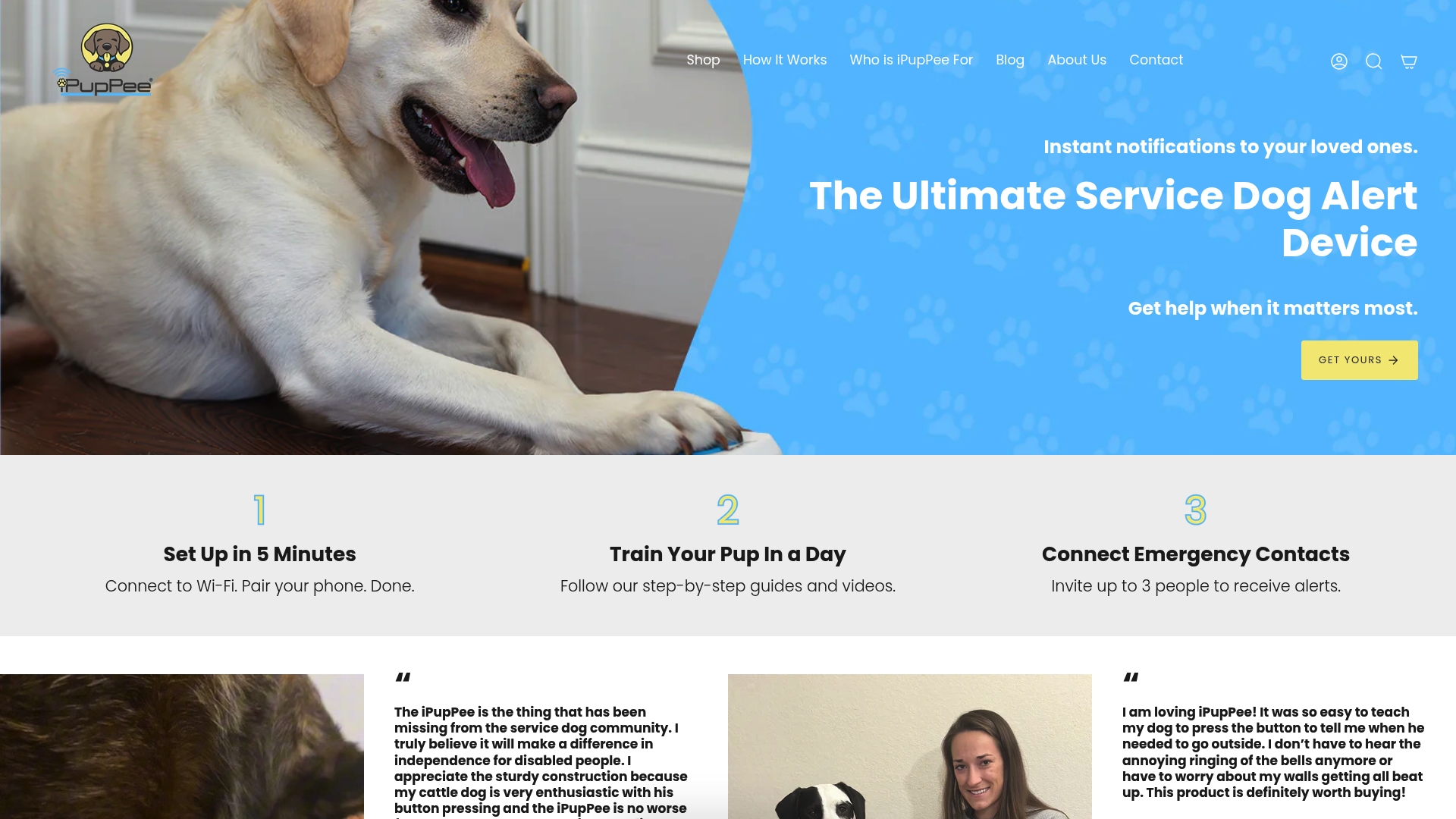
At iPupPee, we provide practical solutions to enhance your dog’s alert communication through our innovative devices designed specifically for service dogs and their handlers. Our alert button system empowers your dog to initiate communication clearly and intentionally, reducing guesswork while strengthening your partnership. Take control today by exploring our comprehensive training instructions and learn how iPupPee can boost your dog alert system’s accuracy and responsiveness. Start building stronger safety and independence now with trusted technology that works alongside your dog’s natural abilities. Visit us at iPupPee to discover how you can elevate every alert into a life-enhancing message.
Frequently Asked Questions
What is dog alert behavior?
Dog alert behavior is the way dogs communicate important information through specific actions, such as vocalizations or body movements, responding to triggers like sounds, sensations, or medical changes.
How do service dogs perform alerts?
Service dogs perform alerts by detecting changes in their owner’s environment or health, then executing a trained behavior, such as nudging, barking, or blocking, to notify their handler effectively.
What are the different types of service dog alerts?
There are several types of service dog alerts, including guide dogs for navigation, hearing dogs for sound detection, medical alert dogs for physiological changes, and psychiatric service dogs that recognize emotional states.
Why is consistency important in dog alerts?
Consistency is crucial because it allows both you and your dog to understand and trust the communication system. If your dog performs the same alert reliably every time, it ensures that you can respond appropriately in critical situations.
Recommended
- Independent Dog Behavior – Impact on Communication and Safety – iPupPee
- Dog Safety Technology: Elevating Independence for Owners – iPupPee
- Understanding Dog Independence Benefits for Owners – iPupPee
- Senior Pet Safety: Keeping Aging Companions Secure – iPupPee
- 5 Surprising Problems Solved by OVAL AI Home Hub - IRVINEi