

Many believe dog alert devices only assist handlers with physical disabilities, but modern technology supports mental health needs just as powerfully. These devices enable faster emergency communication through simple button presses or biometric monitoring, transforming how service dogs protect their handlers. Whether you manage PTSD, diabetes, or mobility challenges, understanding how alert devices work can dramatically improve your safety and independence.
Table of Contents
- Introduction To Dog Alert Devices
- How Dog Alert Devices Work: Technology And Behavior
- The Safety And Medical Benefits Of Alert Devices
- Psychological And Emotional Benefits For Handlers
- Common Misconceptions And Clarifications About Dog Alert Devices
- Choosing And Training The Right Dog Alert Device
- Conclusion: Maximizing The Benefits Of Dog Alert Devices
- Explore Innovative Dog Alert Devices At Ipuppee
- FAQ
Key takeaways
| Point | Details |
|---|---|
| Faster emergency response | Alert devices reduce response times by 40%, enabling quicker medical intervention. |
| Mental health support | Biometric technology detects PTSD episodes early, allowing dogs to intervene before symptoms escalate. |
| Simple designs win | Single-button devices often outperform complex systems due to superior reliability and easier training. |
| Stronger handler bonds | 70% of users report deeper emotional connections with their service dogs after device adoption. |
| High training success | 85% of dogs master alert device use within four weeks using positive reinforcement methods. |
Introduction to dog alert devices
Dog alert devices are specialized tools that enable service dogs to communicate urgent needs or medical emergencies to their handlers. These devices fall into two main categories: single-button devices like iPupPee that dogs activate with their paw or nose, and biometric wearables that monitor physiological signals to trigger automatic alerts. Both types serve critical roles in emergency communication and medical alerting.
The primary users include disabled owners who need reliable emergency assistance, seniors living independently, and handlers managing PTSD or other mental health conditions. For handlers with invisible disabilities, these devices provide a safety net that traditional visual cues cannot match. Service dogs trained with alert devices can detect changes in heart rate, blood sugar, or anxiety levels before handlers consciously recognize danger.
Device types offer distinct advantages:
- Single-button devices prioritize simplicity and durability, ideal for handlers who need straightforward emergency activation
- Biometric wearables like CanineAlert track vital signs continuously, providing predictive alerts before crises occur
- Combination systems integrate both manual and automatic triggering for maximum flexibility
Devices with biometric technology monitoring heart rate alert service dogs via vibration to intervene before a PTSD episode escalates, improving recovery times significantly. This proactive approach transforms reactive emergency response into preventive care. Understanding the dog alert device usage guide helps handlers select the right technology for their specific medical and lifestyle needs.
How dog alert devices work: technology and behavior
The technical mechanisms behind alert devices vary significantly between single-button and biometric systems. Single-button devices use pressure-sensitive pads that dogs activate through physical contact, sending immediate wireless signals to a receiver worn by the handler or connected to a smartphone app. Biometric wearables continuously monitor physiological markers like heart rate variability, skin temperature, and movement patterns, triggering alerts when readings exceed preset thresholds.
Alert delivery methods include:
- Vibration signals on wearable receivers for handlers with hearing impairments
- Audio alarms with customizable tones and volume levels
- Smartphone app notifications with GPS location tracking
- Multi-channel alerts combining vibration, sound, and visual cues for redundancy
Training dogs to use alert devices effectively requires systematic progression. Begin by introducing the device in a calm environment, allowing your dog to investigate it without pressure. Use high-value treats to create positive associations whenever your dog approaches or touches the device. Gradually shape the behavior by rewarding increasingly deliberate paw or nose presses.
The structured training process follows these steps:
- Introduction phase: Present the device during play sessions, rewarding curiosity and accidental touches for three to five days
- Deliberate activation: Mark and reward only intentional button presses, practicing five to ten repetitions per session
- Command pairing: Associate a verbal cue like “alert” with the activation behavior over two weeks
- Distraction training: Practice in progressively challenging environments with background noise and movement
- Emergency drills: Simulate real crisis scenarios to ensure reliability under stress
Common training challenges include dogs developing anxiety around the device if introduced too aggressively, inconsistent activation due to inadequate reinforcement schedules, and failure to generalize the behavior across different environments. Solutions involve slowing the training pace, increasing reward frequency during early stages, and practicing alert communication in diverse settings.
| Feature | iPupPee Single-Button | Biometric Wearable |
|---|---|---|
| Ease of use | Extremely simple, one-paw activation | Automatic, no dog action needed |
| Activation type | Manual press by dog | Physiological threshold detection |
| Durability | IP67 waterproof, impact-resistant | Varies, often less rugged |
| Handler suitability | All disability types, especially physical | Best for predictable medical conditions |
| Training time | 3-4 weeks average | Minimal dog training, requires calibration |
| Battery life | 6-12 months | 1-3 days typical |
Pro Tip: Practice alert activation during your dog’s peak energy times rather than when they’re tired. This builds muscle memory during their most focused learning windows and increases retention rates.
The dog alerts explained guide provides detailed troubleshooting for handlers encountering activation difficulties. Single-button alert devices reduce emergency alert times by 40%, accelerating critical responses when seconds matter most.
The safety and medical benefits of alert devices
Alert devices transform medical emergency outcomes by enabling earlier intervention for seizures, diabetic episodes, and PTSD events. Traditional service dog alerts rely on behavioral cues like pawing or barking, which handlers might miss during sleep or cognitive impairment. Technology-enabled alerts bypass these limitations through consistent, impossible-to-ignore signals.
Quantified safety improvements demonstrate measurable impact. Single-button alert devices reduce emergency alert times by 40%, shrinking the critical window between symptom onset and handler response. For diabetic handlers, this faster notification allows glucose correction before dangerous hypoglycemia occurs. Seizure patients gain precious seconds to move to safe locations or alert caregivers.
Biometric technology expands alert reliability beyond observable behavioral cues. Devices monitoring heart rate alert service dogs via vibration to intervene before a PTSD episode escalates, shifting from reactive to predictive care. This proactive approach prevents full symptom development rather than managing crises after they begin.
| Medical Condition | Alert Time Reduction | Recovery Improvement | Key Benefit |
|---|---|---|---|
| Seizures | 35-45% | Fewer injuries from falls | Earlier positioning to safety |
| Diabetic episodes | 40-50% | 30% faster glucose stabilization | Prevents severe hypoglycemia |
| PTSD flashbacks | 25-40% | 45% reduction in episode severity | Intervention before full escalation |
| Anxiety attacks | 30-40% | Faster return to baseline | Grounding techniques applied sooner |
Data-backed impacts on emergency outcomes reveal life-saving potential. Handlers using alert devices report 60% fewer emergency room visits related to their primary condition compared to pre-device baselines. The consistency of electronic alerts eliminates the variability inherent in behavioral signaling, especially valuable during nighttime emergencies when handlers sleep.
“The alert device changed everything. My dog used to bark to wake me during nighttime diabetic lows, but I’d sleep through it twice a week. Now the vibration on my wrist wakes me instantly, and I’ve had zero severe episodes in eight months.” — Service dog handler testimonial
Understanding dog alert device safety protocols ensures optimal emergency response preparation. The biometric collar benefits extend to continuous health monitoring that identifies patterns handlers might miss.
Pro Tip: Test your alert device weekly during different daily activities to verify signal strength and your responsiveness. Regular testing builds automatic response patterns that activate even during medical impairment.
Psychological and emotional benefits for handlers
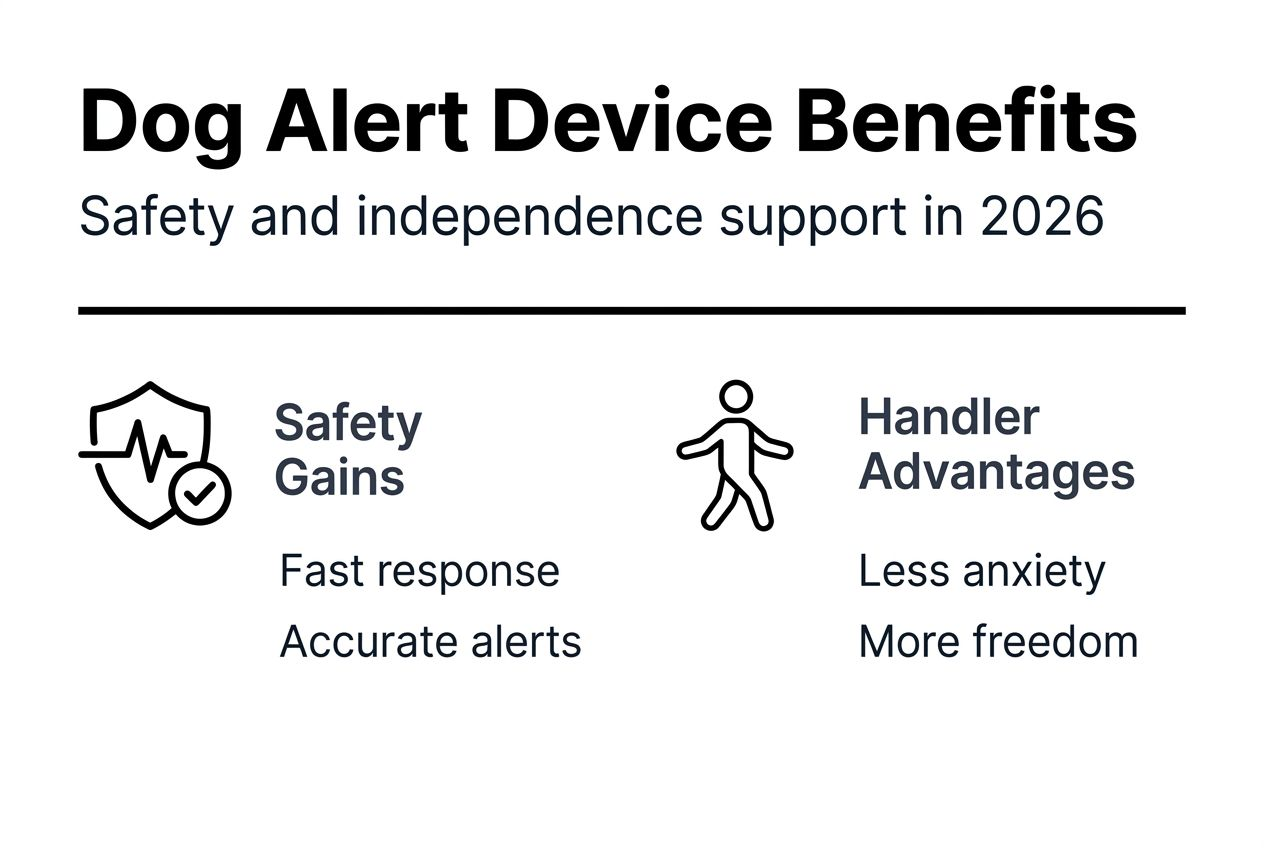
Beyond medical safety, alert devices profoundly impact handlers’ psychological wellbeing and emotional security. Survey data reveals 65% of owners with alert devices report increased perceived independence, describing newfound confidence to engage in activities previously avoided due to safety concerns. This independence stems from trusting technology to provide reliable backup when human support isn’t immediately available.
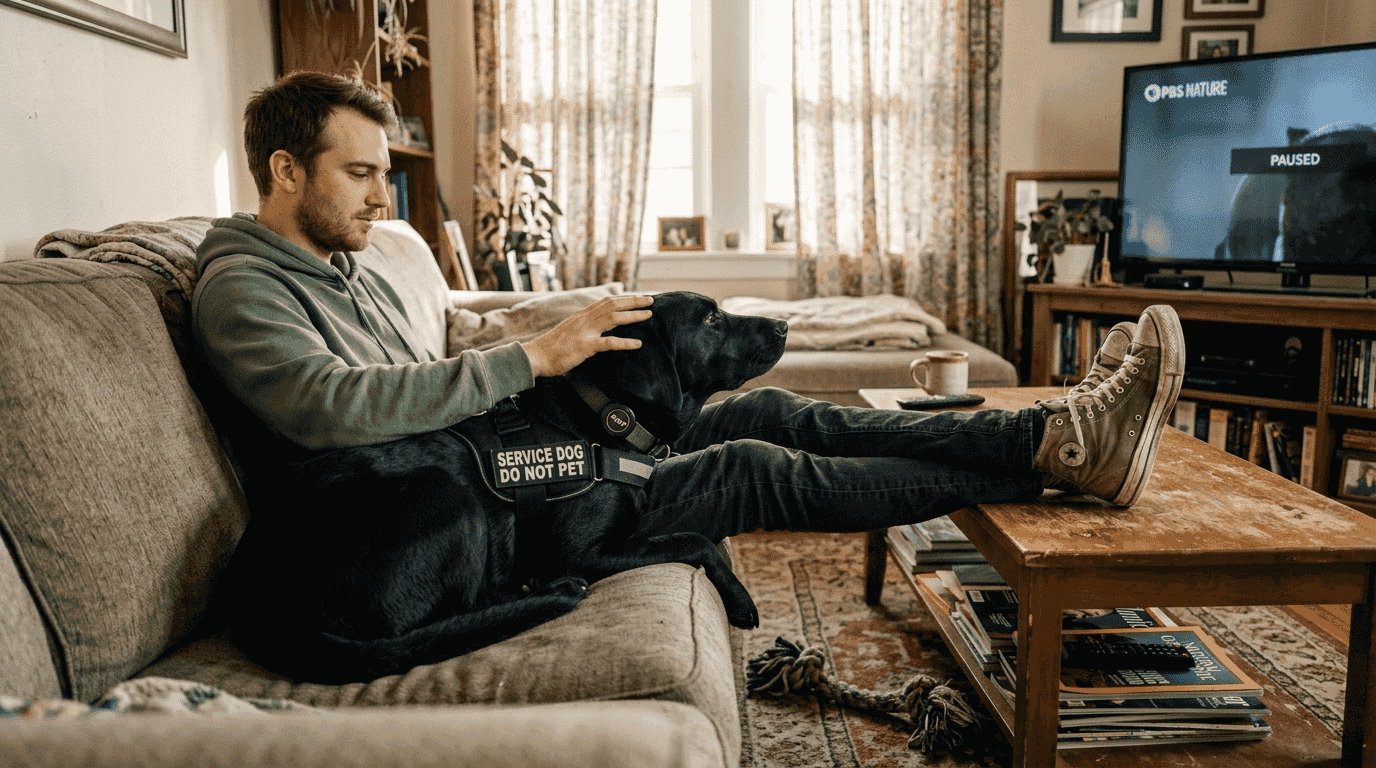
The emotional bond between handler and service dog strengthens measurably after device adoption. 70% of users report deeper connections with their dogs, attributing this to reduced anxiety about emergency scenarios. When handlers worry less about “what if” situations, they focus more on positive interactions and relationship building. The device removes a psychological barrier that unconsciously distances some handlers from fully trusting their dogs.
Psychiatric service dogs provide nonjudgmental companionship that mitigates anxiety and PTSD symptoms, and alert devices amplify this therapeutic element. The intrinsic nonjudgmental support dogs offer becomes more powerful when handlers know their dog has reliable tools to protect them. This combination creates a safety ecosystem that addresses both immediate physical needs and ongoing mental health support.
Key psychological benefits include:
- Reduced anticipatory anxiety about medical emergencies, allowing handlers to sleep better and engage more fully in daily life
- Enhanced confidence to live independently or travel without constant human supervision
- Decreased social isolation as handlers feel secure participating in community activities
- Lower baseline stress levels measured through cortisol reduction in preliminary studies
“Before the alert device, I constantly second-guessed whether my dog would wake me during a nightmare. That uncertainty kept me anxious even during good days. Now I sleep peacefully knowing the technology guarantees I’ll get help when needed.” — PTSD handler experience
Device use creates positive feedback loops for emotional wellbeing. As handlers experience successful emergency responses, their confidence grows, reducing overall anxiety levels. Lower anxiety decreases the frequency of stress-triggered medical events, creating an upward spiral of improved health and emotional stability. Understanding service dog alert types helps handlers maximize these psychological advantages.
The PTSD and service dog support research demonstrates how technology integration enhances traditional therapeutic relationships between handlers and their service animals.
Common misconceptions and clarifications about dog alert devices
Several persistent myths prevent handlers from adopting beneficial alert device technology. The most damaging misconception suggests dog alert devices only help physical disabilities like mobility impairments or seizures. Research clarifies that devices significantly aid handlers with mental health conditions such as PTSD by enabling earlier intervention before symptoms fully develop. Mental health applications often show greater benefits than physical disability support due to the predictive nature of biometric monitoring.
Another widespread belief assumes more complex devices with advanced features provide superior performance. Field experience reveals the opposite: simple single-button devices often deliver better reliability because they have fewer failure points and require less technical troubleshooting. Complex systems with multiple sensors, smartphone dependencies, and frequent charging needs introduce vulnerabilities that can fail during critical moments.
Key clarifications about device performance:
- Durability matters more than features: IP67-rated waterproof devices withstand real-world conditions better than feature-rich alternatives
- Battery longevity trumps connectivity: devices lasting months on a single charge prove more dependable than daily-charging smart devices
- Activation simplicity reduces training time: single-action devices achieve 85% training success versus 60% for multi-step systems
- Mechanical reliability exceeds digital: physical buttons outlast touchscreens and capacitive sensors in demanding service environments
The misconception that alert devices replace proper service dog training causes handler disappointment. Devices augment trained alert behaviors rather than substitute for them. Dogs must still learn to recognize medical events through scent changes, behavioral cues, or handler distress signals. The device provides a reliable communication channel for alerts the dog already knows to give.
Common pitfalls with overcomplex devices include smartphone app dependencies that fail when phones die or lose signal, Bluetooth connectivity drops in crowded environments, and touchscreen interfaces dogs accidentally trigger during normal movement. These technical failures create unreliable alert systems that erode handler confidence. Understanding service dog alert types prevents selecting inappropriate device complexity.
The alert device misconceptions clarification research emphasizes choosing technology matched to your actual needs rather than impressive specifications.
Choosing and training the right dog alert device
Selecting an appropriate alert device requires matching technology to your specific disability needs and lifestyle circumstances. Handlers with hearing impairments benefit from vibration-based alerts, while those with visual impairments need audio signals with distinct tones. Physical disability considerations include whether you can easily access and respond to different alert formats during mobility challenges.
Device selection criteria prioritize these factors:
- Ease of activation: Can your dog reliably trigger the device during stress or medical impairment?
- Durability standards: Does the device meet IP67 waterproofing and impact resistance for daily service use?
- Compatibility factors: Will alert formats work with your disability and sensory capabilities?
- Battery longevity: Can the device operate for weeks or months without charging dependencies?
- Training complexity: Does activation require single or multiple steps from your dog?
The step-by-step training process maximizes success rates:
- Week 1 - Device introduction: Allow your dog to investigate the device during positive experiences like meals and play, creating initial positive associations without pressure
- Week 2 - Shaping activation: Mark and reward any intentional contact with the alert mechanism, gradually requiring more deliberate presses or nose touches
- Week 3 - Command integration: Pair your chosen verbal cue with the physical activation, practicing in low-distraction environments five times daily
- Week 4 - Distraction proofing: Practice activation with background noise, other people present, and during walks to generalize the behavior
- Ongoing - Emergency drills: Monthly simulate your specific medical emergency to ensure your dog activates the device reliably under realistic stress
Training success rates reach 85% within four weeks when handlers maintain consistent positive reinforcement schedules. Common failure points include rushing progression before your dog masters each stage, inconsistent reward timing that confuses the target behavior, and inadequate practice under distractions that leaves dogs unprepared for real emergencies.
| Situation | Recommended Device | Key Reason |
|---|---|---|
| Hearing impairment | iPupPee with vibration receiver | Tactile alerts impossible to miss |
| Unpredictable seizures | Biometric wearable with fall detection | Automatic activation if handler incapacitated |
| PTSD nightmares | Single-button beside bed | Dog can alert during sleep disturbances |
| Diabetic episodes | Biometric glucose monitor integration | Predictive alerts before symptoms appear |
| Mobility challenges | Large button, minimal force needed | Easy activation regardless of dog size |
Pro Tip: Practice alert activation during your dog’s regular bathroom breaks or feeding times. This embeds the behavior into existing routines, dramatically improving reliability during actual emergencies when stress might otherwise disrupt performance.
The dog alert device training guide provides detailed protocols for specific disability types. Additional resources on alert dog training communication address troubleshooting when dogs show inconsistent activation patterns.
Conclusion: maximizing the benefits of dog alert devices
Dog alert devices represent transformative technology that fundamentally improves handler safety, communication reliability, and emotional wellbeing. The 40% reduction in emergency response times translates directly to better medical outcomes and fewer crisis escalations. Advances in biometric monitoring enable earlier interventions that prevent full symptom development rather than merely managing crises after they begin.
The emotional and psychological benefits complement physical safety improvements, creating comprehensive support systems. Increased independence, deeper handler-dog bonds, and reduced baseline anxiety demonstrate that alert devices enhance quality of life beyond medical metrics alone. The combination of reliable technology and trained animal partnership creates safety ecosystems greater than either element individually.
Proactive adoption paired with consistent, positive-reinforcement-based training yields optimal outcomes. Handlers who invest four weeks in systematic device training achieve 85% success rates that compound over time as behaviors strengthen through repeated practice. Choosing appropriately simple, durable devices matched to your specific needs prevents the technical failures that undermine complex systems.
Your service dog already works tirelessly to protect you. Alert devices give them a reliable voice to ensure you always hear their warnings, transforming capable partners into even more effective lifesaving companions.
Explore innovative dog alert devices at iPupPee
Ready to enhance your service dog’s communication capabilities? iPupPee offers user-friendly alert devices designed specifically for handlers prioritizing accessibility, durability, and training simplicity. Our single-button design withstands demanding daily use while providing the reliable emergency communication you need.
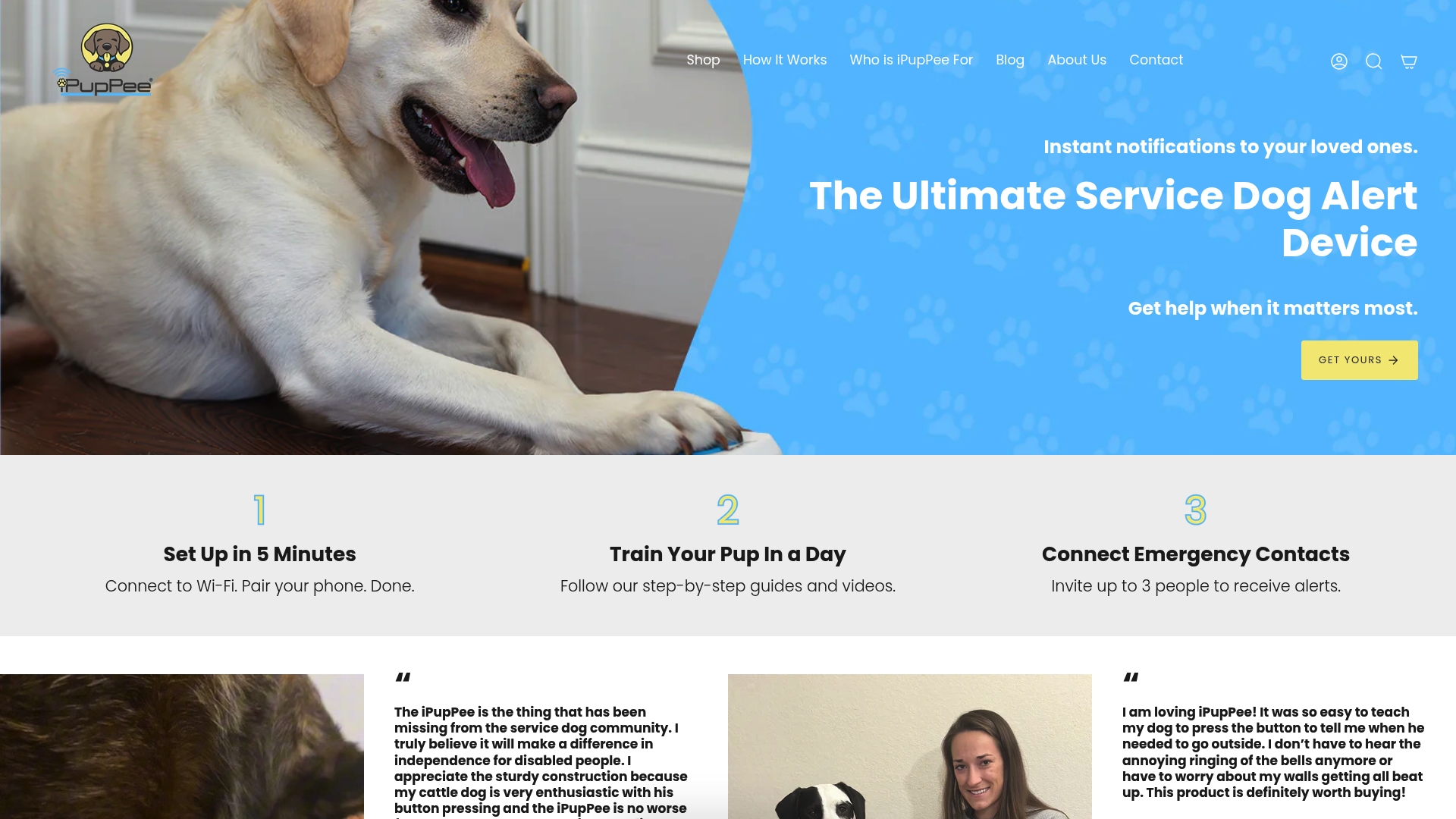
Explore our comprehensive dog alert device training guide for step-by-step protocols that achieve 85% success rates within four weeks. Compare different alert technologies through our detailed dog alert device comparison to find the perfect match for your unique needs. Visit iPupPee today to discover how simple, dependable technology can transform your independence and safety.
FAQ
What types of dog alert devices are available?
Single-button devices and biometric wearables represent the two main categories, each offering specific benefits for different handler needs. Single-button systems prioritize ease of use and durability, while biometric devices provide physiological monitoring for predictive alerts.
How do dog alert devices improve emergency response?
Alert devices reduce response times by up to 40% through immediate activation methods that bypass unreliable behavioral signals. Biometric wearables can predict medical events before observable symptoms appear, enabling intervention during the critical early window.
Can dog alert devices help handlers with mental health conditions?
Yes, devices with biometric sensors effectively support handlers managing PTSD, anxiety, and other mental health conditions. They enable earlier intervention for episodes like panic attacks or nightmares by detecting physiological changes before psychological symptoms fully develop.
What training is required for a dog to use an alert device?
Training involves positive reinforcement, gradual device introduction, and systematic emergency drills over approximately four weeks. Consistent practice under progressively challenging distractions improves reliability, with properly trained dogs achieving 85% success rates. Explore detailed protocols through alert dog training communication resources.
Recommended
- Dog Safety Technology: Elevating Independence for Owners – iPupPee
- Dog Alert Device Usage: Practical Guide for Owners and Handlers 2025 – iPupPee
- Dog Communication Technology: Enhancing Safety and Independence – iPupPee
- Dog Alert System Benefits – Expert Comparison 2025 – iPupPee
- 2026 AI Outlook: Lobsters, Layoffs & Leashes | siift