

What does pet autonomy really mean?
Pet autonomy is the principle that animals have genuine preferences, and that respecting those preferences improves their welfare. It does not mean letting your dog run into traffic or your cat skip vaccinations. It means recognizing that pets have volition, the capacity to express what they want and what they want to avoid, and building your care practices around that reality.
The concept draws from animal welfare science and behavioral research. Animals cannot provide informed consent the way humans do, so true autonomy for pets is better understood as honoring their agency within a guardian relationship. Your dog cannot weigh the pros and cons of a nail trim, but they can tell you through body language whether they feel safe or terrified during one. That signal deserves a response.
Key components of pet autonomy include:
- Volition: The pet’s ability to express preferences through behavior and body language
- Choice: Offering options in daily activities, from walk routes to play styles
- Disengagement: Allowing pets to opt out of interactions they find stressful
- Consent-building: Teaching pets to voluntarily participate in necessary care through positive reinforcement
- Boundaries with purpose: Maintaining safety constraints while maximizing freedom within them
Treating pets as fully formed adults with their own preferences, rather than as children who need constant direction, shifts the entire dynamic of care toward something more respectful and effective.
Table of Contents
- Why applying autonomy to animals gets complicated
- Practical ways to give your pet more real choices
- How the iPupPee device supports pet communication and independence
- How to responsibly build and maintain your pet’s independence
- Pet autonomy looks different across species
- Real challenges to implementing pet autonomy
- What pet autonomy does for welfare and your relationship
- Key Takeaways
Why applying autonomy to animals gets complicated
The philosophical gap between human and animal autonomy is real, and anyone serious about pet welfare should understand it honestly. Human autonomy rests on the ability to reason, weigh information, and communicate a decision. Animal patients cannot demonstrate capacity in that manner, which means decisions about their care are necessarily made by a proxy.
That creates an ethical tension. Owners hold legal and moral responsibility for their pets’ safety. Leash laws exist. Veterinary care is sometimes non-negotiable. The question is not whether to impose any limits, but how to minimize unnecessary ones and how to make the unavoidable ones less coercive.
Legal frameworks currently classify pets as property, which means autonomy in veterinary settings protects owner interests rather than animal interests. Animal welfare advocates argue this needs to change. For now, the practical path forward is for owners to voluntarily adopt a more consent-aware approach, even when the law does not require it.
Practical ways to give your pet more real choices
Force-free, choice-based training is the most direct way to build autonomy into daily life. Asking your dog to sit and rewarding the choice is fundamentally different from pushing their hindquarters down. One teaches cooperation; the other teaches compliance through physical control.
Concrete ways to promote pet self-sufficiency every day can be found in this komplett guide til å tilpasse fôr etter aktivitetsnivå that supports pet independence in daily activities.
- Let them sniff on walks. Dogs get mental exercise from scent work that a brisk trot cannot provide. Slow down and let them investigate.
- Let them choose the route. At a street corner, follow your dog’s lead when it is safe to do so.
- Stop petting every few seconds. Move your hand away and see if your dog leans in for more or steps back. That response is communication.
- Offer play options. Fetch is not the only game. Let your dog show you what they enjoy.
- Create a “yes space.” A gated area where your dog can dig, chew, or rest without redirection gives them a zone of genuine freedom.
- Honor disengagement. If your dog walks away from an interaction, let them go. That is a complete sentence in dog language.
Reading body language signals like lip licking, yawning, a tucked tail, or a turned head is the prerequisite skill for all of this. You cannot honor a preference you do not recognize.
Pro Tip: Start with one walk per week where your dog sets the pace and direction entirely. Notice how their energy and mood differ from a structured heel walk. That contrast alone will change how you think about daily routines.
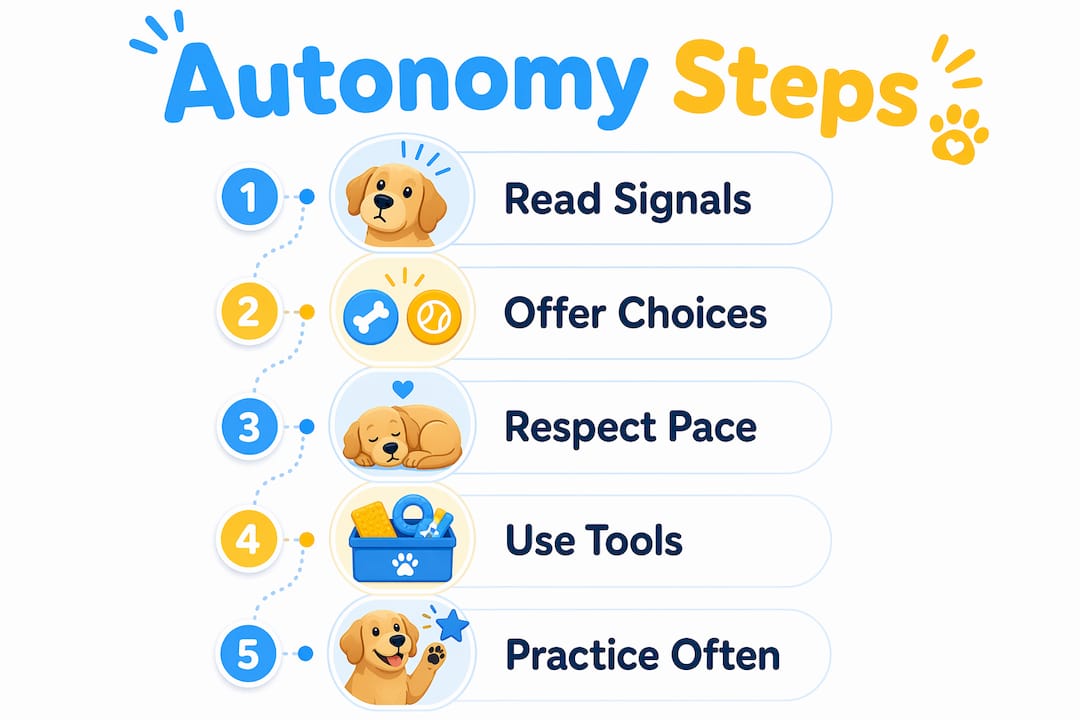
How the iPupPee device supports pet communication and independence
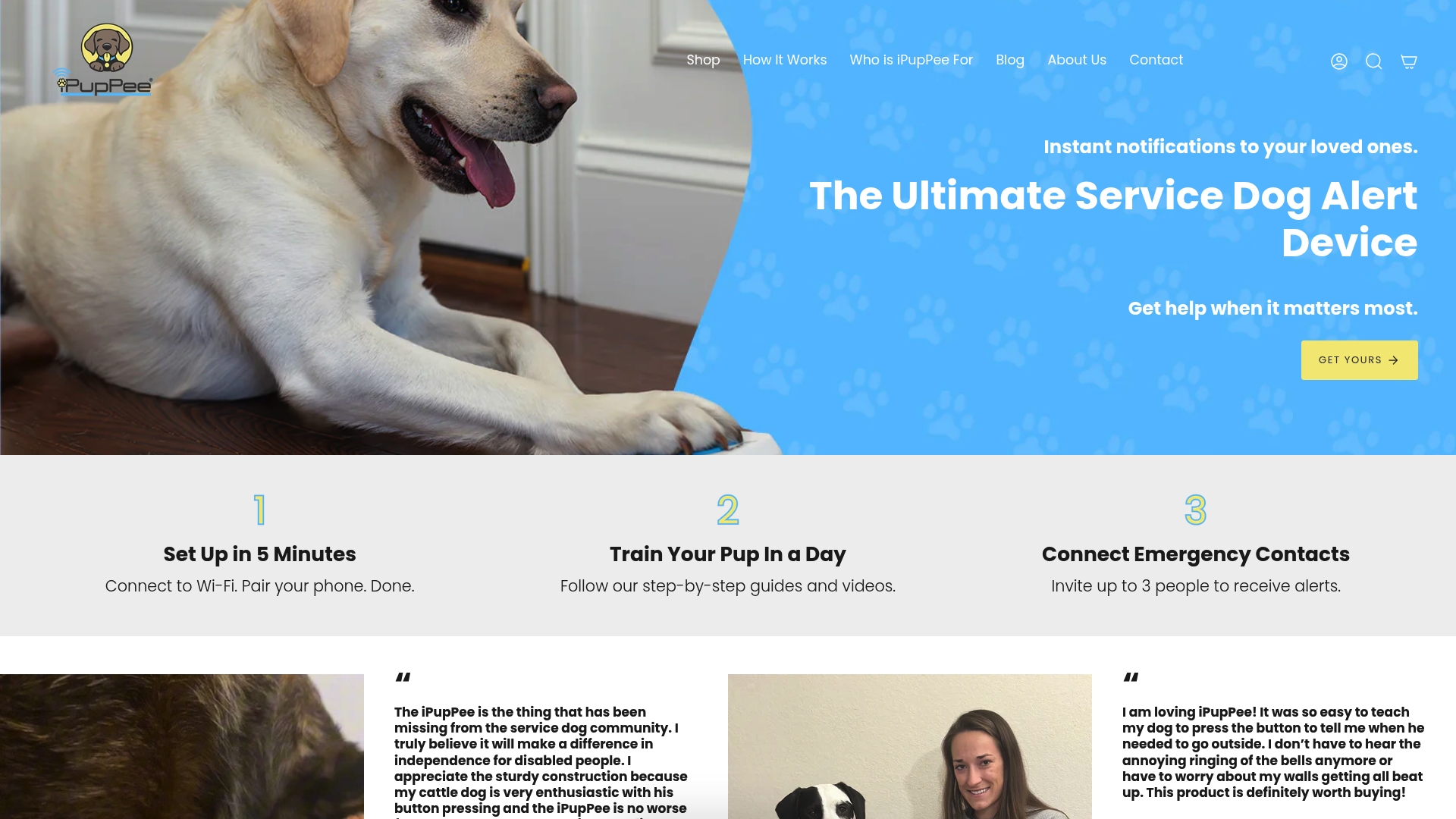
Technology can bridge the gap between what pets want to express and what owners can understand. The iPupPee device does exactly that: it enables dogs to communicate specific needs through a simple button press, giving them a direct line to their owner without barking, scratching, or other behaviors that often get ignored or punished.
The device is particularly valuable in three scenarios:
- Service dog users and disabled individuals: A dog trained to press the iPupPee button can alert a handler to a need without requiring the handler to constantly monitor the dog’s body language.
- Seniors living alone: The device creates a safety loop where the dog’s communication triggers a response, reducing the risk of unmet needs going unnoticed.
- New puppy owners: Teaching a puppy to use a button to signal bathroom needs builds communication habits early, before frustration-based behaviors develop.
The iPupPee device is built around a core belief: pets have things to say, and owners deserve a clear way to hear them. When a dog can press a button and get a consistent response, that exchange builds trust and reduces anxiety on both sides.
The device also supports the importance of pet independence by giving pets a reliable way to initiate interaction rather than waiting passively. That shift from reactive to proactive communication is a meaningful step toward genuine autonomy.
Pro Tip: Pair the iPupPee button with a consistent verbal response from you every time your dog uses it. The predictability of your reaction is what teaches your dog the button actually works, and that reliability is what builds confidence.
How to responsibly build and maintain your pet’s independence
Respecting autonomy is not a one-time decision. It is a set of ongoing practices that require observation, patience, and a willingness to adjust.
Steps for building pet independence without creating anxiety:
- Start with observation. Spend a week noting when your pet disengages, hides, or shows stress signals. Those patterns tell you where autonomy is already being restricted.
- Create predictable routines. Independence is a learned skill, not an innate trait. Dogs develop emotional security through consistent, predictable experiences, not through being left alone and hoping for the best.
- Build alone time gradually. Begin with 30-second separations while you are still home. Increase duration only when your dog is calm, not just quiet.
- Designate a safe space. A specific bed, crate, or room where only good things happen gives your pet a place to self-regulate.
- Respond to signals, not just behaviors. If your cat retreats to a high shelf, that is a choice. If your dog turns away during petting, that is a choice. Honoring both teaches your pet that their communication works.
Pro Tip: Practice “structured independence” daily: put your dog in their safe space with a chew while you work nearby. This teaches them that separation is normal and temporary, not a sign that something is wrong.
Pet autonomy looks different across species
Dogs get most of the attention in autonomy discussions, but the principle applies across species, each with its own expression.
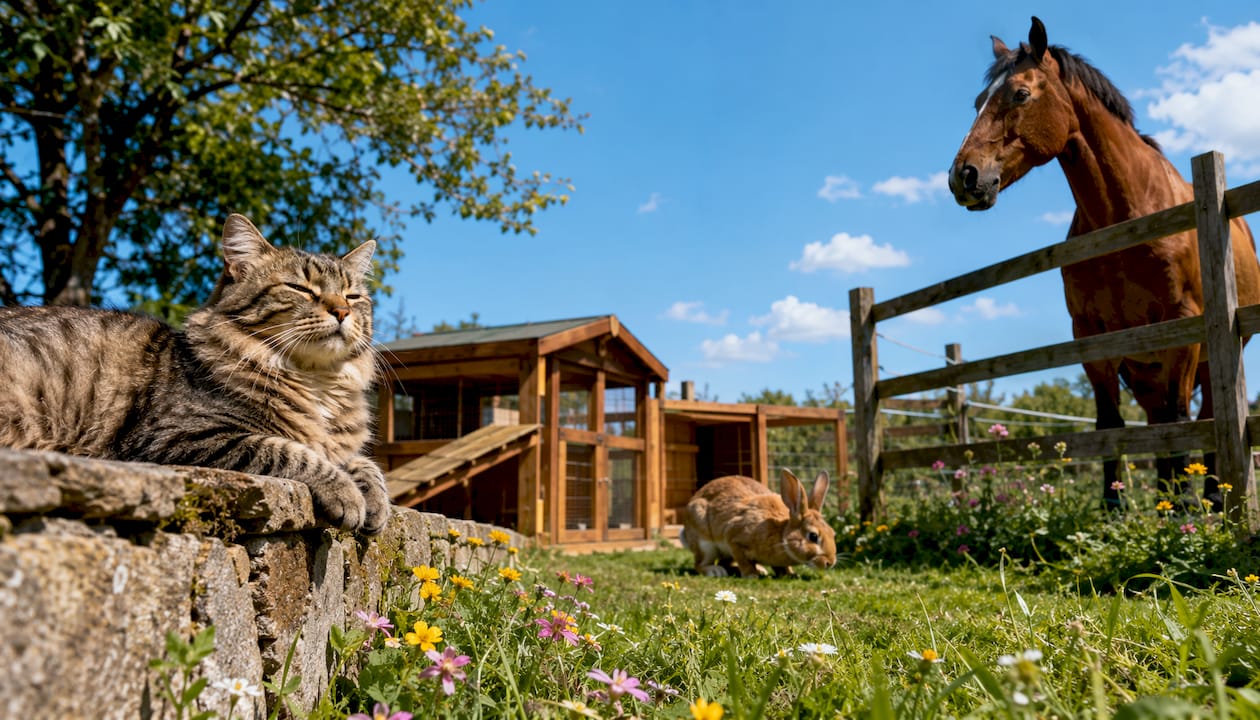
Dogs show autonomy preferences most visibly through social behavior. Allowing a dog to greet or avoid another dog on a walk, rather than forcing the interaction, is a direct application of choice-based care.
Cats are often more naturally autonomous than dogs, but owners still override their preferences constantly, picking them up when they want to be left alone, or confining them to spaces they find stressful. Letting a cat choose when to seek contact is the baseline.
Rabbits and small animals benefit from enriched environments where they can burrow, forage, and hide on their own schedule. Forcing handling on a prey animal that is signaling fear causes lasting stress.
Horses in therapeutic and sport contexts show clear preferences about workload, social grouping, and environment. Trainers who read and respond to those signals report better performance and fewer behavioral problems.
The common thread across all species is that overdependence on human direction creates stress and behavioral problems, while spaces where animals can exhibit natural behaviors without interruption support both autonomy and well-being.
Real challenges to implementing pet autonomy
Knowing the theory is one thing. Applying it runs into friction quickly.
Safety constraints are real. Leash laws, traffic, toxic plants, and aggressive animals all limit how much freedom is genuinely safe. Autonomy within a fenced yard looks very different from autonomy on a busy street.
Misreading signals is common. Most owners learn dog body language informally, which means subtle stress signals get missed. A wagging tail does not always mean a happy dog. Training yourself to read your pet’s signals accurately takes deliberate effort.
Pushing too fast causes harm. Training for independence requires careful pacing. When a dog’s emotional capacity is exceeded, panic responses activate automatically, and no amount of repetition overrides a nervous system in survival mode.
Cultural habits are hard to shift. Many training traditions still rely on physical correction and forced compliance. Shifting to choice-based methods requires unlearning practices that feel normal because they are familiar.
Learned consent is still a power dynamic. Even when a dog voluntarily cooperates with a nail trim for a treat, the choice is still “cooperate or get nothing.” That is better than force, but it is not the same as full autonomy. Acknowledging that gap honestly is part of taking the concept seriously.
What pet autonomy does for welfare and your relationship
Providing spaces where dogs can exhibit natural behaviors without interruption supports both autonomy and well-being. That is not a soft claim. Dogs who have more control over their environment recover from stress faster, show greater behavioral flexibility, and are easier to live with day to day.
The relationship benefit is equally concrete. A dog who can opt out of interactions without being overridden learns that their communication works. That trust is the foundation of a genuinely cooperative relationship, one built on mutual respect rather than compliance.
Owners benefit too. A pet with emotional self-sufficiency does not shadow your every move or panic when you leave. That confidence makes daily life calmer for everyone in the household.
Key Takeaways
Pet autonomy centers on respecting animals’ volition within safe boundaries, and owners who apply this principle consistently see measurable gains in both pet welfare and the quality of their relationship.
| Point | Details |
|---|---|
| Autonomy means volition, not total freedom | Pets express preferences through behavior; honoring those signals is the practical definition of pet autonomy. |
| Consent must be learned, not assumed | Positive reinforcement teaches pets to voluntarily participate in care, reducing fear and stress during handling. |
| Independence is a skill, not a trait | Dogs develop emotional security through gradual, predictable alone-time training, not through being left without preparation. |
| Technology extends communication | The iPupPee device lets dogs initiate contact through a button press, giving them a direct and reliable way to express needs. |
| Overdependence harms both parties | Pets who lack autonomy show higher rates of anxiety and behavioral problems; building independence benefits the whole household. |