

Finding reliable service dog training can be especially challenging for American seniors or pet owners with disabilities. Over 60 percent of American households rely on communication devices to support daily independence, making the use of advanced tools like iPupPee crucial for service dog alerts. Choosing the right approach ensures your dog is well prepared to respond consistently with personalized cues. This guide offers practical steps for assessing readiness, setting up devices, and reinforcing skilled alert behaviors that fit your unique needs.
Table of Contents
- Step 1: Assess Your Dog’s Readiness and Needs
- Step 2: Set Up The Alert Device And Environment
- Step 3: Introduce The Alert Cue And Device
- Step 4: Shape The Desired Alert Behavior
- Step 5: Reinforce And Generalize Alert Responses
- Step 6: Verify Consistent Alert Performance
Quick Summary
| Key Point | Explanation |
|---|---|
| 1. Assess Dog’s Readiness | Evaluate motivation, focus, and obedience to ensure ideal alert training foundation. |
| 2. Create a Controlled Environment | Minimize distractions and ensure a secure space for introducing alert devices. |
| 3. Introduce Clear Alert Cues | Use a consistent verbal cue or signal to establish communication for alerts. |
| 4. Shape Alert Behaviors Gradually | Break down alert actions into small steps and reinforce each progressive behavior. |
| 5. Systematically Verify Performance | Test and document your dog’s alert responses in varied scenarios for reliability assessment. |
Step 1: Assess Your Dog’s Readiness and Needs
Successfully training your dog for alerts starts with a comprehensive readiness assessment. This critical first step helps you understand whether your dog has the foundational skills and temperament required for specialized alert training.
Begin by evaluating your dog’s baseline behavior and learning capabilities. Dogs learn primarily through associative learning, which means they adapt to changes based on experiences and rewards. During this initial assessment, observe how your dog responds to basic commands and their overall focus level. Pay attention to their motivation triggers like specific treats, toys, or praise that might enhance their training potential. A dog who is food motivated or play driven typically demonstrates higher trainability for alert responses.
Carefully consider your dog’s current skill set and personality. Some dogs naturally have stronger communication instincts and faster learning curves. Look for signs of attentiveness, quick response times to existing commands, and an ability to maintain concentration even when distractions are present. Reliable recall training requires making proximity to the owner the most rewarding experience for the dog. This means your dog should already have a solid foundation in basic obedience before attempting specialized alert training.
Pro tip: Create a structured evaluation checklist that objectively tracks your dog’s current skills, motivation levels, and potential training challenges to guide your alert training strategy.
Here’s a summary of key factors to assess before starting alert training:
| Assessment Factor | Why It Matters | Example Indicator |
|---|---|---|
| Motivation Level | Determines engagement | Reacts enthusiastically to treats |
| Focus & Attention | Affects learning speed | Maintains eye contact despite distractions |
| Obedience Foundation | Ensures readiness | Responds quickly to basic commands |
| Communication Instincts | Promotes understanding | Shows natural tendency to signal or fetch |
Step 2: Set Up the Alert Device and Environment
Preparing the right environment is crucial for successful alert device training. This step involves creating a controlled setting that maximizes your dog’s learning potential and minimizes potential distractions.
Controlled training environments are essential for introducing new devices and behaviors. Start by selecting a quiet, familiar space in your home where your dog feels comfortable and secure. Remove potential distractions like toys, other pets, or high-traffic areas. Ensure the room has enough space for your dog to move around and interact with the alert device comfortably. When introducing the device, make the experience positive and game-like, using treats and praise to create an association between the device and rewards.
Integrating wearable technology requires a gradual and patient approach. Begin by letting your dog explore the alert device without any pressure. Allow them to sniff and investigate the device, rewarding calm and curious behavior. Slowly introduce the device’s sounds or vibrations, always pairing these with positive experiences like treats or play. Consistency is key connect the device’s alerts with specific intervention behaviors, helping your dog understand the purpose and expectations.
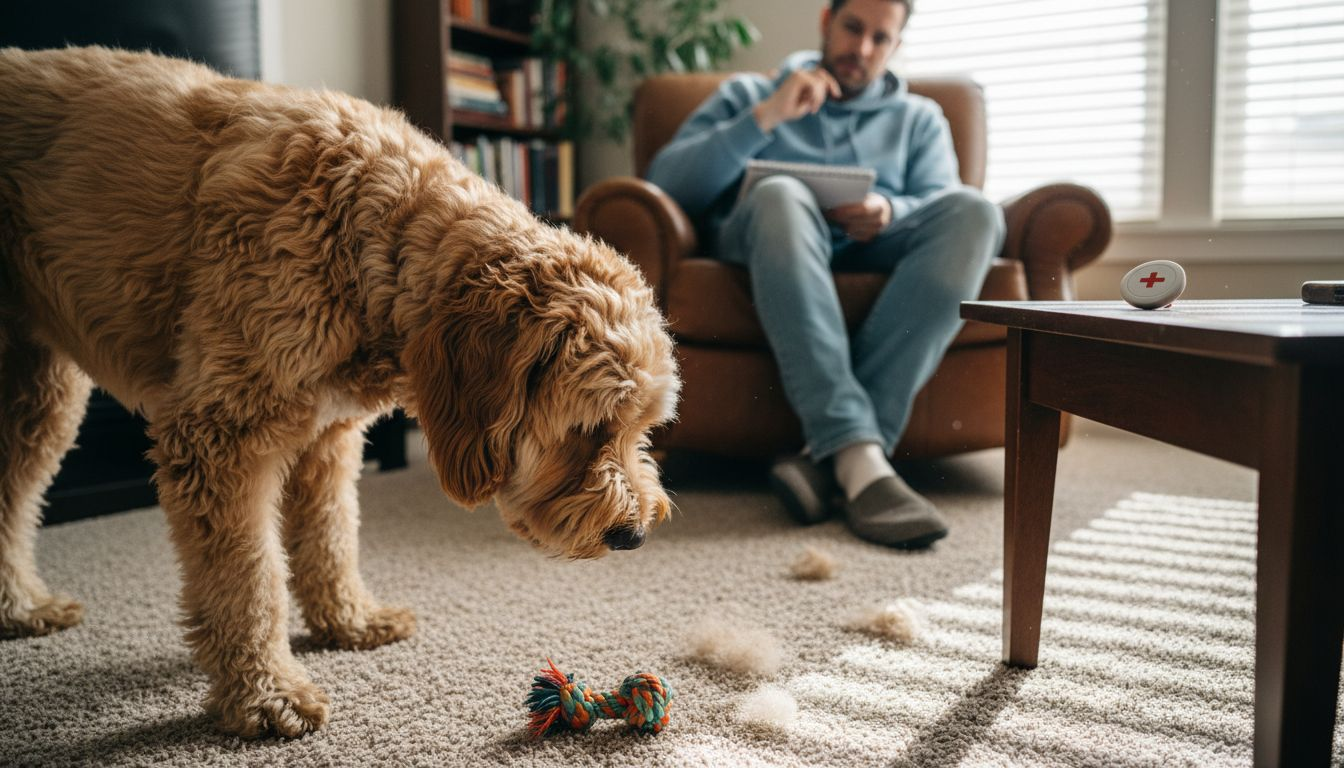
Pro tip: Create a dedicated training zone with minimal distractions and keep training sessions short and engaging to maintain your dog’s focus and enthusiasm.
Step 3: Introduce the Alert Cue and Device
Successfully introducing an alert cue requires a systematic and patient approach that transforms the training process into a positive learning experience for your dog. This step focuses on creating clear communication between you and your dog using specialized training techniques.
Clicker training provides an efficient method for teaching alert behaviors by precisely marking the exact moment your dog performs the desired response. Start by selecting a specific verbal cue or hand signal that will trigger the alert behavior. Practice this cue in a quiet environment with minimal distractions. When your dog responds correctly, immediately use the clicker and reward them with a high value treat. This helps your dog understand the connection between the cue, the device, and the positive reinforcement.
Marker training enhances communication during alert training by providing crystal clear feedback. Choose a consistent sound or gesture that signals the correct behavior something like a specific word or click that your dog can easily recognize. Repeat the training sequence multiple times gradually increasing the complexity of the alert scenario. Begin with short training sessions and slowly build up the duration and difficulty level. Always end on a positive note to maintain your dog’s motivation and enthusiasm for learning.
Pro tip: Practice your alert cue in short five minute sessions several times daily and always use the same tone of voice to help your dog recognize and respond consistently.
Step 4: Shape the Desired Alert Behavior
Shaping an effective alert behavior requires a strategic and patient approach that breaks down complex responses into manageable learning steps. This critical phase transforms your dog’s understanding of the alert process through careful reinforcement and incremental skill building.
Shaping involves teaching complex behaviors by reinforcing progressive approximations toward the final alert action. Begin by identifying the smallest components of the desired alert behavior. For instance, if your alert requires your dog to press a button or nudge a specific device, start by rewarding any interaction with the object. Gradually raise your expectations by only rewarding more precise movements that align closer to the complete alert sequence. This method allows your dog to build confidence while understanding the exact behavior you want.
Modern working dog training emphasizes incremental behavior development through systematic reinforcement. Break down the alert sequence into tiny achievable steps. Reward your dog immediately when they demonstrate even a slight movement toward the desired behavior. As your dog becomes more consistent, increase the precision of your expectations. Pay close attention to your dog’s individual learning pace and adjust the training accordingly. Some dogs will progress quickly while others might need more time to understand and execute the alert behavior.
Pro tip: Keep training sessions short and energetic use high value treats and maintain an upbeat attitude to prevent frustration and make learning feel like an exciting game.
Step 5: Reinforce and Generalize Alert Responses
Successfully training your dog to perform alert behaviors consistently requires a systematic approach to reinforcement and generalization. This critical stage transforms your dog’s learned skills into reliable responses across diverse environments and scenarios.
Alert dog training emphasizes consistent behavior reinforcement through strategic exposure to varied stimuli. Start by practicing the alert behavior in progressively challenging environments. Begin in a quiet, controlled space and gradually introduce mild distractions. Slowly increase complexity by changing locations, adding background noise, or varying the timing of alert cues. Each successful response should be immediately rewarded with high value treats and enthusiastic praise to maintain your dog’s motivation and confidence.
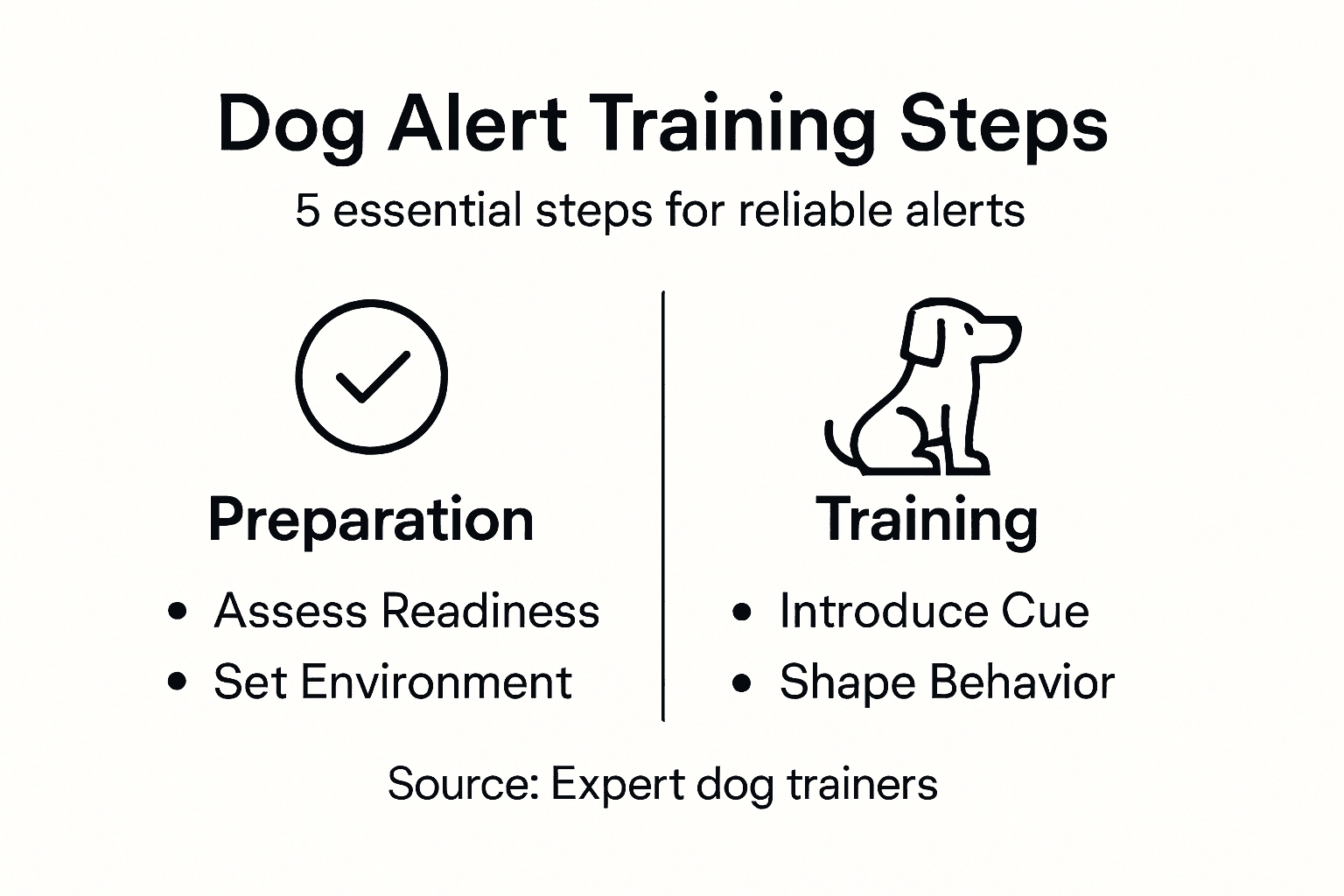
Clicker training supports reliable behavior transfer across different contexts. Consistently mark and reward correct alert behaviors using the same positive reinforcement techniques established during initial training. Practice the alert response in multiple settings such as different rooms, outdoors, or with mild disruptions. The goal is to help your dog understand that the alert behavior remains valid regardless of environmental changes. Pay attention to your dog’s learning pace and adjust the complexity of training scenarios to ensure continued success and engagement.
Pro tip: Create a generalization checklist tracking different environments and scenarios to systematically expand your dog’s alert response reliability.
This table outlines the main steps for generalizing alert behavior:
| Training Step | Purpose | Key Method |
|---|---|---|
| Practice in quiet areas | Build initial consistency | Use frequent rewards |
| Introduce mild distractions | Test response in new scenarios | Add background noise or movement |
| Increase complexity | Strengthen reliability | Change locations, vary cues |
| Track performance | Ensure long-term progress | Record results systematically |
Step 6: Verify Consistent Alert Performance
The final stage of alert training involves systematically assessing your dog’s reliability and precision in performing alert behaviors across different scenarios. This verification process ensures your dog can confidently and consistently execute the learned alert response.
Detection canine performance verification requires comprehensive testing protocols. Design a series of controlled scenarios that progressively challenge your dog’s alert skills. Start by testing in familiar environments with minimal distractions, then gradually introduce more complex settings. Document each alert response, noting accuracy, speed, and consistency. Pay attention to your dog’s ability to perform the alert behavior under varying conditions such as different noise levels, time of day, and potential interruptions.
Scientific alert dog performance assessment involves repeated evaluations to confirm reliability. Create a structured evaluation framework that measures the sensitivity and specificity of your dog’s alert responses. Use standardized metrics to track performance, including response time, accuracy rate, and ability to generalize the alert behavior. Consider video recording training sessions to review and analyze your dog’s performance objectively, identifying areas that might require additional reinforcement or practice.
Pro tip: Develop a detailed performance tracking spreadsheet to systematically record and analyze your dog’s alert behavior across different scenarios and environments.
Enhance Your Dog’s Alert Training with Innovative Tools
Training dogs for alerts involves patience, consistency, and a clear communication system to shape reliable behaviors. Key challenges include maintaining focus, reinforcing the alert cues, and generalizing responses to real-life scenarios. If you are looking to overcome these hurdles and accelerate your dog’s alert training process, innovative solutions can make all the difference. The iPupPee alert device is designed to simplify and enhance communication between you and your dog by using an easy-to-press button that your dog can learn to activate reliably.
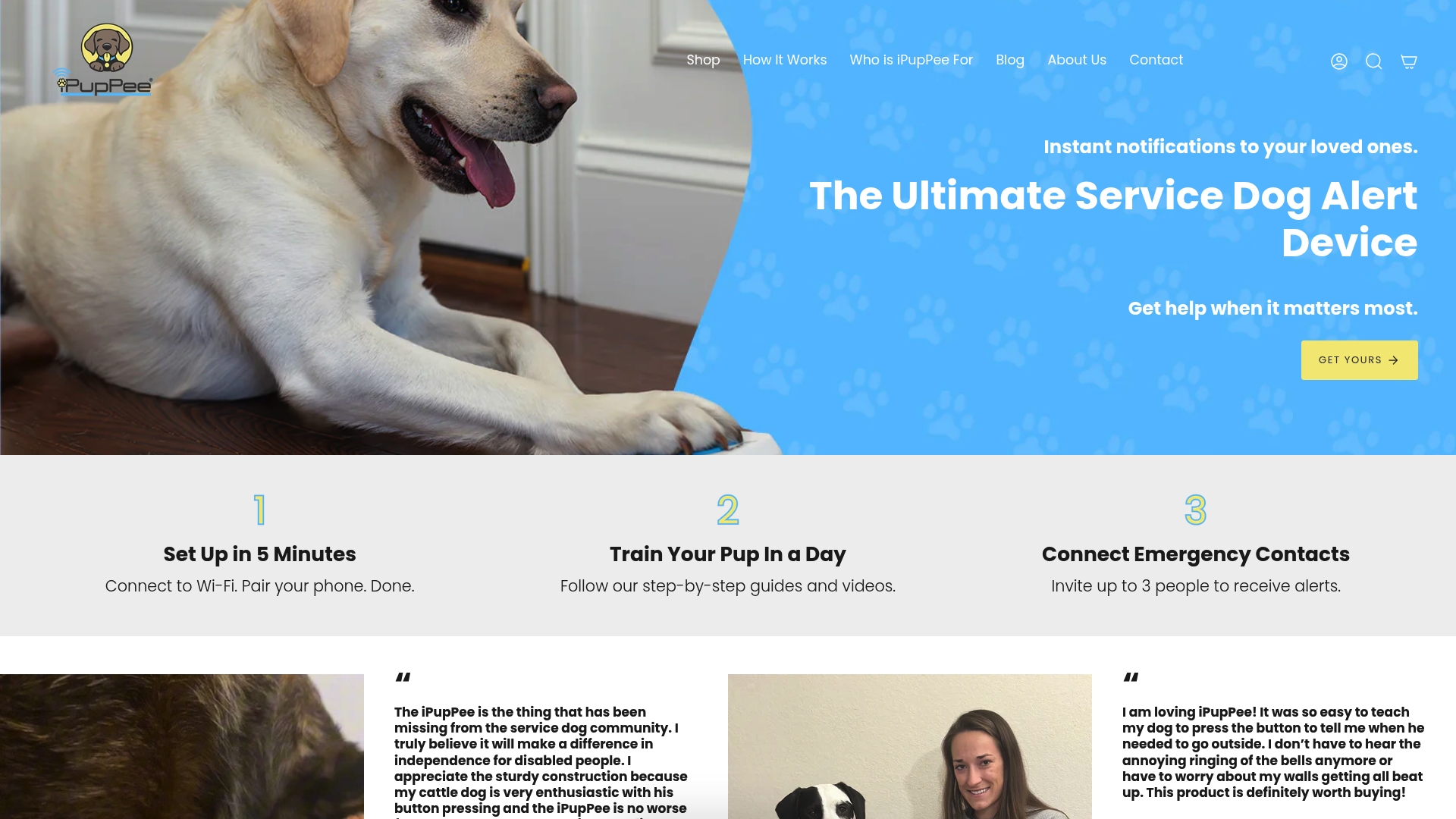
Discover how the iPupPee device complements step-by-step alert training by providing a consistent alert cue your dog can master. This device supports your training strategy from initial introduction to consistent performance verification, addressing common pain points such as distraction and inconsistent alerts. Ready to empower your dog with a tool that increases safety, independence, and clear communication? Explore the full range of features and training guides at ipuppee.com and take a decisive step toward successful and confident alert training today.
Frequently Asked Questions
How do I assess my dog’s readiness for alert training?
To assess your dog’s readiness for alert training, evaluate their baseline behavior and learning capabilities. Observe their responses to basic commands and identify motivation triggers, such as treats or toys, to enhance their training potential.
What environment should I create for training my dog to use an alert device?
Select a quiet, familiar space in your home for training sessions to ensure your dog feels comfortable. Remove distractions and make the experience positive by using treats and praise when introducing the alert device.
How can I effectively introduce the alert cue to my dog?
Introduce the alert cue by choosing a specific verbal command or hand signal, and practice it in a distraction-free environment. Use clicker training to mark the desired behavior and immediately reward your dog to help them associate the cue with positive reinforcement.
What steps should I take to shape my dog’s alert behavior?
Start by breaking down the desired alert behavior into small, manageable components. Reward any initial interaction with the alert device and gradually raise expectations as your dog becomes more consistent in their responses.
How can I verify that my dog is consistently performing alert behaviors?
To verify your dog’s performance, create a series of controlled scenarios that progressively challenge their alert skills. Document their accuracy, speed, and consistency across different environments to ensure reliable response performance.
How long should my training sessions be for optimal results?
Keep training sessions short, around five minutes, to maintain your dog’s focus and enthusiasm. Aim for multiple sessions throughout the day to reinforce learning and prevent frustration.
Recommended
- Dog Alert Device Training Guide for 2025: Easy Steps & Tips – iPupPee
- Dog Alert Training Methods: Best Techniques for 2025 – iPupPee
- Dog Alert Signals: Recognize and Respond for Safety in 2025 – iPupPee
- Dog Alert Response Training Guide for Reliable Assistance – iPupPee
- Understanding Types of Dogs and Breeds for Everyone – FunLifeNow