

Most service dog owners assume their dog’s natural alert behaviors are enough to communicate emergencies. Yet when communication barriers exist due to disabilities, hearing loss, or living alone, even the most well-trained service dog can struggle to reach you in time. Dog alert devices bridge this critical gap, transforming your dog’s alerts into reliable, technology-enhanced signals that notify you and emergency contacts instantly. This guide explores how innovative devices like paw-activated buttons, sensor collars, and audible beacons empower pet owners with disabilities and seniors to achieve greater safety, independence, and peace of mind through smarter emergency communication.
Table of Contents
- Key takeaways
- How dog alert devices enhance safety and independence
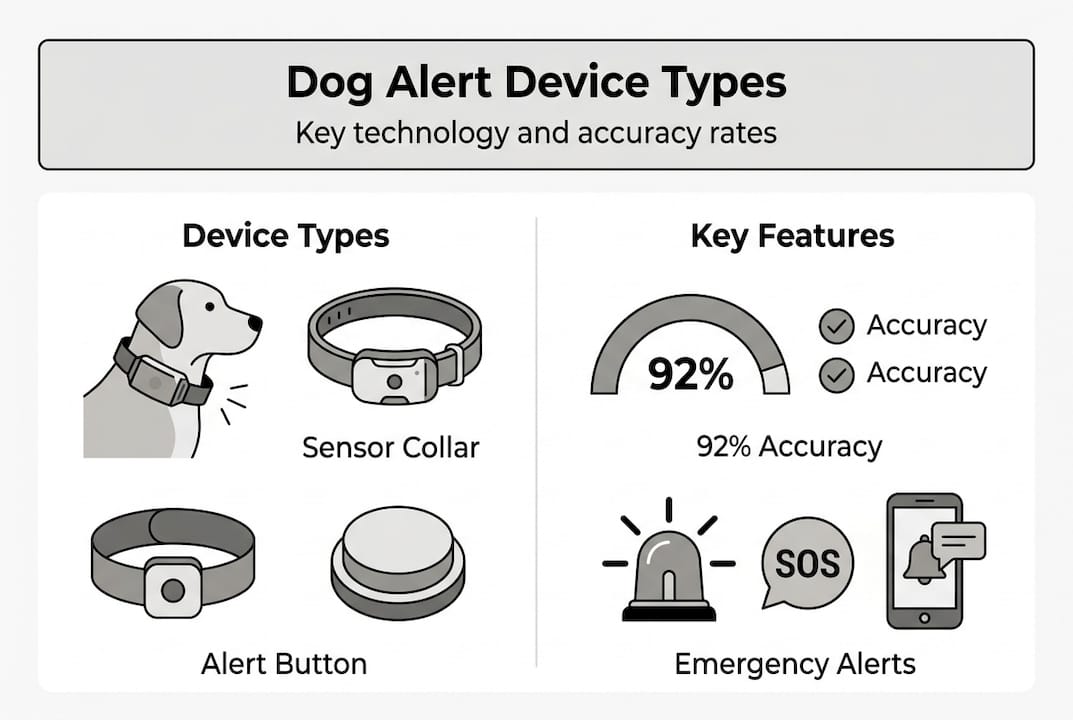
- Types of dog alert devices: features, technology, and accuracy
- Challenges and nuances in dog alert device use and training
- Choosing and using dog alert devices for your needs: practical tips
- Explore innovative dog alert devices with iPupPee
- FAQ
Key Takeaways
| Point | Details |
|---|---|
| Tech enabled alerts | Dog alert devices convert your dog’s signals into reliable, technology driven notifications for you and emergency contacts. |
| Device accuracy | Accuracy ranges from 74 percent to 92 percent in detecting alert behaviors and seizures, improving reliability over natural dog alerts alone. |
| Paw activated buttons | Paw activated alert buttons increase independence for disabled and senior owners by letting the dog initiate notifications. |
| Training matters | Effective use depends on proper training and choosing the right device to match the owner’s needs and the dog’s skills. |
How dog alert devices enhance safety and independence
Dog alert devices create a vital communication bridge for service and assistance dogs to signal emergencies like medical distress, safety threats, or urgent needs. These devices translate your dog’s trained behaviors into clear, actionable alerts you can recognize instantly. Examples include audible feedback lights that emit sounds and visual cues, sensor collars that detect specific movements, and paw-activated buttons your dog presses to send notifications.
The benefits extend far beyond simple alerts. iPupPee enhances independence for disabled and senior owners via dog-activated alerts, with claims of 40% faster emergency response, though independent benchmarks remain limited. For those with disabilities or seniors facing challenges in manual alerting, these devices accelerate emergency response times, increase owner autonomy, and provide crucial peace of mind. You gain confidence knowing your service dog can reach you or emergency contacts even when physical barriers exist.
Selecting the right device requires evaluating your lifestyle, your dog’s current training level, and the specific features each device offers. A senior living alone may prioritize app-based notifications to multiple contacts, while a hearing-impaired owner might need strong visual or vibration alerts. Understanding dog alert device advantages helps you match technology to your unique circumstances.
Proper training integration dramatically improves device effectiveness and reliability. Your dog must learn to associate the device with emergency communication, and you need to develop trust in interpreting signals accurately. Devices work best when training reinforces consistent use as part of daily routines, building muscle memory for both you and your dog.
Pro Tip: Start device training in low-stress environments before introducing emergency scenarios. This builds your dog’s confidence and ensures reliable performance when it matters most.
Types of dog alert devices: features, technology, and accuracy
Dog alert devices fall into several categories, each using distinct technology to serve different needs. Understanding these differences helps you choose devices that align with your dog’s skills and your communication requirements.
Audible beacon safety lights combine sound and light signals for handlers with visual or hearing impairments. The Ruffwear Audible Beacon provides audible feedback and a 12-hour runtime with waterproof design, earning a 4.5/5 user rating. These devices attach to your dog’s collar and activate manually or automatically, making them ideal for short-duration outdoor activities where visibility matters.
Paw-activated alert buttons connect to smartphone apps, notifying emergency contacts instantly when your dog presses the button. These systems typically include two-way audio capability, require no monthly subscriptions, and support multiple emergency contacts. They excel for owners with limited mobility who need their dog to initiate contact independently.
IMU sensor collars use machine learning to detect dog spin alert behaviors with 92% accuracy in controlled testing. These collars monitor motion patterns through inertial measurement units, recognizing trained behaviors like circling or specific movement sequences that signal alerts. The high accuracy makes them suitable for medical alert dogs trained to perform consistent physical signals.

Accelerometer-based seizure detection apps analyze movement data to identify potential seizure events. These systems demonstrate 74% sensitivity with relatively low false positive rates, supporting medical alert functions for owners with epilepsy or similar conditions. While less accurate than IMU collars for trained behaviors, they provide valuable backup monitoring.
| Device Type | Key Technology | Accuracy Rate | Primary Use Case | Notable Features |
|---|---|---|---|---|
| Audible Beacon | Sound + Light | Manual activation | Blind/hearing-impaired handlers | 12-hour battery, waterproof |
| Paw Button | App notification | User-dependent | Limited mobility owners | No subscription, 2-way audio |
| IMU Sensor Collar | Machine learning motion | 92% (lab tested) | Trained alert behaviors | Detects spins and patterns |
| Seizure Detector App | Accelerometer analysis | 74% sensitivity | Medical monitoring | Low false positives |
No single device fits every situation. Comparing dog alert device uses reveals how your dog’s existing training, your physical abilities, and your living situation should guide selection. A dog trained to spin before alerts pairs perfectly with IMU collars, while a dog learning emergency communication may start with simpler paw buttons.
Choosing devices requires balancing real-world usability, training compatibility, and technological reliability. Lab accuracy numbers provide useful benchmarks, but practical performance depends heavily on consistent training and your ability to interpret signals correctly in daily life.
Challenges and nuances in dog alert device use and training
Training consistency stands as the most critical factor in conditioning dogs to use alert devices effectively. Your dog must practice device activation regularly, not just during emergencies, to develop reliable muscle memory. Inconsistent training leads to hesitation, missed alerts, or confusion about when to activate devices.
False positives occur especially in medical device alerts, requiring you to learn signal interpretation accurately. Studies show 74-92% detection rates but highlight variability and false positives, making practical training consistency crucial. You might receive alerts during play behaviors that mimic emergency signals, demanding careful observation to distinguish true emergencies from routine activities.
Accessibility issues can arise depending on device design and your physical capabilities. Some handlers find audible beacon buttons difficult to press due to arthritis or limited dexterity. Button placement, size, and activation force all affect usability, particularly for seniors or those with hand mobility challenges.
Individual variability in dog behavior and alert styles means devices and training must be personalized. Your dog’s natural communication style, energy level, and learning pace influence which devices work best. A high-energy dog might accidentally trigger paw buttons during play, while a calm dog might need extra motivation to use devices consistently.
Training steps for device success:
- Introduce the device in a calm, familiar environment without pressure or emergency scenarios.
- Reward every correct device interaction immediately to build positive associations.
- Gradually increase difficulty by adding distractions or moving to new locations.
- Practice emergency scenarios regularly to maintain skills and build confidence.
- Monitor for false positives and adjust training to clarify when activation is appropriate.
- Coordinate with family members or caregivers so everyone responds consistently to alerts.
You must undergo training alongside your dog to develop trust in signals and reduce interpretation mistakes. Understanding your device’s capabilities and limitations prevents over-reliance or dismissing genuine alerts. Continuous evaluation and adaptation improve long-term device success and safety as your needs and your dog’s abilities evolve.
Pro Tip: Combining manual training with sensor technologies enhances alert reliability by creating redundant communication pathways. If one system fails or produces unclear signals, you have backup methods.
“The difference between a trained alert and a reliable device-assisted alert is consistency. Technology amplifies what training establishes, but it cannot replace the foundation of clear communication between you and your dog.” — Service Dog Training Specialist
Choosing and using dog alert devices for your needs: practical tips
Assess your physical needs and your dog’s alert skills before device selection to ensure compatibility. Consider whether you need visual, audible, or app-based notifications based on your sensory abilities. Evaluate your dog’s current training level to determine if they can reliably perform physical actions like pressing buttons or if passive monitoring through sensors better suits their skills.
Device selection factors include ease of use, battery life, waterproof rating, and notification features. A device requiring frequent charging may not work for someone with limited hand mobility. Waterproof ratings matter if your dog works outdoors or in wet conditions. Notification options should match your lifestyle, whether you need text alerts, phone calls, or notifications to multiple emergency contacts.
Incorporate devices like paw-activated buttons to enhance emergency communication for those with limited mobility. These systems enable your dog to initiate contact independently, reducing your need for manual intervention during emergencies. The iPupPee app-based device offers user-friendly training support and helps notify multiple emergency contacts, making it practical for seniors or disabled owners living alone.
Implement a training schedule that reinforces device use as part of daily routines. Practice device activation during regular activities, not just emergency drills, to normalize the behavior. Consistency builds reliability and ensures your dog responds appropriately when genuine emergencies occur.
Device integration checklist:
- Test device range and connectivity in your home and common outdoor locations.
- Program emergency contacts and verify they receive test notifications.
- Establish a charging routine to prevent dead batteries during critical moments.
- Create backup communication plans if device batteries die or connectivity fails.
- Schedule regular device checks and app updates for reliability.
- Document your dog’s alert patterns to identify improvements or issues over time.
Use comparison tables to weigh pros and cons of leading devices for your specific criteria. Prioritize features that address your most pressing safety concerns, whether that’s rapid emergency contact notification, long battery life, or high accuracy in detecting specific alert behaviors.
| Selection Factor | Questions to Ask | Impact on Device Choice |
|---|---|---|
| Mobility level | Can I manually activate devices if needed? | Determines need for dog-activated vs. manual systems |
| Sensory abilities | Do I need visual, audible, or vibration alerts? | Guides notification type selection |
| Living situation | Am I alone or with caregivers regularly? | Affects number of emergency contacts needed |
| Dog’s training | What alert behaviors does my dog perform reliably? | Matches device type to existing skills |
| Budget | What ongoing costs can I manage? | Influences subscription-based vs. one-time purchase devices |
Coordinate with healthcare providers or trainers for optimal integration and emergency planning. Professional guidance ensures devices complement your medical needs and your dog’s training program. Understanding how dogs alert owners using devices provides context for discussing options with your support team.
Pro Tip: Start with one device type and gradually integrate others as needed for layered safety. Multiple alert methods create redundancy, but introducing too many devices simultaneously can confuse both you and your dog.
Ensure emergency contacts are trained to respond promptly when notified via app-based devices. Your contacts need to understand what different alerts mean and what actions to take. Clear communication prevents delays during actual emergencies. Explore comprehensive guidance on dog emergency alert systems to develop robust safety protocols.
Explore innovative dog alert devices with iPupPee
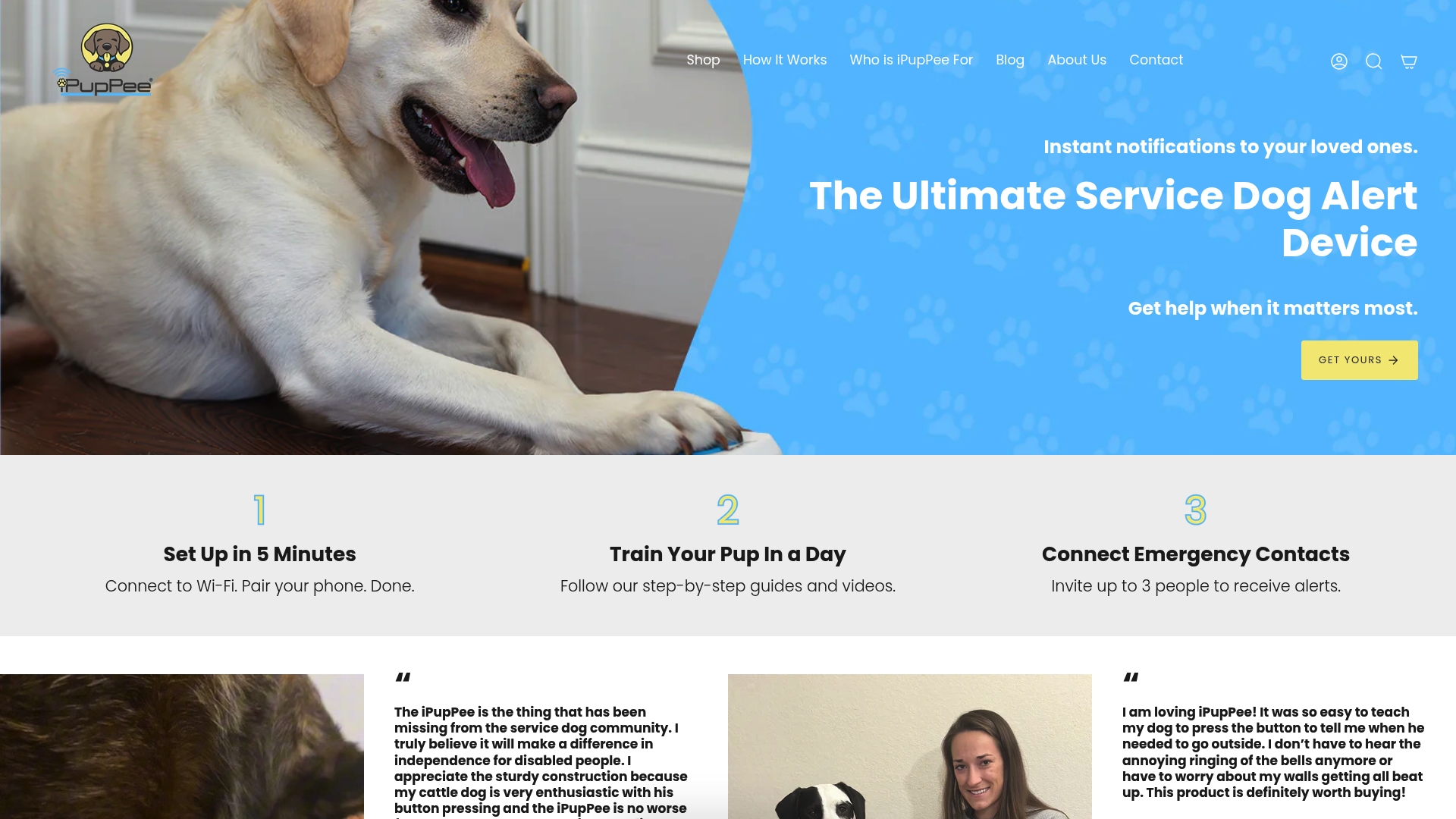
You’ve learned how dog alert devices transform emergency communication, but implementing the right solution requires access to reliable, user-friendly technology designed specifically for service dog owners. iPupPee provides paw-activated emergency alert buttons with companion apps that require no subscriptions and include comprehensive training support. Their devices notify up to three emergency contacts with two-way audio capability, giving you direct communication during emergencies.
Whether you’re managing a disability, supporting a senior family member, or seeking greater independence with your service dog, iPupPee’s platform offers practical solutions tailored to your dog’s alert needs. Visit their site to explore products, access training resources, and discover how technology can enhance your and your service dog’s safety and independence. Their approach combines innovation with accessibility, supporting you in building reliable emergency communication systems. Learn more about comprehensive dog emergency alert systems to find the perfect fit for your situation.
FAQ
What are dog alert devices and how do they work?
Dog alert devices enable dogs to signal emergencies using sensors, buttons, or audio cues that translate trained behaviors into actionable alerts. They communicate with owners or caregivers through lights, sounds, or smartphone app notifications. Devices detect either manual activation when your dog presses a button or automatic triggers when sensors recognize specific movement patterns like spinning or seizure-related motions.
Which dog alert device is best for service dogs with hearing-impaired owners?
Audible beacon safety lights with audio signals assist blind or hearing-impaired owners by providing both sound and visual cues. The Ruffwear Audible Beacon offers audible feedback and waterproof design favored by blind handlers, though some users report button access challenges. Consider device placement and ease of manual access when choosing, and supplement with vibration alerts or app notifications for best results.
How reliable are sensor-based dog alert devices?
Sensor collars demonstrate high lab accuracy around 92% for detecting alert behaviors, but individual variability affects real-world outcomes. Seizure alert apps show 74% sensitivity with some false positives, requiring owners to interpret signals carefully. Proper training is essential to improve reliability and minimize false alerts through consistent conditioning.
What training is needed for dogs to use alert devices effectively?
Consistent conditioning to associate device signals with emergency communication forms the foundation of effective use. Step-by-step guidance improves both dog response accuracy and owner interpretation of alerts. Regular practice ensures reliability under real-life conditions, building muscle memory for your dog and confidence for you. Explore detailed dog alert signal training to develop comprehensive skills.
How do I choose the right dog alert device for my dog and lifestyle?
Assess your mobility and communication needs first, considering whether you require visual, audible, or app-based notifications. Evaluate your dog’s alert training and comfort with technology to match device complexity to their skills. Compare features like notification options, battery life, and ease of use against your daily routines. Test devices progressively and integrate training gradually for best results, learning more about how dogs alert owners using devices to make informed decisions.