

Finding clear communication with your service dog can be the difference between a routine outing and a stressful experience. For individuals with disabilities or seniors, understanding the true nature of service dog alerts—beyond myths and assumptions—becomes vital for daily safety and independence. This guide highlights the complexity of service dog alerts and demystifies misconceptions, revealing how specialized communication tools and technology can transform daily interactions for every handler.
Table of Contents
- Defining Service Dog Alerts And Misconceptions
- Primary Service Dog Alert Categories Explained
- How Service Dog Alert Systems Work
- Device-Based Alerts And Communication Tools
- Training Methods For Consistent Dog Alerts
- Safety, Access, And Legal Considerations
Key Takeaways
| Point | Details |
|---|---|
| Understanding Service Dog Alerts | Service dog alerts involve specialized training to respond to medical, environmental, and psychological changes, not instinctive behaviors. |
| Misconceptions About Capabilities | Many misconceptions exist about the consistency and training of service dog alerts; they require professional training and vary greatly among individual dogs. |
| Importance of Individualized Training | Each service dog and handler team needs tailored training approaches to develop effective communication and alert systems for specific needs. |
| Legal and Safety Considerations | Service dog handlers should be informed about their legal rights, access to public spaces, and documentation to prevent discrimination and ensure safety. |
Defining Service Dog Alerts and Misconceptions
Service dogs represent a critical support system for individuals with disabilities, offering far more sophisticated assistance than many people realize. Emerging research highlights the complexity of their roles beyond simple companionship, challenging widespread misconceptions about their capabilities and training.
At their core, service dog alerts are specialized communication signals that help handlers understand potential medical, environmental, or physiological changes. These alerts can range from warning about impending seizures to detecting blood sugar fluctuations in diabetic individuals. Unlike typical pet behaviors, service dog alerts are deliberate, trained responses designed to provide life-saving interventions.
Common misconceptions about service dog alerts often stem from a lack of understanding about their specialized training. Many people incorrectly assume that:
- All service dogs naturally perform alerts without extensive training
- Alerts are consistent and identical across different dogs and handlers
- Service dogs can detect every potential medical event with 100% accuracy
Variability in alerts is a critical aspect that many overlook. Scientific research indicates significant variation in how individual dogs learn and perform alert behaviors, emphasizing that each dog-handler team develops unique communication methods.
Professional training plays a crucial role in developing reliable service dog alerts. Certified trainers work extensively with dogs to help them recognize specific physiological changes and respond appropriately, transforming natural canine observational skills into targeted assistance techniques.
Pro tip: Understand that service dog alerts are highly individualized skills that require consistent professional training and ongoing communication between the dog and handler.
Primary Service Dog Alert Categories Explained
Service dogs perform a wide range of critical alert functions that go far beyond general assistance, addressing specific medical and psychological needs. These alert categories represent specialized communication methods tailored to individual handler requirements, demonstrating the remarkable adaptability of trained service animals.
The primary service dog alert categories can be broadly classified into several specialized domains:
- Medical Alerts: Detecting physiological changes like blood sugar levels, seizures, or heart rate fluctuations
- Psychiatric Support Alerts: Interrupting anxiety episodes, providing grounding during panic attacks
- Physical Assistance Alerts: Warning about potential mobility challenges or environmental hazards
- Sensory Alerts: Identifying specific sounds, movements, or potential dangers for handlers with sensory impairments
Psychiatric service dogs represent a particularly nuanced category of alert types. Public perceptions often misunderstand their complex roles, viewing them as simple emotional support animals rather than professionally trained medical assistants.
Each alert category requires extensive, specialized training that transforms a dog’s natural observational skills into targeted, life-changing interventions. Professional trainers work meticulously to develop these skills, ensuring that service dogs can reliably communicate critical information to their handlers across various challenging scenarios.
To better understand the unique functions of each service dog alert type, review the summary below:
| Alert Category | Main Focus | Typical Scenarios | Example Intervention |
|---|---|---|---|
| Medical Alerts | Detect health changes | Blood sugar fluctuation, seizure | Nudging, fetching medication |
| Psychiatric Alerts | Interrupt psychological crises | Anxiety or panic episode | Pawing, grounding techniques |
| Physical Assistance | Mobility/environment warnings | Imminent fall, obstacle detected | Blocking handler, positioning |
| Sensory Alerts | Compensate sensory deficits | Fire alarm, car approaching | Warning tap, leading to safety |
Pro tip: Always recognize that service dog alerts are sophisticated, individualized communication systems developed through intensive professional training, not simply instinctive behaviors.
How Service Dog Alert Systems Work
Service dog alert systems represent a complex communication network that transforms canine intuition into life-saving interventions. Dogs detect subtle physiological and behavioral changes through an intricate process of training, observation, and learned response patterns.
The fundamental mechanics of service dog alert systems involve several critical components:
- Sensory Detection: Recognizing minute changes in handler’s body temperature, scent, breathing patterns, or muscle tension
- Signal Interpretation: Translating detected changes into specific alert behaviors
- Communication Techniques: Using physical interactions like nudging, pawing, or positioning to communicate potential risks
- Trained Response Protocols: Executing specific interventions based on the type of detected change
Psychiatric service dogs demonstrate particularly sophisticated alert mechanisms. Alert behaviors serve as critical intervention strategies for handlers experiencing anxiety, panic attacks, or post-traumatic stress symptoms. These dogs are trained to recognize emotional escalation and interrupt potentially harmful psychological cycles.
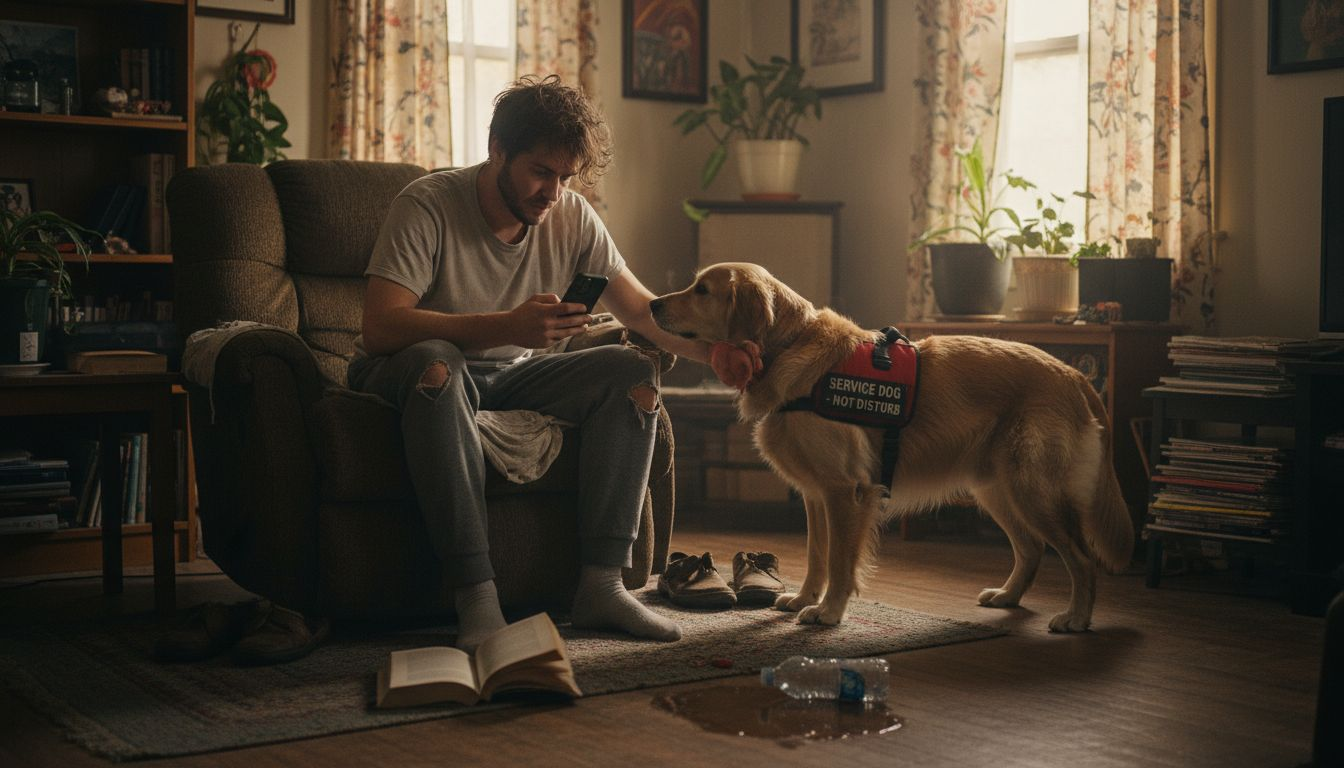
Professional trainers develop these alert systems through extensive conditioning, teaching dogs to recognize specific physiological and psychological signals while maintaining a calm, focused demeanor. The process involves careful behavioral shaping, ensuring that the dog’s alert is both reliable and non-intrusive.
Pro tip: Remember that service dog alert systems are highly personalized communication tools, requiring ongoing training and mutual understanding between the dog and handler.
Device-Based Alerts and Communication Tools
Device-based alerts represent a cutting-edge approach to enhancing service dog communication capabilities, bridging technological innovation with canine assistance. These specialized tools create an additional layer of safety and independence for handlers with diverse medical and mobility needs.
The primary categories of device-based communication tools include:
- Wearable Alert Devices: Small electronic attachments that translate dog signals into audible or vibrating alerts
- Smartphone Integration Tools: Apps and bluetooth-enabled devices that track and transmit service dog signals
- Environmental Sensing Equipment: Devices that help dogs communicate potential hazards or changes in surroundings
- Medical Monitoring Accessories: Specialized sensors that complement the dog’s natural alert capabilities
Workplace assistive technologies have significantly expanded the functionality of service dog communication systems. Specialized alert devices help debunk common misconceptions about service dog capabilities, demonstrating that technology can amplify their natural alerting skills.
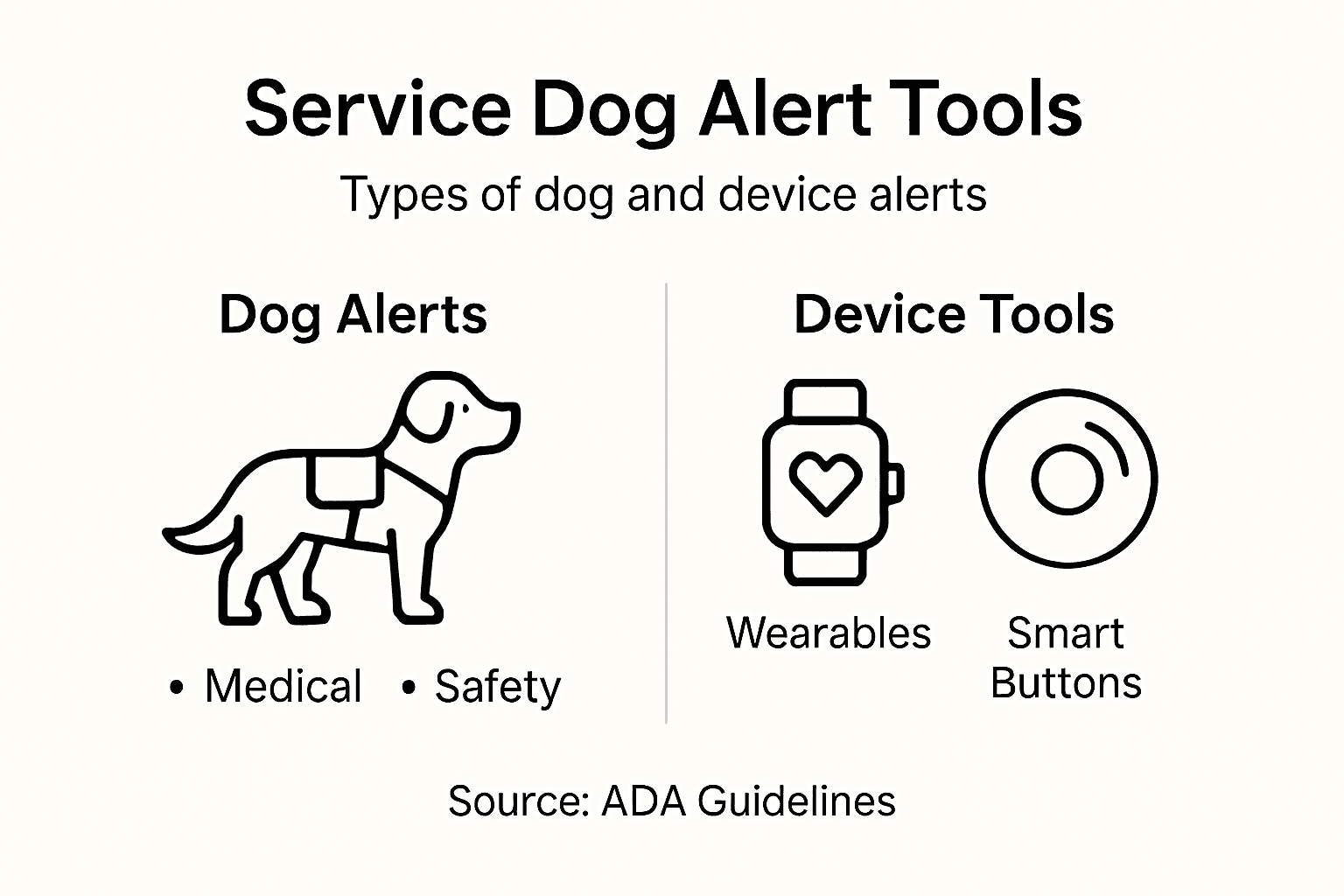
These communication tools are not replacements for trained service dogs but sophisticated complements that enhance their ability to provide timely, accurate information. Professional trainers work closely with technology developers to ensure these devices integrate seamlessly with the dog’s natural alert behaviors.
Here is a comparison of traditional service dog alerts and device-based alert technologies:
| Aspect | Traditional Dog Alerts | Device-Based Alerts |
|---|---|---|
| Communication Method | Physical signals (pawing, nudging) | Audible/vibrating electronic cues |
| Customization Level | Highly individualized | Varies by device and handler setup |
| Reliance on Technology | None | Essential for device operation |
| Integration Complexity | Built into training | Requires trainer-device coordination |
Pro tip: Always consult with professional service dog trainers when selecting device-based communication tools to ensure proper integration with your dog’s existing alert system.
Training Methods for Consistent Dog Alerts
Medical alert training techniques represent a sophisticated approach to developing reliable service dog communication skills. These methods transform natural canine observational abilities into precise, life-saving alert behaviors through systematic and individualized training strategies.
Key components of consistent service dog alert training include:
- Sensory Cue Recognition: Teaching dogs to identify specific physiological changes through scent, body temperature, and behavioral shifts
- Positive Reinforcement Techniques: Using reward-based methods to strengthen desired alert behaviors
- Individualized Training Protocols: Customizing training approaches to match specific handler needs and medical conditions
- Gradual Complexity Progression: Incrementally increasing alert task difficulty and precision
Behavioral reinforcement plays a crucial role in developing reliable alert systems. Interdisciplinary research highlights the importance of creating consistent, repeatable communication patterns between dogs and their handlers, ensuring that alerts remain accurate and meaningful across various scenarios.
Professional trainers employ multiple strategies to build consistent alert behaviors, including scenario-based training, controlled exposure to different environmental stimuli, and continuous skill assessment. This comprehensive approach ensures that service dogs can perform their critical communication functions with maximum reliability and minimal variability.
Pro tip: Invest in professional training that focuses on your specific medical or support needs, as individualized approaches yield the most consistent and effective service dog alert systems.
Safety, Access, and Legal Considerations
Social and legal challenges for service dog handlers represent a complex landscape of rights, protections, and public understanding. These considerations extend far beyond simple animal accompaniment, creating a nuanced framework of legal responsibilities and handler protections.
Key legal and safety considerations include:
- Public Access Rights: Ensuring service dogs can accompany handlers in all public spaces
- Disability Discrimination Protections: Legal safeguards preventing exclusion or mistreatment
- Documentation and Verification Standards: Appropriate methods for demonstrating service dog legitimacy
- Handler Safety Protocols: Guidelines for protecting both the handler and the service dog in various environments
Legal protections play a critical role in service dog handler experiences. Americans with Disabilities Act regulations provide fundamental access rights, establishing clear guidelines for service dog acceptance in public spaces and workplace environments.
Understanding these legal frameworks helps handlers navigate complex social situations, protect their rights, and ensure their service dogs can effectively provide necessary support. Professional organizations and disability advocacy groups continue to work toward expanding and clarifying these critical protections.
Pro tip: Always carry concise documentation about your service dog’s legal status and be prepared to provide clear, factual information about your rights and the dog’s essential functions.
Enhance Your Service Dog’s Alert Power for Safer Living
Understanding the many types of service dog alerts reveals how vital clear and timely communication is for safety and independence. Whether managing medical alerts, psychiatric support, or sensory warnings, handlers face the challenge of ensuring these sophisticated signals are consistently understood. The article highlights the crucial role of personalized training and professional techniques to achieve reliable alerts that truly empower safe living.
At iPupPee, we recognize these pain points and goals by offering an innovative communication device designed specifically to bridge the gap between you and your service dog. Our unique alert button helps translate your dog’s signals into actionable messages that enhance situational awareness and reduce misunderstandings. This technology supports the complex alert systems discussed in the article by adding a dependable tool for clear communication that complements professional training.
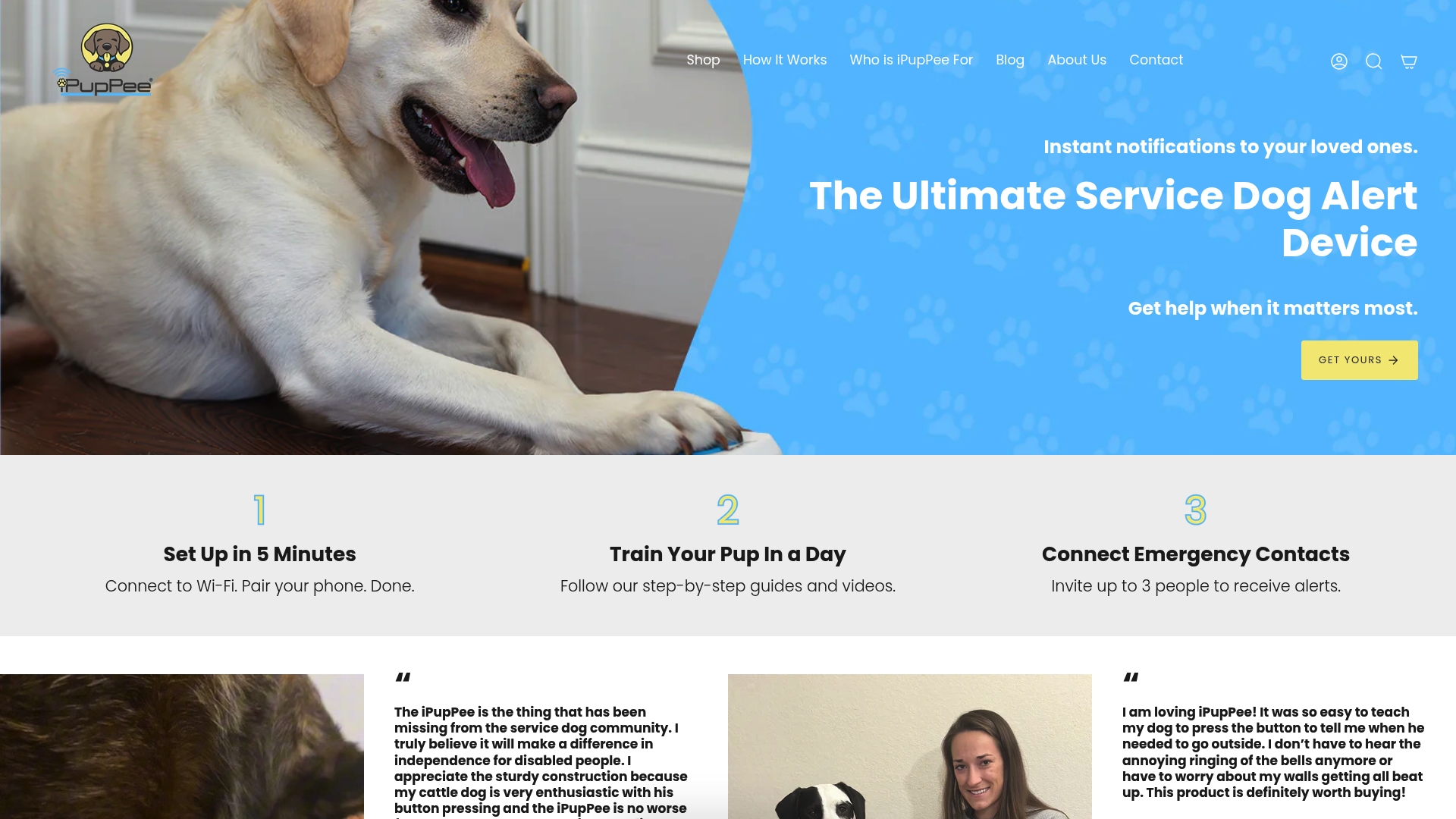
Discover how the iPupPee device can amplify your service dog’s alerts and bring peace of mind every day. Act now to increase your safety and independence with a trusted solution built for service dog handlers. Visit iPupPee today and take the next step toward empowered living.
Frequently Asked Questions
What are the different types of service dog alerts?
Service dog alerts can be broadly categorized into medical alerts, psychiatric support alerts, physical assistance alerts, and sensory alerts. Each type is tailored to address specific individual needs, providing essential support in various scenarios.
How do service dogs learn to perform alerts?
Service dogs learn to perform alerts through extensive professional training that includes sensory cue recognition, positive reinforcement techniques, and personalized training protocols designed for individual handler needs.
Are service dog alerts consistent across all dogs?
No, service dog alerts are not consistent across all dogs. Each dog-handler team develops unique communication methods, and there can be significant variation in how individual dogs learn and perform alert behaviors.
What role do device-based alerts play in service dog communication?
Device-based alerts enhance service dog communication capabilities by providing additional safety and independence for handlers. These tools can translate dog signals into audible or vibrating alerts, integrating technology with traditional service dog alert systems.