

Sensors give you continuous, objective data on your pet’s behavior and activity, so you can spot changes earlier than observation alone allows. Accelerometers detect eating, drinking and scratching patterns, GPS adds location safety, and devices like iPupPee add fast communication. They support your veterinarian and tools like microchips, which the CDC still treats as the standard for identification.
TL;DR:
- Fit the device snugly, wear it consistently for 7 to 14 days, and judge sustained changes against your pet’s baseline rather than isolated alerts.
- Leash tension, collar position, body shape, and coat can affect readings, so check for independent testing on the behaviors and animals you care about.
- GPS can help locate a pet, but collars can slip off or lose power; keep the microchip registered and have your veterinarian scan it yearly.
- Share trend charts and notes about medication or diet changes with your veterinarian, since alerts identify shifts but cannot diagnose conditions.
Table of Contents
- How do pet sensors work, and which types will you actually find?
- What can sensors monitor day to day?
- What does the research say about accuracy and limits?
- How do you choose and use a pet sensor?
- Which new and contactless sensors are worth watching?
- How should you combine sensor data with veterinary care?
- What should you know about privacy and data security?
- How do sensors support pets with special needs?
- Editorial take: start with one goal, and treat accuracy as a range
- How can iPupPee support your monitoring routine?
- FAQ
- Sources
How do pet sensors work, and which types will you actually find?
Every smart pet device is built from a handful of sensing parts. Knowing what each one measures helps you turn a spec sheet into realistic expectations.
- Accelerometers and inertial measurement units (IMUs): These measure motion in several directions. They power step counts and machine-learning models that classify behaviors such as eating, drinking and scratching. A collar-mounted unit sits close to the neck, where head movements during eating and drinking are easy to pick up.
- GPS: GPS gives location, geofencing and escape alerts. It is most useful for outdoor safety, but a collar can break, slip off or lose battery power. For that reason the CDC says microchips remain the permanent identification method, and it advises registering the chip and keeping your contact details current.
- Acoustic sensors and microphones: These can estimate breathing or pulse proxies by listening. They are sensitive to background noise and to how snugly the device sits.
- Temperature sensors: Peripheral thermistors read skin or surface temperature. Thick fur, weather and sleeping position can all skew the reading, so treat them as a rough signal rather than a fever test.
- Camera and vision sensors: Cameras give context. They can confirm what a motion sensor suggested, such as whether your dog was scratching or just shaking off water. The tradeoff is privacy, which we cover below.
- Chemical sensors and biosensors: These analyze urine, saliva or breath. Research on point-of-care testing for pets describes electrochemical biosensors and lateral-flow tests as promising, while noting that calibration, biofouling and reproducibility are still hard problems.
Most consumer products combine several of these. A smart collar might pair an accelerometer with GPS and a temperature reading, while a feeder pairs a weight sensor with a camera.
The key point is that each sensor measures a physical signal, not a diagnosis. An accelerometer reports movement. Software then guesses which behavior produced that movement. That guess can be excellent for a distinct action like drinking and much weaker for something subtle, so the quality of the software matters as much as the hardware.
What can sensors monitor day to day?
Sensors earn their place when they connect to something you care about: comfort, safety and routine. Here is how the sensor types translate into everyday outcomes.
Behavior detection. Walking, running, eating, drinking, scratching and licking each leave a recognizable motion pattern. A rise in scratching can point to itchy skin, a drop in walking can hint at joint pain, and a change in drinking can be worth mentioning to your vet. Researchers have shown that collar accelerometers can objectively quantify how dogs respond to dermatology treatment, which is a good example of motion data becoming a medical conversation.
Vital-sign proxies. Resting respiratory rate (RRR) and heart-rate estimates are the most talked-about proxies. They are useful when measured at rest, consistently, and compared against your own pet’s normal. They are far less useful during play, panting from heat or a car ride.
Safety features. GPS escape alerts tell you when a pet leaves a set zone. Fall or seizure flags can notify you of unusual motion. Two-way audio and video let you check on a pet quickly instead of guessing.
Daily care automation. Smart feeders log portions and timing, water-level sensors show whether your pet is drinking less, and litter-box biosensing is moving toward tracking hydration and glucose.
Here is how those pieces show up in real life:
- Early itch detection: A gradual rise in nightly scratching episodes may show up in the log before you notice raw skin.
- Joint comfort tracking: A dog with osteoarthritis may slowly cover fewer steps or rest longer after walks, and a trend line makes that visible.
- Remote feeding checks: If you are at work, a feeder log confirms the meal was eaten, not just dispensed.
- Hydration awareness: A drop in logged drinking events over several days is a prompt to look closer. Our guide on checking pet hydration with a log shows a simple way to do it.
Sensor performance, in context: In one large validation project, a collar accelerometer algorithm reached sensitivity and specificity of 0.949 and 0.999 for drinking, which means it caught nearly every real drinking event and almost never invented one.
If you want to see how these outputs map to everyday decisions, our explainer on dog lifestyle monitoring walks through typical readings and what owners do with them. Our overview of behavioral pet tracking covers how the classification side works.
What does the research say about accuracy and limits?
Not every claim on a product box is backed by evidence, and the gap between validated and unvalidated features is the most useful thing to understand before you buy.
What is well supported. A large validation project trained deep-learning algorithms on more than 5,000 videos and then ran them across over 11 million device days. The published results reported sensitivity and specificity of 0.949 and 0.999 for drinking, and 0.988 and 0.983 for eating. Sensitivity is how many real events the device catches. Specificity is how rarely it reports an event that did not happen.

Broader reviews agree. Collar-mounted accelerometers have been validated to classify canine behaviors, and studies report sensitivities and specificities often above 90% for walking, drinking and eating.
Where performance slips.
- Leash use and fit: Research on nine-axis inertial measurement units found that some accelerometers correlate less well with step counts during on-leash walks than during off-leash movement, and that fit and body shape affect results.
- Behavior type: Strong results for eating and drinking do not automatically carry over to subtler behaviors. Each behavior needs its own validation.
- No shared standard: There is no standardized “activity count” across brands, and outputs can differ between devices and species. Experts also warn against transferring human-health algorithms directly to pets without validation.
Unvalidated claims to question. Many consumer wearables lack independent clinical validation. Claims about calorie burn and specific vital-sign accuracy often have no peer-reviewed backing, and they can vary with breed, coat and activity level. A study of the Maven Pet Smart Collar compared its resting respiratory rate readings with manual counts in healthy dogs and found a small bias, which is the kind of independent check worth looking for.
Think of it as two tiers. Behavior detection for eating, drinking and scratching sits in the better-evidenced tier. Energy expenditure and many vital-sign estimates sit in the weaker one. A device can be excellent at the first and vague about the second.
- Ask whether the vendor cites peer-reviewed validation or only internal testing.
- Check whether tests were done on dogs like yours, in your size and coat type.
- Treat calorie numbers as a loose guide, not a prescription for portions.
- Remember that sensors detect changes but do not diagnose conditions.
How do you choose and use a pet sensor?
A short checklist beats a long spec comparison. Work through these steps in order.
- Pick one primary goal. Safety, chronic-condition monitoring, behavior tracking and care automation call for different devices. Buying for a clear goal keeps you from paying for features you will never read.
- Check fit and mounting. Collar position affects what the sensor can detect. A device that rotates around the neck or sits loose will produce noisy data. If you walk your dog on a leash a lot, remember that leash tension can change accelerometer readings.
- Collect a baseline. Wear the device for 7 to 14 days before reacting to alerts. This lets the system learn your pet’s normal rhythm, and it gives you a personal reference. Our guide to a baseline explains how to run it.
- Separate vendor claims from validation. Look for independent studies on the behaviors you care about. Be skeptical of calorie claims without outside testing.
- Plan how you will share data. Find out whether you can export trend charts, screenshots or event logs before you buy, because your vet will want something they can read in a few minutes.
- Check battery and upkeep. A sensor that dies midweek leaves holes in your baseline. Note charging time, water resistance and how the band holds up on a pet who swims or rolls in dirt.
Pro Tip: Keep the device on consistently, and note unusual events like a vet visit, a trip or a new food, so you can explain odd spikes later.
It also helps to decide in advance what you will do with an alert. A good rule is to act on sustained changes over several days, not on a single flag. If scratching climbs repeatedly, that is worth a call. One restless evening is probably not.
Finally, remember that a sensor is one layer. Keep your pet’s microchip registered and current, because as the CDC notes, there is no single central registry, so you register with the chip manufacturer and keep your details updated. Annual veterinary scanning confirms the chip still reads.
Wearable features keep changing, and our post on wearable tech for dog health is a useful reference for what modern collars can and cannot do.
Which new and contactless sensors are worth watching?
Several technologies are moving from the lab toward the market. None of them replaces a veterinary exam, but each could make home monitoring more informative.
- Litter-box biosensors: Researchers describe electrochemical biosensors built into litter boxes that track feline urine glucose and hydration. The aim is non-invasive, continuous home monitoring that streams data to support earlier condition monitoring and a more informed conversation between owner and veterinarian, not to replace care.
- Urine strips and point-of-care tests: Electrochemical sensors and lateral-flow tests could give quick at-home readings, although calibration and reproducibility remain open challenges.
- Breath sensors: Volatile organic compound (VOC) detectors are being developed for noninvasive screening. Detecting very low concentrations reliably is the main technical hurdle.
- Contactless monitoring: Radar and imaging can estimate respiration and sleep patterns without anything attached to the pet. That suits animals that dislike collars or harnesses.
- Implantable sensors: These promise continuous access to physiological signals. They also raise practical questions about comfort, long-term safety and ethics, which owners and veterinarians will need to weigh carefully.
A sensible attitude is curious but patient. When a new product claims to measure glucose or hydration at home, ask what study supports it, what animals it was tested on and what your vet thinks of the readings. Early research results often look better than real-world performance, and field conditions like dirty litter, multiple pets and fur can be harder than lab conditions.
Contactless approaches may end up being the most welcome for senior or nervous pets, because nothing has to be worn. Implantables sit furthest out, since they need a procedure and long-term evidence of comfort and safety before most owners will consider them.
How should you combine sensor data with veterinary care?
Think of sensor data as a conversation starter with your vet. The goal is a clear workflow, not more notifications.
- Focus on trends over single readings. Compare against your pet’s baseline and look for sustained shifts across days, not one odd evening.
- Know which alerts are worth a call. Prolonged elevation in resting respiratory rate, a marked drop in activity or sustained increases in scratching are the kinds of changes that deserve a vet’s attention.
- Prepare your data. Take screenshots of trend charts, export CSV files if the app allows it and add short notes about diet changes, medications or stressful events.
- Bring context. A chart without notes is hard to interpret. A line saying “new food started on the 3rd” turns a puzzling dip into a useful clue.
- Do not self-diagnose. Sensors detect behavioral change but do not diagnose conditions. Their strength is highlighting deviations from your pet’s normal so a clinician can assess.
Before you turn on cloud features, read how the device handles data sharing and retention. That is covered next.
What should you know about privacy and data security?
Pet sensors collect more than steps. Location history, daily routines, photos and audio from a camera can reveal when your home is empty, where you walk and how you live.
Before you enable cloud features, check a few things. Find out who can see your pet’s data, whether it is shared with third parties and how long it is kept. Look for the option to delete your history and your account. Use a strong, unique password and turn on two-factor authentication where offered, because a compromised account could expose live video or location.
Be especially careful with cameras and microphones. If a device records audio, think about who else is in the room, including guests and neighbors. Position cameras away from private areas, and disable recording when you are home if you do not need it.
Also consider what happens to the data if the company changes its policy or stops supporting a product. Export what you value, such as baseline charts, so you are not locked in. A simple habit is to review privacy settings after each app update, since defaults can change.
How do sensors support pets with special needs?
For pets that are older, disabled or recovering, small improvements in monitoring can make daily life safer and more independent.
A senior dog with arthritis can be watched for slow declines in activity, helping you adjust exercise and bring trends to your vet. A pet prone to seizures can be paired with motion flags and a camera so you are alerted quickly when you are in another room. A blind or deaf pet kept in a safe zone benefits from geofence alerts if they wander. A pet recovering from surgery can have rest and licking behavior tracked, which helps you spot over-activity or excessive licking at the wound.
Independence matters for owners too. People with limited mobility, living alone or caring for a service dog often need quick ways to check in or to get help. Two-way audio and video mean a short look can replace a long walk across the house.
The best results come from matching the device to the specific need, keeping the setup simple and agreeing with your vet on which changes should trigger a call. Sensors work best here as a safety net around good daily care, never as a substitute for attention.
Editorial take: start with one goal, and treat accuracy as a range
The research supports a modest but real conclusion. Behavior sensors for eating, drinking and scratching are well validated, and they are most valuable when you compare them to your own pet’s baseline. What gets overrated is the headline number on the box. Calorie burn, sleep scores and “wellness” ratings sound precise but often have no independent validation behind them.
The conventional advice, buy the device with the most features, falls short. More sensors mean more alerts, and more alerts mean more fatigue. Most owners are better served by choosing one goal, whether that is itch tracking, joint comfort or safe escapes, and learning that single signal well.
What should you do first? Fit the device carefully, run a 7 to 14 day baseline, and agree with your vet on what a worrying trend looks like. Keep the microchip registered. Then expect accuracy to be good for some things and rough for others, and let the data start a conversation instead of ending one.
— Andrew
How can iPupPee support your monitoring routine?
A sensor can tell you something changed. We built iPupPee as an alert and communication device that lets your dog send a notification to you or to emergency contacts, with live video and two-way audio.
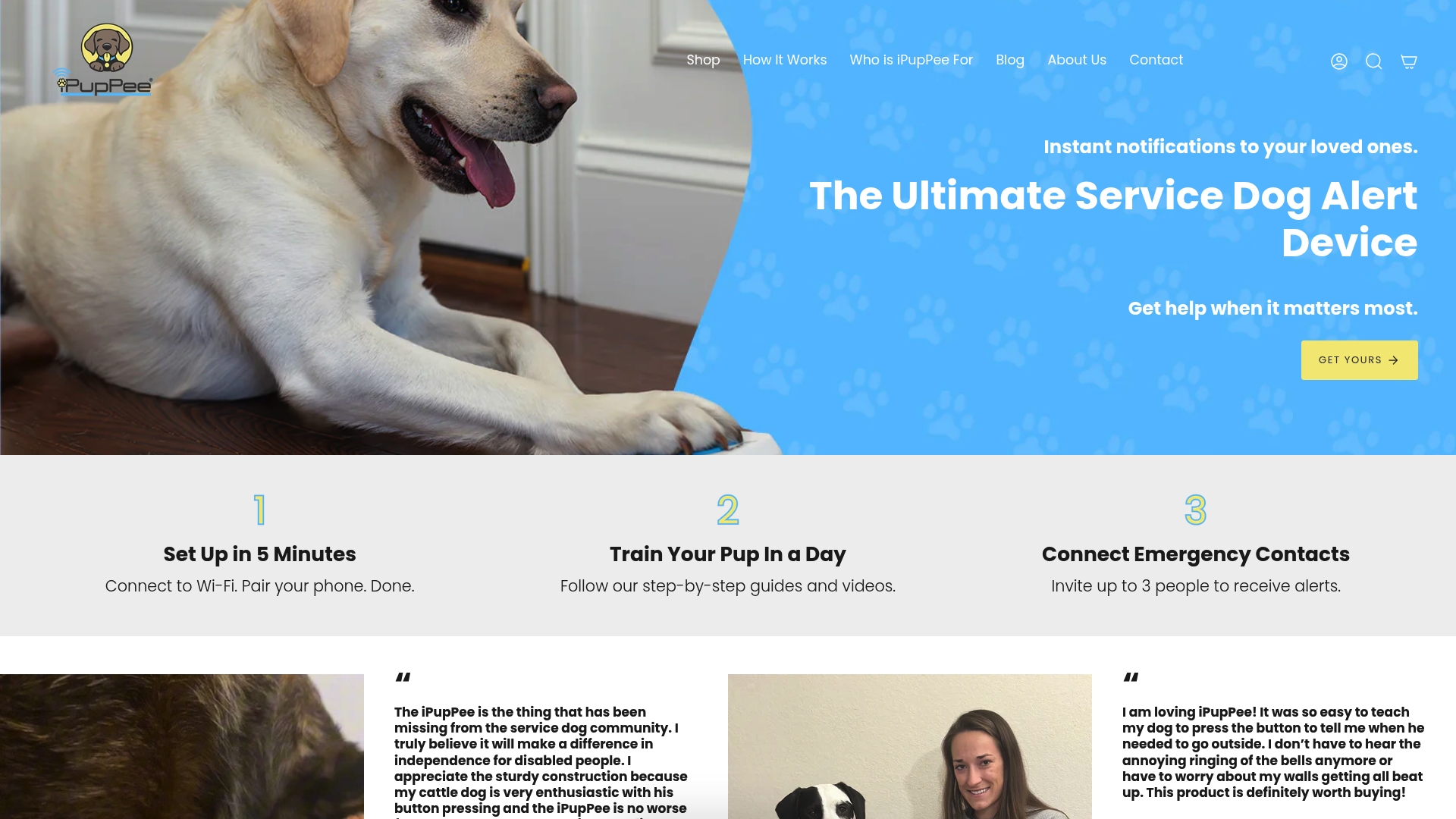
Here is how it fits alongside wearables:
- Faster response: If a collar flags unusual activity, a quick video check can tell you whether to step in.
- Multiple contacts: Alerts can reach several people, which helps seniors, disabled owners and service dog teams.
- Training included: Our guides and the Psychology & Training Course, at $119, help you teach your dog to use the button.
- Simple for dogs of all sizes: One press sends the message.
We make no clinical claims. iPupPee is a communication and safety tool, not a diagnostic device. You can see how it works and order the iPupPee Medical Alert Device Training System for Service Dogs at $129.99.
FAQ
What is the main purpose of a sensor in pet care?
A sensor detects a physical signal, such as motion, location or temperature, and turns it into data you can read. In pet care that means tracking behavior and safety over time. It highlights changes from your pet’s normal so you can act sooner.
What type of sensor can detect animals?
Motion sensors, cameras, radar and microphones can all detect an animal’s presence or movement. For individual pets, collar-mounted accelerometers are one option, and validation work shows they can identify eating and drinking with high accuracy.
Can sensors replace a microchip?
No. GPS collars can fail, slip off or run out of battery, so the CDC treats the microchip as the standard permanent identification. Keep it registered with the manufacturer and have your vet scan it yearly.
How long does it take to learn my pet’s baseline?
Plan on 7 to 14 days of steady wear. That gives the device enough data to learn your pet’s normal rhythm, so later alerts reflect real changes, not ordinary daily variation.