

TL;DR:
- Dog communication involves body language, vocalizations, and olfactory cues that express their emotions and needs. Recognizing subtle calming signals like lip licking, yawning, and head turning early helps prevent conflict and enhances trust with your dog. Understanding and decoding these signals across all five categories improves training, safety, and the quality of your relationship.
Dog communication signals are the complete system of body language, vocalizations, and sensory cues dogs use to express emotions, intentions, and needs to the world around them. Norwegian dog trainer Turid Rugaas identified over 30 calming signals that dogs use as subtle pre-conflict indicators, proving that canine communication runs far deeper than a bark or a wagging tail. Most owners read only the loudest signals and miss the quiet ones that matter most. Learning to decode the full picture transforms your relationship, sharpens your training, and keeps both you and your dog safer every single day.
What are the main dog communication signals and what do they mean?
Dog communication signals fall into five core categories: body posture, tail position, ear placement, facial expression, vocalizations, and olfactory cues. Each category carries its own vocabulary, and fluency in all five is what separates a confident handler from a confused one.
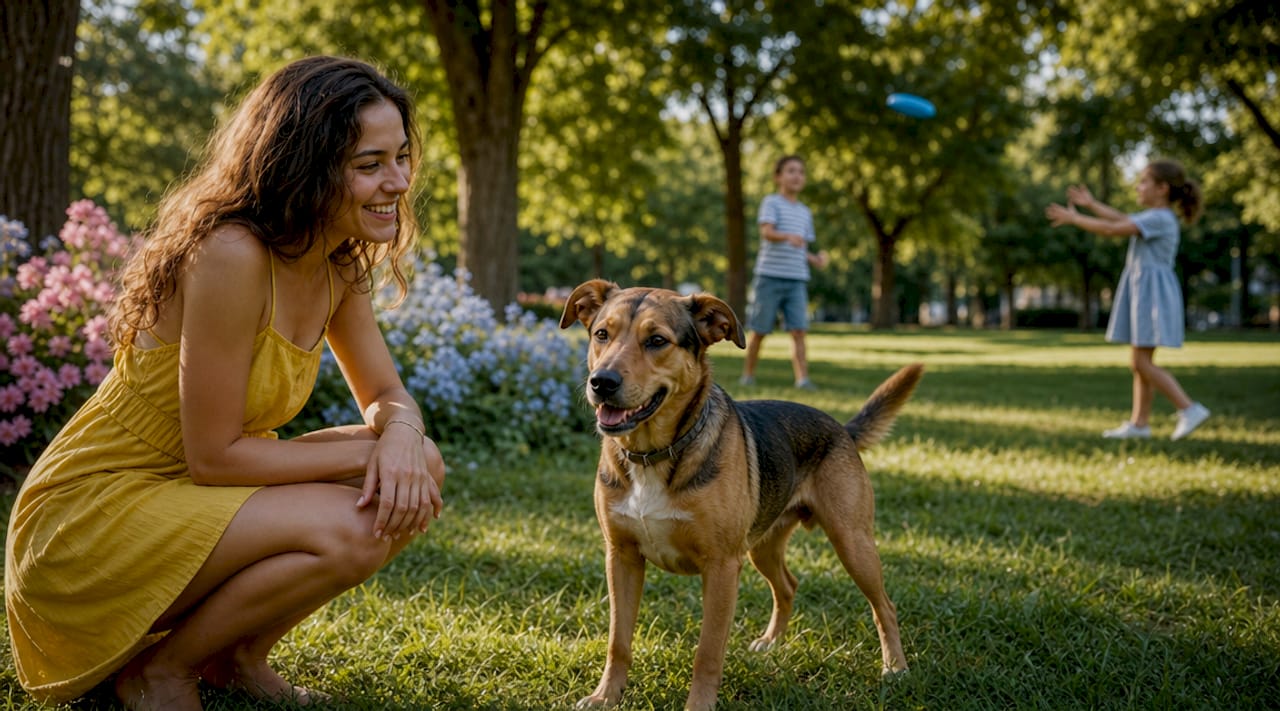
Body posture is the broadest signal. A relaxed dog carries loose, wiggly weight across its whole body. A dog shifting its weight forward with a stiff spine is signaling alertness or potential threat. A dog curling inward, tucking its tail, and lowering its head is communicating fear or submission. The full body reads like a sentence, not a single word.
Tail signals are widely misread. A high, tight, vibrating wag signals arousal or tension, not happiness. A loose, wide sweep at mid-height is the genuinely friendly wag most people picture. A tail tucked hard under the belly signals fear. Speed, height, and stiffness all change the meaning completely.
Ear positions shift fast and carry precise information:
- Ears relaxed and slightly back: calm and comfortable
- Ears pricked sharply forward: alert, focused, potentially aroused
- Ears pinned flat against the skull: fear, submission, or extreme stress
- One ear forward, one back: conflicted or uncertain emotional state
Facial expressions are among the most nuanced signals. Soft, blinking eyes indicate comfort. Whale eye, where the whites of the eyes show in a crescent shape, signals stress or discomfort. A closed, tight mouth with tense jaw muscles indicates anxiety. An open, relaxed mouth with a loose tongue signals ease.
Vocalizations carry meaning only when read alongside body signals. A bark paired with a play bow is an invitation. The same bark paired with a stiff body and forward weight is a warning. Whining with a tucked tail signals distress. Growling, covered in depth below, is a critical communication tool that owners must never suppress.
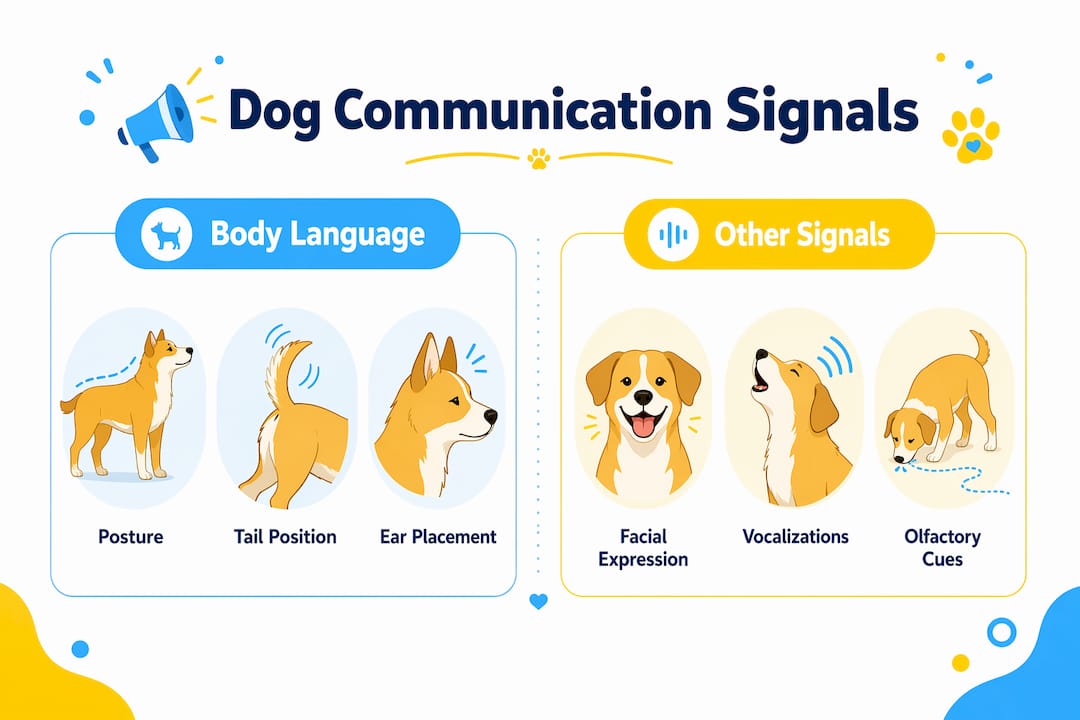
Olfactory communication operates on a channel humans can barely perceive. Dogs have an olfactory ability 40 times more sensitive than humans, enabling complex social and emotional signaling through pheromones deposited in urine, feces, and skin glands. When your dog spends three minutes sniffing a fire hydrant, it is reading a detailed social bulletin board. This sensory channel is why dog sensory communication deserves as much attention as the visible signals most owners focus on.
Pro Tip: Watch your dog’s whole body at once rather than fixating on one feature. A wagging tail attached to a stiff, forward-leaning body tells a very different story than a wagging tail on a loose, wiggly dog.
| Signal type | What it communicates |
|---|---|
| Loose, wiggly body posture | Relaxation and friendliness |
| High, stiff tail wag | Arousal or tension, not happiness |
| Whale eye (whites visible) | Stress or discomfort |
| Ears pinned flat | Fear, submission, or extreme stress |
| Play bow (front down, rear up) | Friendly invitation to play |
How to recognize subtle calming signals and stress indicators
Calming signals are the quiet language dogs use to de-escalate tension before it becomes conflict. Turid Rugaas documented these as intentional, communicative acts, not random fidgeting. Recognizing them early is the single most effective way to prevent bites and reduce your dog’s chronic stress.
Early stress signals often appear as lip licking, yawning, turning the head away, and avoiding eye contact. These indicate mild discomfort or uncertainty, not tiredness or distraction. When your dog yawns during a training session, it is not bored. It is telling you the pressure is too high.
Here are the most common calming signals and what they mean in practice:
- Lip licking (a quick tongue flick, not after eating): mild stress or social appeasement directed at a person or another dog
- Yawning (outside of tiredness context): a request to slow down or reduce pressure
- Head turning away: a polite signal to another dog or person meaning “I am not a threat”
- Sniffing the ground suddenly: displacement behavior used to break tension in a charged situation
- Shaking off (like after a bath, but dry): a physical reset after stress, often seen after a tense interaction ends
- Slow blinking or looking away: active de-escalation, especially common between unfamiliar dogs
Signal clusters provide context that single signals cannot. A yawn alone means mild stress. A yawn combined with lip licking and a head turn means the dog is significantly uncomfortable and needs relief immediately. Reading clusters rather than isolated cues is the difference between catching a problem early and missing it entirely.
Freezing deserves special attention. Freezing involves complete stillness, body stiffness, and intense staring, and represents the final impulse-control barrier before an aggressive reaction. When a dog freezes, the situation requires an immediate change. Move the trigger away, redirect the dog calmly, and do not force continued interaction.
Pro Tip: Film short clips of your dog during training sessions or social interactions. Reviewing footage at half speed reveals calming signals you missed in real time, and patterns become obvious within a few sessions.
Common misconceptions about dog communication signs
Misreading dog signals is not just frustrating. It actively damages trust and, in some cases, creates dangerous situations. These are the four most consequential myths owners carry.
Myth 1: Tail wagging always means a happy dog. This is the most widespread error in dog signals interpretation. A high, stiff, rapidly vibrating tail signals high arousal and potential aggression. A tucked, low wag signals fear. Only a loose, mid-height, sweeping wag reliably indicates friendliness. Context and body posture must accompany every tail reading.
Myth 2: Growling is bad behavior that should be corrected. Punishing growling suppresses warnings and increases bite risk. Growling is a dog communicating “I need space” or “I feel threatened.” Removing the growl through punishment does not remove the underlying discomfort. It removes the warning, leaving the bite as the next available option. Growling is a gift. Treat it as information, not defiance.
Myth 3: The “guilty look” means the dog knows it did something wrong. The guilty look, characterized by lowered head, whale eye, tucked tail, and flattened ears, is an appeasement signal triggered by your body language and tone of voice. Studies show dogs display this look when owners approach with an angry posture, regardless of whether the dog actually misbehaved. It communicates “please don’t be angry with me,” not genuine guilt.
Myth 4: A dog rolling onto its back wants a belly rub. Belly-up posture can signal submission or stress, not always an invitation for touch. A dog that rolls over with a tense body, tucked tail, and whale eye is asking for the pressure to stop. Reaching in to pet that dog can escalate the situation. A relaxed belly-up posture with a loose body and soft eyes is the genuine invitation.
Misreading a dog’s communication signals does not just cause confusion. It teaches the dog that its signals are ignored, which leads to escalation and, eventually, to behaviors that feel like they “came out of nowhere.” Nothing in dog behavior comes out of nowhere. The signals were there. They were missed.
How understanding dog signals improves training and daily life
Applying knowledge of how dogs communicate changes training from a battle of wills into a genuine conversation. The practical benefits are immediate and measurable.
Ignoring a dog’s emotional state during training damages trust and produces behavioral problems. Recognizing early stress signals, like lip licking or yawning during a session, tells you to reduce the difficulty, shorten the session, or switch to a simpler exercise. This adjustment prevents frustration from compounding and keeps the dog engaged rather than shut down.
The play bow, with front legs stretched forward and rear end raised, is one of the clearest friendly signals in the canine repertoire. Using play bows and other positive signals to open interactions sets a cooperative tone before any command is given. Dogs that feel safe and understood learn faster and retain more.
Practical ways to apply signal knowledge every day:
- Watch for lip licking or yawning before and during greetings with strangers or other dogs. If you see them, give your dog more space and time.
- Pause training the moment you see a displacement behavior like sudden sniffing or shaking off. The dog is telling you the session needs a reset.
- Never force a dog to hold a stay when its body shows freeze signals. Redirect instead.
- Respect head turns and look-aways during introductions. Let the dog set the pace.
- Learn to read your dog’s emotions by tracking which signals appear consistently in specific situations, building a personal signal map for your individual dog.
Pro Tip: Keep a simple journal for two weeks. After each walk, training session, or social interaction, note which signals your dog showed and when. Patterns emerge quickly, and you will start anticipating your dog’s needs before stress escalates.
Key takeaways
Understanding dog communication signals requires reading clusters of cues across body posture, tail position, facial expression, vocalizations, and olfactory signals, never in isolation.
| Point | Details |
|---|---|
| Read signal clusters | A single yawn means mild stress; yawn plus lip lick plus head turn signals significant discomfort. |
| Never punish growling | Suppressing growls removes warnings and increases bite risk without addressing the underlying cause. |
| Tail wagging is not always friendly | High, stiff, vibrating wags signal arousal or tension, not happiness. |
| Freezing requires immediate action | Complete stillness and stiffness is the last warning before an aggressive reaction. |
| Stress signals appear early | Lip licking, yawning, and head turning are mild discomfort signals that precede escalation. |
What learning “dog language” actually changed for me
I spent the first two years with my dog reading only the obvious signals. Loud bark, clear warning. Tail wagging, all good. I thought I was paying attention. I was not.
The shift happened when I started watching video footage of my dog during training. I saw lip licks I had completely missed in real time. I saw him yawn three times in five minutes during a recall session I thought was going well. He was telling me the session was too long and too pressured. I had been ignoring him.
What changed after I started reading signal clusters was not just my dog’s behavior. It was my own. I stopped pushing through discomfort I had not noticed. I started ending sessions earlier, on a high note, before the stress signals appeared. My dog started offering behaviors voluntarily that he had previously needed heavy prompting to produce. The relationship shifted from compliance to cooperation.
The uncomfortable truth most training advice skips is this: most “problem behaviors” are communication failures on the human side, not the dog’s side. The dog has been signaling clearly. The owner has been missing it. Learning to read those signals is not a bonus skill. It is the foundation everything else is built on.
Becoming a careful observer of your dog’s body language is the single highest-return investment you can make in your relationship. You do not need special equipment or a professional trainer to start. You need to slow down and watch.
— Andrew
Take your understanding further with Ipuppee
Knowing the theory is the starting point. Applying it consistently across different situations, dogs, and environments is where real fluency develops.
Ipuppee’s blog covers dog communication signals in depth, from stress detection guides that walk you through reading subtle cues to practical breakdowns of how dogs signal their needs in daily life. Whether you are working with a new puppy, a rescue dog, or a trained service dog, Ipuppee’s resources give you the specific, visual, and example-driven guidance that makes signal reading second nature. Visit ipuppee.com to explore the full library and start building the communication skills your dog has been waiting for you to develop.
FAQ
What are calming signals in dogs?
Calming signals are over 30 subtle behaviors, identified by Turid Rugaas, that dogs use to de-escalate tension and communicate discomfort. Common examples include lip licking, yawning, head turning, and sniffing the ground.
Why does my dog growl and should I stop it?
Growling is a warning signal that communicates “I need space” or “I feel threatened.” Punishing growling suppresses that warning without removing the underlying stress, which increases the risk of biting without warning.
Does tail wagging always mean a dog is happy?
No. A loose, wide, mid-height wag signals friendliness, but a high, stiff, rapidly vibrating wag indicates arousal or tension. Always read tail position and speed alongside the dog’s full body posture.
What does it mean when a dog freezes?
Freezing, characterized by complete stillness, body stiffness, and intense staring, is the final warning signal before an aggressive reaction. The situation requires an immediate change, such as removing the trigger or calmly redirecting the dog.
How do I get better at reading my dog’s body language?
Film short clips of your dog during training and social interactions, then review them at half speed. Signal clusters that are invisible in real time become clear on video, and consistent patterns in your individual dog emerge within days.