

Two one-minute checks, skin tent and gum capillary refill, give you the fastest read on whether your dog or cat is dehydrated, but a single check on a single day tells you less than a week of tracked water intake and urine color against your pet’s own baseline. Run both checks, log water and bathroom habits for a week to see what’s normal for your specific animal, and call your vet the moment you see repeated vomiting, collapse, or skin that stays tented.
TL;DR:
- Tracking water intake and urination patterns over a week provides a more reliable baseline than single-day checks, especially for early dehydration signs.
- Skin tent and gum capillary refill tests offer quick screening but can be inaccurate in certain breeds, ages, or environmental conditions like heat and humidity.
- Monitoring devices like smart bowls and wearable sensors can help detect changes but are susceptible to false signals and should complement, not replace, behavioral tracking.
- Immediate veterinary emergency action is required if a pet shows collapse, pale or blue gums, repeated vomiting, seizures, or heatstroke symptoms.
- Consistently comparing behavior patterns against a baseline reduces false alarms and improves the timely detection of dehydration beyond isolated checks.
Table of Contents
- How to Monitor Pet Hydration With Two Quick Home Checks
- Tracking Pet Water Intake and Urine Patterns Over Time
- Pet Hydration Monitoring Devices: What They Actually Measure
- When Reduced Drinking Becomes a Veterinary Emergency
- Why Baseline Tracking Beats One-Off Checks
- Does Wet Food Really Hydrate Pets Better Than Dry Food?
- Where Most Owners Get Hydration Monitoring Wrong
- Make Baseline Tracking Easier With Smart Alerts
- Sources
How to Monitor Pet Hydration With Two Quick Home Checks
The skin-tent test takes about ten seconds. Gently pinch a fold of skin between your pet’s shoulder blades, lift it slightly, and let go. In a well-hydrated animal, the skin snaps back into place within one to two seconds, according to guidance from Cornell University’s College of Veterinary Medicine. If it slowly sags back or stays tented, that’s a warning sign worth acting on.
The gum check adds a second data point. Press a finger firmly against your pet’s gum until it turns pale, then release. Healthy capillary refill returns pink color in under two seconds. Gums that feel tacky or dry instead of slick, or that stay pale longer than two seconds, point toward dehydration.
Neither test is foolproof, and this matters more than most pet owners realize. Senior pets, very thin animals, and loose-skinned breeds like Basset Hounds or Shar-Peis can show slow skin recoil even when they’re fine, simply because they’ve lost skin elasticity with age or genetics, notes RSPCA Pet Insurance. Heat and humidity can also throw off gum color temporarily.
Beyond those two checks, watch for a cluster of supporting signs:
- Sunken or dull-looking eyes
- Saliva that feels thick or tacky instead of watery
- Urine that’s darker or more concentrated than usual
- Noticeably less frequent urination
- Lethargy that doesn’t match the day’s activity level
- Panting that continues well after exercise or excitement has stopped
Pro Tip: Run the skin-tent and gum checks back to back, not on separate days. Comparing them side by side catches conflicting signals, like normal gums but slow skin recoil, that tell you to keep watching rather than panic or ignore it.
None of these signs, alone, diagnoses dehydration. They’re screening tools, the kind you use to decide whether today needs closer attention or a vet call, not a replacement for either.
Tracking Pet Water Intake and Urine Patterns Over Time
A single day’s water bowl level tells you almost nothing. What matters is the pattern: how often your pet drinks, when, and for how long, compared against their own normal. The University of Minnesota’s College of Veterinary Medicine points to this behavior-based approach, frequency and timing of drinking events, as more useful for early detection than obsessing over ounces consumed.
Here’s a simple way to build that baseline over one week:
- Fill a marked measuring jug or a bowl with volume lines and note the starting amount each morning.
- Log the time of each drinking session you notice, even roughly, for seven straight days.
- Weigh your pet on the same kitchen or bathroom scale once, on day one and day seven, to catch unexplained loss.
- In multi-pet households, separate bowls per animal or watch individual drinking behavior directly. Shared bowls mask which pet’s intake actually changed, a real blind spot the University of Minnesota’s guidance flags for multi-pet homes.
- Note anything unusual in urine color or frequency next to your water log.
For an objective number beyond visual checks, a handheld refractometer measures urine specific gravity (USG). Target ranges typically cited are under 1.020 for dogs and under 1.030 for cats, per the University of Minnesota. Collecting a clean sample (a ladle or shallow container works for outdoor dogs) and reading it correctly takes practice, and the number means little without context from your vet.
Pro Tip: Take a photo of your water log or USG reading before a vet visit. Handing over a week of real data speeds up diagnosis far more than describing “he seemed thirstier lately” from memory.
Pet Hydration Monitoring Devices: What They Actually Measure
Hydration monitoring devices fall into three rough categories, and each solves a different problem.
Smart bowls with level sensors track how much water disappears from the bowl over time. They’re convenient for single-pet households but get confused fast by splashing, evaporation in dry climates, or multiple animals sharing one bowl.
Wearable or collar-linked drinking-event trackers take a different approach: instead of measuring volume, they log when and how often your pet actually drinks. Devices like the Maven drinking tracker build a personal baseline over time and flag departures from it, which is valuable because it separates an expected increase (a hot afternoon, a long hike) from a genuinely concerning trend.
Handheld refractometers stay analog but add precision, giving you an actual USG number instead of a guess based on urine color.
When choosing among these, weigh:
- Budget: level sensors are usually cheapest; refractometers cost more upfront but need no subscription.
- Household complexity: multi-pet homes need per-animal tracking, not aggregate bowl data.
- Your tolerance for data: some owners want a simple alert, others want raw numbers to interpret themselves.
When Reduced Drinking Becomes a Veterinary Emergency
Some signs mean drop everything and go. Others mean call today, not tomorrow.
Get emergency care immediately if you see:
- Collapse or extreme weakness
- Gums that look pale, blue, or gray instead of pink
- Repeated vomiting or diarrhea, especially together
- Seizures
- Signs of heatstroke: heavy panting, disorientation, bright red gums
Call your vet the same day for:
- Skin that stays tented alongside any other symptom on this list
- Urine that’s dark, unusually strong smelling, or absent for a full day
- Refusal to drink for more than 12 hours
- Vomiting that continues even without other symptoms
When you call, bring specifics: how long symptoms have lasted, your water log if you’ve kept one, urine color or a USG reading if you have a refractometer, and any recent medication, food changes, or heat exposure. According to Veterinary Partner, mild dehydration without vomiting can sometimes be managed at home with small, frequent amounts of water, but moderate or severe cases need veterinary evaluation and possibly subcutaneous or IV fluids. That distinction, mild versus moderate, is exactly what a vet needs your data to make.
Why Baseline Tracking Beats One-Off Checks
A single skin-tent test on a random Tuesday tells you almost nothing about whether Tuesday is normal for that particular animal. Cornell’s veterinary guidance backs combining quick screening checks with pattern tracking precisely because the combination catches problems a single snapshot misses.
Routine monthly weigh-ins reinforce this. Slow dehydration tied to kidney issues or chronic illness can show up as unexplained weight loss of 5 to 10 percent over several weeks, long before behavior changes are obvious.
Automated tracking doesn’t replace a vet’s judgment. What it does is hand your vet a week of real drinking and urination data instead of your best guess from memory, and that difference speeds up almost every hydration-related diagnosis.
Owners who track consistently walk into vet appointments with answers instead of impressions. That alone changes how fast a real problem gets caught.
Does Wet Food Really Hydrate Pets Better Than Dry Food?
Yes, meaningfully so. Wet food typically runs 70 to 80 percent moisture, while dry kibble sits closer to 10 percent. A cat or dog eating only dry food has to make up that entire moisture gap through drinking water alone, which is a much harder habit to enforce than most owners assume, especially with cats, who evolved from desert ancestors with a weak natural thirst drive.

This is why diet shows up directly in your hydration tracking. A pet switched from wet to dry food will often drink more water on paper, but total moisture intake can still drop, since water from a bowl doesn’t fully compensate for the moisture lost from the diet. If you’re logging water intake and see a jump right after a food switch, that’s expected, not automatically a red flag, but it’s worth noting as context.
Practical fixes if your pet eats mostly dry food: add warm water or low-sodium broth to kibble, offer a wet-food topper once daily, or mix wet and dry rations. Dr. Clauder’s practical hydration guidance recommends exactly this kind of blended approach for dogs that under-drink relative to their activity level. Multiple water bowls placed around the house, refreshed daily, also help, particularly for cats who prefer drinking away from their food.
Where Most Owners Get Hydration Monitoring Wrong
The mistake I see most often is treating the skin-tent test as a verdict instead of a screening tool. Owners pinch the skin once, see a normal snap-back, and move on without realizing that a pet can pass that test on Monday and be genuinely dehydrated by Wednesday if they’ve stopped drinking normally. The test catches a moment, not a trend.

Behavior-based tracking, watching when and how often your pet actually drinks, catches problems the pinch test misses entirely, because it’s built on your pet’s own pattern rather than a generic threshold. USG numbers and monitoring tech add real value here, but only as a layer on top of that baseline, not a replacement for it. A refractometer reading means little if you don’t know what’s normal for your own animal.
What I’d prioritize first: a week of simple logging before you spend money on any device. Once you know your pet’s actual baseline, every tool from a smart bowl to a vet visit becomes more useful, because you’re comparing against real data instead of a guess.
— Andrew
Make Baseline Tracking Easier With Smart Alerts
Everything above, the daily logs, the marked bowls, the week of watching drinking patterns, works, but it takes real discipline to keep up by hand. That’s the gap monitoring devices are built to close: giving pets a direct way to signal you instead of you guessing whether today’s behavior is normal.
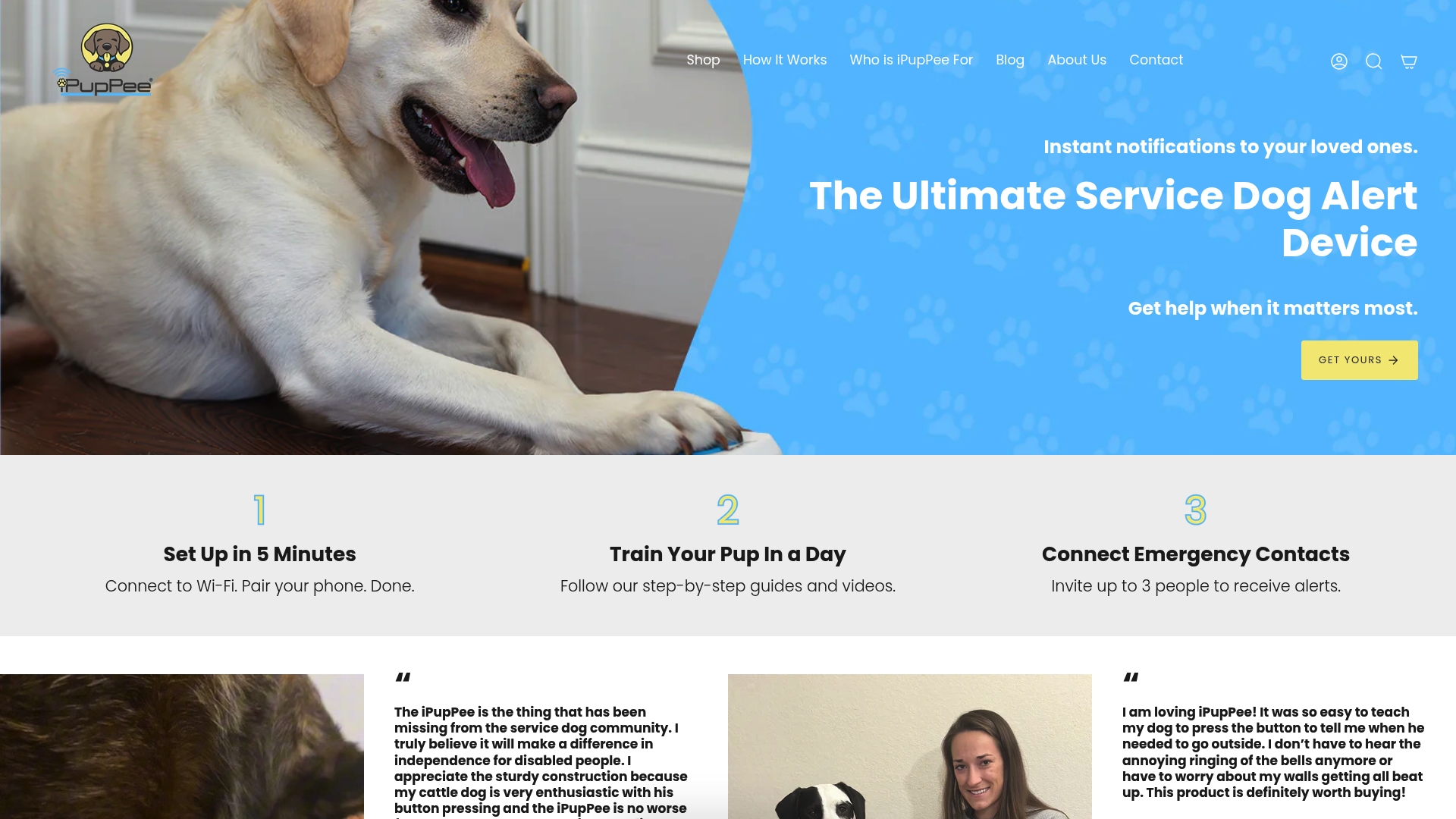
Certain alert devices let a dog send a direct notification to you or an emergency contact with live video and two-way audio, which turns “did he seem off today?” into an actual answer you can check in real time. That’s a meaningful upgrade over a paper log for owners managing multiple pets, seniors living alone with a dog, or anyone who wants fewer blind spots between vet visits. Such a device doesn’t diagnose dehydration and never replaces a vet exam. What it does is flag unusual behavior the moment it happens, so you catch a deviation from normal instead of discovering it a day later. If you’re ready to build a monitoring habit that actually holds up, see how the iPupPee device works and check whether it fits your household.
Sources
- Hydration | Cornell University College of Veterinary Medicine
- How to increase water intake in pets | College of Veterinary Medicine (UMN)
- Dehydration: First Aid - Veterinary Partner - VIN