

Finding ways to clearly understand your dog’s needs can make daily life safer and far less stressful, especially for seniors and individuals with disabilities. Strong communication between humans and dogs is more than just following commands—it supports independence, safety, and emotional well-being for both handler and pet. With the rise of innovative devices like the iPupPee, you can strengthen your connection and unlock new levels of support, making everyday challenges easier to overcome. Effective communication skills are the heart of these solutions, bringing comfort and confidence to both ends of the leash.
Table of Contents
- The Role of Dog Communication Training
- Types of Canine Communication Devices
- Training Methods for Button-Based Systems
- Safety, Independence, and Daily Benefits
- Common Mistakes and Misconceptions
Key Takeaways
| Point | Details |
|---|---|
| Importance of Communication Training | Dog communication training fosters better understanding and relationships between dogs and their handlers, enhancing behavioral interpretation and emotional regulation. |
| Role of Technology | Canine communication devices offer innovative ways to facilitate interactions, allowing dogs to express needs and emotions more precisely. |
| Training Methods | Button-based systems require consistent training to help dogs effectively communicate, utilizing positive reinforcement for successful learning. |
| Common Misconceptions | Many handlers hold outdated beliefs about canine learning, which can hinder effective communication device training; patience and personalized strategies are key. |
The Role of Dog Communication Training
Dog communication training represents a critical approach to enhancing understanding between humans and canines. By developing systematic methods to interpret and respond to dog behaviors, handlers can create more meaningful, safe, and supportive relationships.
Research demonstrates that effective communication skills play a transformative role in human-dog interactions. When implemented correctly, communication training offers several key benefits:
- Improved behavioral understanding
- Enhanced emotional regulation for dogs
- More precise interpretation of canine signals
- Stronger bond between handler and dog
- Reduced miscommunication risks
Professional veterinary research highlights that communication training is not just about commands, but about developing a nuanced, empathetic approach to understanding canine communication patterns. Client-centered communication skills enable handlers to recognize subtle behavioral cues that indicate a dog’s emotional state, potential discomfort, or specific needs.
Training techniques often involve teaching both the dog and human partner how to read and respond to non-verbal signals. This might include understanding ear positions, tail movements, body postures, and vocalization variations that communicate different emotional states or intentions.
Advanced communication training can be especially crucial for service dogs, therapy animals, and working dogs who must navigate complex human environments with precision and emotional intelligence. By developing these skills, dogs can more effectively support their handlers and perform critical tasks.
Pro tip: Start communication training early and remain consistent, using positive reinforcement techniques that build trust and mutual understanding between you and your dog.
Types of Canine Communication Devices
Canine communication devices represent a sophisticated technological approach to bridging the communication gap between dogs and humans. These innovative tools enable more nuanced and precise interactions, helping both species understand each other more effectively.
Research highlights several key augmentative interspecies communication technologies that are transforming how we interact with dogs. These devices range from simple to complex communication systems:
- Button-based communication boards
- Sound-activated signal devices
- Electronic lexigram systems
- Wearable communication chips
- Smart collar communication interfaces
Soundboard communication systems have gained significant popularity in recent years. These button-based communication tools allow dogs to press labeled buttons that play recorded words, enabling them to express basic needs, emotions, and preferences.

More advanced communication devices incorporate sophisticated technologies like magnetic chips and specialized keyboards. These systems go beyond basic commands, allowing dogs to potentially communicate more complex thoughts and emotional states. Such devices are particularly valuable for service dogs, therapy animals, and pets with special needs.
The technological landscape of canine communication is rapidly evolving, with researchers and technology developers continuously exploring more nuanced ways for dogs to express themselves. Each device type offers unique advantages, ranging from simple alert mechanisms to complex cognitive communication platforms.
Here’s a quick comparison of canine communication device types and their typical uses:
| Device Type | Technology Used | Primary Use Case |
|---|---|---|
| Button-based boards | Simple electronics | Basic needs and requests |
| Sound-activated devices | Audio sensors | Alerts and attention signals |
| Electronic lexigram systems | Display/keypads | Complex command sequences |
| Wearable chips | RFID or magnetic | Tracking and health monitoring |
| Smart collars | Bluetooth/GPS | Remote interaction and safety |
Pro tip: When introducing a communication device to your dog, start with simple, consistent training and use positive reinforcement to help them understand the new communication method.
Training Methods for Button-Based Systems
Button-based communication systems offer a revolutionary approach for dogs to express their needs, emotions, and thoughts. These innovative training methods require patience, consistency, and a strategic approach to help dogs understand and effectively use communication buttons.
Successful button training involves several key stages of development, with dog owners implementing button training strategies that build progressive communication skills:
- Initial button introduction and familiarization
- Associating specific buttons with consistent actions
- Creating predictable communication patterns
- Expanding vocabulary and button complexity
- Reinforcing successful communication attempts
The first stage of button training focuses on creating positive associations. This means placing buttons in accessible locations and demonstrating their use through consistent modeling. Dogs learn by observing and mimicking, so handlers must actively show how pressing different buttons generates specific responses or outcomes.
Repetition and positive reinforcement are critical components of successful button communication training. Each successful button press should be immediately acknowledged with treats, praise, or the requested action. This approach helps dogs understand that communicating through buttons produces desirable results and encourages continued learning.
Advanced training techniques involve gradually increasing button complexity and teaching dogs to combine multiple buttons to express more nuanced thoughts. Some dogs can learn to create simple sentences or communicate multiple-step requests by strategically pressing different labeled buttons in sequence.
Pro tip: Start with just 3-5 essential buttons and practice consistently for at least 15 minutes daily, allowing your dog to learn at their own pace without overwhelming them.
Safety, Independence, and Daily Benefits
Communication devices for dogs represent more than technological innovation - they are transformative tools that dramatically enhance safety, independence, and quality of life for both pets and their human companions. These advanced systems provide critical support across multiple dimensions of daily living.
Connected devices for dogs offer remarkable benefits in monitoring and protection:
- Real-time health tracking capabilities
- Emergency alert mechanisms
- Location monitoring and GPS tracking
- Remote activity assessment
- Automated safety interventions
For individuals with disabilities or seniors living alone, these communication technologies create unprecedented levels of independence. Dogs equipped with communication devices can alert handlers to potential medical issues, signal need for assistance, or provide critical safety information that traditional methods cannot deliver.
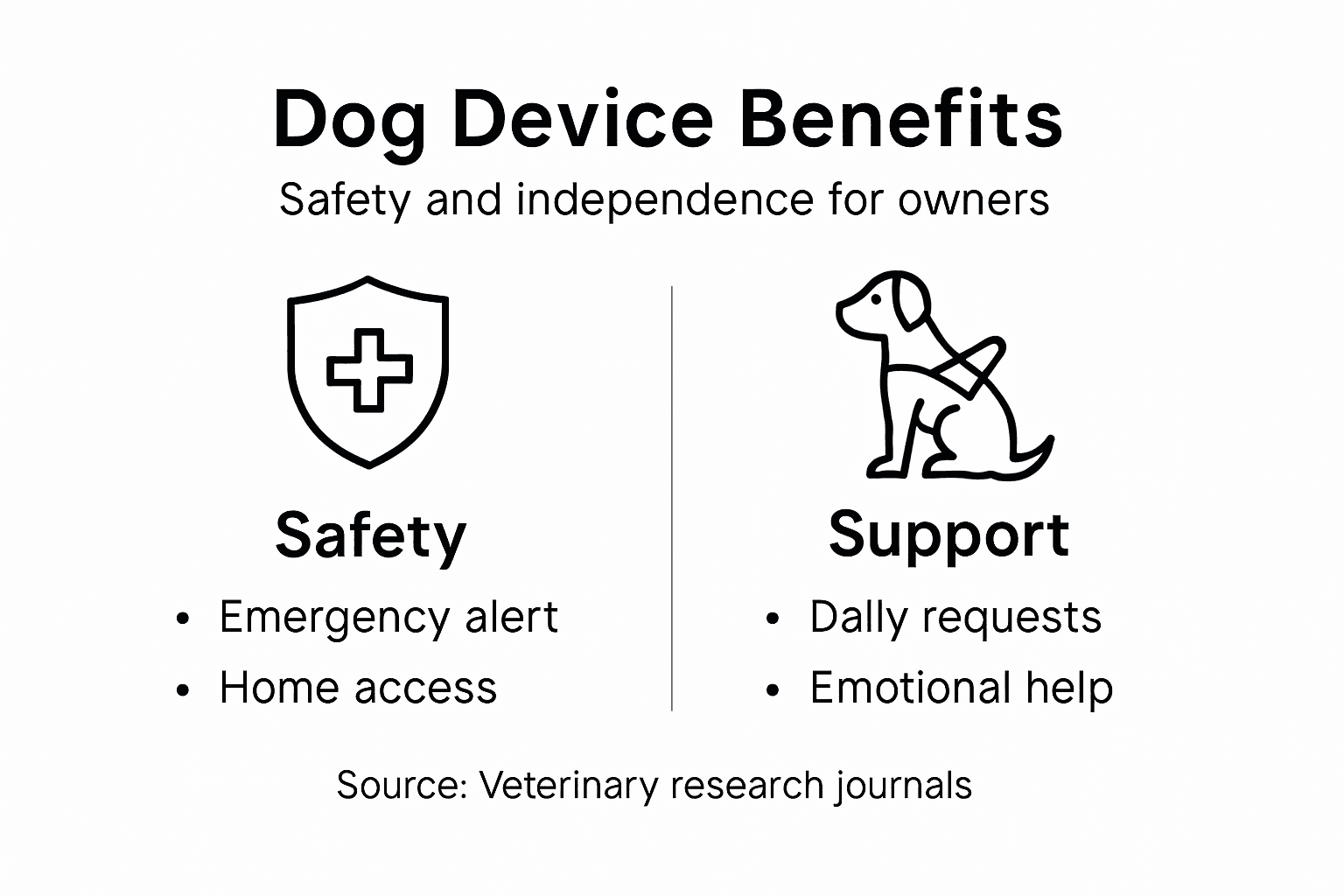
Emotional and practical support are equally significant advantages of these communication systems. By enabling more nuanced interactions, these devices help reduce anxiety for both dogs and humans. Service dogs, in particular, can communicate more precisely about their handler’s needs, creating a more responsive and intuitive support relationship.
The psychological impact of these technologies cannot be overstated. They transform communication from a one-way command structure to a collaborative dialogue, where dogs can actively participate in decision-making and express their own needs and observations.
Pro tip: Choose communication devices that match your specific lifestyle and your dog’s individual capabilities, and invest time in consistent, patient training to maximize their effectiveness.
Common Mistakes and Misconceptions
Dog communication device training requires nuanced understanding and careful approach. Many handlers unknowingly sabotage their efforts by approaching these technologies with outdated or incorrect assumptions about canine learning and communication.
Dog training misconceptions can significantly hinder communication device effectiveness. The most prevalent errors include:
- Expecting immediate perfect performance
- Assuming dogs understand complex instructions instantly
- Using punishment-based training methods
- Inconsistent button placement and usage
- Rushing the learning process
- Failing to celebrate small communication attempts
One critical misunderstanding is that dogs will naturally comprehend communication devices without structured, patient training. In reality, these tools require systematic introduction, consistent reinforcement, and a gradual approach that respects the dog’s individual learning pace and cognitive capabilities.
Emotional intelligence plays a crucial role in successful communication device training. Handlers must recognize that these technologies are not magical solutions, but collaborative tools requiring mutual understanding, trust, and incremental skill development. Dogs need time to associate buttons with specific meanings and outcomes.
Successful communication device training involves understanding each dog’s unique personality, learning style, and communication preferences. What works for one dog might not be effective for another, emphasizing the importance of personalized, adaptive training strategies.
To help you avoid common setbacks, here is a summary of frequent training mistakes and how to prevent them:
| Mistake | Why It Happens | How to Avoid |
|---|---|---|
| Rushing learning process | Unrealistic expectations | Allow ample time for each stage |
| Punishment-based responses | Misunderstood motivation | Use only positive reinforcement |
| Changing button locations | Inconsistency in set-up | Keep device layout the same |
| Neglecting small achievements | Overlooking progress | Celebrate every attempt |
Pro tip: Document your dog’s communication attempts and progress, creating a personalized training log to track improvements and identify areas needing more focused attention.
Unlock Clear Communication with Your Dog Today
Training dogs to use communication devices addresses the crucial challenge of bridging the gap between canine signals and human understanding. This article highlights the importance of patient, consistent training with button-based systems to improve safety, emotional connection, and independence for dogs and their handlers. If you want to transform your relationship by enabling your dog to express needs and feelings clearly through proven technology, you need the right tools and guidance.
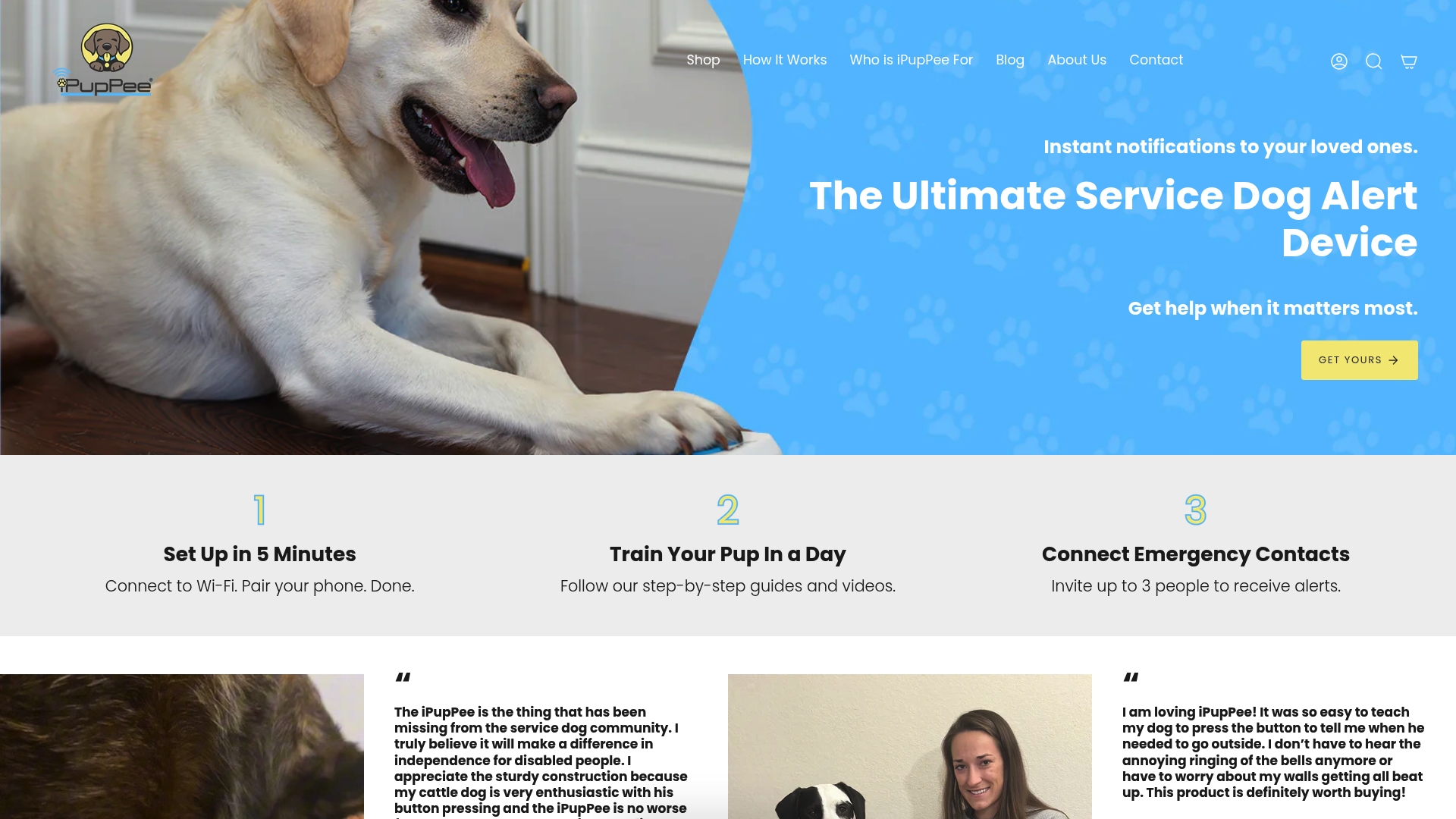
Explore the innovative solutions at iPupPee designed specifically to help dogs communicate effortlessly. Our unique button alert device empowers your dog to speak simple messages that foster trust, reduce anxiety, and enhance your shared safety. Start today with our training instructions and product resources to build your dog’s communication skills step by step. Visit iPupPee now and take the first step towards a clearer, more confident connection with your dog.
Frequently Asked Questions
What are dog communication devices?
Dog communication devices are innovative tools that help dogs express their needs and emotions more effectively, allowing for improved interactions between dogs and their human companions.
How can I train my dog to use a button-based communication system?
Training your dog to use a button-based system involves introducing buttons gradually, associating them with consistent actions, and using positive reinforcement to encourage communication.
What are the benefits of using canine communication devices?
Canine communication devices enhance safety, independence, and emotional connection between dogs and their handlers by allowing for real-time health monitoring, alert signals, and clearer communication of needs.
Are soundboard communication systems effective for all dogs?
Soundboard systems can be effective for many dogs, but their success depends on the individual dog’s learning style and personality. Consistent training and patience are crucial for best results.