

TL;DR:
- Effective support solutions require responsiveness, reliability, ease of use, and compatibility with routines.
- Technology like sensor collars and GPS tracking significantly improve communication and safety for support animals.
- Bonds and personal engagement influence mental health benefits more than just the presence of an animal or device.
Pet owners relying on service dogs or emotional support animals (ESAs) face a frustrating reality: the market is flooded with devices, training programs, and advice, yet finding solutions that genuinely improve safety and independence feels like searching for a needle in a haystack. Some tools overpromise and underdeliver. Some animals are a better fit than others. And the research on what actually works is often buried in academic jargon. This guide cuts through the noise and gives you a practical, evidence-backed framework to evaluate your options, understand the real outcomes you can expect, and match the right tools to your specific lifestyle.
Table of Contents
- Key criteria for evaluating emotional support solutions
- Top innovative tools and devices to enhance communication
- How service dogs and emotional support animals impact mental health
- comparing natural vs. tech-enhanced communication approaches
- A new take on pets, tech, and emotional support: What most guides miss
- Next steps: upgrade your pet’s emotional support journey
- frequently asked questions
Key Takeaways
| Point | Details |
|---|---|
| Evaluate true needs | Prioritize your specific emotional support or communication needs before choosing a solution. |
| Tech boosts reliability | Modern devices like sensor collars and haptic vests offer high accuracy and consistent responses for many situations. |
| Match solution to lifestyle | The most effective approach depends on your daily routine, pet’s temperament, and training commitment. |
| Research matters | Scientific studies reveal real benefits but also limits—what works best varies by person and pet. |
Key criteria for evaluating emotional support solutions
Before you invest in any device, training program, or support animal, you need a clear set of criteria. Without one, you will waste money and time on solutions that do not fit your life.
Start with responsiveness. Any support solution, whether it is a trained dog or a wearable device, must respond quickly and consistently in the moments that matter. A two-second delay in a medical alert situation is not acceptable.
Next, think about reliability and ease of use. A device that requires a 30-step setup or a dog that only performs reliably in ideal conditions will let you down. The emotional support dogs benefits you gain depend heavily on how seamlessly the solution fits into your daily routine.
Also consider the technology adoption curve. Not every pet owner is a tech enthusiast, and some devices demand significant time to learn. Factor in your comfort level honestly.
Here is what to evaluate before committing to any solution:
- Mental health context: What specific challenge are you addressing? (anxiety, depression, physical disability, loneliness)
- Owner attachment style: Pet attachment shows mixed association with mental health, with stronger effects observed in children and wellbeing outcomes than in adult symptomology.
- Integration with lifestyle: Will this work in your home, your workplace, or when you travel?
- Training requirements: How much time and consistency are you able to commit?
- Cost and maintenance: Both upfront and ongoing costs matter.
Pro tip: Before you buy anything, spend two weeks tracking the specific moments when you feel unsafe or unsupported. That log will reveal far more about what you actually need than any product description.
Top innovative tools and devices to enhance communication
Technology has advanced rapidly in this space. The options available in 2026 are more reliable, accurate, and user-friendly than anything available even five years ago. Here is a breakdown of the top categories to consider.
- Smart sensor collars: These use machine learning on motion data to interpret your dog’s behavior. sensor collar alerts detect trained signals with 92% accuracy, confirming dog alerts for visually or hearing impaired handlers. That is not a minor improvement; that is life-changing precision.
- GPS tracking devices: Critical for handlers who work or travel. If your dog moves out of range or gets disoriented in a crowd, real-time GPS keeps you connected.
- Alert button devices: Simple button-press tools let your dog signal you without verbal commands, reducing miscommunication in noisy or chaotic environments. Training steps for alert dog communication are well-documented and achievable for most owners.
- App-integrated monitoring platforms: These pair with wearables to track your dog’s behavior patterns over time, flagging anomalies before they become problems.
- Signal amplification vests: For dogs trained in device-assisted alerts, vests with vibration or light signals create a clear, visible cue even in loud or bright environments.
“The gap between a dog that tries to alert you and one that successfully communicates in every environment often comes down to technology, not training.”
Pro tip: Battery life is the most overlooked factor. A device with 20 hours of battery is nearly useless if you forget to charge it once. Look for solutions with at least 48-hour battery life or wireless charging capability.
How service dogs and emotional support animals impact mental health
The research on mental health outcomes from animal companions is compelling, but it comes with important nuances. The benefits are real, they are just not universal.
| Support type | Primary benefit | Who benefits most | Evidence level |
|---|---|---|---|
| ESAs | Adults with serious mental illness | Those with limited social networks | Strong (longitudinal) |
| Service dogs | Veterans with severe symptoms | Veterans with service-related trauma | Strong (comparison study) |
| Pet ownership | General wellbeing | Children and attached adults | Mixed |
ESAs reduce anxiety, depression, and loneliness, with meaningful effects reported in longitudinal research with adults with serious mental illness. That is not a small sample finding; it is a sustained pattern tracked over time.

For veterans, the data is equally compelling. Service dogs reduce both anxiety and depression in veterans with service-related trauma compared to standard care alone.
Here is what the research consistently shows:
- Dogs reduce cortisol levels (the stress hormone) simply through physical contact.
- Regular interaction with a service dog or ESA reduces social isolation, which is itself a major mental health risk factor.
- For disabled Americans living alone, the presence of a trained animal provides safety and reduces fear-based anxiety.
- Age and attachment strength moderate outcomes. A deeply bonded owner sees far greater benefit than a casual pet owner.
Interestingly, music’s impact on mental health follows a similar pattern: outcomes depend heavily on personal connection and consistency, not just exposure.
Statistic spotlight: ESAs consistently show measurable improvements in loneliness, anxiety, and depression for adults living with serious mental illness, with effects sustained over time in longitudinal study conditions.
The key takeaway is that the quality of the relationship matters more than the label. A legally certified service dog with a distracted or disconnected handler will not deliver the same dog alert safety outcomes as a strongly bonded team.
comparing natural vs. tech-enhanced communication approaches
So which approach is better: classic pet-human communication or technology-enhanced solutions? The honest answer is that it depends on your priorities, and most people benefit from both.
| Factor | Natural communication | Tech-enhanced communication |
|---|---|---|
| Cost | Low | Medium to high |
| Training required | High | Medium |
| Performance in distractions | Variable | Required |
| Battery dependency | None | Yes |
| Response reliability | Bond-dependent | High (92% accuracy) |
| Distance capability | Limited | Strong (GPS) |
Tech-enhanced communication using haptic vests and GPS provides reliable silent signaling and location tracking, but it requires battery maintenance and proper training integration to deliver on its promise.
Here is where each method clearly excels:
- Natural communication wins in everyday, calm environments where your bond and training are consistent. It is cost-free, always available, and reinforces your relationship.
- Technology wins in distracted, noisy, or high-stakes environments. A crowded airport or a medical emergency is not the place to rely solely on body language interpretation.
To figure out what to try first, consider step-by-step alert training as your foundation before layering in devices. Technology amplifies a strong training base. It cannot replace one.
If you are building from scratch, 2025’s best dog alert training methods offer structured, evidence-backed frameworks to start with. Once the fundamentals are solid, introduce technology to extend your reach.
For home environments, integrating pet-friendly home accessories alongside communication devices creates a consistent sensory environment that supports both your dog’s performance and your own wellbeing.
A new take on pets, tech, and emotional support: What most guides miss
Here is the uncomfortable truth most pet and ESA guides will not tell you: there is no perfect combination. The guides that list “top 10 devices” or “best support animals” are simplifying a deeply personal, context-specific situation into a one-size-fits-all answer.
Attachment strength and social context shape outcomes far more than any device or breed. Two people with the same dog and the same collar can have radically different results based on how they engage, how consistent they are, and what specific challenges they face.
From hands-on experience working in this space, the owners who get the best results are not the ones who bought the newest gadget. They are the ones who experimented systematically, tracked what worked and what did not, and adjusted over time. Innovation in pet communication means personalizing your combination, not chasing trends.
Start with one change. Track the results for 30 days. Then decide what to add, remove, or modify. Reading about dog alerts and how they work gives you the foundation, but your lived experience with your specific animal is the real data source. Trust the process, not the product list.
Next steps: upgrade your pet’s emotional support journey
If this guide helped you see the gap between what you have and what is possible, the next step is straightforward. At iPupPee, we specialize in bridging exactly that gap.
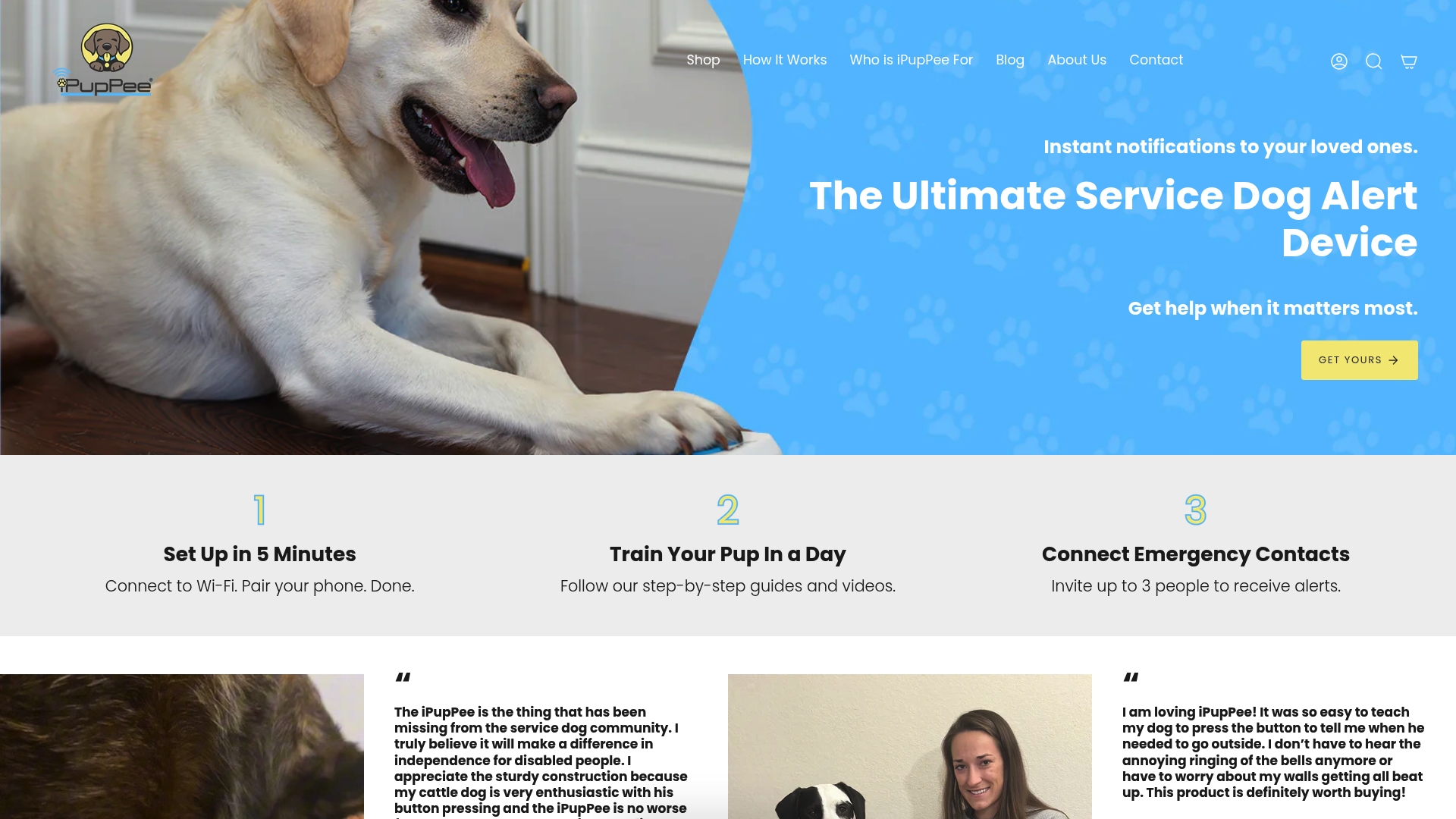
From innovative button-based alert devices designed to work for dogs of all training levels to in-depth guides on building reliable communication systems, iPupPee’s full range of solutions is built for pet owners who take safety and independence seriously. Whether you are managing a disability, supporting a family member, or simply want a stronger, safer bond with your dog, our resources and tools give you a practical path forward. Browse our product lineup and training content today to take control of your pet communication journey.
frequently asked questions
How do emotional support animals differ from service dogs?
Emotional support animals provide comfort and companionship for mental health conditions, while service dogs are trained to perform specific physical or psychiatric tasks for handlers with disabilities, a distinction recognized under federal law. Pet attachment shows mixed association with mental health outcomes, with the strongest effects tied to attachment strength and social context.
Which technology is best for enhancing service dog communication?
Sensor collars and haptic vests currently lead the field, with sensor collars detecting alerts at 92% accuracy using machine learning on motion data, making them especially valuable for visually or hearing impaired handlers.
Can emotional support from pets improve mental health outcomes?
Yes, particularly for adults with serious mental illness. ESAs reduce anxiety, depression, and loneliness based on longitudinal pilot research, with the strongest results seen in people with limited social support networks.
What should I consider before choosing a tech-based pet communication solution?
Prioritize reliability, battery life, and training requirements before anything else. Tech solutions using haptic vests and GPS are powerful but only effective when they integrate smoothly into your specific daily routine and your dog’s established training.
Recommended
- Dog alert devices: 92% accuracy for safety and independence – iPupPee
- Pet safety tech: Empowering service dog independence – iPupPee
- Pet training importance: 50% safer dogs in 2026 – iPupPee
- Dog Training Emotional Benefits: Improve Bonding & Well-Being 2025 – iPupPee
- Pet-friendly decor ideas for stylish homes in 2026 – Homable