

TL;DR:
- Choose dog activities based on physical ability and temperament for safety and well-being.
- Indoor enrichment like puzzle feeders and scent games effectively stimulate dogs mentally and physically.
- Private outdoor spaces are safer and less stressful than crowded dog parks, especially for reactive or service dogs.
10 Dog-Friendly Activities for Safe, Happy Pets in 2026
Finding activities that are genuinely fun and completely safe for your dog sounds simple until you factor in age, mobility, reactivity, or a service dog’s strict focus requirements. The options are endless, and not every trending outing on social media is a smart fit for your pup. Whether you have a senior dog with stiff joints, a service dog who needs low distraction, or a rescue still learning to trust the world, the right activity can transform your dog’s quality of life. This guide walks you through exactly how to choose, compare, and commit to the best dog-friendly activities for your unique situation.
Table of Contents
- How to choose the best dog-friendly activities
- Top indoor dog-friendly activities for every home
- The truth about outdoor dog parks, trails, and patios
- Creative, safe enrichment for special needs and senior dogs
- Why the best dog-friendly activities put needs, not trends, first
- Find more dog-friendly inspiration with iPupPee
- Frequently asked questions
Key Takeaways
| Point | Details |
|---|---|
| Match activities to needs | Choose dog-friendly activities based on your dog’s health, temperament, and unique communication requirements. |
| Rotate enrichment options | Vary food, scent, and play activities every week to prevent boredom and sustain engagement. |
| Prioritize safety, not trends | Focus on your dog’s safety and comfort—especially for service, senior, or special needs dogs—instead of following popular fads. |
| Consult your vet for challenges | Always get veterinary advice before starting new routines with senior, disabled, or reactive dogs to prevent injury. |
How to choose the best dog-friendly activities
Before you book a spot at the local dog park or try the newest puzzle toy, it pays to slow down and assess what your dog actually needs. Not all enrichment is equal, and starting with the wrong activity can cause stress, injury, or setbacks in training.
Start with physical ability. A young Border Collie and a ten-year-old Labrador with arthritis are not candidates for the same weekend adventure. Age, body weight, joint health, and stamina all determine what your dog can safely handle. Follow dog exercise safety tips to assess your dog’s baseline before adding new demands. For dogs recovering from surgery or managing chronic pain, check safe activities for disabled dogs before making any plans.
Consider temperament before venue. A dog that freezes around strangers will not thrive at a busy outdoor patio. A dog that gets overstimulated easily needs calm, structured environments rather than unpredictable social settings. Ask yourself whether your dog does better with one-on-one time or in group settings, and honor the honest answer.
Here are the core filters every owner should apply:
- Physical stamina: Can your dog sustain 30 minutes of activity without panting, limping, or disorienting?
- Reactivity level: Does your dog bark, lunge, or freeze around other animals or strangers?
- Training foundation: Does your dog reliably respond to basic cues in distracting environments?
- Enrichment variety: Are you rotating food, scent, tactile, and cognitive activities to prevent boredom?
- Health clearance: Has your vet approved new or strenuous routines, especially for older or unwell dogs?
For service dogs, the rules are even more specific. Research from enrichment studies confirms that individual variation plays a huge role in what engages each dog. What works beautifully for one dog may completely overwhelm another. According to guidelines at events like Tails on the Trails, service dogs need activities that maintain focus and task reliability, prioritizing passive socialization over active play and avoiding high-distraction public pet areas entirely.
Pro Tip: Schedule a “test run” of any new activity at the quietest possible time, then watch your dog’s body language closely. Yawning, lip licking, and turning away are stress signals, not boredom.
Top indoor dog-friendly activities for every home
Now that you know what to look for, explore the best ways to keep your dog busy inside. Indoor enrichment is not a consolation prize for bad weather. It is often the safest, most controlled, and most mentally demanding option available, especially for dogs with mobility limitations or sensory sensitivities.
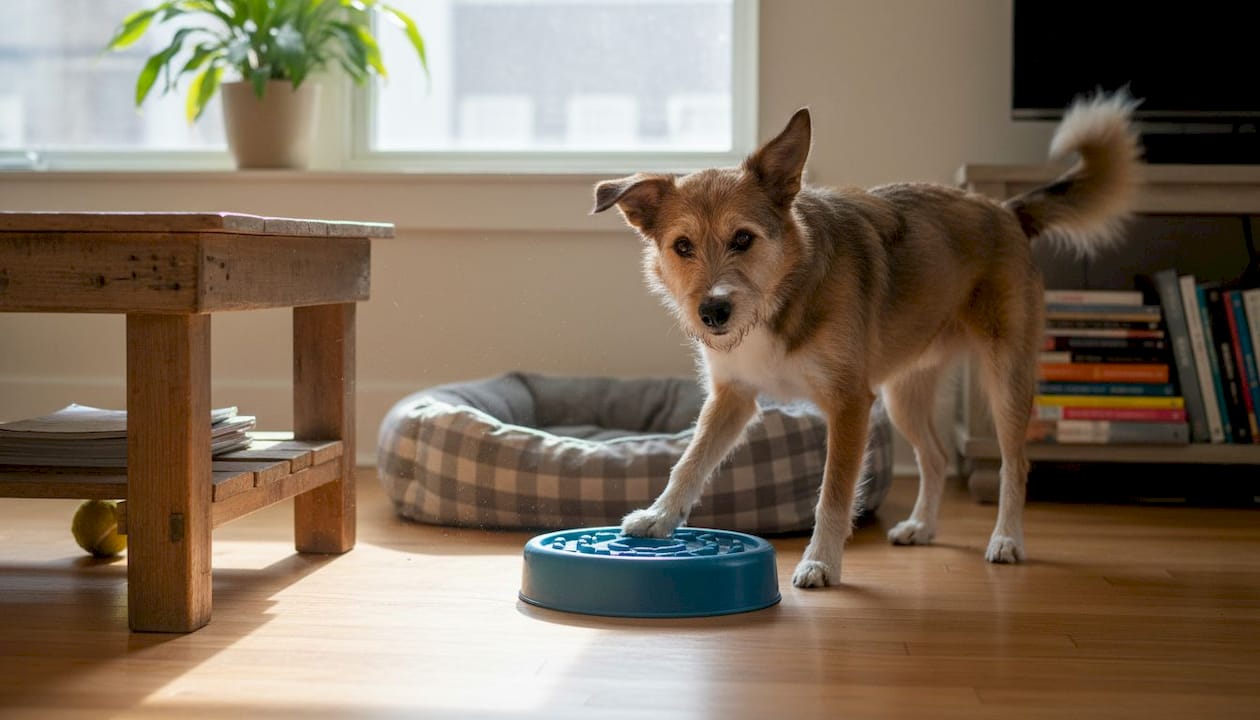
Enrichment research shows that food-based activities are the most engaging for most dogs, followed closely by olfactory (scent) and tactile activities. However, dogs habituate quickly, often within the first hour of a new activity, which means rotating types is critical to sustaining interest and welfare benefits.
Here are the top indoor activities ranked by accessibility:
- Puzzle feeders and food games: Replace your dog’s bowl with a puzzle feeder at least three times a week. This turns every meal into a problem-solving session, combining physical reward with cognitive demand.
- Scent hide-and-seek: Hide small amounts of kibble or treats in different rooms and let your dog sniff them out. Start easy, then increase difficulty as your dog gets faster.
- Gentle interactive play: Soft tug toys, slow-roll fetch on carpet, and flirt poles (used calmly) give mobility-limited dogs a satisfying outlet without high-impact movement.
- Trick training sessions: Teaching a new behavior, even something simple like “touch” or “spin,” builds focus, burns mental energy, and deepens your bond. Ten minutes of training can tire a dog more than a 30-minute walk.
- Environmental modification: Add ramps over stairs, place non-slip mats on hardwood, and create cozy zones with elevated beds for seniors or dogs with joint pain. These changes make everyday navigation a gentler experience. Explore dog-friendly home ideas for room-by-room inspiration.
- Sensory variety rotations: One week use food-stuffed toys, the next week switch to scent games, the following week introduce new textures like crinkle mats or snuffle rugs.
Also check that your indoor space is genuinely safe. Some common houseplants are toxic to dogs, and a quick review of safe houseplants for dogs can prevent accidental poisoning during ground-level sniff exploration.
Pro Tip: Rotate activities on a weekly schedule and keep a simple log. When you notice your dog engaging less enthusiastically, it is a clear sign it is time to switch things up.
The truth about outdoor dog parks, trails, and patios
When you’re ready to take the fun outside, not all spaces are created equal. Here’s what matters most for your dog’s safety and comfort.
Dog parks get a lot of love in pet owner communities, but a closer look at the data tells a more nuanced story. A survey of 677 dog park reviews found that parks average 3.93 out of 5 stars. While 87% are fenced and 83% have waste stations, common complaints include overcrowding, inconsistent cleanliness, and poor size separation. Only 69% of parks offer separate small and large dog areas, which creates real safety risks for smaller or older dogs.
Outdoor venue quick comparison:
| Feature | Public dog parks | Private trails | Dog-friendly patios |
|---|---|---|---|
| Crowd control | Low | High | Medium |
| Cleanliness | Variable | High | Medium |
| Safe for service dogs | Rarely | Yes | Sometimes |
| Safe for reactive dogs | No | Yes | Sometimes |
| Off-leash freedom | Yes | Sometimes | No |
| Cost | Free | Free/low | Free with purchase |
For service dogs and reactive dogs, trails and quieter private spaces almost always win over busy public parks. Follow a reliable dog walking safety guide to prepare for trail outings, including what to bring, how to read trail etiquette signs, and when to turn back.
Outdoor patios can be wonderful, but only if the environment is calm. A loud brunch spot with chairs scraping, kids running, and traffic nearby is genuinely stressful for many dogs. Look for patios with clear dog policies, dedicated pet zones, and enough space for your dog to settle. Read up on garden pet safety tips if you have an outdoor space at home, since many garden plants and treatments are hazardous.
Quick pros and cons of dog parks vs. private outdoor spaces:
- Dog parks: Free, social, off-leash freedom. Risk of conflict, disease exposure, poor supervision, and overcrowding.
- Private trails or yards: Controlled, calm, adjustable pace. May require travel or booking.
- Patios: Easy to combine with daily errands. Highly variable in noise and suitability.
“Not every dog thrives in a crowd. Choosing the wrong outdoor venue is not just a missed opportunity. It can set back months of trust-building, especially for reactive or service-trained dogs.”
Pro Tip: Always carry your own cleanup kit, water, and a cooling mat in warm weather. Do not rely on park facilities to have everything you need.
Creative, safe enrichment for special needs and senior dogs
Special needs and senior dogs deserve the same excitement, with smart adaptations. Here’s how to keep every pup engaged and thriving.
The biggest mistake owners make with aging or disabled dogs is assuming they want or need less stimulation. The reality is that mental enrichment becomes even more important when physical activity is limited. A dog that cannot run should still sniff, solve, and interact.
Before starting anything new, consult your vet or a canine physical therapist. This step is non-negotiable for dogs with arthritis, degenerative myelopathy, post-surgical recovery, or cardiac conditions. Structured rehab exercises like sit-to-stand repetitions, supported walking on non-slip surfaces, and hydrotherapy for joint relief can dramatically improve quality of life when introduced correctly.
Here is a practical breakdown of enrichment options by effort and benefit level:
| Activity | Physical demand | Mental demand | Best for |
|---|---|---|---|
| Puzzle feeders | Very low | High | All ages and abilities |
| Snuffle mats | Very low | Medium-High | Seniors, mobility issues |
| Sit-to-stand rehab | Low-Medium | Low | Post-surgery, arthritis |
| Hydrotherapy | Low impact | Low | Joint conditions, DM |
| Scent trails indoors | Very low | High | Blind or deaf dogs |
| Gentle tug play | Low-Medium | Medium | Dogs with upper body strength |
For senior dogs specifically, visit tips for senior dog care for guidance on pacing, signs of fatigue, and how to modify activities as your dog ages. If you are working on keeping an older dog’s mind sharp through training, training elderly dogs safely offers a structured, positive approach.
Here are the top five enrichment steps for special needs dogs:
- Get veterinary clearance for any new physical activity, no matter how gentle it appears.
- Start with scent work, since it requires almost no physical exertion but provides enormous mental stimulation.
- Add gentle rehab exercises like supported sit-to-stand two to three times per week once cleared.
- Monitor closely: watch for hesitation, trembling, excessive panting, or reluctance to continue. Stop immediately if you notice any of these signs.
- Adjust weekly based on your dog’s response. What works in month one may need to be scaled back or swapped out by month three.
Structured enrichment improves welfare for every dog, not just those with a formal diagnosis. Even a healthy adult dog benefits from rotating the types, intensity, and novelty of its daily activities.
Why the best dog-friendly activities put needs, not trends, first
Here is an uncomfortable truth about the dog activity space: most of the viral trends, the dog-friendly brewery visits, the group agility classes, the beach days with twelve dogs running loose, are designed around human enjoyment as much as canine welfare. That is not necessarily wrong, but it becomes a problem when owners adopt popular activities without honestly asking whether their specific dog is ready, suited, or safe in that environment.
Enrichment research shows clearly that food-based enrichment is the most effective for most dogs, that habituation happens fast, and that individual variation is enormous. Yet the conversation online tends to skip past all of that nuance and jump straight to “take your dog to this cool new spot.”
Service dogs face the sharpest version of this problem. A service dog taken to a busy, loud dog-friendly event is not getting enriched. It is being asked to suppress its training, manage its own stress, and tolerate an environment that actively works against everything it has been taught. The result is a fatigued, overstimulated dog who may struggle to perform its actual job when it matters most.
For every dog owner, the smarter framework is simple: choose activities that serve your dog’s personality, health status, and communication style, then rotate and adapt as your dog grows or changes. Quality of engagement beats quantity of outings every time. A dog that is fully present and genuinely stimulated during a 15-minute scent game at home is better off than one that spent two hours at a crowded dog park feeling anxious.
If you are working with a senior dog and want structured guidance, training for senior dogs offers a practical, safety-first framework that respects both the dog’s physical limits and its ongoing need for mental engagement.
The real goal is not to check off the most interesting activities. It is to build a lifestyle your dog genuinely thrives in, and that looks different for every single dog.
Find more dog-friendly inspiration with iPupPee
Ready to explore more or personalize your routine even further? At iPupPee, we exist to help dog owners, especially those caring for service dogs, seniors, or pups with special needs, find smarter, safer ways to enrich their dogs’ lives. From communication tools that help your dog signal their needs to curated guides covering everything from home setups to daily routines, we have resources built around real dogs and real challenges.
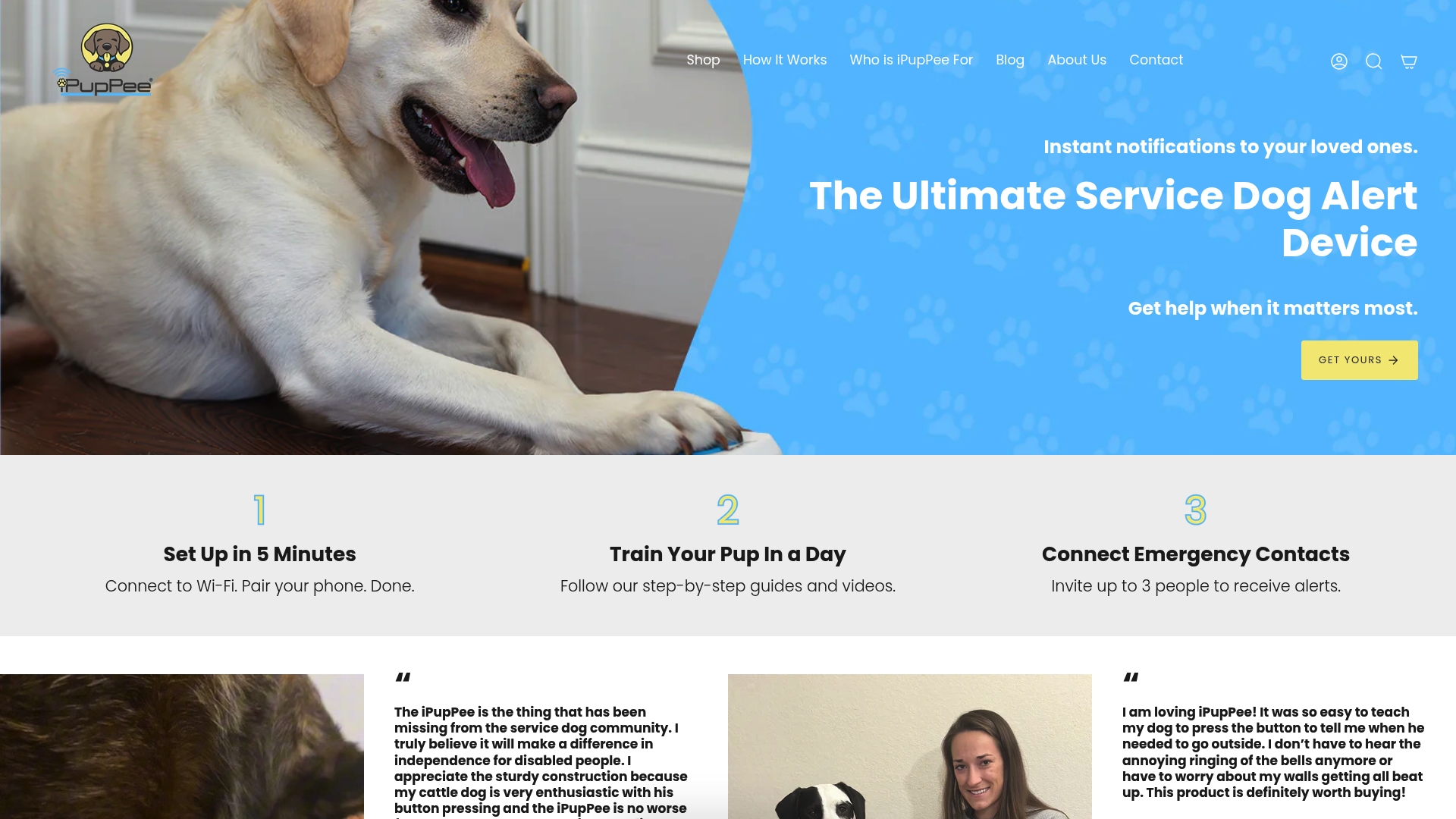
Visit our blog for more home activities your dog will actually enjoy, plus product ideas and safety guides tailored to every life stage. Whether you are just starting out or fine-tuning a routine that is been working for years, there is always a better option waiting for you and your pup at iPupPee.
Frequently asked questions
What are the safest dog-friendly activities for service dogs?
The safest activities for service dogs minimize distractions, support task reliability, and favor passive socialization. According to Tails on the Trails guidelines, service dogs should avoid high-distraction public pet areas entirely.
How often should I rotate enrichment activities for my dog?
Rotate enrichment types weekly to prevent habituation. Research shows that dogs habituate to new enrichment within about an hour, making variety essential for sustained welfare benefits.
Are dog parks safe for senior or disabled dogs?
Dog parks carry real risks for senior and disabled dogs, including crowding, inconsistent cleanliness, and high-energy dogs. A survey of 677 parks found only 69% separate small and large dogs, so quieter private spaces are often the safer choice.
What activities are best for dogs with mobility issues?
Gentle in-home scent work, puzzle feeders, and vet-approved rehab exercises like sit-to-stand are the safest starting points. Expert guidance recommends hydrotherapy for joint conditions when appropriate, always with professional clearance first.