
A virtual pet sitter is a remote way of looking after a pet: someone (or something) watches, talks to and checks on your animal through video, audio, alerts and apps instead of standing in your living room. The term covers three different things, and people mix them up: a person who does live video check-ins, a camera or smart device that lets you do the watching yourself, and a service that pairs an app with an in-person sitter. None of them can feed a dog, open a door or clean up an accident. That part still needs a human present.
This guide explains what each version does, what it can’t do, who gets the most from it, and how to set one up without creating privacy problems.
TL;DR
- “Virtual pet sitter” usually means remote monitoring and interaction: live video, two-way audio, alerts, photo updates and activity tracking.
- It is different from a virtual pet (a game) and from an in-person sitter, who handles feeding, walks, medication and emergencies.
- Remote tools work best as a layer on top of physical care, not as a replacement for it.
- Check video quality, privacy settings and who can access the feed before you buy anything. A 2023 study of 20 pet-tech apps found real security gaps.
- If your dog needs to reach you, not just be watched, look for a device that lets the dog send the alert.
Table of Contents
- What a virtual pet sitter actually is
- How virtual pet sitting works day to day
- What a virtual sitter can do, and what still needs hands
- Benefits of remote pet care
- Limits worth planning around
- Who gets the most from it
- How to choose a setup
- Privacy and security: the part people skip
- When a pet needs hands-on care
- Our perspective
- A device that lets your dog call you
- FAQ
- Sources
What a virtual pet sitter actually is
There is no single regulated definition, which is why the search results for this phrase are such a mix of pet-sitting jobs, software and camera reviews. In practice, the phrase is used in three ways.
1. A person who checks in by video. Some sitters offer live video visits: they talk to your pet through a camera, play or reassure it, and send you a report. Job boards list this as a role, and pay data shows it is treated as a small, part-time kind of work. It suits a pet that is already fed and cared for by someone else, or one that mainly needs company.
2. A device you control. A pet camera or smart device lets you watch and talk to your pet from your phone. VCA Animal Hospitals describes home pet-monitoring systems that can offer video, one- or two-way audio, barking alerts, night vision, treat dispensing and remote play. Those are monitoring and interaction functions, not physical sitting.
3. A hybrid. Booking platforms and local sitters often combine a physical visit with an app: photos, videos, messages and GPS tracking of a walk. Petworks describes virtual pet care as a broad category that can include online caregiver discovery, messaging, virtual or in-person meet-and-greets, remote updates, automated feeders, cameras, two-way communication and GPS tracking.

How it differs from a virtual pet
A virtual pet is a digital creature on a screen, the descendant of handheld toys and mobile games. It has nothing to do with caring for a real animal. If you landed here looking for that, you want a different kind of page.
How it differs from an in-person sitter
An in-person sitter is physically there. VCA says such a sitter can feed and water a pet, provide exercise and mental stimulation, monitor eating and elimination, clean litter or waste, give medication and potentially provide first aid. A virtual setup can see and hear some of that happening. It can’t do it.
How virtual pet sitting works day to day
The technology is simpler than the name suggests. A typical setup has four parts.
- Sensing. A camera, microphone, collar sensor or button captures what your pet is doing or wants.
- Connection. Home Wi-Fi or a cellular link sends it to your phone.
- Alerts. You get a notification when something happens, such as barking, movement, or a button press.
- Response. You talk through a speaker, dispense a treat, call a neighbor or sitter, or decide to come home.
Wearables add another layer. A peer-reviewed Florida study found that a collar-mounted three-dimensional accelerometer and smartphone app tracked dogs’ scratching, shaking, sleeping, activity and resting, with daily summaries available to owners and veterinary staff over a four-month follow-up. That is monitoring in its most data-driven form: it tells you how the dog has been over days, not just what is on camera right now.
If you want to see how this fits into a broader picture, our guides on remote monitoring for pets and dog lifestyle monitoring walk through what to track and how long a baseline takes.
What a virtual sitter can do, and what still needs hands
The cleanest way to think about it is a split between seeing and talking and doing.
| Task | Remote tools | Needs someone physically present |
|---|---|---|
| Checking the pet is calm, eating, sleeping | Yes, by video or activity data | Only if something looks wrong |
| Talking to or calming the pet | Yes, two-way audio | No |
| Spotting barking or distress | Yes, alerts | Someone must respond in person |
| Food and fresh water | Automated feeders help, with limits | Yes, for reliability |
| Toilet breaks and walks | GPS can track a walk | Yes |
| Medication | No | Yes |
| Illness, injury, first aid | Can flag a concern | Yes |
The physical minimums are well established. Pet-care marketplace guidance such as Pawshake’s service guide lists feeding, fresh water, regular toileting, basic non-injectable medication, hygiene and reporting signs of illness or injury as the core of sitting. A camera does none of these.
Veterinary medicine draws the same line. The Canadian Veterinary Medical Association says virtual care can support monitoring, triage, follow-up and client education, but cannot replace physical examination, diagnostic testing or treatment administration. The Florida study makes a similar point in practice: remote data helped clinic staff spot possible treatment problems and decide whether to change therapy or bring the dog back for an exam. It supported clinical care rather than replacing it.
Benefits of remote pet care
Your pet stays home. Familiar surroundings mean fewer disruptions to routine. Petworks notes that photo and video updates can reassure travelling owners while the pet remains at home, and that staying put can be easier on territorial cats.
You see trends, not just snapshots. The Florida team’s view is that objective home data can improve follow-up and reveal treatment trends between visits, especially when paired with direct communication.
It can ease separation stress. VCA says remote contact may reduce separation stress for many pets. Many owners also end up with a phone full of screenshots from their camera, and some turn the best one into a custom cat Pokémon card as a keepsake.
It gives you reassurance at any hour. Checking in at 2 p.m. from the office beats wondering.
Limits worth planning around
Planning for limits is part of using the tools well.
- Some dogs react badly to a talking screen. VCA warns that some dogs may become more upset by a two-way camera if they think their owner is trapped inside it. Start with short, calm check-ins and watch how your dog responds.
- Hardware has constraints. A scoping review of remote human-dog technology lists device size, robustness, battery use, breed and body-shape effects, coat and body composition, and insufficient evidence on reliability among the open issues.
- A notification only helps if someone reads it. Decide in advance who responds, and what they do.
Who gets the most from it
Dog owners who work or travel
A short camera check plus a midday visit from a neighbor or sitter is a common pattern. The remote layer tells you whether a visit is needed sooner.
Service dog handlers and people with disabilities
For handlers, the question runs both ways: you want to know your dog is fine, and your dog may need to reach you. The scoping review says remote human-dog technology may support companion, search and assistance tasks, and that communication should be understandable to dogs and ideally need little or no training. That design goal matters more than any feature list.
Senior owners
Older owners living alone often want a way to be reached by family if something happens, and a way for family to see the dog is okay. Our piece on wearable tech for dogs, safety, alerts and independence covers this in more depth.
Rescues, fosters and new puppy households
A new or anxious dog’s first weeks alone are when patterns show up. Watching from outside the home, without walking in and re-triggering excitement, tells you more about how the dog copes.
How to choose a setup
Work through these questions in order.
- What problem are you solving? Watching, talking, being alerted, or tracking health are different jobs, and different tools.
- Who needs to be reached? If several family members or contacts need alerts, check how access is shared. VCA lists how multiple users share access among the points to check.
- What is the room like? VCA also recommends checking video quality and range, room layout, camera and audio options, night vision, treat size and mounting.
- Does your dog have to do anything? The less training the better. Our guide to training dogs with communication devices safely covers how to introduce one gradually.
- What happens when Wi-Fi drops? Have a backup contact who can physically check on the dog.
- What are the ongoing costs? Some devices need monthly plans. Ask before you buy.
One caution: our article on digital pet interaction looks at the weak links that can break an alert chain, from Wi-Fi to phone settings. Test the whole path, not just the device.
Privacy and security: the part people skip
A camera in your home is a data source. A 2023 peer-reviewed study analyzed 20 popular pet-tech apps and found that two sent login or account details over unencrypted traffic and 14 contacted trackers before consent. The same study surveyed 593 participants in the UK, US and Germany: 521 believed attacks on pet technology could happen, yet users generally took fewer precautions with pet tech than with other online services.
Earlier research on wearables found that pet-wearable software may collect extensive information about owners, while privacy policies can be vague about what pet data is gathered.
Practical steps:
- Use a unique password and turn on two-factor authentication where offered.
- Read what the app collects and whether it asks for your contacts or location.
- Point cameras away from bedrooms, desks with documents and windows.
- Review who has access every few months and remove people who no longer need it.
- Keep firmware updated.
When a pet needs hands-on care
Remote care is a toolset, not a substitute. The CVMA’s position is that virtual care expands monitoring and access while complementing in-person care. Arrange a physical visit, or call your veterinarian, if:
- The pet is on medication that must be given on a schedule.
- It has a medical condition, is elderly or very young.
- It is a dog that needs to go out several times a day.
- You see vomiting, limping, collapse, heavy panting or refusal to eat or drink on camera. Contact your veterinarian, or an emergency clinic if it looks severe.
The Florida study’s lesson is the right model: remote data plus a human who can act on it. If you are curious how daily checks fit with vet care, see our overview of pet wellness monitoring.
Our perspective
Most advice about virtual pet sitting assumes the owner is the only one doing the communicating: you watch, you talk, you decide. We think that misses half the picture. Dogs have things to tell us too, and a dog who is alone and needs help has no good way to say so.
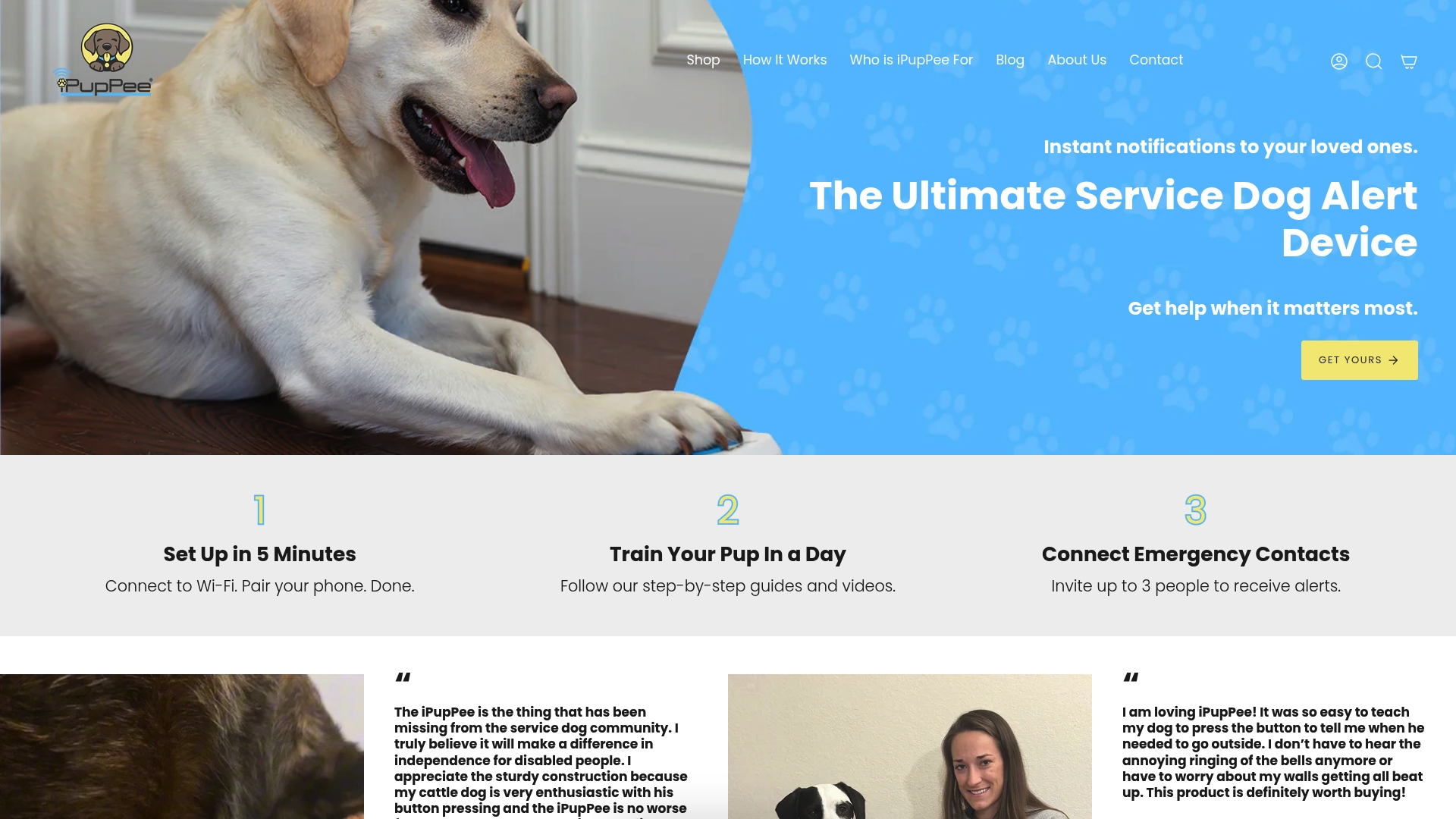
That is why we built iPupPee as an alert device the dog can press. The dog sends a notification to you or to emergency contacts over Wi-Fi, and you can respond with live video and two-way audio. It is designed for dogs of all sizes, and it does not require a monthly subscription fee. For service dog teams, seniors and people living alone, that turns remote care from passive watching into a real two-way line.
Remote tools do not replace a person who can walk in the door. We see them as the thing that tells that person when to come. Used that way, they give people more independence and give dogs a voice.
Andrew
A device that lets your dog call you
If you want your dog to be able to reach you, not only be watched, the iPupPee is a Wi-Fi alert device for dogs. Your dog presses a button, and you or your emergency contacts get a notification with live video and two-way audio. It costs $129.99 as a one-off purchase, with no monthly fee. See how it works or go straight to the iPupPee device page.
To teach the behavior, our on-demand Psychology & Training Course is $119 one-off and covers the dog psychology behind training a button response. You can also read about how dogs use sensory signals through alert devices before you decide.
FAQ
What is a virtual pet sitter?
It is a remote way of checking on and interacting with a pet through video, audio, alerts and apps. It can be a person doing video check-ins, a camera or smart device you operate, or an app attached to an in-person sitter. It does not include hands-on tasks such as feeding or walking.
Is a virtual pet sitter the same as a virtual pet?
No. A virtual pet is a digital character in a game or app. A virtual pet sitter is about looking after a real animal from a distance.
Can a virtual pet sitter replace an in-person sitter?
For a short absence and a healthy, independent adult pet, remote check-ins may be enough alongside someone who can drop by. For pets that need meals, walks, medication or hands-on supervision, you still need a person present. Remote tools tell that person when to act.
Is it safe to put a camera or app on my pet?
It can be, if you choose carefully. Research on pet-tech apps has found unencrypted logins and trackers contacting servers before consent, so use strong passwords, two-factor authentication, and read the privacy policy. Place cameras away from private areas.
Does virtual pet sitting help with separation anxiety?
It may reduce stress for many pets, but some dogs get more upset when they hear you through a speaker and cannot find you. Try short check-ins and watch the response. For significant anxiety, talk with your veterinarian or a certified trainer.
Sources
- Watching Your Watch Dog: Home Pet Monitoring Systems, VCA Animal Hospitals
- Pet Sitter Options, VCA Animal Hospitals
- Booking Virtual Pet Care in the Digital Age, Petworks
- Remote Monitoring of Canine Patients Treated for Pruritus, PubMed Central
- Digital Technology Supporting the Remote Human-Dog Relationship, PubMed Central
- Virtual Veterinary Care, Canadian Veterinary Medical Association
- What services can I offer and what should they include, Pawshake
- Security and privacy of pet technologies, Frontiers in the Internet of Things
- Buddy’s wearable is not your buddy, privacy implications of pet wearables
- Custom cat Pokémon card guide, PokeCardStudio