

TL;DR:
- Smart pet technology is essential for service dogs and pets with disabilities, improving safety and independence.
- These devices rely on connected sensors, AI analysis, and microchip recognition for monitoring and control.
- Proper use requires ongoing management and integration with training, especially for high-stakes applications.
Most pet owners assume smart home gadgets for dogs are a luxury, like a fancy collar or a heated dog bed. But the reality is strikingly different. Smart home automation for pets now integrates GPS collars, AI-powered cameras, microchip doors, and health-monitoring wearables into one connected system that genuinely transforms how dogs communicate, stay safe, and maintain independence. For owners of service dogs, dogs with disabilities, or anyone living alone who depends on their dog as much as their dog depends on them, this technology is not optional. It is essential.
Table of Contents
- How do smart home systems for pets actually work?
- Key devices: What’s available and who benefits?
- Why communication is as important as safety
- Independence and health: Home automation for service dogs and special needs
- What most pet owners miss: Pitfalls and best practices
- Why smart pet homes matter more for special needs and service dogs
- How iPupPee can support your smart pet home journey
- Frequently asked questions
Key Takeaways
| Point | Details |
|---|---|
| Smart homes empower pets | IoT pet tech boosts safety, independence, and communication, especially for service dogs and pets with unique needs. |
| Validated tech matters | Choose devices with proven accuracy and reliability, particularly for health monitoring and access control. |
| Hybrid approach works best | Combining smart devices with human training and intuition delivers superior outcomes for pet and handler. |
| Not all gadgets fit all pets | Select tools based on your dog’s needs, focusing on science-backed features and flexible routines. |
How do smart home systems for pets actually work?
The term “smart home for pets” sounds technical, but the core idea is simple: devices talk to each other and to you through your smartphone. Most systems rely on Wi-Fi and Bluetooth connectivity, pairing sensors, cameras, and access devices into a single app-based dashboard you can check from anywhere.
Here is where it gets genuinely impressive. Modern pet tech uses accelerometers and gyroscopes (motion-tracking sensors borrowed from fitness wearables) to monitor your dog’s activity, sleep cycles, and even subtle changes in gait. AI algorithms then analyze those data streams in real time, flagging unusual patterns like excessive barking, nighttime restlessness, or sudden inactivity that might signal illness or distress.
Microchip and RFID (Radio Frequency Identification) technology adds another layer. Smart pet doors, for example, read your dog’s microchip and only unlock for recognized pets. Tests have recorded RFID scanning success rates of 99.7% across 12,000 scans, meaning the door essentially never fails to recognize your dog while keeping raccoons, stray cats, and neighboring pets firmly outside.
Pet-specific dashboards pull all of this together. Instead of juggling five separate apps, owners manage feeding schedules, camera feeds, door logs, and health summaries from one interface. That centralization matters enormously for caregivers who are already managing complex routines.
Pro Tip: Schedule a weekly “device health check” inside your app. Verify sensors are syncing, batteries are above 20%, and motion detection zones are still calibrated correctly. A five-minute check prevents the kind of silent failures that only surface when you need the system most.
| Feature | Technology used | What it tracks | Accuracy benchmark |
|---|---|---|---|
| Activity monitoring | Accelerometer, gyroscope | Steps, rest, posture | Up to 92% behavior detection |
| Door access control | Microchip/RFID | Entry/exit per pet | 99.7% scan success rate |
| Feeding automation | Programmable motors | Meal size, timing | ±2-3g per meal portion |
| Behavior alerts | AI, camera vision | Barking, movement | Real-time push notifications |
You can explore how these elements connect specifically to smart dog safety devices to understand which combinations work best for your situation.
Key devices: What’s available and who benefits?
Understanding the mechanics is one thing. Knowing which device solves which problem is where most owners get stuck. The market has four core categories, and each serves a distinct purpose.
Pet cameras are the most widely adopted device. Models like the Furbo 360° have earned 87% satisfaction ratings across more than 5,800 verified reviews. That number matters because it reflects real-world reliability, not lab conditions. Beyond video, premium cameras offer two-way audio, treat-tossing functions, and AI bark detection. For owners of anxious dogs or dogs with separation-related behaviors, cameras provide active engagement rather than passive monitoring.
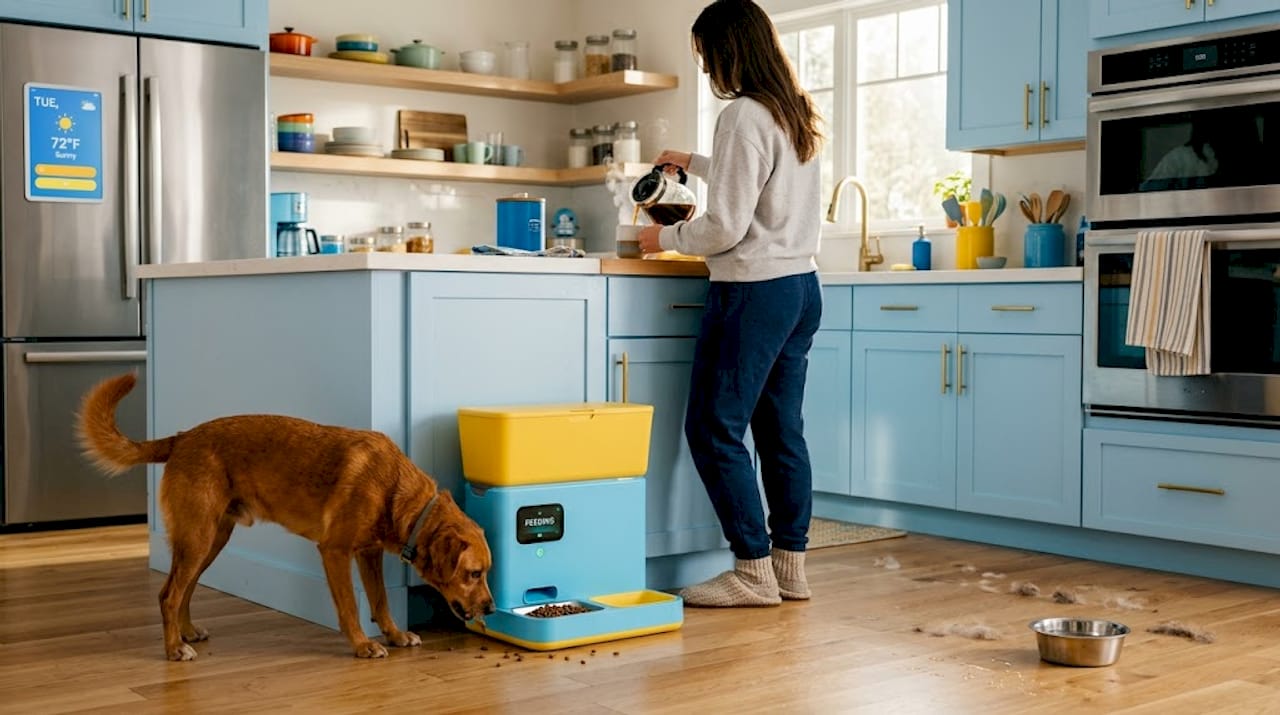
Smart feeders eliminate one of the most common sources of stress for owners with mobility limitations or irregular schedules. Precision matters here: top-rated feeders deliver meals accurate to ±2-3 grams per portion, which is critical for dogs on veterinary-prescribed diets or weight management programs.
GPS collars address the nightmare scenario every dog owner fears: a dog that bolts. For service dogs that may be working in public spaces, and for dogs with anxiety disorders who escape during fireworks or thunderstorms, real-time GPS tracking with geofencing alerts (a virtual boundary that triggers a notification when crossed) provides immediate peace of mind. Some models update location every 10 seconds.
Smart pet doors are perhaps the most underappreciated device. Tests show 100% raccoon exclusion during a 47-minute controlled trial using microchip-based access. That same exclusivity means your dog can move freely in and out of the yard without you opening a door, which is a genuine quality-of-life upgrade for owners with mobility challenges.
Here is how each device maps to real needs:
- Pet cameras: Best for separation anxiety, remote bonding, multi-story homes
- Smart feeders: Best for mobility-impaired owners, prescription diets, multi-pet precise feeding
- GPS collars: Best for service dogs in public, high-escape-risk dogs, rural properties
- Smart doors: Best for dogs needing outdoor access, owners with limited mobility, multi-pet households
For service dog handlers specifically, pairing GPS tracking with camera monitoring creates a layered safety net. Learn how service dog safety tech can be structured to support both handler and dog effectively.
| Device | Key feature | Best for | Limitation |
|---|---|---|---|
| Pet camera (Furbo 360°) | AI bark detection, treat toss | Anxious dogs, remote owners | Requires stable Wi-Fi |
| Smart feeder | Precise portioning | Mobility-impaired owners | Single-pet focused models |
| GPS collar | Real-time geofencing | Service dogs, escape artists | Monthly subscription cost |
| Smart pet door | Microchip access control | Free-roaming, mobility needs | Installation required |
Why communication is as important as safety
Safety features get most of the attention, but communication is where smart home pet tech delivers its most surprising results. The ability to hear, speak to, and even reward your dog remotely changes the entire dynamic of separation.
Cameras equipped with treat-tossing functions and AI bark detection, like those from Furbo, create a feedback loop that behavioral science supports. When a dog barks, the owner is alerted, can speak through the camera, and then reward calm behavior with a treat. Behavioral protocols using this approach show a 70% reduction in barking in documented cases, which is a result that rivals in-person desensitization training.
“Remote positive reinforcement through treat-tossing cameras creates the same neurological reward pathway as in-person training. The dog connects calm behavior with a positive outcome, regardless of whether the owner is physically present.” This is why camera-based intervention works where passive monitoring does not.
Here is a practical protocol for combining tech with behavioral training:
- Set a baseline. Use your camera’s activity log to identify peak anxiety windows, typically 15-30 minutes after you leave.
- Intervene early. When the AI sends a bark alert, open the two-way audio immediately. Speak calmly before the behavior escalates.
- Reward the pause. Use the treat-toss function the moment your dog stops barking. Timing within three seconds reinforces the correct behavior.
- Reduce intervention gradually. Over two to three weeks, lengthen the time between alert and intervention. This builds your dog’s ability to self-regulate.
- Track progress. Most camera apps log bark frequency over time. Use this data to confirm improvement or adjust your approach.
Pro Tip: Camera tech amplifies your training, it does not replace it. Dogs who receive consistent in-person training alongside camera-based reinforcement show faster improvement than those relying on remote intervention alone. Combine both for the best outcome.
The communication dimension is especially powerful for owners with disabilities who may not always be physically able to respond to their dog in real time. For deeper guidance on this, the pet communication tips available at iPupPee offer practical frameworks built around these exact scenarios.
Independence and health: Home automation for service dogs and special needs
For dogs with mobility limitations, chronic health conditions, or service roles, smart home technology shifts from a convenience to a care tool. The key is validated technology, not just popular gadgets.
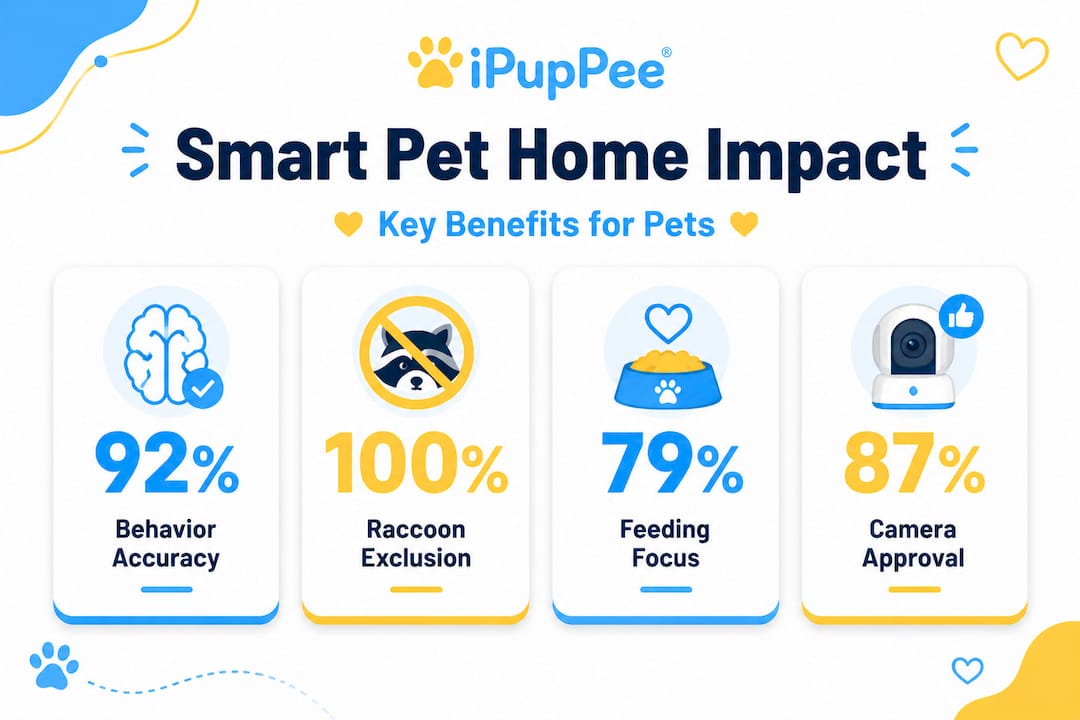
Research on wearable sensors for special needs animals shows 92% behavior detection accuracy in validated systems. That level of precision allows owners and veterinarians to detect early warning signs, like subtle changes in gait, reduced activity levels, or irregular sleep patterns, before they become serious health events. Early detection is particularly valuable for aging service dogs where maintaining working capacity depends on catching problems early.
Here is how specific features support service and special needs dogs:
- Activity trend monitoring flags gradual changes in movement that might indicate joint pain or illness, giving owners data to bring to vet appointments
- Automated feeders ensure timely, precise nutrition for dogs with metabolic conditions or those recovering from surgery, even when the owner has a medical episode or limited mobility day
- Geofencing alerts notify handlers the moment a working dog moves outside a defined area, critical in public settings where a dog might slip a harness
- Microchip door access allows a mobility-impaired dog to move between indoor and outdoor spaces without needing the owner to physically open a door
- Two-way camera audio lets a handler with limited mobility check on a dog resting in another room and provide verbal reassurance without moving
These features are not isolated conveniences. Together they create an environment where both the dog and the owner have more autonomy. For owners who depend on their dog as a medical alert or mobility assistance animal, that autonomy is foundational. The pet safety solutions for special needs and pet care innovation for disabilities resources at iPupPee go deeper into building these systems practically.
What most pet owners miss: Pitfalls and best practices
The benefits are real, but so are the limitations. Overconfidence in automation is the most common mistake owners make, and it can backfire in ways that directly harm a dog’s welfare.
The research is clear: devices supplement training, they do not replace it. A dog who learns to behave calmly only because a camera is watching has not internalized that calm behavior. A dog who eats on time because of an automated feeder but receives no social interaction during meals may still develop anxiety-based behaviors. The technology creates conditions for good outcomes. Humans create the outcomes themselves.
Common pitfalls to avoid:
- Overreliance on automation for behaviors that require ongoing human reinforcement, like socialization and recall training
- Ignoring device compatibility between brands, since not all smart pet devices share protocols, creating gaps in your monitoring network
- Security fatigue, where owners stop updating device firmware, leaving cameras and door systems vulnerable to network breaches
- Assuming accuracy equals sufficiency, a wearable flagging unusual activity still requires a human to interpret and act on that data
Adoption barriers including interoperability and security fatigue are cited by researchers as the primary reasons smart pet tech underperforms in real households. The technology works. The human systems around it often do not.
It is also worth noting that 79% of current IoT pet research centers on feeding automation, which is just one slice of what dogs actually need. The field is expanding rapidly into predictive AI health monitoring, but for now, owners should treat feeding tech as one component of a broader strategy.
Pro Tip: Every three months, revisit your device settings as if setting them up for the first time. Dogs’ routines change with seasons, age, and health. A feeding schedule that worked at 18 months may not serve a five-year-old dog well. Staying adaptive is what separates effective tech use from abandoned gadgets. Resources on navigating dog training challenges can help you align your tech setup with your training evolution.
Why smart pet homes matter more for special needs and service dogs
Here is an opinion that the mainstream pet tech conversation consistently sidesteps: the dogs who need this technology most are not the dogs it is marketed to.
Most smart pet product advertising targets healthy, young dogs with owners who have disposable income and mild convenience preferences. The imagery is cheerful. The use cases are simple. But the transformative power of this technology sits almost entirely with a different group: service dogs, dogs with physical or neurological conditions, dogs whose owners are disabled, elderly, or living alone with complex needs.
For those owners, a GPS collar is not a fun feature. It is the difference between finding a lost service dog within minutes and a devastating outcome. An automated feeder is not a time-saver. It is what ensures a medically fragile dog eats correctly on a day when the owner is hospitalized. A camera with two-way audio is not entertainment. It is how a person with severe mobility limitations maintains emotional connection with an animal who also serves as their safety anchor.
The uncomfortable truth is that mass-market validation, high review counts, and social media popularity do not tell you whether a device will hold up in these high-stakes scenarios. That is why research-validated accuracy metrics like the 92% detection rate in specialized wearables matter far more than general star ratings for this audience.
Our experience working with this community has reinforced one consistent finding: owners who invest in understanding their specific needs first, then match technology to those needs, almost always outperform owners who buy the most popular devices and hope for the best. Flexibility and ongoing adjustment are the real tools. Technology just extends their reach. Exploring service dog care essentials is a strong starting point for building a genuinely need-matched system.
How iPupPee can support your smart pet home journey
Building a smart home for your dog is not a one-time purchase. It is an ongoing process of learning, adjusting, and finding the right tools for your specific situation.
At iPupPee, we have developed resources specifically for pet owners who need more than generic advice. Whether you are integrating technology for a service dog, supporting a pet with special needs, or simply trying to build a safer, more connected home for your dog, our guides cover the practical details most sources skip. From step-by-step setup advice to product comparisons tailored to disability contexts, everything is designed for owners navigating real challenges. Visit iPupPee to explore the full range of tools, devices, and educational content that can help you take the next concrete step with confidence.
Frequently asked questions
Do smart pet doors really keep other animals out?
Yes, smart doors using microchip or RFID only unlock for programmed pets, with tests showing 100% raccoon exclusion and a 99.7% scan success rate across thousands of entries.
How accurate are activity and health wearables?
Validated wearables detect pet behaviors with up to 92% accuracy, making them reliable tools for early health monitoring and behavioral trend tracking.
Will smart home devices replace pet training?
No. Research consistently shows that devices supplement training, not replace it. The best outcomes always combine reliable technology with consistent, hands-on behavioral work.
Does smart pet tech help reduce pet anxiety?
Yes. Cameras equipped with treat-tossing and AI bark detection have shown a 70% barking reduction when used alongside structured behavioral reinforcement protocols.