

Over 250,000 American adults rely on emotional support dogs to help manage daily stress, anxiety, and isolation tied to disabilities. For many, these companion animals can mean the difference between feeling alone and finding hope in tough moments. Understanding how emotional support dogs function, their legal status, and how they differ from service animals empowers individuals to access greater safety, independence, and the right support tools.
Table of Contents
- Defining Emotional Support Dogs And Misconceptions
- Types Of Emotional Support Dogs And Their Roles
- Mental Health And Daily Life Benefits Explained
- Legal Protections For Disabled Americans
- Responsibilities, Costs, And Common Pitfalls
Key Takeaways
| Point | Details |
|---|---|
| Emotional Support Dogs Provide Comfort | They offer critical psychological stability for individuals with mental health challenges, differing from service dogs which require specific training. |
| Legal Protections Are Limited | Emotional support dogs do not have public access rights like service animals and are primarily protected under housing laws. |
| Types of Emotional Support Dogs Exist | Different types, such as PTSD and anxiety support dogs, cater to specific mental health needs, offering targeted assistance. |
| Owner Responsibilities Are Significant | Emotional support dog ownership involves substantial time, financial commitment, and adherence to legal documentation requirements. |
Defining Emotional Support Dogs and Misconceptions
Emotional support dogs are specialized companion animals that provide critical psychological comfort and stability for individuals with mental health challenges or disabilities. Unlike service dogs, these canines do not require extensive specialized training but instead offer therapeutic companionship through their presence and emotional bond. Common misconceptions about emotional support animals often blur the important legal and functional distinctions between support animals, service animals, and typical pets.
The primary distinction lies in their legal status and functional capabilities. Emotional support dogs are not considered service animals under the Americans with Disabilities Act (ADA), which means they do not have automatic public access rights like service dogs trained for specific tasks. These dogs primarily provide comfort through companionship, helping individuals manage anxiety, depression, and other mental health conditions. While they play a crucial psychological role, they are not trained to perform specific medical interventions or assist with physical disabilities.
Legal protections for emotional support dogs are relatively limited compared to service animals. They are primarily covered under housing regulations, which require landlords to make reasonable accommodations for individuals with documented emotional support animal needs. However, emotional support dogs do not have guaranteed access to public spaces like restaurants, stores, or transportation systems. This crucial difference often surprises individuals who misunderstand the precise legal framework surrounding these supportive animals.
Pro Tip: Always obtain an official letter from a licensed mental health professional to ensure your emotional support dog receives proper housing accommodations and legal recognition.
Types of Emotional Support Dogs and Their Roles
Emotional support dogs play a vital role in helping individuals manage various mental health challenges, with distinct types designed to address specific psychological needs. Different emotional support dog types are tailored to provide targeted emotional assistance for conditions ranging from anxiety and depression to post-traumatic stress disorder (PTSD) and autism spectrum disorders. These specialized companions offer unique forms of psychological comfort through their intuitive understanding and consistent emotional presence.
Some prominent types of emotional support dogs include psychiatric service dogs, PTSD support dogs, anxiety support dogs, and depression support dogs. Psychiatric service dogs receive more specialized training and can perform specific tasks like interrupting panic attacks or providing grounding techniques for individuals with severe mental health conditions. In contrast, other emotional support dogs primarily offer companionship and emotional regulation through their calming presence. These dogs help individuals manage symptoms by providing consistent emotional stability, reducing stress levels, and creating a sense of security.
The nuanced differences between emotional support dog types reflect the complex mental health needs they address. For instance, autism support dogs help individuals navigate social interactions and manage sensory overwhelm, while PTSD support dogs can help veterans and trauma survivors feel safer and more connected. Unlike service dogs, these animals do not require extensive task-specific training but instead rely on their innate ability to provide emotional comfort and unconditional support. Their primary role is to mitigate mental health symptoms through consistent companionship and emotional attunement.
Pro Tip: Consult with a mental health professional to determine the most appropriate emotional support dog type that matches your specific psychological needs and lifestyle requirements.
Here’s a concise breakdown of emotional support dog types and their main target conditions:
| Dog Type | Main Psychological Focus | Typical Support Provided |
|---|---|---|
| Psychiatric Service | Severe mental health issues | Task intervention, grounding, safety |
| PTSD Support | Trauma, PTSD | Security, comfort, anxiety relief |
| Anxiety Support | Generalized anxiety | Calming presence, emotional harmony |
| Depression Support | Depression | Motivation, companionship, stability |
| Autism Support | Autism spectrum disorders | Routine, social navigation, comfort |
Mental Health and Daily Life Benefits Explained
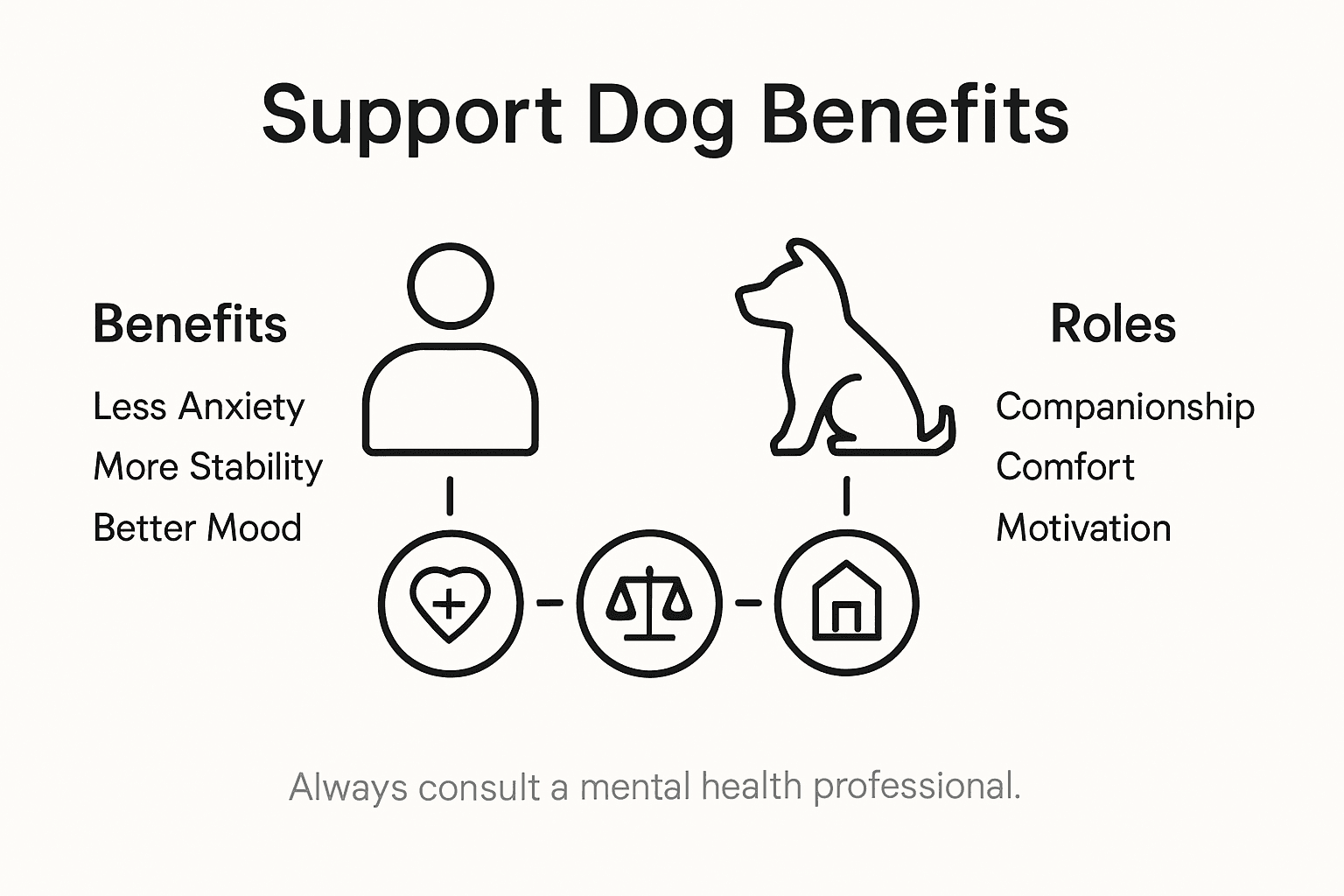
Emotional support dogs offer profound mental health benefits that extend far beyond simple companionship. Scientific evidence demonstrates significant psychological improvements for individuals struggling with various mental health challenges. These specialized companion animals provide tangible psychological support through their consistent presence, helping individuals manage anxiety, reduce stress, and create a sense of emotional stability that traditional treatments sometimes cannot achieve.

The therapeutic impact of emotional support dogs is particularly remarkable in managing complex mental health conditions. Research shows these dogs can interrupt negative behavioral patterns, provide deep pressure therapy during moments of heightened anxiety, and create a protective emotional barrier for individuals experiencing psychological distress. Psychiatric assistance dogs have been documented to help reduce anxiety through tactile stimulation, block unwanted social interactions, and offer grounding techniques that can dramatically improve daily functioning for people with conditions like post-traumatic stress disorder, depression, and severe anxiety disorders.
Beyond immediate emotional regulation, emotional support dogs contribute to long-term mental health management by fostering routine, providing unconditional love, and creating a sense of purpose. Their presence can reduce feelings of isolation, encourage social interaction, and help individuals develop more positive coping mechanisms. Some studies even suggest that the consistent companionship of an emotional support dog can influence healthcare utilization, with some owners reporting decreased medication dependency and reduced hospitalization needs, highlighting the profound psychological and practical benefits these animals provide.
Pro Tip: Schedule a comprehensive consultation with a mental health professional to develop a personalized emotional support dog integration plan that addresses your specific psychological needs and lifestyle requirements.
Legal Protections for Disabled Americans
Emotional support dogs occupy a unique legal landscape in the United States, with protections that differ significantly from service animals. Federal regulations define precise legal boundaries for emotional support animals, providing critical rights while also establishing clear limitations. Unlike service dogs trained to perform specific tasks, emotional support dogs are primarily protected under housing laws, ensuring individuals with mental health challenges can live with their supportive companions without additional pet restrictions or fees.
The Americans with Disabilities Act (ADA) distinguishes emotional support dogs from service animals, which means these companion animals do not automatically receive public access rights. This distinction is crucial for understanding the legal framework. While service dogs can accompany their handlers in most public spaces, emotional support dogs are primarily protected in housing settings through the Fair Housing Act. This law requires housing providers to make reasonable accommodations, preventing discrimination against individuals who rely on emotional support animals for psychological well-being.
Recent legal developments have further clarified the status of emotional support animals, particularly in travel and public spaces. The Air Carrier Access Act has significantly reduced travel accommodations for emotional support dogs, reflecting a more stringent approach to defining animal assistance. State-level regulations add additional complexity, with some jurisdictions implementing specific certification requirements and penalties for fraudulent emotional support animal documentation. Disabled Americans must carefully navigate these nuanced legal protections, understanding that while emotional support dogs provide critical psychological benefits, their legal recognition differs from fully trained service animals.
Pro Tip: Obtain a comprehensive letter from a licensed mental health professional documenting your need for an emotional support dog to ensure maximum legal protection in housing and other regulated environments.
Responsibilities, Costs, and Common Pitfalls
Owning an emotional support dog involves significant financial and personal responsibilities that extend far beyond initial adoption. The comprehensive costs of emotional support dog ownership range from initial acquisition expenses to ongoing monthly maintenance. Prospective owners should anticipate initial adoption fees between $500 and $3,000, with monthly care expenses averaging $280 to $740, covering essential needs like food, veterinary care, grooming, and necessary supplies.
Beyond financial considerations, emotional support dog owners must invest substantial time in training, socialization, and behavioral management. Proper training is critical to ensure the dog can effectively provide psychological support while maintaining appropriate public behavior. Common pitfalls include insufficient training leading to potential conflicts in public spaces, misunderstandings about legal rights, and challenges with documentation. Owners must be prepared to consistently work with their dogs, understand their specific needs, and maintain clear communication with healthcare providers and housing authorities.
Legal and social challenges represent another complex dimension of emotional support dog ownership. Owners must carefully navigate documentation requirements, ensuring they have legitimate medical documentation from licensed mental health professionals. This documentation is crucial for accessing housing accommodations and preventing potential legal disputes. Additionally, owners must be prepared to address potential skepticism, educate others about the role of emotional support animals, and manage their dog’s behavior in various social contexts to maintain the animal’s and handler’s reputation.
Pro Tip: Create a comprehensive care and training portfolio for your emotional support dog, including medical records, training certificates, and a detailed behavioral management plan to demonstrate responsibility and preparedness.
Here is a summary of common responsibilities, typical costs, and pitfalls for emotional support dog ownership:
| Aspect | Highlights | Example Pitfall |
|---|---|---|
| Initial Costs | Adoption fees up to $3,000 | Underestimating total expenses |
| Ongoing Costs | Monthly care $280–$740 | Ignoring grooming/veterinary needs |
| Training | Time investment for socialization, behavior | Neglecting consistent training |
| Legal | Proper documentation required | Incomplete records, legal disputes |
| Social | Public demeanor, education | Misleading others about legal rights |
Enhance the Bond Between You and Your Emotional Support Dog for Greater Independence
Living with an emotional support dog brings vital comfort and stability as highlighted in the article. However, challenges like effective communication and ensuring your dog’s well-being and safety can complicate daily life. If you seek practical solutions to strengthen this special bond while promoting safety and independence, the iPupPee alert device is designed to meet exactly those needs.

With the iPupPee device, you can empower your emotional support dog to communicate simple needs through a button press creating clearer interaction that assists with managing anxiety, depression, or PTSD. Its safety features are tailored especially for disabled Americans and pet owners requiring reliable communication tools. Take the next step to boost your emotional connection and ease daily challenges today by exploring this innovative device at iPupPee. Discover how safety and communication can transform your life and your dog’s effectiveness as your emotional support companion.
Frequently Asked Questions
What are emotional support dogs and how do they differ from service dogs?
Emotional support dogs provide companionship and therapeutic comfort to individuals with mental health challenges but do not perform specific tasks like service dogs, which are trained to assist with physical disabilities under the ADA.
What legal protections do emotional support dogs have?
Emotional support dogs are primarily protected under housing regulations, which require reasonable accommodations from landlords. They do not have automatic public access rights like service dogs.
What types of mental health conditions can emotional support dogs help manage?
Emotional support dogs can assist with various mental health challenges, including anxiety, depression, PTSD, and autism spectrum disorders, by providing emotional stability and companionship.
What are the costs associated with owning an emotional support dog?
The costs can range from $500 to $3,000 for initial adoption, with ongoing monthly expenses averaging between $280 and $740 for food, veterinary care, and other necessities.