

TL;DR:
- Canine-to-human technology interprets behavioral and physiological signals rather than translating dog words directly.
- Different device types, like biosensors, AI sound analyzers, and button systems, serve various communication and health monitoring needs.
- While some tools have scientific validation, users should treat data as guidance, not definitive translation, and prioritize bonding alongside technology.
Most dog owners have felt it. That moment when your dog is clearly trying to tell you something and you just can’t figure out what. The promise of technology that could explain canine-to-human tech in a clear, useful way sounds almost too good to be true. It often is, at least in the way most people imagine it. We’re not talking about a device that speaks dog like a universal translator from a sci-fi movie. What actually exists is far more grounded, genuinely useful, and honestly more interesting than the marketing hype suggests. Here’s what you actually need to know.
Table of Contents
- Key takeaways
- The science behind canine-to-human tech
- Types of devices and what they actually do
- Comparing capabilities and cutting through the hype
- How to use canine tech responsibly
- My honest take on where this technology stands
- See how Ipuppee can help you and your dog
- FAQ
Key takeaways
| Point | Details |
|---|---|
| Tech interprets, not translates | Canine-to-human devices read behavioral and physiological signals, not dog “words.” |
| Multiple device types exist | Wearables, AI sound analyzers, and button boards each serve different communication needs. |
| Accuracy varies widely | Some devices have strong scientific backing; others rely heavily on marketing claims. |
| Training improves outcomes | Properly acclimating your dog to communication devices makes the data far more reliable. |
| Balance tech with bonding | Devices work best as a complement to your attention, not a replacement for it. |
The science behind canine-to-human tech
Before you can make sense of any device on the market, you need to understand what dogs actually do to communicate. They don’t use words. They use a layered system of signals that most humans only partially read.
Dogs communicate through three main channels:
- Vocalizations: Barks, whines, growls, and howls carry emotional tone and urgency but are highly context-dependent.
- Body language: Ear position, tail movement, posture, and eye contact convey far more than sound alone. You can read more about reading these signals in detail.
- Physiological signals: Heart rate, respiration, temperature, and hormonal activity reveal stress, pain, or excitement that isn’t visible from the outside.
The core problem for pet owners is that humans are notoriously inconsistent at reading these signals correctly. We anthropomorphize, misread stress signals as aggression, and often miss the subtle shifts that precede a behavioral change. Technology steps in to fill that gap, not by speaking for your dog, but by capturing data that makes the signals more legible.
NYU scientist Michael Long argues that animal communication tech improves most when it focuses on decoding broad expressive signals rather than trying to map animal behavior onto human language structure. That framing changes everything. The goal isn’t translation. It’s interpretation of patterns you can act on.
“Rather than expecting a ‘universal translator,’ dog communication tech functions best when seen as a tool interpreting physiological and behavioral data to improve care and safety.”
A 2026 peer-reviewed study adds weight to this perspective by showing that petting dogs and making eye contact measurably increases beta and gamma brain activity in humans compared to touching inanimate objects. Human-canine interaction produces real, neurological responses in both directions. Technology that helps owners understand what their dogs are experiencing isn’t just a convenience. It’s building on a biologically real connection.
Types of devices and what they actually do
The category of canine tech for pet owners covers a surprisingly wide range of tools. Here’s how they break down by function and realistic capability.
Biosensor wearable collars
These are the most scientifically grounded tools available right now. Devices like the PetPace collar use embedded sensors to monitor health continuously, capturing heart rate, respiratory rate, temperature, activity levels, and posture. Peer-reviewed work at Michigan State University using PetPace collars demonstrated non-invasive continuous monitoring that produced meaningful behavioral and physiological data insights. That’s not a marketing claim. That’s published science.
The value here is in catching what you’d otherwise miss. A spike in resting heart rate, a change in sleep posture patterns, reduced activity on one side of the body. These are early signals of pain or illness that most owners would only notice when symptoms became obvious.
AI-powered vocalization analyzers
Devices like PettiChat use neural networks trained on large databases of dog vocalizations to provide contextual interpretations of barks in real time. The claim of over 90% context recognition accuracy sounds impressive. What that means in practice is that the AI can classify emotional context — playful, anxious, alert, demanding — with reasonable confidence. It cannot tell you what your dog is thinking, and it definitely cannot communicate back to your dog in any meaningful way.
These tools are genuinely useful for new dog owners learning to read vocal cues, and for multi-pet households where distinguishing between dogs’ communication styles matters.
Soundboard button systems
Research at UC San Diego found that trained dogs use button presses with consistent meaning and purpose, suggesting real communicative intent. Dogs trained on soundboards learn to press labeled buttons to indicate needs like “outside,” “water,” or “play.” This is probably the most interactive form of human-canine interaction tech available to everyday owners.
The learning curve is real. It requires significant investment in training time and consistency. But the payoff is a form of communication that goes both ways, with your dog actively initiating exchanges rather than you always trying to decode them.
Smart vests and touchscreen interfaces
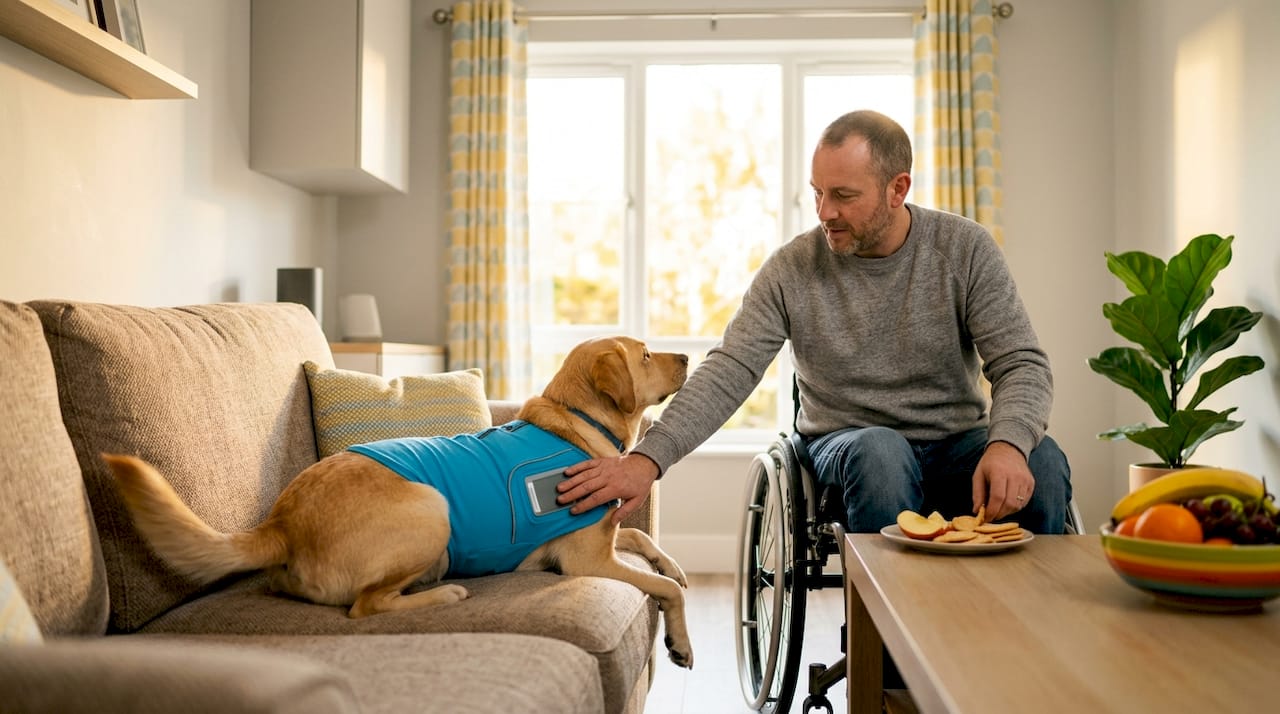
These are primarily used in service dog and assistance contexts. A smart vest with embedded sensors can track whether a service dog is actively working or at rest, and alert handlers to changes in the dog’s physiological state. Touchscreen interfaces allow dogs in research or clinical settings to select from visual options. These aren’t consumer products yet, but they represent where human-animal communication technology is heading.
Pro Tip: If you’re introducing any new device to your dog, start with short sessions of 10 to 15 minutes and pair it with positive reinforcement. A dog that associates the collar or button board with good outcomes will give you cleaner, more reliable data.
Comparing capabilities and cutting through the hype
Not all canine communication devices are created equal. Here’s a direct comparison of the major device categories across the dimensions that matter most.
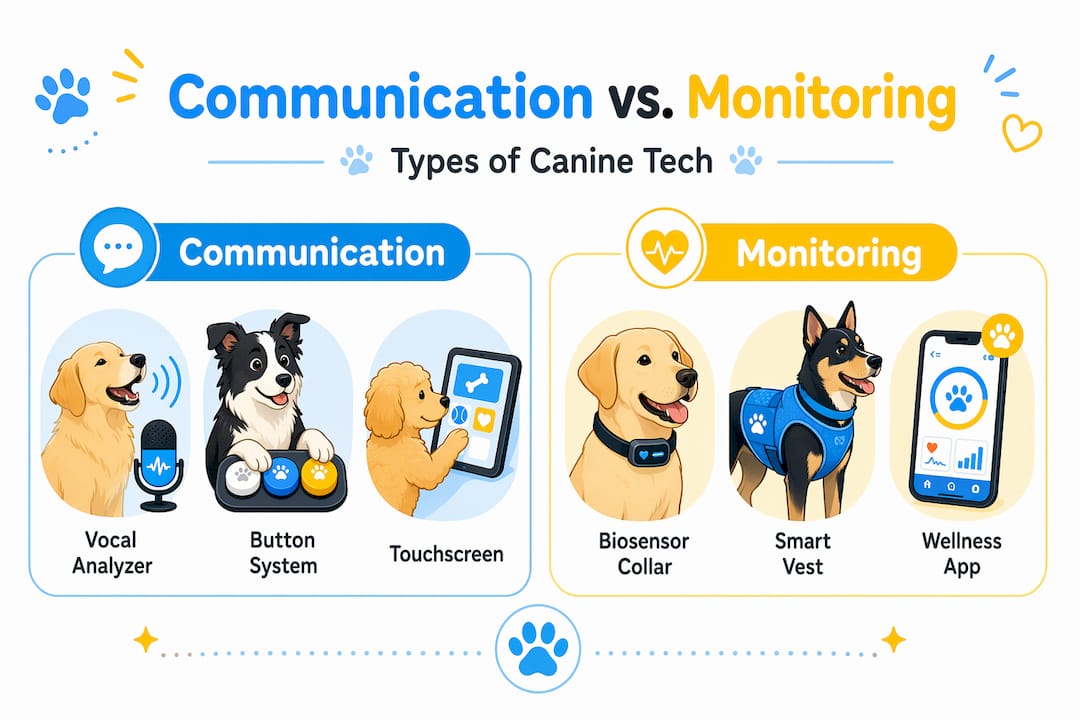
| Device type | Data captured | Scientific validation | Best use case |
|---|---|---|---|
| Biosensor collar | Heart rate, respiration, activity, temperature | Strong (peer-reviewed studies) | Health monitoring, stress detection |
| AI vocalization analyzer | Bark tone, frequency, emotional context | Moderate (proprietary datasets) | Emotional state interpretation |
| Soundboard buttons | Intentional presses mapped to needs | Emerging (UC San Diego research) | Active communication training |
| Smart vest / touchscreen | Physiological signals, task status | Limited consumer access | Service dog and research contexts |
The most common pitfall in this space is treating marketed “translations” as reliable communication. Many marketed pet translators overpromise, and early adopters frequently report novelty rather than accurate two-way communication. That doesn’t mean the technology is worthless. It means you need to know what each tool is actually measuring and what it cannot do.
Continuous monitoring works best when it complements human observation rather than replacing it. A collar that flags elevated heart rate doesn’t diagnose your dog. It tells you to pay closer attention or call your vet. That distinction keeps you in the loop as the primary caregiver instead of outsourcing judgment to an algorithm.
AI faces a real ceiling in this field. Pattern recognition across large datasets can tell you an emotional category. It cannot tell you why your specific dog is anxious today versus yesterday. Context, history, and your direct knowledge of your dog’s individual behavior are still the most accurate tools you have. Behavioral AI improves as it integrates vocal, movement, and physiological signals together, but even multimodal models are interpreting correlations, not meanings.
Pro Tip: When reviewing data from any wearable device, always cross-reference alerts with your own observations. If the collar flags a stress response but your dog seems completely relaxed, note that discrepancy and track whether it’s a pattern.
How to use canine tech responsibly
Understanding the tools is half the job. Using them well requires a deliberate approach.
-
Match the device to your actual needs. A wearable biosensor collar suits an owner managing a dog with chronic health conditions. A soundboard suits an owner with the time to invest in active communication training. A vocalization analyzer suits a new owner still learning the basics.
-
Train your dog before you rely on the data. Rushing past the acclimation phase produces noisy, unreliable data. Safe device introduction involves gradual exposure and positive reinforcement before you start treating any output as meaningful.
-
Set realistic interpretive standards. Don’t treat a single alert as definitive. Look for patterns over days or weeks. Isolated data points are context-free.
-
Consider data privacy seriously. Many pet tech apps collect behavioral and location data. Read privacy policies before you connect any device to a cloud platform.
-
Keep non-tech bonding central. Play, physical contact, routine, and your direct attention are still the foundation of a healthy human-canine relationship. Technology that draws your focus away from your dog rather than toward them is working against you.
You can explore safety, alerts, and independence provided by wearables in more detail to get a fuller picture of what these tools offer in real-life situations.
My honest take on where this technology stands
I’ve followed this space closely, and the thing I keep coming back to is how much the hype outpaces the reality. Every few months a new device promises to finally let you understand what your dog is saying. And every time, the reality is more modest and more genuinely interesting than the claim.
What I’ve found actually works is focusing on physiological monitoring rather than communication. The dogs that benefit most from canine tech aren’t the ones whose owners are trying to decode barks. They’re the dogs whose owners get early warnings about health changes, reduced stress in novel environments, or clearer patterns around behavioral triggers. That’s where the technology has earned its credibility.
What I’ve also seen is that owners who approach these tools with healthy skepticism get more out of them. They treat the data as one input among many rather than a verdict. They stay curious about their dog’s individual behavior instead of defaulting to an app’s interpretation.
I think the next five years will be genuinely transformative in this space. Better multimodal AI, more affordable biosensors, and richer datasets will make these tools noticeably more accurate. But the owners who benefit most will be the ones who use technology to sharpen their own attention, not replace it.
My advice: buy the tool that solves a real problem you actually have. Then put in the time to understand what it’s measuring. The bond you build in the process is worth more than any single insight the device produces.
— Andrew
See how Ipuppee can help you and your dog
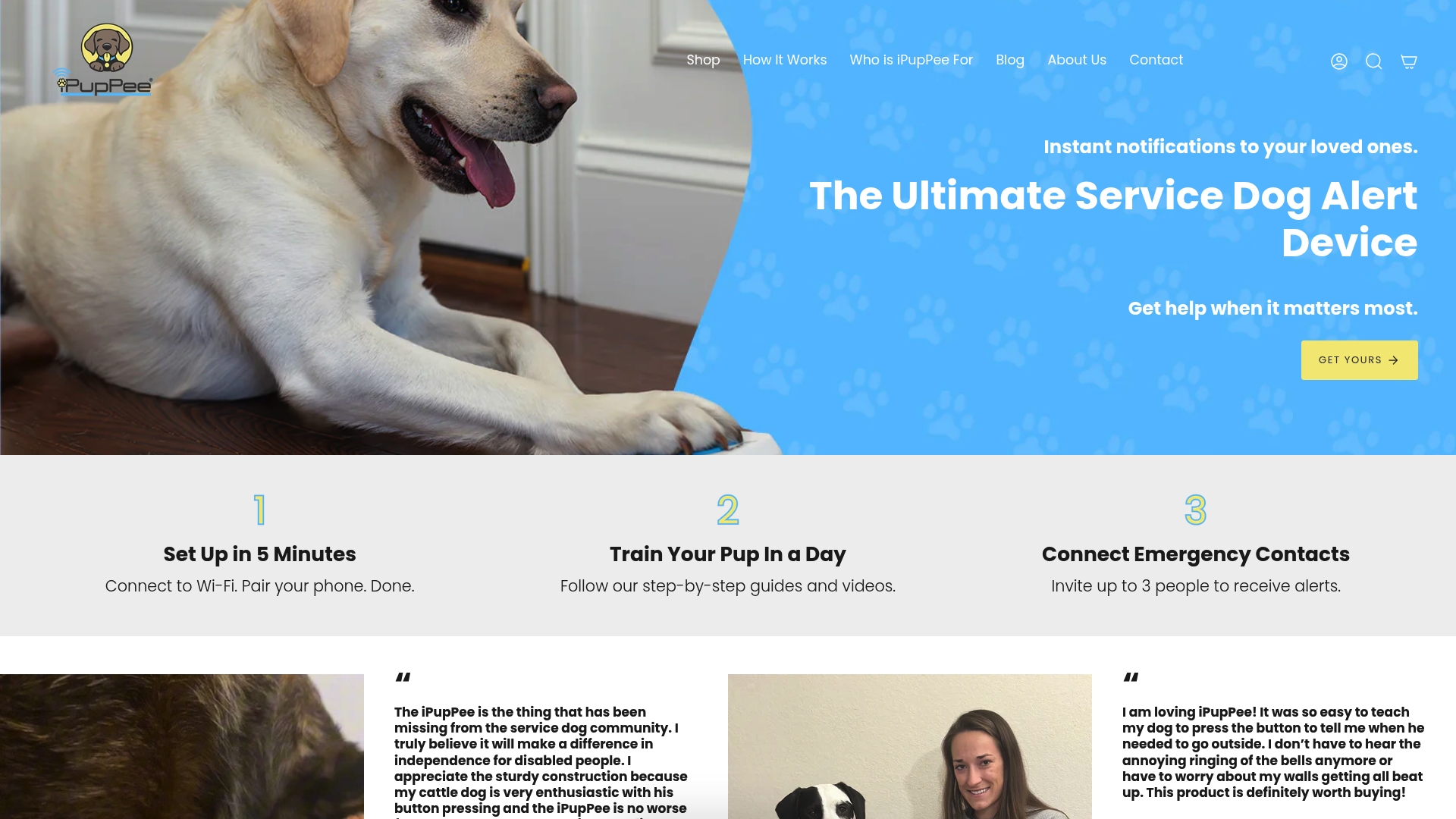
Ipuppee has built its products and resources around a simple idea: pet owners shouldn’t have to choose between technology and genuine connection with their dogs. The iPupPee alert device gives dogs a way to communicate a clear, specific signal to their owners through a single button press. It’s not trying to translate dog language. It’s giving your dog a reliable way to be heard when it matters most.
Whether you’re a service dog handler, a new puppy owner, or someone living alone who wants an added layer of safety and communication, Ipuppee’s dog tech resources cover the full range of tools and training approaches. Every product is designed with real-world use in mind, not novelty. If you’re ready to explore what responsible, practical canine tech looks like, visit Ipuppee to find the right fit for your situation.
FAQ
What does canine-to-human tech actually do?
Canine-to-human tech captures and interprets your dog’s physiological, behavioral, or vocal signals and presents that data in a format humans can understand. It does not translate dog language directly; it reads patterns and provides context.
Are AI pet translators scientifically accurate?
Most AI vocalization devices offer emotional context classification rather than true translation. Some claim over 90% context recognition accuracy, but independent scientific validation remains limited and results vary significantly by breed and environment.
How do soundboard buttons work for dogs?
Dogs are trained to press labeled buttons associated with specific needs or activities, like “outside” or “play.” Research at UC San Diego shows dogs use these buttons with consistent, purposeful intent, making them one of the most interactive communication tools available.
Is continuous monitoring from a collar worth it?
For dogs with health conditions, senior dogs, or dogs in high-stress environments, continuous biosensor monitoring provides data that even experienced owners would miss. Peer-reviewed research supports the accuracy of these devices for tracking stress and physical health indicators.
How do I get my dog comfortable with a communication device?
Start with short, positive sessions and pair the device with treats or play. Rushing the acclimation process produces unreliable data and can create negative associations. Consistent, calm introductions over several days produce the best long-term results.