

TL;DR:
- Technology like haptic vests and sensor collars enhances silent communication and alert detection.
- Strong dog-owner connectivity depends on trust, training, safety, and emotional welfare.
- Devices serve as tools to support, not replace, foundational training and deepened human-dog bonds.
Most dog owners picture communication as a voice command, a hand signal, or a firm leash tug. That picture is incomplete. A growing wave of devices — from haptic vests to sensor-embedded collars — is quietly reshaping how dogs and humans understand each other. For service dog handlers, disabled owners, seniors living alone, and anyone who depends on their dog for safety, this shift is more than a trend. It is a real change in what a strong bond looks like. This guide breaks down what dog-owner connectivity truly means, explains the tools behind it, and gives you practical steps to deepen the relationship you already have.
Table of Contents
- What is dog-owner connectivity?
- How technology is improving dog-owner connectivity
- The role of training and welfare in connectivity
- Practical steps to enhance your dog-owner connectivity
- Our view: Real connection is more than tech
- Connect deeper with your dog today
- Frequently asked questions
Key Takeaways
| Point | Details |
|---|---|
| More than commands | Dog-owner connectivity covers communication, trust, and safety beyond basic obedience. |
| Technology as a bridge | Haptic vests and sensor collars make silent, reliable exchange possible, especially for special needs. |
| Hybrid approach works best | Combining training with technology strengthens and validates your bond for real-world needs. |
| Prioritize welfare | Effective use of technology always respects your dog’s welfare and emotional well-being. |
What is dog-owner connectivity?
Dog-owner connectivity is the quality of the ongoing relationship between you and your dog. It goes far beyond sit, stay, and come. At its core, it describes how well you and your dog understand each other’s signals, moods, and needs — in real time, across different situations, and under stress.
Think about a busy household where a parent manages a young child and a dog at the same time. Or picture a wheelchair user relying on a service dog to retrieve dropped items or alert to medical events. In both cases, the strength of the bond directly affects safety and quality of life. Dog communication with humans is about more than commands; it’s about shared communication, safety, and well-being.
Connectivity rests on four pillars:
- Communication: The signals, cues, and feedback that flow both ways between you and your dog.
- Trust: Your dog’s confidence that your cues are consistent and your response to their alerts is reliable.
- Safety: The ability to act fast in an emergency, whether that means your dog alerting you or you redirecting your dog.
- Emotional welfare: Recognizing your dog’s stress, comfort level, and emotional state so the relationship stays positive.
Understanding how dogs communicate is the first step to strengthening all four pillars. Dogs read body language, tone, timing, and scent far more than most owners realize. When you understand this, you stop relying solely on words and start thinking in terms of the full picture.
Technology is now entering this picture as a genuine bridge. Haptic tools research shows that devices transmitting vibration or touch-based signals can extend communication in environments where voice fails — think loud public spaces, emergency situations, or handlers with hearing or speech impairments.
Pro Tip: Try spending five minutes each day practicing silent communication with your dog using only hand signals and eye contact. You will be surprised how quickly your dog’s attentiveness improves.
Now that we’ve set the stage for what connectivity means, let’s understand how technology is transforming these bonds.
How technology is improving dog-owner connectivity
The newest tools in dog communication go well beyond a standard GPS tracker. Two categories are changing the game most meaningfully: haptic vests and IMU sensor collars.
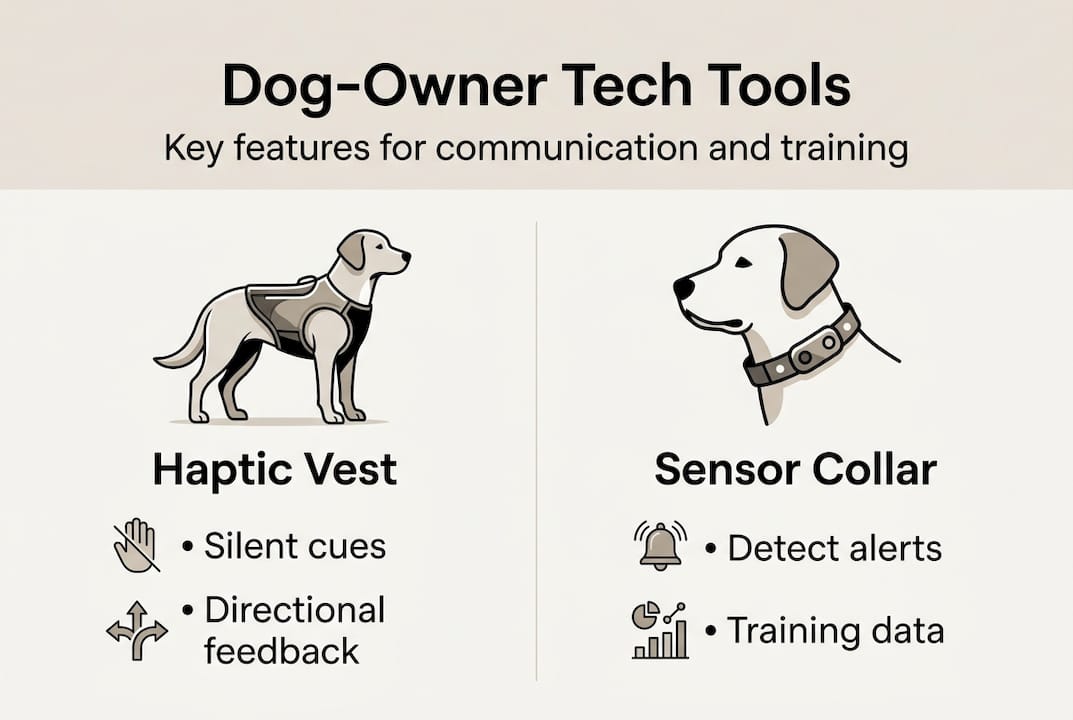
Haptic vests use vibration motors placed at different points on a dog’s body to send silent, directional cues. Instead of calling out “left” or “right,” a handler activates a motor that vibrates on the corresponding side of the vest. Haptic/vibration tools enable silent, non-verbal commands, making them ideal for service and special needs teams working in noisy or public environments.
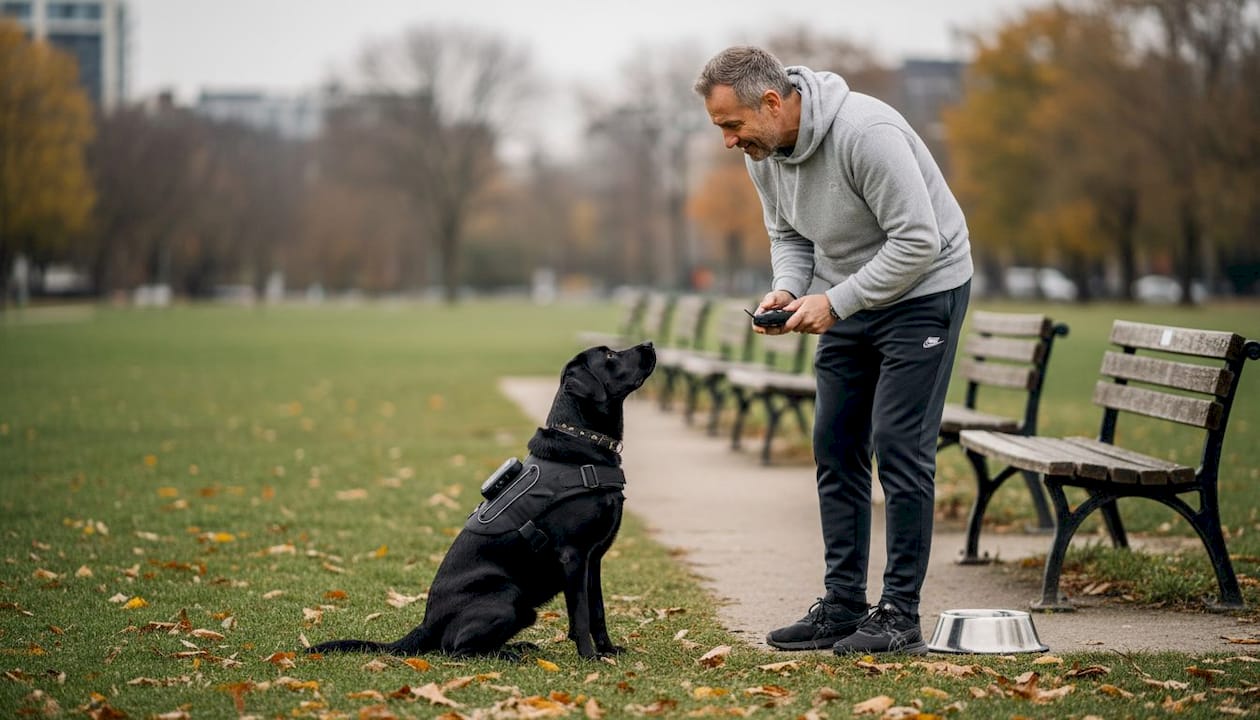
IMU sensor collars use inertial measurement units (motion-tracking chips) to detect specific physical behaviors. When a dog is trained to perform a distinct alert behavior — like spinning in a circle to signal a seizure or nudging with their nose — the collar records that motion pattern. IMU sensor collars research shows these collars can detect trained alert behaviors with 92% accuracy using machine learning, a result that is genuinely impressive for real-world safety applications.
Here is a quick comparison of both technologies:
| Feature | Haptic vest | IMU sensor collar |
|---|---|---|
| Primary function | Send silent cues to dog | Detect dog alert behaviors |
| Direction of signal | Human to dog | Dog to human |
| Best use case | Commands in noisy spaces | Medical alert detection |
| Tech involved | Vibration motors | Motion sensors and machine learning |
| Special needs benefit | High (voice/hearing limits) | High (automated alert logging) |
Learn more about dog communication technology to understand how these tools fit into a broader communication strategy. For handlers with physical limitations, exploring the best devices for disabled owners is a smart starting point.
Here is a straightforward sequence for integrating tech into your daily routine:
- Assess your needs. Identify where communication gaps exist — is it noise, mobility, speed of response?
- Choose one tool at a time. Avoid overwhelming your dog or yourself by introducing multiple devices at once.
- Introduce the device slowly. Allow your dog to smell and explore the vest or collar before activating it.
- Pair the device with known cues. Use the haptic signal alongside a hand signal your dog already knows.
- Monitor and adjust. Watch for stress signals. If your dog becomes anxious, slow the pace.
Research on the dog-human emotional bond also confirms that even a few extra minutes of daily play can strengthen the relationship that makes all tech tools work better.
With these innovative devices redefining communication, it’s important to understand the role of training and welfare in connectivity.
The role of training and welfare in connectivity
No device replaces a well-trained dog. That sounds obvious, but the temptation to lean on technology without building foundational skills is real — especially when a new gadget promises impressive results right out of the box.
The most effective approach is a hybrid one. Hybrid dog training blends classic positive reinforcement methods with technology, using each where it performs best. Training builds behavior; technology confirms and extends it.
Here is why this matters for welfare:
- Dogs that are overtrained on device cues alone may become anxious when the device malfunctions or is absent.
- Constant vibration stimuli, if introduced poorly, can cause stress or confusion.
- Devices designed to detect alert behaviors only work if the dog’s behavior was trained precisely in the first place.
- Welfare comes first. If your dog shows signs of stress, back off from the technology and return to basics.
“Technology validates trained behavior and well-established bonds, but the welfare of the dog and the strength of the handler relationship are what make any communication system reliable.” Source: Expert nuances and hybrid training
A common mistake is assuming that because an IMU collar can detect a spin, you no longer need to reinforce that spin with training and rewards. You do. The collar reads what is there. If the trained behavior drifts, the readings drift too.
Exploring communication apps for dogs can also help you identify supplementary tools that work alongside device-based communication, not instead of it.
Pro Tip: Reward both your dog’s naturally occurring alert behaviors and their trained responses. This reinforces the behavior itself, not just the cue, which makes your dog’s signals more reliable in high-stress moments.
Understanding these best practices empowers you to make smart, welfare-centered choices as you personalize your approach.
Practical steps to enhance your dog-owner connectivity
Strong connectivity is built through consistent, layered practice. Here is a sequence that works for most dog owners and handlers, from absolute basics to gradual tech integration.
- Establish a daily routine. Dogs thrive on predictability. A consistent schedule for feeding, play, and training signals to your dog that you are a reliable presence.
- Practice nonverbal communication daily. Use hand signals, body posture, and eye contact so your dog learns to read you without depending on your voice.
- Add bonding play. Hybrid training plus technology optimizes communication and safety, and play is one of the fastest ways to deepen the emotional component of the bond.
- Introduce a communication device gradually. Follow the steps from the previous section and be patient. Rushing this stage can undermine weeks of trust-building.
- Run low-stakes emergency drills. Practice your dog’s alert behavior in calm settings before you need it in a real scenario.
- Track your progress. Keep simple notes on what is working and what is not. Adjust weekly rather than daily to give changes time to show results.
Here is a practical exercise list you can start today:
- Spend ten minutes in a quiet room practicing hand signals only, no voice.
- Set up a mock emergency scenario once a week and reward your dog’s correct alert.
- Practice “check-in” eye contact: reward your dog every time they look at you voluntarily during off-leash time.
- If using a haptic vest, pair one vibration pattern with one known command until the pairing is solid before adding another.
For handlers who need their dogs to respond in urgent situations, learning how to build faster emergency response into your training routine is worth the extra time investment. If you are new to devices, a step-by-step guide on how to introduce communication devices will help you avoid common setup mistakes. IMU sensor collar data also gives you a clearer sense of what these tools can realistically achieve.
Armed with practical techniques, let’s look at what truly matters — and what most coverage misses — about meaningful dog-owner connection.
Our view: Real connection is more than tech
We have seen a lot of enthusiasm around wearable tech for dogs, and we share it. But we also want to be honest about something most coverage glosses over: technology can only reveal what is already there.
If your dog trusts you, a haptic vest makes your communication faster and quieter. If your dog does not trust you, the vest just adds another confusing stimulus. The same is true for alert collars. A device that logs a spin alert with 92% accuracy is only useful if that spin is the product of genuine, consistent training and a dog that is calm enough to perform reliably.
The handlers we have seen get the best results are the ones who treat devices as a mirror, not a shortcut. They use communication and connection as their foundation, and technology as a way to see and extend what is already working. They also personalize. What works for a seizure alert dog may not work for a hearing assistance dog or a senior owner’s companion animal. There is no single formula. Your dog’s temperament, your lifestyle, and your specific safety needs all shape the right approach. Start with the relationship. Let the tools follow.
Connect deeper with your dog today
If this article has sparked ideas for your own situation, you are already asking the right questions. Deepening your bond takes consistent effort, a willingness to learn, and the right resources at the right time.
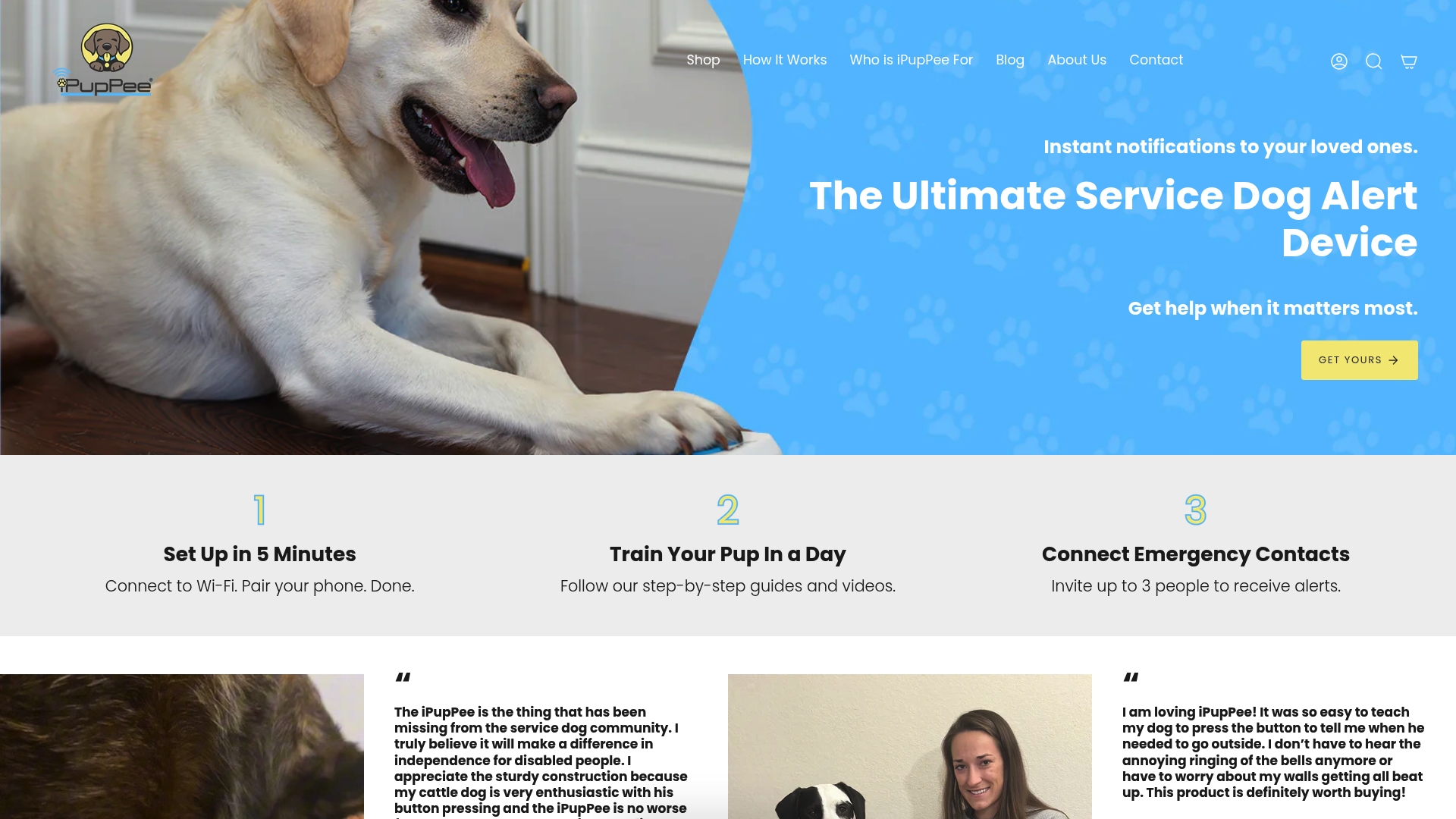
At iPupPee, we built our platform around exactly this goal. Whether you are looking for training guides, device recommendations, or support for a special needs situation, the tools and guides at iPupPee are designed with real dog owners in mind. From alert devices to communication training resources, you will find practical, tested support for every stage of your journey. Take the next step today and see what a stronger, safer connection with your dog actually looks like in practice.
Frequently asked questions
What does dog-owner connectivity mean?
Dog-owner connectivity refers to the strength of communication, trust, and understanding between you and your dog, supported by both training and technology.
How can technology improve my connection with my dog?
Haptic/vibration tools enable silent, non-verbal commands, while IMU sensor collars detect trained alert behaviors, making communication easier especially for special needs and service dog teams.
Does using technology mean I can skip training my dog?
No. Foundational training must come first; technology supports and validates trained behavior but cannot create it or replace the bond that makes it reliable.
What is the accuracy of sensor collars for alert behaviors?
IMU sensor collars have shown up to 92% accuracy in detecting trained alert behaviors using machine learning in published research studies.
Can technology enhance emotional connection with my dog?
Devices can confirm and extend signals, but daily play and consistent bonding routines are what build the true emotional foundation behind any effective communication system.