

Over 80 million American households include at least one dog, yet so many pet owners miss the deeper signals their companions send every day. Understanding dog communication goes far beyond simple commands and treats. This connection shapes loyalty, trust, and even a dog’s happiness. Discover how American dogs and their humans build remarkable bonds through unique ways of sharing emotions, needs, and intentions.
Table of Contents
- What Dog Communication With Humans Means
- Main Ways Dogs Signal Their Needs
- New Technologies For Dog-Human Interaction
- Training Dogs To Use Communication Devices
- Risks, Safety, And Common Missteps
Key Takeaways
| Point | Details |
|---|---|
| Communication Complexity | Dog communication involves understanding both verbal and nonverbal cues from humans, enabling effective interaction. |
| Signaling Needs | Dogs utilize a variety of physical, vocal, and behavioral signals to express their needs and emotional states to humans. |
| Technological Innovations | New technologies, such as bark translation devices and smart collars, enhance the understanding of canine communication and emotional states. |
| Responsible Training | Using communication devices requires a patient approach focused on positive reinforcement to ensure the dog’s emotional well-being. |
What Dog Communication With Humans Means
Dog communication with humans is a complex, nuanced interaction involving multiple sensory and cognitive channels. Unlike simple command-response relationships, this communication represents a sophisticated exchange where dogs interpret human verbal and nonverbal signals while simultaneously expressing their own emotional and physical states.
Research demonstrates that dogs possess remarkable abilities to understand human communication cues, with their comprehension deeply influenced by familiarity, tone, and contextual understanding. Dogs do not merely hear words but actively process the emotional undertones and physical gestures accompanying human speech. They can distinguish between different vocal inflections and recognize specific words, showing an intricate capacity for interspecies communication.
The communication process involves several key elements that enable dogs to interact effectively with humans:
- Vocal Signals: Recognizing specific words and tone variations
- Body Language: Interpreting human physical movements and postures
- Emotional Attunement: Sensing human emotional states through subtle cues
- Learned Responses: Developing communication patterns based on consistent interactions
Understanding how dogs perceive human language reveals a dynamic relationship that goes beyond simple training. Dogs develop sophisticated communication strategies that allow them to navigate complex social environments, respond to human needs, and establish deep emotional connections. This ability makes them not just pets, but true companions capable of understanding and responding to human emotional landscapes.
Main Ways Dogs Signal Their Needs
Dogs have developed sophisticated methods of communicating their needs to humans, utilizing a complex array of physical, vocal, and behavioral signals that go far beyond simple verbal commands. These communication strategies have evolved through thousands of years of domestication, enabling dogs to effectively convey their most pressing requirements and emotional states.
Research reveals that dogs are remarkably strategic in signaling their needs to humans, particularly when it comes to obtaining food or attention. They modulate their begging behaviors based on human attention levels and environmental context, demonstrating an incredible ability to adapt their communication approach. Some key signaling methods include:
- Physical Positioning: Sitting near humans, standing close to food sources
- Vocalization: Whining, barking, or making specific sounds to attract attention
- Body Language: Tail wagging, ear positioning, eye contact
- Direct Interaction: Nudging, pawing, or bringing objects to humans
Interpreting human social cues is equally crucial in this communication process. Dogs have developed an extraordinary capacity to read subtle human gestures, using visual signals to understand intentions and respond appropriately. By combining these sophisticated communication strategies, dogs can effectively express hunger, discomfort, need for bathroom breaks, desire for play, and emotional states, transforming their relationship with humans from simple pet-owner interactions to nuanced, empathetic connections.

New Technologies for Dog-Human Interaction
Technological innovations are revolutionizing the way humans and dogs communicate, bridging the complex language barrier through sophisticated digital solutions. These emerging technologies aim to transform our understanding of canine communication, providing unprecedented insights into dogs’ emotional states, needs, and cognitive processes.
One fascinating example of communication technology is the bark translation device, which attempts to decode dog vocalizations into human-understandable emotional categories. While primarily designed for entertainment, these devices represent an important step toward understanding the nuanced ways dogs express themselves. The technology categorizes different bark types and provides representative emotional interpretations, giving owners a glimpse into their dog’s potential psychological state.
Additional communication technologies are expanding the boundaries of human-dog interaction:
- Electronic Training Devices: Ultrasonic communication tools that emit sounds undetectable to humans
- Smart Collar Technologies: Tracking emotional and physical states through biometric monitoring
- Button Communication Systems: Allowing dogs to communicate specific needs through programmable buttons
- AI-Powered Interpretation Platforms: Using machine learning to analyze dog body language and vocalizations
These technological innovations are not just novelties but powerful tools for enhancing understanding, safety, and connection between humans and their canine companions. By providing more nuanced communication channels, these technologies help bridge the interspecies communication gap, ultimately improving the quality of life for both dogs and their human families.
Training Dogs to Use Communication Devices
Training dogs to use communication devices requires a patient, systematic approach that focuses on positive reinforcement and gradual skill development. These innovative technologies offer unprecedented opportunities for dogs to express their needs, emotions, and intentions more clearly to their human companions.
When introducing communication technologies, owners must be mindful of the ethical considerations surrounding training devices. Not all communication tools are created equal, and the potential for misuse can lead to negative emotional impacts on dogs. Responsible training involves understanding each device’s specific mechanics, purpose, and potential psychological effects on the animal.
Successful training of communication devices typically involves these key strategies:
- Consistent Positive Reinforcement: Rewarding dogs immediately when they interact correctly with the device
- Gradual Introduction: Starting with simple commands and slowly increasing complexity
- Short, Focused Training Sessions: Maintaining dog engagement and preventing frustration
- Individual Adaptation: Recognizing each dog’s unique learning style and pace
Research highlights important considerations when implementing electronic training technologies, emphasizing that the effectiveness of any communication device depends on the trainer’s skill, patience, and commitment to the dog’s emotional well-being. The goal is not just teaching a skill, but creating a meaningful communication pathway that enhances the bond between dogs and their human companions.
Risks, Safety, and Common Missteps
Effective dog communication relies not just on technique, but on understanding the potential risks and ethical considerations inherent in training and interaction methods. Owners must approach communication technologies with a nuanced, compassionate perspective that prioritizes the dog’s emotional and psychological well-being.
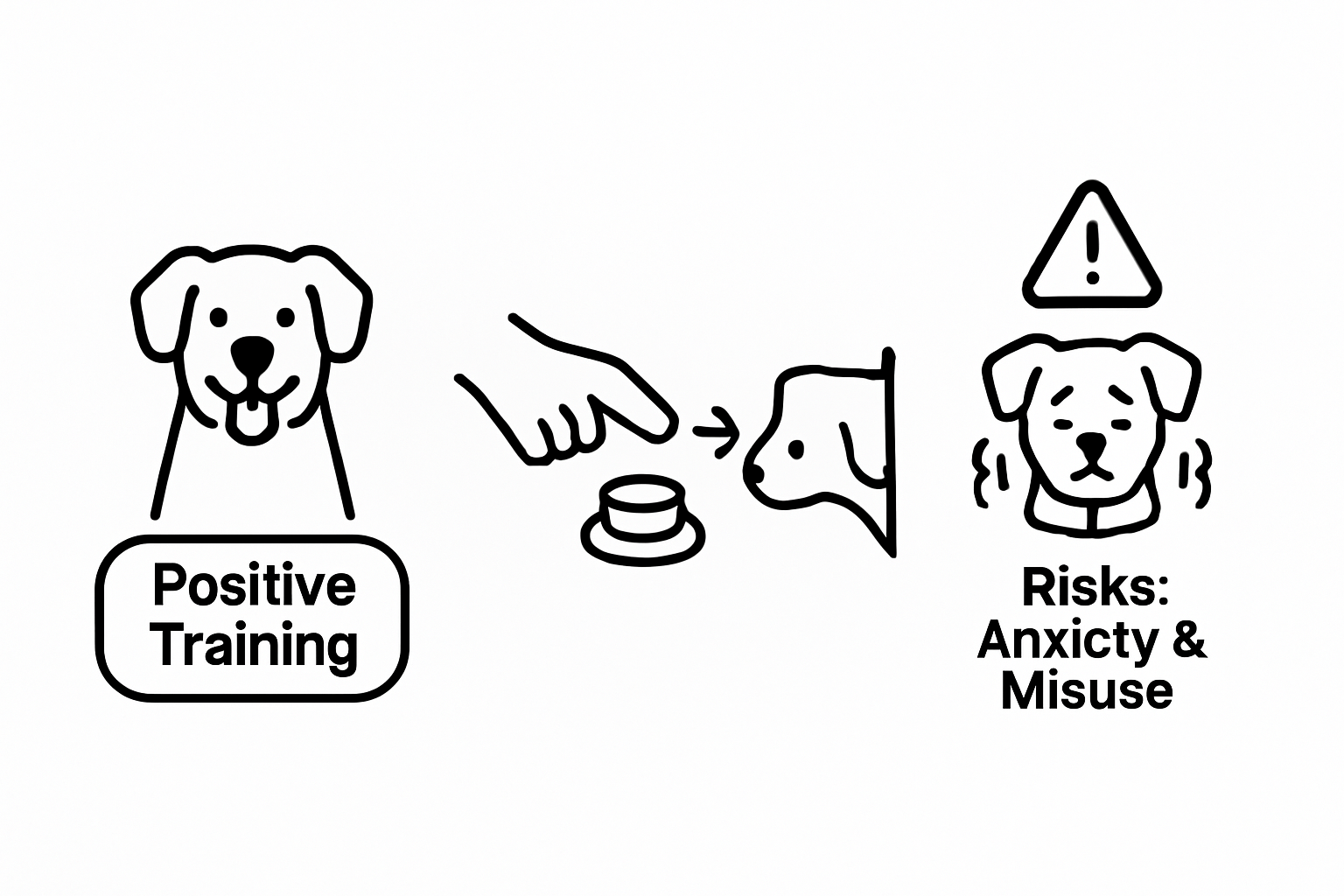
Research reveals significant concerns about training devices that could potentially harm canine welfare. Certain electronic training tools, if misused, can lead to increased aggression, fear, and long-term psychological damage. The consequences of improper training extend far beyond immediate behavioral responses, potentially undermining the trust and bond between dogs and their human companions.
Common missteps in dog communication and training include:
- Inconsistent Communication: Sending mixed or conflicting signals
- Punishment-Based Approaches: Using negative reinforcement that creates anxiety
- Ignoring Individual Dog Temperaments: Applying one-size-fits-all training methods
- Overreliance on Technology: Replacing genuine interaction with device-based communication
The ethical implications of training technologies underscore the critical importance of understanding each dog’s unique psychological landscape. Responsible communication requires patience, empathy, and a commitment to methods that build trust, respect the dog’s emotional boundaries, and create a supportive learning environment. Success is measured not by compliance, but by the strength of the human-dog relationship and the dog’s confidence and emotional security.
Bridge the Communication Gap Between You and Your Dog for Greater Safety and Connection
Understanding your dog’s needs and emotional states is essential for building a stronger, more trusting relationship. The article highlights the challenges dogs face in communicating effectively with humans, from subtle body language cues to vocal signals. Many owners struggle with inconsistent communication or miss important signals that indicate their dog’s needs or emotional well-being. This gap can create frustration and limit the deep bond dogs and owners crave.
That is why iPupPee offers an innovative solution designed to enhance safety and communication through simple, intuitive technology. The iPupPee device empowers dogs to express their needs clearly by pressing a button that instantly notifies their human companions. This technology supports better emotional attunement and learned responses as described in the article, making it easier to understand when your dog requires assistance, attention, or care.

Discover how you can foster empathetic communication with your canine friend while improving safety and independence. Visit iPupPee now to learn about the device, explore training instructions, and start transforming your connection today. Don’t wait to empower your dog with the voice they deserve.
Frequently Asked Questions
How do dogs communicate their needs to humans?
Dogs use a combination of vocal signals, body language, and direct interactions to express their needs. Common methods include whining, tail wagging, and nudging.
What technologies are available to enhance dog-human communication?
Technologies like bark translation devices, smart collars for monitoring emotions, and button communication systems help bridge the communication gap between dogs and humans.
What are the risks of using electronic training devices for dogs?
Improper use of electronic training devices can lead to increased anxiety, aggression, and damage to the relationship between dogs and their humans. It’s important to understand ethical considerations before using such tools.
How can I train my dog to use communication devices effectively?
Successful training involves positive reinforcement, gradual introduction of commands, and short, focused training sessions that cater to the dog’s individual learning style.