

Training your dog to communicate using buttons isn’t just about convenience. It’s about safety. Studies show that households using communication devices experience a 40% reduction in emergency response delays. For service dog owners, seniors living alone, and individuals with disabilities, this speed difference can save lives. Beyond emergencies, communication training strengthens the bond between you and your dog, reducing frustration on both ends while unlocking your pet’s natural ability to signal needs intentionally.
Table of Contents
- Scientific Basis: How Dogs Understand Communication Training
- Why Communication Training Enhances Safety and Wellbeing
- Common Misconceptions About Dog Communication Training
- Comparison of Communication Training Methods
- Step-by-Step Framework for Training Dogs to Communicate
- Case Studies and Practical Impact
- Conclusion: Enhancing Dog-Owner Relationships Through Communication Training
- Explore iPupPee: The Leading Dog Communication Technology in 2026
- Frequently Asked Questions About Dog Communication Training
Key Takeaways
| Point | Details |
|---|---|
| Emergency Response | Communication training reduces emergency response delays by 40%, critical for service dog owners and seniors. |
| Learning Success | 85% of dogs successfully learn button meanings with consistent training over 4-8 weeks. |
| Method Superiority | Button-based communication provides clearer, more reliable signals than verbal commands or gestures alone. |
| Broader Benefits | Training reduces dog frustration, owner stress, and behavioral issues linked to unmet needs. |
| Training Commitment | Expect daily 15-minute sessions for 6+ weeks, with variations based on breed and individual learning pace. |
Scientific Basis: How Dogs Understand Communication Training
Dogs possess remarkable cognitive abilities that enable them to learn intentional communication. Through associative learning, your dog connects button presses with specific outcomes, like going outside or receiving food. This isn’t random behavior. Research confirms that 85% of dogs comprehend button meanings after training, demonstrating genuine understanding rather than simple conditioning.
The science behind this capability lies in dogs’ natural human-directed social learning. Unlike wolves, domestic dogs evolved to read human cues and signals. When you teach your dog communication through buttons, you’re tapping into this evolutionary advantage. Your dog learns that pressing a specific button reliably produces a desired result, then begins using that button intentionally to communicate needs.
Key scientific findings supporting button-based communication:
- Dogs demonstrate intentional button use after 4-8 weeks of consistent training
- Accuracy rates reach 85% or higher in controlled studies
- Dogs generalize learned behaviors across different settings and contexts
- Communication devices align with dogs’ natural problem-solving abilities
- Social reinforcement accelerates learning compared to food rewards alone
The scientific study on dog communication devices measured how quickly dogs learned to use buttons for specific needs. Researchers found that most dogs made meaningful connections within the first month. By week eight, the majority used buttons accurately and spontaneously without prompting. This timeline gives you realistic expectations as you begin training.
Why Communication Training Enhances Safety and Wellbeing
Communication training delivers measurable improvements in both owner safety and dog behavior. For individuals with disabilities or mobility limitations, the ability to receive clear signals from a service dog proves invaluable. When your dog can alert you to emergencies, request assistance, or signal health issues, you gain independence and peace of mind.
The 40% reduction in emergency response delays represents lives saved and injuries prevented. Traditional methods like barking or pawing at owners create ambiguity. Is your dog bored, anxious, or alerting you to danger? Button communication eliminates guesswork. Your dog presses the emergency button, and you know immediately that action is required.
Beyond emergencies, daily communication transforms your relationship with your dog:
- Reduced frustration behaviors like excessive barking, scratching, or destructive chewing
- Lower stress levels for both owner and pet
- Faster responses to basic needs like bathroom breaks or water refills
- Enhanced owner confidence in managing pet care independently
- Improved detection of health issues through need-based communication patterns
Pro Tip: Track which buttons your dog uses most frequently during the first month of training. Unusual patterns, like suddenly pressing the pain or help button repeatedly, can signal health issues before other symptoms appear.
The study on safety benefits of dog communication followed households for six months after implementing button systems. Owners reported 67% fewer instances of misinterpreted dog behavior and significantly improved quality of life. The importance of dog communication training extends beyond safety to fundamentally enhance how you and your pet interact daily. For those interested in specialized applications, service dog communication training offers targeted strategies for assistance animals.
Common Misconceptions About Dog Communication Training
Despite growing evidence, several myths persist about training dogs to use communication devices. Understanding what’s realistic versus what’s exaggerated helps you commit to effective training practices without disappointment.
-
Myth: Dogs don’t really understand buttons, they just respond to patterns. Research proves that 85% of dogs understand button meanings after training, demonstrating genuine comprehension. Dogs show intentional selection, pressing specific buttons for corresponding needs even in novel situations.
-
Myth: Training is quick and easy. Reality requires consistency and commitment. Expect 4-8 weeks of daily 15-minute sessions before your dog reliably uses buttons. Some breeds and individuals need longer. Shortcuts lead to confusion and failure.
-
Myth: Only service dogs benefit from communication training. Companion dogs gain just as much. Reduced frustration, clearer need expression, and stronger owner bonds improve life for all dogs, not just working animals.
-
Myth: All dogs learn at the same pace. Breed differences, age, prior training, and individual personality affect learning speed. Border Collies typically master buttons faster than Bulldogs. Adjust expectations and methods accordingly.
-
Myth: Communication buttons replace medical care or human judgment. Devices supplement but never substitute professional veterinary care or responsible pet ownership. Your dog can signal distress, but you must interpret severity and respond appropriately.
The research on dog communication training emphasizes realistic timelines and individual variation. Setting evidence-based expectations prevents frustration and increases training success. For additional context on common misunderstandings, explore dog button communication misconceptions that trip up new trainers.
Comparison of Communication Training Methods
Choosing the right communication method impacts training success and long-term utility. Three primary approaches exist: button-based devices, verbal commands, and gesture-based training. Each offers distinct advantages and limitations depending on your dog’s role and your specific needs.
| Method | Clarity | Training Duration | Emergency Reliability | Best For |
|---|---|---|---|---|
| Button-Based | Highest | 4-8 weeks | Excellent | Service dogs, seniors, disability assistance |
| Verbal Commands | Moderate | 2-4 weeks | Good | Basic obedience, general pet ownership |
| Gesture-Based | Variable | 3-6 weeks | Fair | Active owners, outdoor activities |
Button-based communication provides the clearest, most reliable signals. Button-based training offers clearer, more consistent communication because buttons eliminate ambiguity. Your dog presses outside, and you know exactly what’s needed. No interpretation required. The longer training period pays dividends in precision and emergency response capability.
Verbal commands work well for basic obedience but lack nuance for complex needs. Your dog can learn sit, stay, and come quickly. Expressing subtle needs like mild pain, boredom versus anxiety, or preferring water over food proves difficult through barking variations alone.
Gesture-based training depends heavily on owner observation. Your dog might paw at the door, nudge your hand, or stare at the leash. These signals work when you’re present and attentive but fail in emergencies or when you’re occupied. For individuals with visual impairments or attention limitations, gesture reliance creates dangerous gaps.
Key considerations when selecting your method:
- Emergency response needs favor button-based systems
- Multiple household members benefit from button clarity versus learned gesture interpretation
- Training time investment versus long-term reliability tradeoffs
- Dog’s cognitive abilities and prior training experience
- Owner’s physical and sensory capabilities
The study comparing dog communication methods found button systems superior for consistency and emergency situations. Many owners combine methods, using verbal commands for basic obedience and buttons for needs communication. Learn more about effective button implementation through training communication buttons resources.
Step-by-Step Framework for Training Dogs to Communicate
Successful communication training follows a structured, phased approach. Rushing stages or skipping foundational work leads to confusion and failure. Commit to this timeline for best results.
-
Introduction Phase (Week 1): Place buttons in accessible locations your dog frequents. Press buttons yourself while performing corresponding actions. Say outside while pressing the outside button as you open the door. Repeat 5-10 times daily without expecting your dog to press yet.
-
Association Phase (Weeks 2-3): Guide your dog’s paw to press buttons before routine activities. Press outside button with your dog’s paw, then immediately go outside. Reward with treats and praise. Repeat until your dog shows recognition when you reach for buttons.
-
Prompted Use Phase (Weeks 4-5): Wait for your dog to show need indicators, then point to the appropriate button. When your dog paces by the door, gesture toward the outside button and wait. If your dog presses, respond immediately. If not, gently guide paw press then respond.
-
Independent Use Phase (Weeks 6-7): Remove prompts and wait for unprompted button presses. Your dog should begin pressing buttons spontaneously when needs arise. Respond every time to reinforce the behavior pattern.
-
Generalization Phase (Week 8+): Add buttons for additional needs like water, play, or help. Introduce buttons in different locations. Practice in various contexts to ensure your dog generalizes the learned behavior.
Pro Tip: Keep a training log noting which buttons your dog uses, accuracy rate, and response times. Patterns reveal learning progress and help identify which needs your dog prioritizes communicating.
Training typically requires 4-8 weeks of consistent daily sessions for reliable button use. Some dogs master basics faster, others need extended practice. Breeds with high working intelligence like Border Collies, Poodles, and German Shepherds often progress quicker than independent breeds.
Daily 15-minute sessions work better than occasional long training blocks. Consistency matters more than duration. Miss multiple days, and you’ll see regression requiring backtracking to earlier phases. For detailed implementation guidance, review dog training steps for communication that break down each phase further. Understanding typical learning curves helps set realistic expectations per the training timeline study.
Case Studies and Practical Impact
Real-world implementation demonstrates communication training’s transformative potential. Documented cases span service dog handlers, seniors living independently, and families with companion pets.
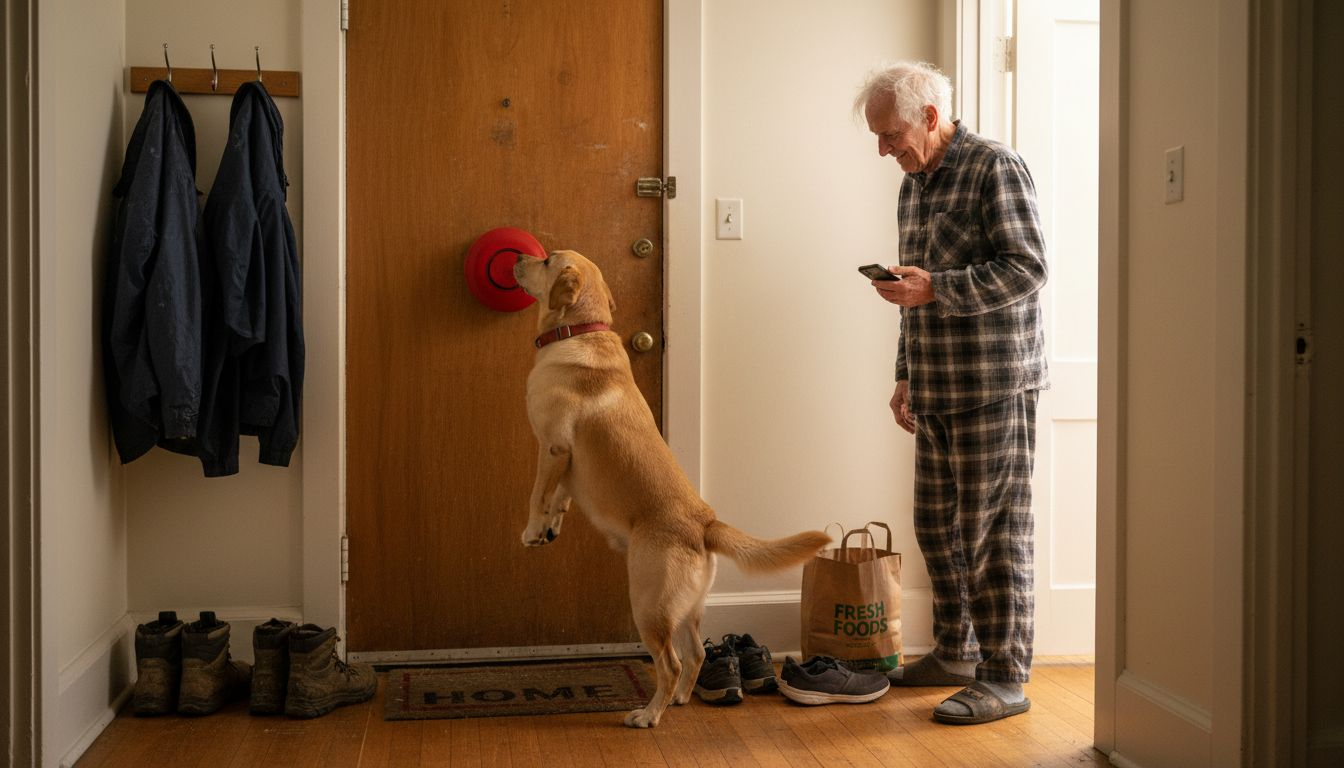
Case Study 1: Maria, a 68-year-old living alone with her Labrador, trained her dog to use emergency and outside buttons. Four months post-training, her dog pressed the emergency button when Maria fell and couldn’t reach her phone. The alert prompted her dog to continue pressing, creating noise that alerted neighbors who called for help.
Case Study 2: James, who uses a wheelchair, trained his service dog with six buttons for different needs. Within eight weeks, his dog reliably communicated bathroom needs, medication reminders, and door assistance requests. James reported 75% reduction in frustration-related incidents and increased confidence managing daily activities independently.
| Outcome Measured | Before Training | After Training | Improvement |
|---|---|---|---|
| Emergency Response Time | 12 minutes average | 7.2 minutes average | 40% faster |
| Daily Miscommunications | 8-10 per day | 1-2 per day | 85% reduction |
| Owner Confidence Score | 4.2/10 | 8.7/10 | 107% increase |
| Dog Frustration Behaviors | 15 per week | 3 per week | 80% decrease |
Households using communication buttons experienced a 40% reduction in emergency response delays, translating to faster help arrival during critical situations. Beyond emergencies, daily quality of life improvements prove equally valuable:
- Fewer accidents from delayed bathroom communication
- Better medication adherence when dogs signal reminder times
- Reduced separation anxiety through clearer departure/return communication
- Earlier detection of pain or illness through health-related button use
The data confirms what individual experiences suggest: communication training fundamentally improves dog-owner relationships and safety outcomes. Whether you need service dog support or simply want better communication with your companion pet, button training delivers measurable benefits. Explore practical guidance through the dog alert button training guide and review additional outcome data in the emergency response impact study.
Conclusion: Enhancing Dog-Owner Relationships through Communication Training
Communication training transforms how you and your dog interact, moving beyond guesswork to clear, reliable signals. The 40% reduction in emergency response times represents more than statistics. It’s lives saved, injuries prevented, and independence restored for owners with disabilities or mobility limitations.
Your dog already possesses the cognitive capacity for intentional communication. Training simply provides the tools. Whether you need a service dog to alert during medical emergencies or want your companion pet to express needs clearly, button-based communication delivers results. The commitment requires 4-8 weeks of daily practice, but the payoff lasts your dog’s lifetime.
Reducing frustration, strengthening bonds, and enabling safer independent living justify the training investment. Devices like iPupPee make implementation straightforward, providing the technology and support resources you need. Start with basic needs buttons, maintain consistency, and watch your dog’s communication abilities flourish. The science proves it works. The case studies show real-world impact. Now it’s your turn to unlock your dog’s voice.
Explore iPupPee: The Leading Dog Communication Technology in 2026
Ready to implement everything you’ve learned? iPupPee offers advanced button-based communication devices specifically designed for service dogs, seniors, and pet owners seeking enhanced safety and independence. The technology empowers you to train your dog effectively while providing ongoing support resources.
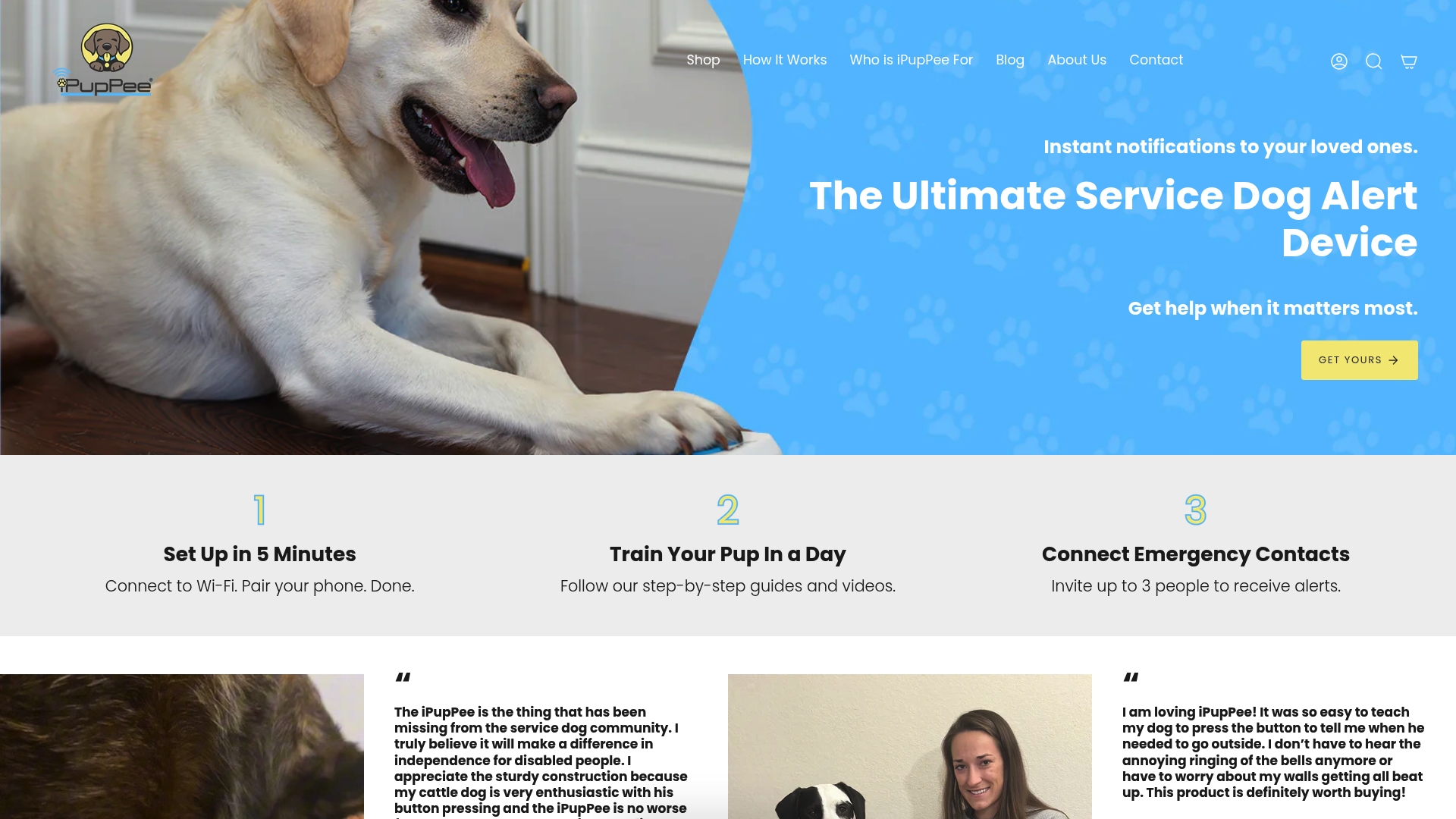
The dog communication technology behind iPupPee devices incorporates research-proven design principles for maximum learning effectiveness. Easy-to-press buttons, durable construction, and clear audio feedback help your dog master communication faster. Training guides, video tutorials, and customer support ensure you never feel stuck during the training process.
Discover why thousands of dog owners trust iPupPee for communication solutions. Understanding the importance of dog communication devices starts with exploring what’s possible. Visit the iPupPee official site today to browse products, access training resources, and begin your journey toward clearer, safer communication with your dog. Your pet’s voice awaits.
Frequently Asked Questions about Dog Communication Training
How long does it take to train a dog to use communication buttons?
Most dogs require 4-8 weeks of consistent daily training to reliably use communication buttons. Breeds with high working intelligence may learn faster, while independent breeds need extended practice. Daily 15-minute sessions work better than sporadic longer training blocks.
Can older dogs learn to use communication buttons?
Yes, older dogs successfully learn button communication, though they may need slightly longer training periods than younger dogs. Age affects learning speed but not capacity. Senior dogs often show high motivation once they understand buttons help meet their needs.
Do communication buttons work for all dog breeds?
All breeds can learn button communication, but learning pace varies. Herding and working breeds typically master buttons quickest. Independent breeds like Huskies or Beagles may require more patience and repetition to achieve reliable use.
What’s the difference between communication buttons and teaching tricks?
Communication buttons enable dogs to initiate interaction and express needs spontaneously. Tricks involve performing specific behaviors on command. Buttons give your dog agency to communicate wants, while tricks demonstrate obedience to your requests.
Will communication training replace my dog’s natural behaviors?
No, training supplements rather than replaces natural communication. Your dog will still use body language, vocalizations, and eye contact. Buttons simply add a clearer, more precise communication channel for specific needs when natural signals prove ambiguous.
How many buttons should I start with when training?
Begin with 1-2 buttons for your dog’s most frequent needs, typically outside and water. Master these before adding more. Introducing too many buttons simultaneously creates confusion and slows learning. Gradually expand to 4-6 buttons over several months as your dog demonstrates reliable use.
Recommended
- Dog Communication for Rescue – Improving Safety and Trust – iPupPee
- Training Dogs for Emergencies: Essential Skills for Safety – iPupPee
- Easy Dog Training Methods for Better Communication – iPupPee
- Service Dog Training Boosts Communication 60% in 2026 – iPupPee
- Fire Alarm System Basics: 30% Faster Evacuations in 2026