

Most dog owners believe that understanding their pet’s needs is limited to reading body language or interpreting barks. This assumption overlooks the emerging world of dog communication apps that are transforming how we interact with our canine companions. These digital tools offer innovative ways to bridge the communication gap between humans and dogs, providing real-time alerts, customizable signals, and safety features that enhance daily life. Whether you’re a service dog handler seeking greater independence or a pet owner wanting deeper connection with your dog, communication apps present practical solutions. This article explores the types of apps available, their core features, how to integrate them with training, and what future innovations promise for dog-human communication.
Table of Contents
- Key takeaways
- Understanding dog communication apps and their core features
- Comparing popular dog communication apps and safety tools
- Enhancing your dog’s communication through training and app integration
- Future trends and innovations in dog communication technology
- Explore today’s best dog communication solutions at iPupPee
- Frequently asked questions
Key Takeaways
| Point | Details |
|---|---|
| Real time alerts | Dog communication apps provide instant notifications when a dog signals needs or safety issues arise. |
| Button based signals | Buttons let dogs signal needs such as outside, food, or play through repeatable actions. |
| Behavior monitoring tools | Tracking mood and activity over time helps owners detect changes in health or stress early. |
| Choosing the right app | Selecting an app depends on your dog’s needs and your communication goals. |
Understanding dog communication apps and their core features
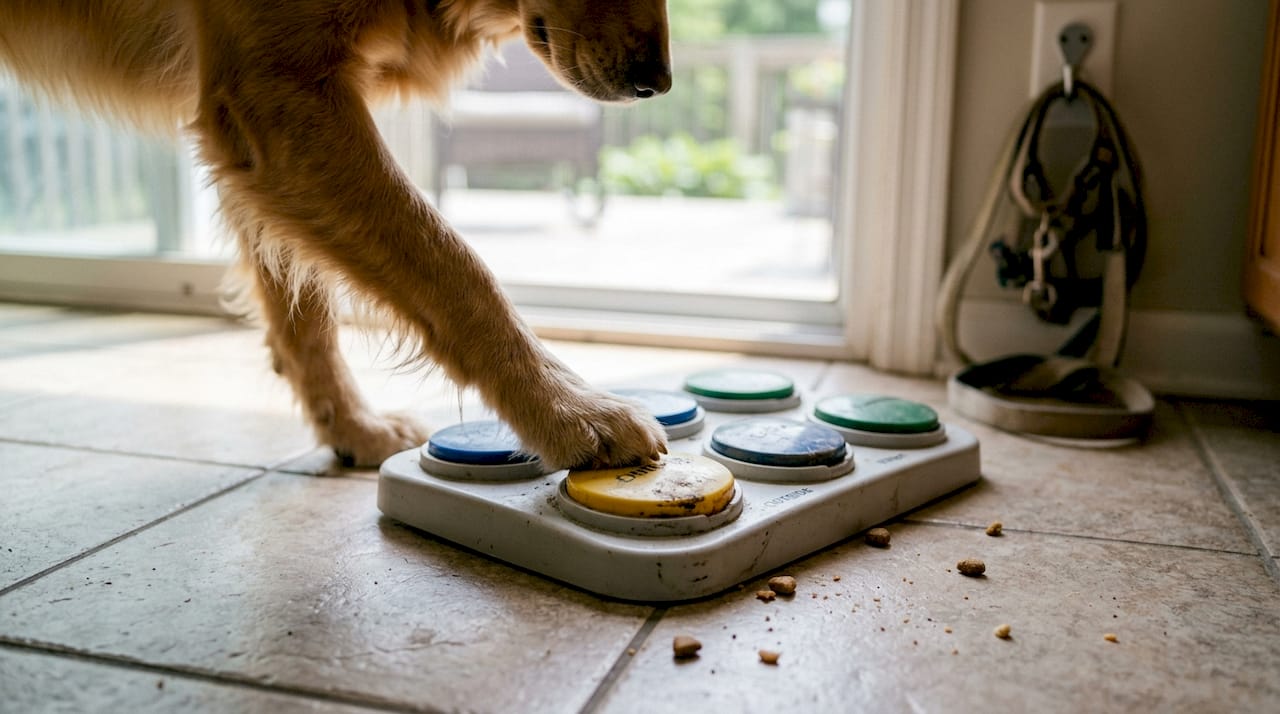
Dog communication apps are digital tools designed to facilitate clearer interaction between dogs and humans through technology-enabled interfaces. These applications transform how we understand and respond to our pets’ needs by providing structured communication methods that go beyond traditional training. Dog communication technology includes button-based communication, alerts, and behavior monitoring that create new pathways for expressing needs and emotions.
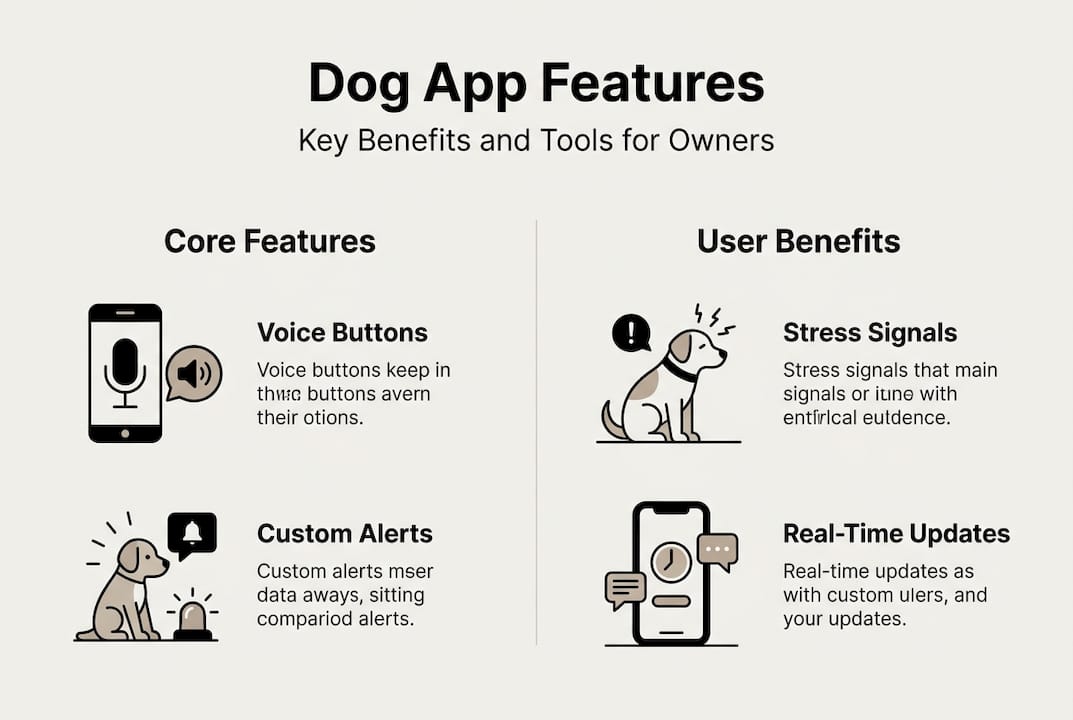
The most common features include button interfaces that dogs can press to convey specific needs like going outside, wanting food, or requesting playtime. Alert systems provide emergency notifications when dogs need immediate attention or assistance. Activity and behavior monitoring tracks patterns over time, helping owners identify changes in health or mood. Many apps use sound recognition technology to interpret barks and whines, while others incorporate sensors that detect physical movements or stress indicators. Customizable commands allow owners to tailor the app to their dog’s unique personality and learned behaviors.
These technologies deliver significant benefits for both everyday pet owners and service dog handlers. Real-time communication reduces frustration for dogs trying to express urgent needs. Safety features prove especially valuable for disabled owners who rely on their dogs for assistance and need reliable alert systems. The dog button communication guide explains how button-based systems have gained popularity because they provide concrete, repeatable signals that dogs can learn quickly.
Early challenges included dogs accidentally triggering buttons, inconsistent recognition of sounds, and the learning curve required for both pets and owners. Some apps struggled with battery life or required constant internet connectivity. However, recent iterations have addressed many limitations through improved sensor accuracy, offline functionality, and more intuitive user interfaces. The technology continues evolving to meet diverse needs across different dog breeds, ages, and living situations.
Common app categories include:
- Button communication platforms that create vocabulary boards for dogs
- Emergency alert systems designed for service animals and safety monitoring
- Behavioral analysis tools that track mood patterns and stress levels
- Activity monitors that log exercise, sleep, and daily routines
- Training companions that reinforce commands through app-based rewards
Comparing popular dog communication apps and safety tools
Selecting the right communication app requires understanding how different platforms serve specific needs. The market offers diverse options ranging from simple button systems to comprehensive safety monitoring tools. Dog alert device benefits highlight how specialized features address safety and independence concerns for various user groups.
| App Type | Communication Method | Alert Features | Price Range | Best For |
|---|---|---|---|---|
| Button-based platforms | Programmable buttons | Basic notifications | $30-80 one-time | Teaching vocabulary and routine needs |
| Safety monitoring apps | Sensor integration | Emergency alerts, GPS | $10-25/month | Service dogs and disabled owners |
| Behavioral trackers | Pattern analysis | Stress indicators | $5-15/month | Understanding mood changes |
| All-in-one systems | Multiple methods | Comprehensive alerts | $100-200 + subscription | Handlers needing full communication suite |
User interface design varies significantly across platforms. Some apps prioritize simplicity with large, clear buttons suitable for dogs with limited training. Others offer complex customization allowing handlers to program dozens of unique signals. Device integration matters for users who want their communication system to work with existing smart home technology or wearable monitors. The best dog communication devices provide detailed comparisons for disabled owners seeking independence-enhancing features.
Safety-focused applications play a crucial role in recognizing stress or potentially aggressive behaviors before incidents occur. These apps monitor physiological indicators like heart rate variability or movement patterns that signal discomfort. Understanding how to recognize aggressive dog behaviors helps owners interpret app alerts correctly and take preventive action. Early warning systems prove especially valuable in multi-pet households or public settings where quick intervention prevents conflicts.
Pro Tip: Evaluate your dog’s existing communication style before selecting an app. Dogs who already use physical signals like pawing or nosing may adapt quickly to button systems, while vocal dogs might benefit more from sound-recognition platforms.
Subscription models versus one-time purchases present different value propositions. Monthly subscriptions typically include cloud storage for behavioral data, regular feature updates, and customer support. One-time purchase apps offer basic functionality without ongoing costs but may lack advanced analytics. Many platforms provide trial periods allowing you to test compatibility with your dog’s learning style before committing. Consider whether you need:
- Real-time cloud syncing across multiple devices
- Historical data analysis for veterinary consultations
- Multi-dog management within a single account
- Integration with other pet care apps or devices
- Customer support for troubleshooting and training guidance
Enhancing your dog’s communication through training and app integration
Successfully implementing communication apps requires consistent training that reinforces signals and commands. Technology alone cannot create understanding without proper introduction and practice. Creating dog communication signals demonstrates how combining app use with proper training increases communication success and dog safety through systematic learning approaches.
The integration process follows a structured path that respects your dog’s learning pace. Begin by selecting an app that matches your communication goals and your dog’s current skill level. Introduce one signal at a time, starting with high-value needs like food or outdoor access that motivate engagement. Pair each app interaction with immediate positive reinforcement, whether treats, praise, or the desired outcome. Monitor progress through the app’s tracking features, noting which signals your dog masters quickly and which require additional practice. Adjust your approach based on this data, potentially simplifying complex signals or adding intermediate steps.
Patience proves essential during the learning phase. Dogs need time to understand that pressing a button or triggering an alert produces consistent results. Rushing the process or introducing too many signals simultaneously creates confusion and reduces effectiveness. Most dogs require two to four weeks to reliably use their first communication signal, with subsequent additions coming more quickly as they grasp the underlying concept.
Pro Tip: Pair app buttons with verbal cues or hand gestures during initial training. This multi-modal approach helps dogs connect the digital signal with familiar commands, accelerating comprehension and building confidence.
Service dog handlers can tailor apps and training for specific tasks and emergency situations. Customizable alert systems allow programming signals for medical episodes, mobility assistance needs, or environmental hazards. Training protocols for service dogs emphasize reliability under stress and in public settings where distractions abound. The tips for pet communication offer practical strategies applicable to both service animals and companion pets.
Effective training integration includes these sequential steps:
- Select three priority communication needs your dog should express first
- Introduce the app interface in a quiet, familiar environment without distractions
- Demonstrate the desired interaction by guiding your dog’s paw to the button or sensor
- Immediately provide the associated reward or outcome when the signal activates
- Practice the signal five to ten times daily in short sessions lasting three to five minutes
- Gradually increase difficulty by adding mild distractions or changing locations
- Expand vocabulary only after your dog reliably uses existing signals for one week
- Review app analytics weekly to identify patterns and optimize training focus
Consistency across family members or caregivers ensures dogs receive uniform responses to their communication attempts. Everyone interacting with your dog should understand which signals mean what and respond appropriately. Inconsistent reactions confuse dogs and undermine the training investment. Establish clear protocols for how different household members will reinforce app-based communication.
Future trends and innovations in dog communication technology
Emerging technologies promise to revolutionize how dogs and humans interact through increasingly sophisticated digital tools. Dog safety technology highlights how recent innovations promise smarter, AI-powered communication and improved safety monitoring for dogs through advanced sensor integration and machine learning capabilities.
Artificial intelligence integration represents the most significant advancement on the horizon. AI algorithms can interpret subtle behavioral patterns that humans might miss, analyzing video footage or sensor data to identify early signs of illness, anxiety, or discomfort. Machine learning models trained on thousands of dogs can predict needs before they become urgent, suggesting proactive interventions. Natural language processing may eventually allow apps to translate barks and whines into human-readable text with context about emotional state and intent.
Wearable technology advances enable real-time health and safety monitoring that extends beyond basic activity tracking. Next-generation collars and harnesses incorporate biometric sensors measuring heart rate, body temperature, and stress hormones. These devices communicate wirelessly with smartphone apps, providing continuous health data that veterinarians can analyze remotely. GPS integration with behavioral alerts creates geofencing systems that notify owners when dogs leave safe zones or exhibit unusual movement patterns suggesting distress.
| Innovation | Expected Availability | Adoption Potential | Key Benefit |
|---|---|---|---|
| AI emotion recognition | 2026-2027 | High | Automatic interpretation of mood and needs |
| Advanced biometric wearables | Available now, improving | Medium to High | Continuous health monitoring and early illness detection |
| Voice-to-text bark translation | 2027-2028 | Medium | Direct conversion of vocalizations to understandable messages |
| Personalized training AI | 2026-2027 | High | Customized learning plans based on individual dog progress |
| Augmented reality training tools | 2028-2029 | Low to Medium | Visual guidance for teaching communication signals |
Promising technologies reshaping dog communication apps include:
- Neural interface research exploring direct brain-to-device communication for severely disabled handlers
- Blockchain-based health records allowing secure sharing of behavioral data across veterinary networks
- Haptic feedback systems that provide tactile cues to dogs wearing specialized vests or collars
- Computer vision platforms that analyze facial expressions and body language in real-time
- Integration with smart home systems allowing dogs to control environmental factors like lighting or temperature
Increased focus on apps designed for disabled owners and service animals drives innovation in accessibility features. Voice-controlled interfaces eliminate the need for manual app navigation. Customizable alert systems accommodate various disabilities by offering visual, auditory, and haptic notification options. The dog communication technology landscape continues expanding to serve diverse needs across different user populations.
Developers are prioritizing user privacy and data security as apps collect increasingly sensitive information about pets and households. Encrypted communication channels protect alert data from unauthorized access. Local processing options allow core features to function without constant cloud connectivity, addressing privacy concerns while maintaining functionality. Transparent data policies help users understand how their information is stored and used.
Explore today’s best dog communication solutions at iPupPee
While future innovations promise exciting possibilities, proven communication tools are available right now to enhance your relationship with your dog. iPupPee specializes in practical devices and resources that bridge the communication gap between dogs and their owners. The platform offers user-friendly solutions designed specifically for service dog handlers, disabled owners, and anyone seeking safer, more independent interaction with their pets.
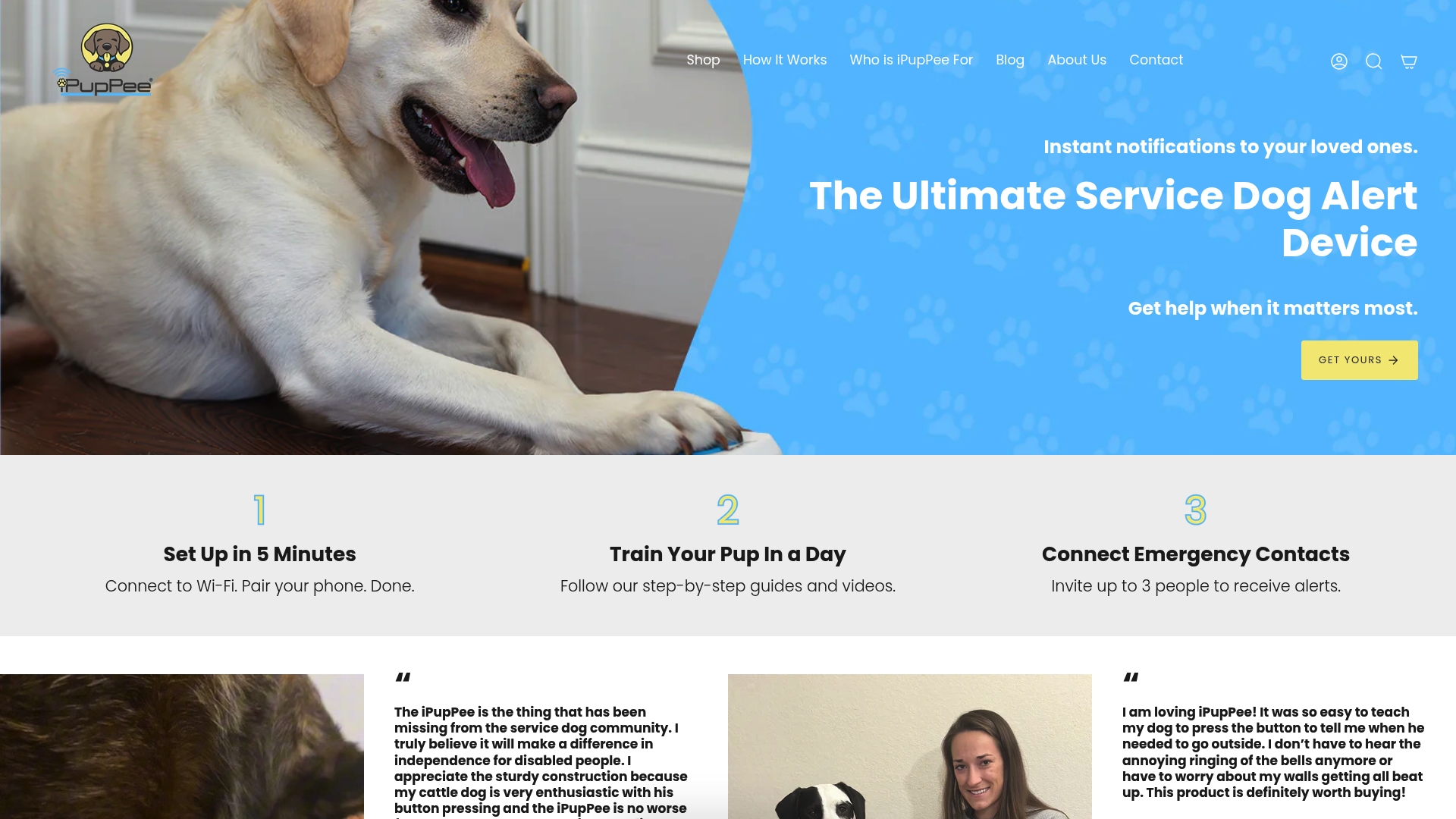
Discover a curated selection of communication devices that have helped thousands of dog owners achieve clearer understanding and improved safety. From button-based systems to comprehensive alert devices, iPupPee provides options suited to various needs and skill levels. The blog features detailed guides, training tips, and real-world success stories from handlers who have transformed their daily routines through better communication technology. Whether you’re just beginning to explore communication apps or ready to implement an advanced system, iPupPee offers the products and educational resources to support your journey toward more meaningful interaction with your canine companion.
Frequently asked questions
Which dog communication app is best for service dog handlers?
Service dog handlers benefit most from apps offering customizable buttons and comprehensive alert features tailored to specific assistance tasks. Look for platforms supporting emergency signaling, task-specific commands, and reliable notification systems that function in various environments. The dog communication devices for disabled owners guide compares top options designed specifically for handlers requiring independence-enhancing features. Prioritize apps with proven reliability records and responsive customer support for troubleshooting critical communication needs.
Can dog communication apps improve aggressive behavior awareness?
Certain apps monitor physiological stress indicators and movement patterns that signal potential aggression before visible warning signs appear. These platforms alert owners to elevated heart rates, tense body language, or unusual behavior patterns suggesting discomfort or anxiety. Understanding how to recognize aggressive dog behaviors helps owners interpret app alerts correctly and intervene proactively. Combining app monitoring with professional behavioral training reduces incidents and creates safer environments for dogs and people.
How do I train my dog to use a communication app effectively?
Start with familiar commands paired with app signals to create clear associations between digital interactions and desired outcomes. Use positive reinforcement immediately after your dog activates the correct signal, providing treats, praise, or the requested action. Keep training sessions short at three to five minutes, practicing five to ten times daily for consistent progress. The training dog communication signals resource offers detailed protocols for introducing apps systematically while building your dog’s confidence and comprehension.
Are dog communication apps suitable for all dog breeds?
Most apps can be adapted to different breeds, but success depends heavily on individual temperament, age, and prior training experience rather than breed alone. Some breeds with high trainability and problem-solving skills may learn app-based communication faster, while others require more patience and repetition. Training approaches and app selection should consider breed-specific behavioral traits like energy levels, attention spans, and natural communication styles. Senior dogs or those with physical limitations may need modified interfaces or alternative signal methods to participate successfully.
Do dog communication apps require constant internet connectivity?
Many modern apps offer offline functionality for core features like button presses and basic alerts, storing data locally until internet connection resumes. Advanced features such as cloud syncing, remote monitoring, and AI analysis typically require connectivity for real-time operation. Check specific app requirements before purchasing, especially if you live in areas with unreliable internet or plan to use the system during outdoor activities. Some premium platforms provide hybrid modes that balance functionality with connectivity needs, ensuring critical communication remains available regardless of network status.