

Over 90 percent of the messages dogs send to humans involve subtle changes in body language, facial expression, or posture. Recognizing these non-verbal cues is key to building trust and avoiding confusion or even conflict. Whether it’s a wagging tail, a bark, or a nose-to-nose greeting, understanding the core principles of canine communication will help you connect on a deeper level with your four-legged companion.
Table of Contents
- Core Principles of Canine Communication
- Body Language and Physical Signals in Dogs
- Vocalizations and What They Mean
- Scent, Touch, and Other Communication Methods
- Enhancing Dog-Human Communication With Technology
- Common Mistakes and Safety Precautions
Key Takeaways
| Point | Details |
|---|---|
| Non-Verbal Communication | Dogs primarily communicate through body language, utilizing tail position, ear orientation, and body posture to convey emotions and intentions. |
| Vocalization Nuance | Canine vocalizations like barking and whining serve different emotional purposes, underscoring the need for context in interpreting these sounds. |
| Scent and Touch | Dogs use scent marking and physical interactions to share social and emotional information, highlighting the importance of these methods in understanding their communication. |
| Avoiding Miscommunication | Recognizing common misinterpretations of dog signals is crucial for maintaining safety and harmony in owner-dog relationships. |
Core Principles of Canine Communication
Dogs are masters of non-verbal communication, using an intricate system of body language, vocalizations, and subtle signals to express their internal emotional states. Body language serves as their primary communication method, allowing them to convey complex feelings and intentions without uttering a single sound.
According to AMCNY, dogs primarily use non-verbal cues like facial expressions and body postures to communicate their emotions. This means understanding your dog requires keen observation and sensitivity to their physical signals. These communication signals can include:
- Tail position and movement
- Ear orientation
- Eye contact and gaze intensity
- Overall body tension
- Mouth and lip positioning
Understanding these signals helps prevent potential misunderstandings and conflicts. A wagging tail doesn’t always mean happiness - context and additional body language provide crucial nuance. For instance, a stiffly raised tail with minimal movement might indicate alertness or potential aggression, while a relaxed, broad wag typically signals friendliness.
To become fluent in dog communication, owners must develop a holistic perspective. Watch for clusters of signals rather than isolated movements. A dog’s entire body tells a story - from the tip of their ears to the end of their tail. Learn more about dog communication techniques and deepen your understanding of these fascinating non-verbal conversations.
Body Language and Physical Signals in Dogs
Dogs communicate an extraordinary range of emotions and intentions through intricate physical signals, transforming their bodies into a complex language system. Every movement tells a story - from the subtlest ear twitch to the most dramatic tail sweep.
According to SF SPCA, dogs express their emotional states through various physical signals, including tail position, ear orientation, and body posture. These signals provide critical insights into their comfort levels and underlying intentions. Let’s break down the key physical communication signals:
- Tail Position: Reveals emotional state
- Ear Orientation: Indicates attention and mood
- Body Posture: Shows confidence or submission
- Facial Expressions: Communicates immediate feelings
- Muscle Tension: Signals potential stress or excitement
As Paws Chicago explains, interpreting these nuanced body language cues helps owners respond appropriately to their dog’s needs. A tucked tail might indicate fear, while a raised tail with stiff movements could signal potential aggression. Context matters immensely - a wagging tail isn’t always a sign of happiness.
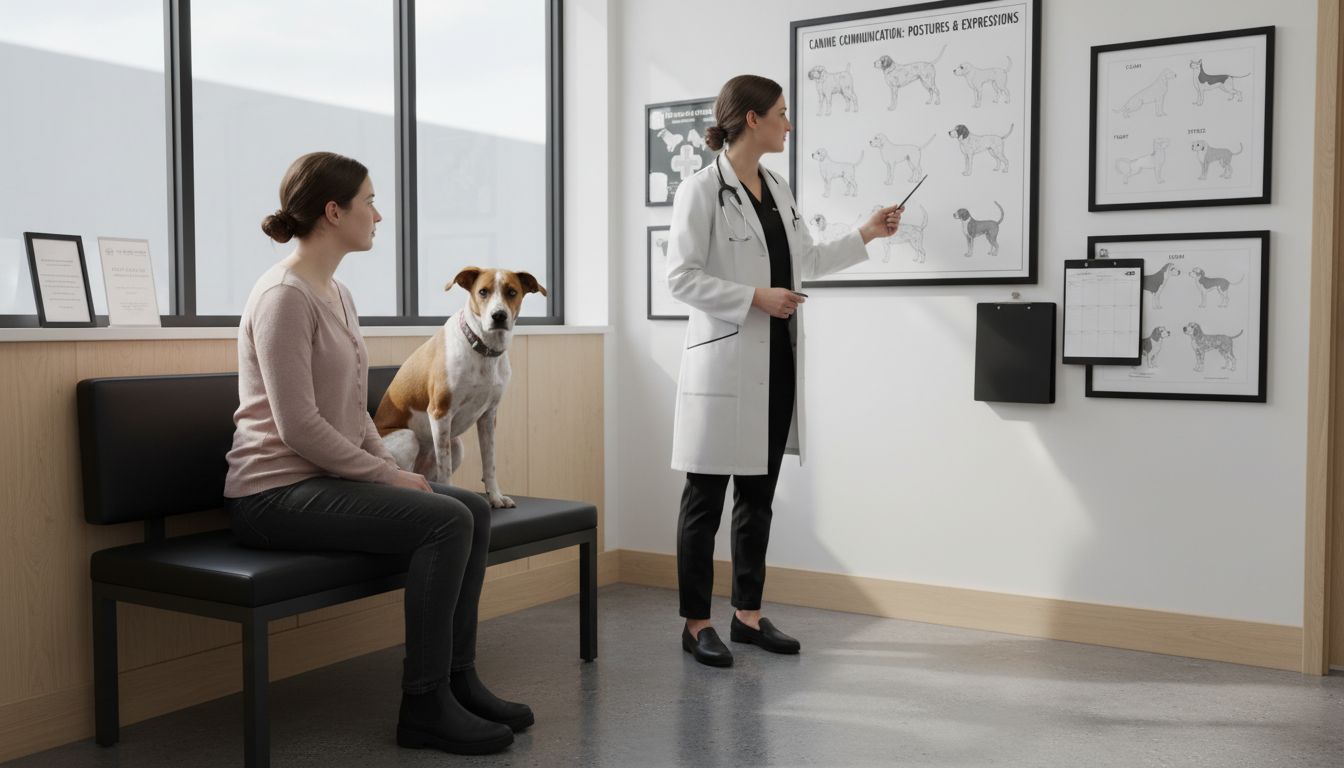
Mastering canine body language requires patience and keen observation. Think of it like learning a foreign language, where subtle variations dramatically change meaning. Discover advanced communication techniques for dog owners to deepen your understanding and strengthen your bond with your four-legged companion.
Vocalizations and What They Mean
Canine vocalizations are a rich and complex communication system that goes far beyond simple noise-making. Dogs use an intricate array of sounds to express everything from immediate emotional states to specific needs and intentions.
According to SF SPCA, dogs utilize various vocalizations like barking, whining, howling, and growling to communicate different emotions, including excitement, anxiety, and aggression. These sounds are nuanced and context-dependent, requiring careful interpretation. Here’s a breakdown of common dog vocal signals:
- Barking: Alerts, warnings, or attention-seeking
- Whining: Discomfort, anxiety, or desire for attention
- Howling: Communication over distance, emotional expression
- Growling: Warning, threat display, or pain indication
- Yelping: Sudden pain or surprise
As AMCNY explains, while dogs primarily communicate non-verbally, their vocalizations remain critical indicators of emotional states. A single bark can mean different things depending on its pitch, duration, and accompanying body language. Sharp, repetitive barks might signal excitement, while low, sustained growls typically indicate potential aggression or discomfort.
Learn essential voice commands every dog owner should know to enhance your communication and strengthen the bond with your furry companion. Understanding these vocal nuances transforms how you interact with and respond to your dog’s emotional landscape.
Scent, Touch, and Other Communication Methods
Dogs are sensory communicators with an incredible ability to share information through methods far beyond what humans typically understand. Scent communication represents a sophisticated and complex language that serves as their primary method of exchanging intricate social and emotional information.
According to SF SPCA, dogs communicate through scent marking and physical touch, conveying critical details about territory, social bonds, and emotional states. This communication method goes well beyond simple territorial marking. Dogs use scent in multiple sophisticated ways:
- Urine Marking: Territorial signaling
- Anal Gland Secretions: Individual identification
- Pheromone Exchanges: Emotional state communication
- Physical Nuzzling: Social bonding
- Nose-to-Nose Contact: Intimate information sharing
As AMCNY explains, physical contact and scent interactions provide profound insights into dogs’ social interactions and emotional well-being. When dogs sniff each other, they’re essentially exchanging a complex biological resume that includes information about age, health, reproductive status, and recent experiences.
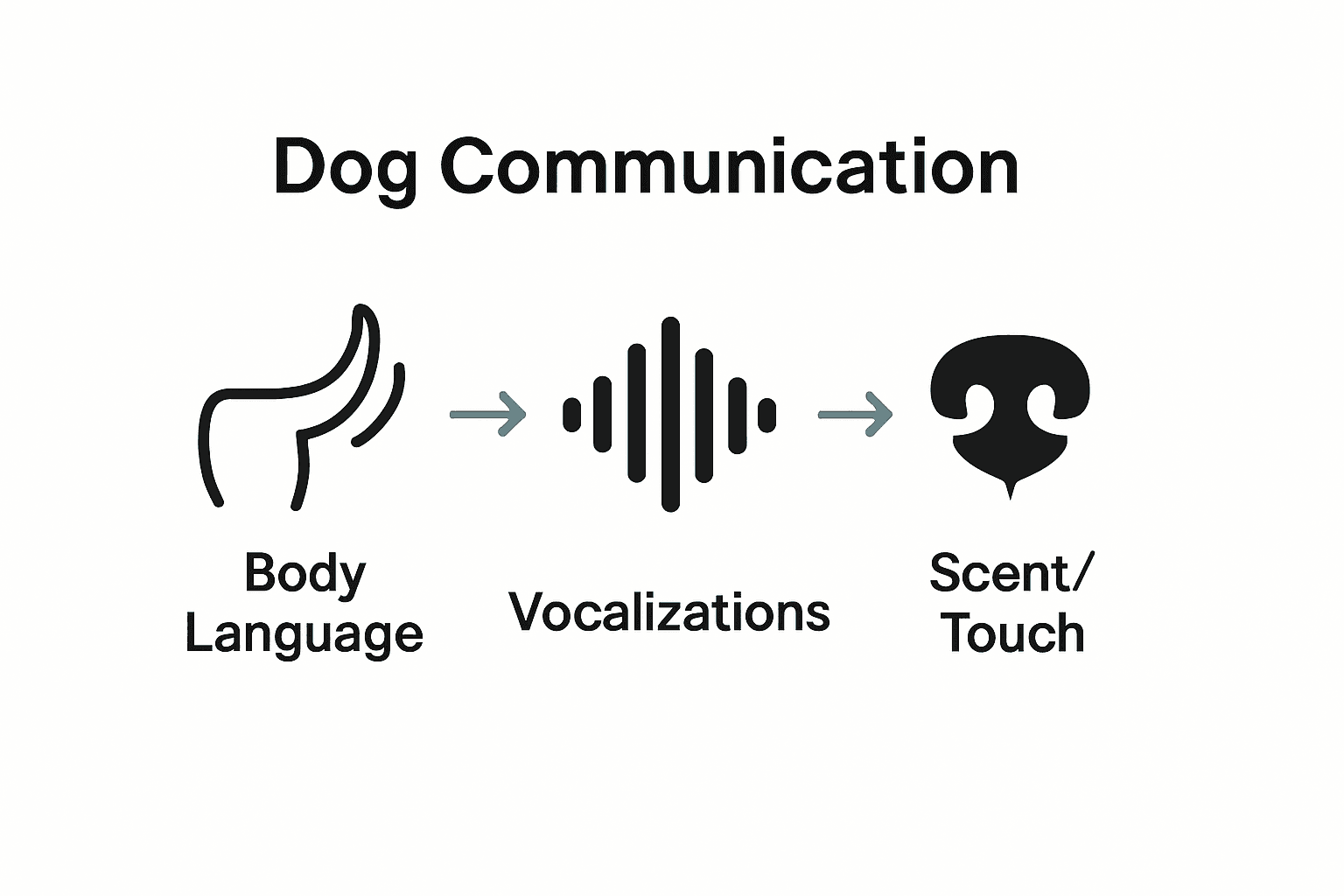
Discover advanced communication techniques for understanding your dog’s unique signals to unlock the deep, nuanced world of canine communication beyond what meets the human eye.
Enhancing Dog-Human Communication With Technology
Technology is revolutionizing the way we understand and interact with our canine companions, bridging the communication gap that has long existed between humans and dogs. Innovative devices and applications are transforming our ability to interpret and respond to our dogs’ complex communication systems.
According to AMCNY, advancements in technology such as wearable devices and apps are being developed to interpret canine body language and vocalizations, with the ultimate goal of improving understanding between dogs and humans. These technological solutions offer unprecedented insights into our dogs’ emotional and physical states:
- Wearable Sensors: Track physiological indicators
- Communication Buttons: Enable dogs to express specific needs
- AI-Powered Translation Devices: Interpret body language
- Health Monitoring Apps: Detect stress and discomfort
- Interactive Training Technologies: Enhance communication skills
As SF SPCA explains, emerging technologies are exploring innovative ways to translate dog vocalizations and body language into human-understandable formats, ultimately strengthening the human-dog bond. These tools transform complex canine communication into actionable insights that help owners better understand and support their furry companions.
Learn about advanced dog button communication techniques and discover how technology can unlock a new level of understanding between you and your dog.
Common Mistakes and Safety Precautions
Dog communication is a delicate dance of understanding, where misinterpretation can lead to dangerous misunderstandings. Recognizing and avoiding common communication mistakes is crucial for maintaining a safe and harmonious relationship with your canine companion.
According to SF SPCA, misinterpreting a dog’s body language can lead to unsafe situations. Preventing potential conflicts requires a keen eye and understanding of subtle canine signals. Here are critical mistakes dog owners frequently make:
- Ignoring Warning Signs: Missed early signals of discomfort
- Misreading Body Language: Failing to recognize stress indicators
- Forcing Interactions: Pushing beyond a dog’s comfort zone
- Inappropriate Approach: Violating a dog’s personal space
- Misunderstanding Vocalizations: Incorrectly interpreting barks or growls
As AMCNY explains, failing to observe non-verbal cues can result in serious safety risks. A dog’s body language is their primary communication method, and missing these signals can lead to unexpected and potentially dangerous situations.
Explore essential safety tips for responsible dog ownership to ensure you’re creating a safe, understanding environment for both you and your furry friend.
Enhance Your Bond With Clear Dog Communication Today
Understanding your dog’s body language, vocalizations, and scent signals is the first step toward a safe and trusting relationship. Yet, even with all this knowledge, expressing your dog’s needs effectively can be challenging. The article highlights common problems like misinterpreting tail positions, ignoring vocal cues, and missing subtle body language, which can lead to frustration or even safety risks.

That is why iPupPee offers an innovative solution to bridge the communication gap between you and your dog. Our simple button alert device empowers your dog to clearly signal their needs through trained presses, making it easier to understand their unique messages beyond traditional cues. Whether you are a new puppy owner navigating early training or someone with a service dog looking for enhanced communication and safety, iPupPee helps you respond promptly and confidently.
Discover the full benefits and start improving your dog-human communication by visiting iPupPee’s home page. To build on your knowledge of dog vocalizations and body language, check out our dog voice commands guide. Ready to take the next step in providing safety and independence for you and your furry companion? Explore the dog button communication techniques and make every moment together safer and more meaningful.
Frequently Asked Questions
How do dogs primarily communicate with humans?
Dogs primarily communicate using non-verbal cues like body language, vocalizations, and scent, allowing them to express their emotions and intentions without spoken words.
What are some common signs of a dog’s emotional state?
Common signs include tail position, ear orientation, overall body posture, facial expressions, muscle tension, and vocalizations, each of which provides insight into their comfort levels and emotions.
Why is it important to understand canine body language?
Understanding canine body language helps prevent misunderstandings and conflicts, allowing owners to respond appropriately to their dog’s needs and emotions, ultimately strengthening the human-dog bond.
How can technology help improve communication with dogs?
Technology, such as wearable devices and communication apps, can help interpret a dog’s body language and vocalizations, offering insights into their emotional state and improving the overall understanding between dogs and their owners.