

Most seniors assume that moving into a senior living community means saying goodbye to their dog. That belief is simply wrong. Around 75% of for-profit assisted living facilities in the U.S. now welcome pets, including dogs. The real challenge is not finding a place that allows your companion but knowing what to look for, what to expect, and how to set yourself up for success. This guide walks you through everything, from understanding the benefits of dog-friendly senior living to navigating costs, amenities, and safety responsibilities, so you and your dog can thrive together.
Table of Contents
- Understanding the benefits of dog-friendly senior living
- What to expect: Common dog-friendly policies and requirements
- Costs and fees: What you’ll pay for pet privileges
- Amenities that enrich life for you and your dog
- Navigating safety and care responsibilities
- How iPupPee supports seniors and their dogs
- Frequently asked questions
Key Takeaways
| Point | Details |
|---|---|
| Widespread availability | Three out of four for-profit senior living communities now welcome dogs. |
| Tangible wellbeing benefits | Dog companionship reduces loneliness and boosts seniors’ physical and emotional health. |
| Clear policies and costs | Expect pet assessments, limits, and fees that vary by community. |
| Safety is prioritized | Facilities set rules to protect both residents and pets, including behavior checks and care planning. |
Understanding the benefits of dog-friendly senior living
Dog-friendly senior living is not just a nice perk. It is a genuine quality-of-life upgrade backed by real data. Seniors who live with dogs report lower rates of loneliness, more daily movement, and a stronger sense of purpose. These are not small wins. They are the building blocks of a healthier, happier life.
The numbers tell a clear story. Seniors with pets are 36% less likely to report feeling lonely compared to those without. Dog owners also walk 22 minutes more per day and report a 69% reduction in stress and anxiety. That kind of daily movement and emotional relief adds up fast over weeks and months.
“A dog gives you a reason to get up, get outside, and connect with the world around you. For seniors living alone, that reason can be life-changing.”
Here is a quick look at the core benefits you can expect:
- Lower loneliness and depression rates thanks to constant companionship
- More physical activity through daily walks and play
- Reduced stress and anxiety from the calming effect of a dog’s presence
- Stronger social bonds with neighbors who share a love of dogs
- A reliable daily routine that supports mental clarity and independence
These pet companionship benefits go beyond emotional comfort. Research consistently links pet ownership to better heart health and lower blood pressure in older adults. If you want to understand the full picture of wellbeing and connection that dogs provide, the evidence is hard to ignore. You can also explore a detailed breakdown of how dogs help seniors maintain health and independence in 2025 and beyond.
What to expect: Common dog-friendly policies and requirements
While the advantages are compelling, it is important to understand exactly what rules and standards dog-friendly senior communities set. Here is what you need to know before making the move.
Most communities have clear, consistent policies. Pet-friendly senior communities typically limit residents to 1 or 2 dogs, set weight limits between 25 and 70 pounds, enforce breed restrictions, and require proof of spay or neuter status, vaccinations, and your ability to provide ongoing care. These rules exist to protect everyone in the community, including your dog.
Before you move in, expect a formal review process. Facilities require a pre-move-in pet assessment that covers temperament, health records, and often a meet-and-greet with staff. Think of it as a job interview for your dog.
Here is a comparison of what different community types typically allow:
| Policy area | Independent living | Assisted living | Memory care |
|---|---|---|---|
| Dogs allowed | Yes, most cases | Yes, with review | Limited, case by case |
| Weight limit | Up to 70 lbs | 25 to 50 lbs | Usually under 25 lbs |
| Breed restrictions | Rare | Common | Very common |
| Backup care required | Sometimes | Always | Always |
| Pet deposit required | Yes | Yes | Yes |
Key requirements to prepare for include:
- Up-to-date vaccination records and vet contact information
- Proof of spay or neuter status
- A written backup care plan in case your health changes
- A temperament assessment or behavioral history
- Signed agreement to follow all community pet rules
Pro Tip: Before touring any community, call ahead and ask for their full written pet policy. Some facilities have unpublished breed or size restrictions that are not listed on their website. Getting this in writing saves you from surprises later.
Reviewing senior pet owner tips before your move can help you prepare your dog for the transition. If your dog needs a refresher on manners, exploring dog training for seniors is a smart first step.
Costs and fees: What you’ll pay for pet privileges
Understanding requirements is just one part of pet-friendly living. Next, let us get specific about what the privilege actually costs and how to plan your budget accordingly.
Pet fees in senior living are real, but they are manageable when you know what to expect. Common pet fees include a one-time deposit ranging from $300 to $500, monthly pet rent between $25 and $75, and sometimes a separate application fee. Over a year, that can add up to $600 or more on top of your base rent.
Here is a breakdown of typical pet-related costs:
| Fee type | Typical range | Frequency |
|---|---|---|
| Pet deposit | $300 to $500 | One-time |
| Monthly pet rent | $25 to $75 | Monthly |
| Application fee | $25 to $100 | One-time |
| Vet verification fee | $0 to $50 | Annual |
These fees are not arbitrary. They cover facility cleaning, shared amenity upkeep, liability management, and the cost of maintaining pet-friendly spaces like dog parks and washing stations.
Here is how to minimize surprise costs and stay in control of your budget:
- Ask for a full fee schedule in writing before signing any lease or agreement.
- Confirm whether the pet deposit is refundable and under what conditions.
- Ask if monthly pet rent increases annually and by how much.
- Check whether vet verification is required every year and who covers that cost.
- Negotiate where possible. Some communities will waive the application fee for long-term residents or those with well-documented, well-behaved dogs.
Pro Tip: Bundle your pet cost questions into a single conversation with the admissions coordinator. Asking all at once signals that you are a prepared, responsible pet owner, which can actually work in your favor during the approval process.
For a broader look at managing senior pet safety and costs together, it helps to plan ahead before the move rather than after.
Amenities that enrich life for you and your dog
Once basic fees are covered, you are paying for more than just permission. Dog-friendly communities can truly transform daily life with standout amenities that benefit both you and your companion.
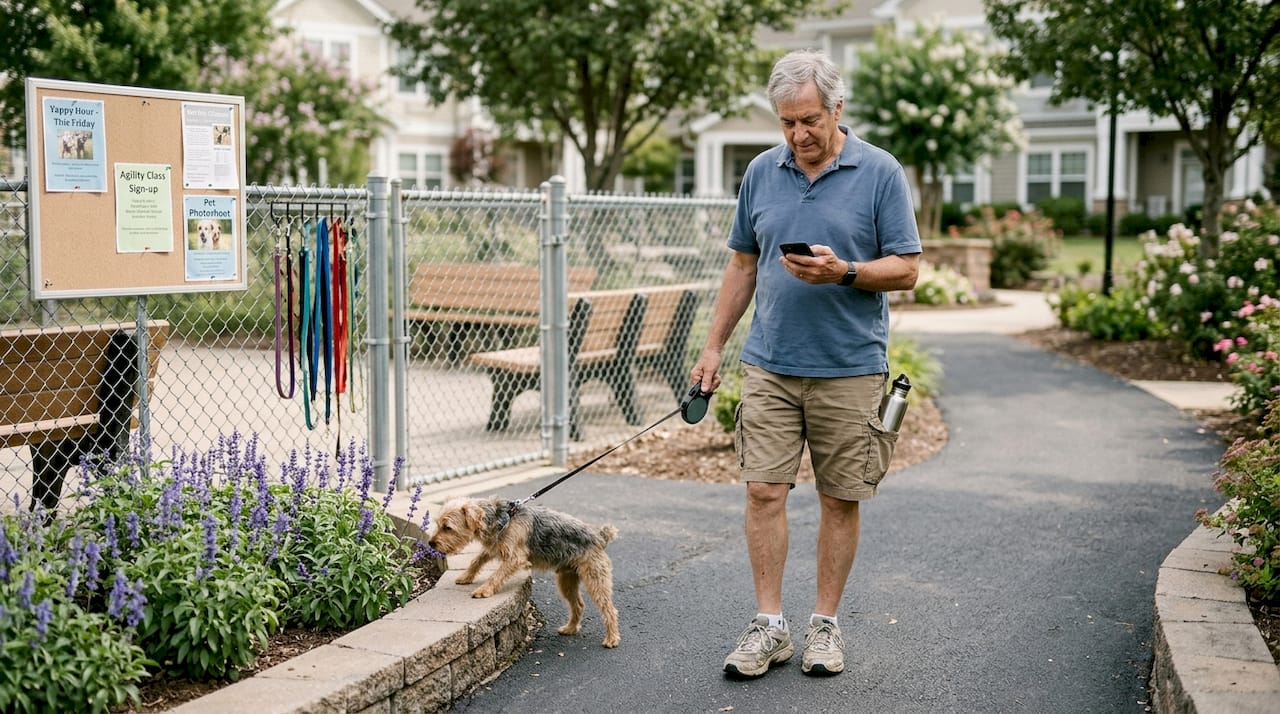
The best communities go well beyond a simple “pets allowed” policy. Amenities in dog-friendly communities include fenced dog parks, walking trails, pet spas and washing stations, and pet therapy programs designed to promote exercise, socialization, and safety. These features are not luxuries. They are tools that support your independence and your dog’s wellbeing every single day.
Here is what to look for when evaluating a community’s amenities:
- Fenced dog parks for safe off-leash play and socialization
- Paved walking trails that are accessible and well-lit for evening walks
- On-site pet washing stations to reduce grooming costs and hassle
- Pet therapy programs that bring structured, calming interaction for residents
- Nearby veterinary partnerships or mobile vet services for convenience
Pro Tip: Visit the dog park during your community tour. Watch how other residents and their dogs interact. A well-maintained, actively used park is a strong sign that the community genuinely supports pet owners rather than just tolerating them.
Amenities also create natural opportunities for social connection. A shared dog park is one of the best places to meet neighbors, build friendships, and feel at home in a new environment. You can find ideas for senior activities with pets that go beyond the community itself, including pet-friendly adventures you can plan with your dog.
Navigating safety and care responsibilities
Amenities create comfort, but safety and responsibility are the foundation of a thriving pet-friendly community. Here is how to make smart, safe choices.
Fall prevention is the most critical safety concern for seniors living with dogs. A dog that pulls on the leash or moves unpredictably underfoot is a genuine fall risk. Communities prioritize calm temperament and loose-leash walking skills for exactly this reason. Training your dog to walk calmly beside you is not optional. It is essential.
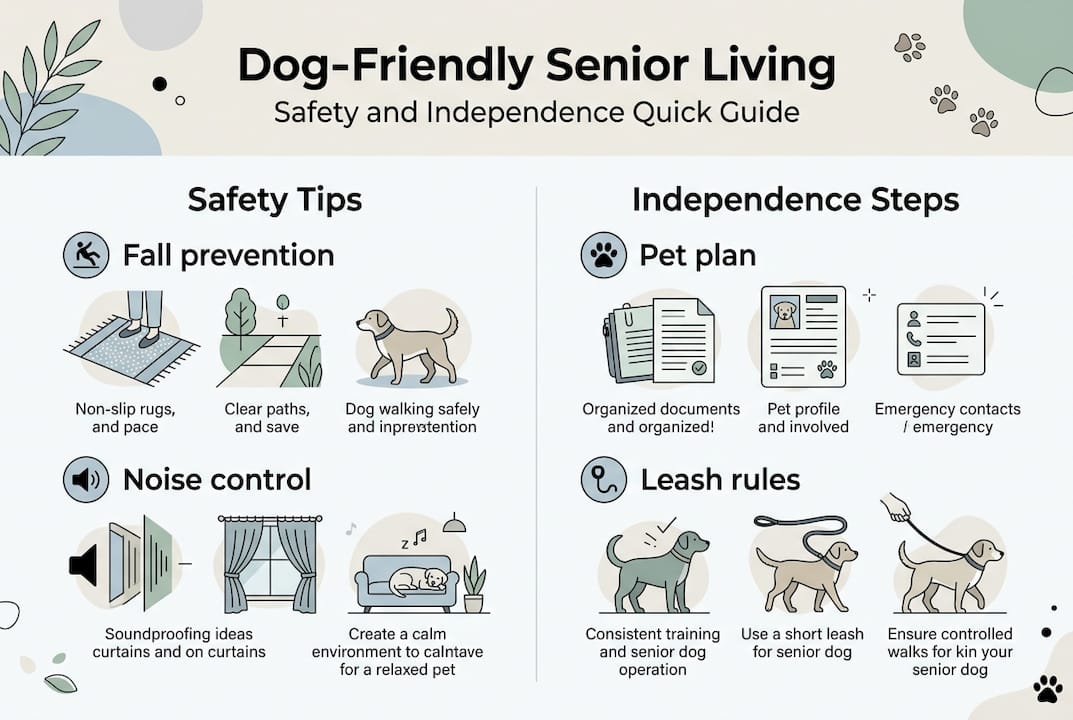
Communities also manage allergy and noise concerns through clear protocols. Dogs must be kept on leash in shared spaces, noise complaints are taken seriously, and residents are expected to clean up after their pets at all times. These rules protect everyone, including you.
Policies balance companionship benefits with safety through assessments, limits, and fees. One area that catches many seniors off guard is the care transition plan. If your health changes and you can no longer walk or care for your dog, the community needs to know there is a plan in place.
Here are the key steps to stay safe and responsible as a pet owner in senior living:
- Keep all vaccinations and vet checkups current and documented.
- Train your dog to walk calmly on a leash before moving in.
- Write a formal backup care plan and share it with family and the facility.
- Report any behavioral changes in your dog to staff early.
- Stay connected with your vet and update health records at least once a year.
“The communities that work best for seniors and their dogs are the ones where residents take responsibility seriously. A well-cared-for dog is a welcome dog.”
Understanding dog communication for seniors can help you stay ahead of your dog’s needs before they become problems. For dogs with health concerns of their own, the senior pet health guide covers practical care tips for aging dogs in 2026.
How iPupPee supports seniors and their dogs
You have done the hard work of understanding what dog-friendly senior living looks like. Now it is worth thinking about the tools that make daily life with your dog safer and more connected.

At iPupPee, we build products specifically for seniors and pet owners who value safety, independence, and clear communication with their dogs. Our alert device lets your dog signal you with a simple button press, so you always know when your companion needs attention, even if your mobility or hearing has changed. For seniors living in a community setting, that kind of reliable communication is not just convenient. It is a genuine safety tool. Explore our iPupPee device and see how it fits into your daily routine with your dog.
Frequently asked questions
How do I know if a senior community allows dogs?
Check the facility’s written pet policy or call admissions directly. 75% of for-profit assisted living facilities in the U.S. now welcome pets, so your chances are good.
How many dogs can I bring to a pet-friendly senior living facility?
Most facilities limit residents to 1 or 2 dogs per unit, and weight or breed restrictions often apply on top of that limit.
What if I can’t care for my dog due to health changes?
Facilities require a written backup care plan before approving your pet. This plan should name a family member or licensed pet care provider who can step in if your health declines.
Are there extra costs for bringing my dog to senior living?
Yes. Expect a one-time deposit of $300 to $500, monthly pet rent of $25 to $75, and possibly an application fee, which can total several hundred dollars per year.
Recommended
- Senior Pet Safety: Keeping Aging Companions Secure – iPupPee
- 7 Essential Senior Pet Owner Tips for Safer, Happier Dogs – iPupPee
- Dog Communication for Seniors: Enhancing Safety – iPupPee
- Dog training for seniors: improve safety and companionship – iPupPee
- How to travel with a dog: culinary adventures guide