

Many seniors believe training an older dog is too difficult or that their own age makes them less effective trainers. This misconception prevents countless seniors from experiencing the profound benefits of a well-trained canine companion. The truth is that training dogs for seniors can dramatically improve safety, communication, and quality of life for both owner and pet. This guide delivers practical, gentle techniques specifically designed for senior dog owners and their aging companions, focusing on safety commands, sound-alert training, and building deeper bonds through positive reinforcement methods that work.
Table of Contents
- Why Training Senior Dogs Is Different From Training Younger Dogs
- Effective Dog Training Techniques For Seniors And Their Dogs
- Specialized Training For Safety And Independence
- Overcoming Common Challenges In Senior Dog Training
- Explore Tailored Dog Training Solutions For Seniors
- Frequently Asked Questions
Key takeaways
| Point | Details |
|---|---|
| Positive reinforcement works best | Senior dogs respond better to treats, praise, and gentle affection than harsh corrections or punishment-based methods. |
| Safety cues prevent accidents | Commands like wait, stay, and leave it near doors and stairs reduce fall risks and increase independence for seniors. |
| Adapt to physical changes | Training sessions should be shorter with frequent breaks to accommodate arthritis, vision loss, and cognitive decline. |
| In-home training reduces stress | Familiar environments help both seniors and senior dogs focus better without distractions or transportation challenges. |
| Sound-alert training aids independence | Dogs trained to recognize doorbells, alarms, and phones provide critical safety benefits for seniors with hearing loss. |
Why training senior dogs is different from training younger dogs
Training senior dogs requires a fundamentally different approach because of physical and cognitive changes that naturally occur with age. Your older dog may face arthritis that makes sitting or lying down painful, vision loss that affects their ability to see hand signals clearly, or hearing decline that makes voice commands harder to detect. These physical limitations mean you need to adjust your expectations and methods to meet your dog where they are today, not where they were five years ago.
Cognitive decline presents another significant challenge. Older dogs exhibit slower learning due to cognitive decline and physical limitations, requiring more repetition and patience than younger dogs. Your senior dog might forget commands they knew perfectly well last month or seem confused by training sessions that would have been easy in their youth. This doesn’t mean they can’t learn, it simply means the learning process takes longer and requires gentler, more consistent reinforcement.
Seniors themselves often face mobility or hearing limitations that influence how effectively they can deliver commands and rewards. If you use a walker or cane, bending down to reward your dog might be challenging. If you have hearing loss, you might miss your dog’s subtle vocalizations or alerts. These realities require creative adaptations to traditional training methods.
Established behavioral patterns add another layer of complexity. Your senior dog has lived with certain habits for years, making it harder to introduce completely new behaviors. Instead of expecting dramatic changes, focus on modifying existing patterns and building on what your dog already knows. The goal shifts from intensive obedience training to enhancing safety, comfort, and mental engagement through manageable, achievable steps.
Training a senior dog isn’t about perfection; it’s about creating a safer, more connected relationship that honors both your capabilities and theirs.
Key differences in senior dog training include:
- Shorter training sessions of 5 to 10 minutes instead of 20 to 30 minutes
- More frequent breaks to prevent physical discomfort and mental fatigue
- Greater emphasis on safety commands rather than complex tricks
- Adaptation of hand signals and voice commands to accommodate sensory decline
- Focus on mental stimulation and bonding over physical performance
Effective dog training techniques for seniors and their dogs
Positive reinforcement methods like treats, praise, and gentle affection are highly effective for senior dogs because they build trust without causing stress or physical discomfort. When your dog performs a desired behavior, immediately reward them with a small, soft treat they can easily chew, verbal praise in a warm tone, or gentle petting in their favorite spot. This creates a positive association that encourages repetition without fear or anxiety.
Safety cues form the foundation of effective training for seniors. Teaching commands like wait at doorways prevents your dog from rushing out and potentially causing you to fall. The stay command near stairs gives you time to navigate steps safely without your dog underfoot. The leave it command protects your dog from eating harmful items and prevents pulling that could throw you off balance. These simple commands create a safer home environment for both of you.
Adapting training sessions to physical limits ensures success without frustration. If standing for long periods causes you pain, conduct training sessions while seated in a comfortable chair. If your dog has arthritis, avoid commands that require repeated sitting or lying down. Break training into multiple short sessions throughout the day rather than one exhausting marathon. This approach respects both your limitations and maintains enthusiasm for learning.
Gentle voice commands combined with clear hand signals improve communication when hearing or vision decline. Speak in a calm, consistent tone and pair each verbal command with a distinct hand gesture your dog can see even with reduced vision. If your dog’s hearing has declined, emphasize the hand signal and consider incorporating a small flashlight to get their attention before giving commands.
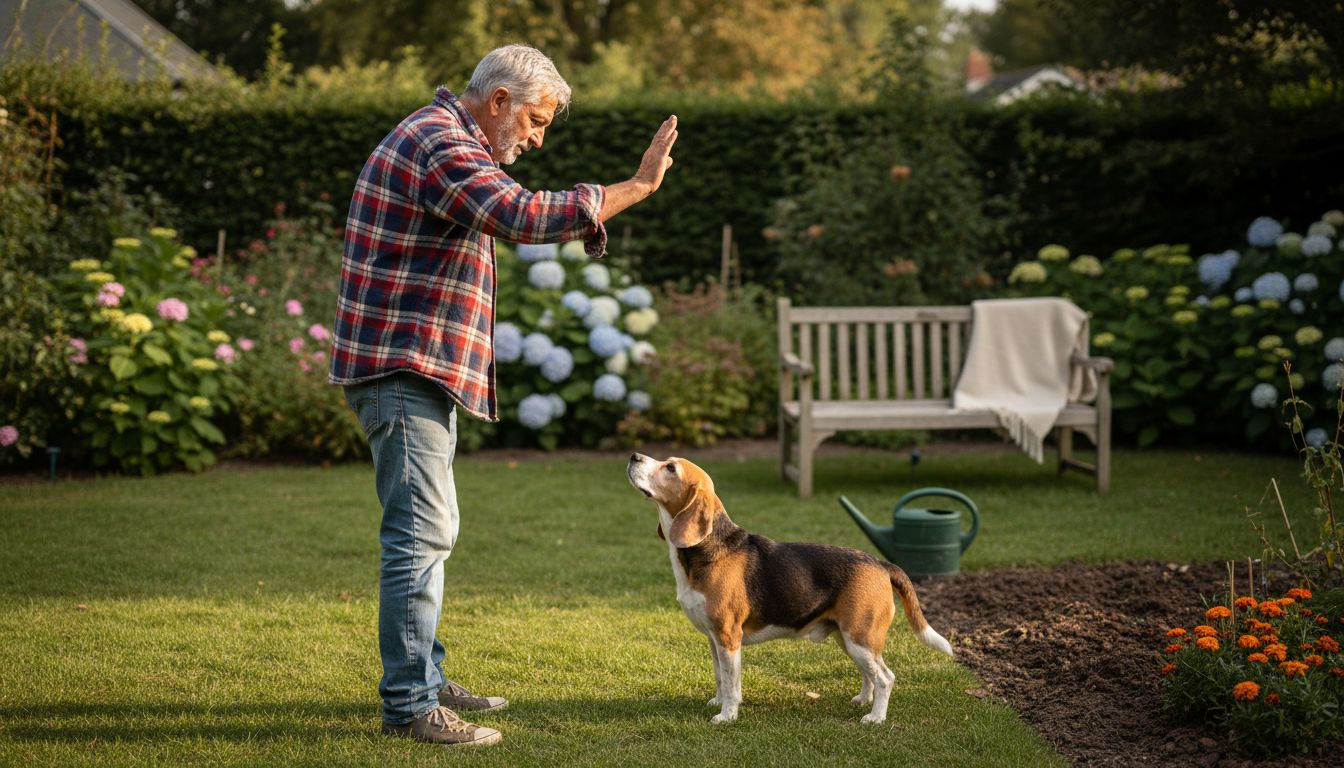
Home-based training eliminates the stress and logistical challenges of attending classes. Your dog learns better in familiar surroundings without the distraction of other animals. You avoid transportation difficulties and can train at times that suit your energy levels and daily routine. This convenience makes consistency easier to maintain, which is critical for successful training outcomes.
Pro Tip: Keep training treats in multiple locations around your home so you can reward good behavior instantly without searching for rewards or losing the teaching moment.
| Training Method | Pros | Cons | | — | — | | Positive reinforcement | Builds trust, reduces anxiety, effective for senior dogs, strengthens bond | Requires consistency, may take longer to see results | | Punishment-based | May produce quick compliance in some cases | Creates fear and anxiety, damages trust, ineffective and harmful for senior dogs |
Effective techniques for seniors include:
- Using high-value treats like small pieces of chicken or cheese to motivate learning
- Practicing commands during daily routines like mealtime or walks for natural reinforcement
- Keeping training sessions positive and ending on a successful note to maintain enthusiasm
- Recording progress in a simple journal to track improvements and identify patterns
- Involving family members or caregivers to ensure consistent commands and rewards
Specialized training for safety and independence
Sound-alert training teaches dogs to recognize and alert owners to important sounds like doorbells, fire alarms, and phone calls, providing critical safety benefits for seniors with hearing loss or limited mobility. This specialized training transforms your dog into an active partner in your daily safety and independence, giving you confidence to live alone or with minimal assistance.
The step-by-step process for sound-alert training begins with identifying the specific sounds most important to your safety and daily life. Start with one sound, such as the doorbell. When the doorbell rings, immediately guide your dog to you using a treat and praise them enthusiastically. Repeat this process consistently every time the doorbell sounds. Once your dog reliably comes to you when the doorbell rings, add a specific alert behavior like a gentle paw touch or nose nudge. Gradually introduce additional sounds one at a time, using the same patient, reward-based approach.
Safety cues prevent wandering and falls, which are critical concerns for senior dog-owner households. Teaching your dog to wait at doorways until you give permission prevents them from bolting outside when you open the door to collect mail or greet visitors. The stay command keeps your dog in a safe position while you navigate stairs or move through tight spaces. These simple behaviors reduce your risk of tripping or being pulled off balance.
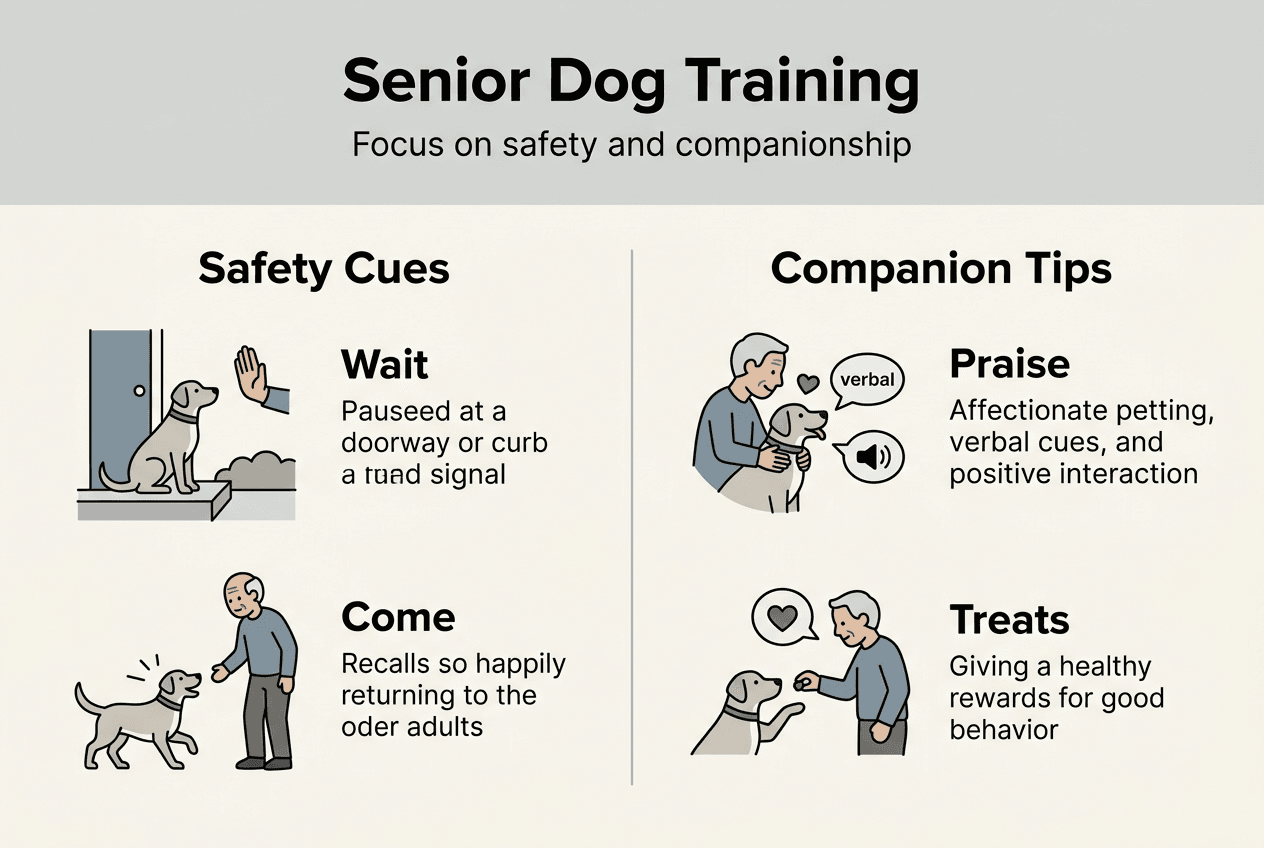
Sound-alert training benefits seniors with mild hearing loss by providing an early warning system for important events. Your dog becomes your ears, alerting you to smoke alarms, timers, phones, and visitors before you might otherwise notice. This early awareness gives you time to respond appropriately and maintains your independence without constant reliance on electronic alert systems.
| Alert Sound | Trained Dog Response | Owner Benefit | | — | — | | Doorbell/knock | Dog touches owner with paw or nose | Awareness of visitors without hearing doorbell | | Phone ringing | Dog brings owner to phone location | Never miss important calls | | Smoke/fire alarm | Dog alerts with urgent pawing or barking | Early warning for emergency evacuation | | Timer/alarm clock | Dog nudges owner awake or to kitchen | Medication reminders and cooking safety | | Dropped items | Dog retrieves or alerts to location | Reduces bending and fall risk |
Best practices for creating a lifelong training routine:
- Schedule brief training sessions at the same time each day to build habit and consistency
- Start with one new skill or command and master it completely before adding another
- Celebrate small victories with extra treats, playtime, or affection to maintain motivation
- Adjust training intensity based on your energy levels and your dog’s physical condition each day
- Incorporate trained behaviors into daily activities so they become automatic responses
- Review and practice previously learned commands regularly to prevent forgetting
- Seek support from family, friends, or professional trainers when you encounter persistent challenges
Sound-alert dogs contribute to seniors’ sense of independence and security by reducing reliance on others for basic awareness and safety. Knowing your dog will alert you to important sounds allows you to live confidently alone, maintain your daily routines without constant worry, and respond quickly to emergencies. This partnership enhances your quality of life while strengthening the emotional bond between you and your companion.
Pro Tip: Practice sound-alert training during low-stress times when you’re relaxed and patient, then gradually introduce distractions to ensure your dog responds reliably in real-world situations.
Overcoming common challenges in senior dog training
Slow learning pace due to cognitive decline requires repetitive, gentle sessions that respect your dog’s mental capacity. Patience and consistency are key when training older dogs who may require more time and repetition than their younger counterparts. Your dog might need to practice a command 50 times instead of 10 before it becomes reliable. This isn’t failure, it’s simply the reality of working with an aging brain that processes information more slowly.
Physical ailments mean avoiding painful exercises and allowing frequent rest throughout training sessions. If your dog has arthritis, don’t repeatedly ask them to sit and stand, which can cause joint pain and create negative associations with training. Instead, focus on commands they can perform comfortably, like stay or come. Watch for signs of fatigue such as excessive panting, lying down, or loss of interest, and end the session immediately when these appear.
Common challenges seniors and their dogs face include:
- Decreased hearing requiring louder commands or greater reliance on hand signals
- Vision loss making it harder for dogs to see treats, hand signals, or obstacles
- Arthritis limiting mobility and making certain positions painful or impossible
- Anxiety or confusion from cognitive decline causing inconsistent responses to familiar commands
- Owner fatigue or pain making it difficult to maintain consistent training schedules
- Reduced motivation in older dogs who are less food-driven or playful than in youth
Staying patient, consistent, and positive through setbacks ensures continued progress despite obstacles. When your dog forgets a command they performed perfectly yesterday, resist frustration and simply return to basics with extra rewards and encouragement. Remind yourself that every small step forward represents genuine achievement given the physical and cognitive challenges you’re both managing.
Pro Tip: Celebrate small progress like your dog waiting an extra second before going through a doorway or responding to a command after fewer repetitions, these incremental improvements build lasting bonds and maintain your motivation through difficult periods.
Using assistive devices or modifying training tools accommodates disabilities for both you and your dog. If bending is difficult, use a long-handled treat dispenser to reward your dog without stooping. If your dog’s vision is poor, use treats with strong scents they can easily locate. If you have limited mobility, consider puppy training for disabilities tips that apply equally well to senior dogs and their owners. These adaptations remove barriers and make training accessible regardless of physical limitations.
Explore tailored dog training solutions for seniors
Now that you understand effective training techniques for senior dogs and owners, iPupPee offers expert guidance designed specifically for your unique needs. Our training resources adapt to physical and cognitive limitations, making learning easier and more successful for both you and your companion. We support in-home training approaches that reduce stress and eliminate transportation challenges, allowing you to build skills in the comfort and safety of your own environment.

Our specialized alert signal training guide walks you through the exact process of teaching your dog to recognize and respond to critical household sounds, enhancing your safety and independence. Whether you’re managing hearing loss, mobility limitations, or simply want a more responsive companion, our step-by-step instructions and proven methods help you achieve meaningful results. Explore iPupPee today to discover training solutions that honor your capabilities while strengthening the bond with your loyal friend.
Pro Tip: Consistent, at-home training boosts confidence and safety for both you and your dog by eliminating the pressure and distraction of unfamiliar environments while allowing you to practice at your own pace.
Frequently asked questions
How long does it take to train a senior dog effectively?
Senior dogs require more time and consistent repetition, often weeks to months for new behaviors to become reliable. The exact timeline depends on your dog’s cognitive function, physical health, and prior training experience. Patience and smaller, frequent sessions improve retention and reduce frustration for both of you. Celebrate progress in days and weeks rather than expecting overnight transformations.
Can senior dogs learn new commands despite cognitive decline?
Yes, with patience and positive reinforcement, senior dogs can learn new commands and modify behaviors even with cognitive decline. The learning process simply takes longer and requires more repetition than training younger dogs. Cognitive decline may slow progress but does not prevent learning entirely. Focus on one command at a time and use high-value rewards to maintain motivation and attention.
What are the best safety commands to teach my senior dog?
Commands like wait, stay, and leave it near doors and stairs prevent accidents and falls that pose serious risks for seniors. These basic safety cues give you control in potentially dangerous situations without requiring complex behaviors your dog might struggle to learn. Sound-alert training for phones, alarms, and doorbells enhances emergency preparedness and daily independence. Start with the commands most relevant to your specific safety concerns and living environment.
Recommended
- Dog Communication for Seniors: Enhancing Safety – iPupPee
- Master Training Dogs for Seniors: A Step-by-Step Guide – iPupPee
- Senior Pet Companionship: Enhancing Life for Aging Dogs – iPupPee
- Senior Pet Safety: Keeping Aging Companions Secure – iPupPee
- Safety in elderly care: essential guide for families
- Silver Link Companion — AI Voice Companion for Seniors