

Start with communication-first devices that supplement supervision and training — that combination covers the most ground for both everyday pet owners and service-dog handlers. As the Riney Canine Health Center at Cornell puts it, technology works best as an extra layer on top of physical measures and behavioral preparation, not as a stand-in for either. No gadget replaces a well-trained dog or an attentive handler.
Core categories this guide covers:
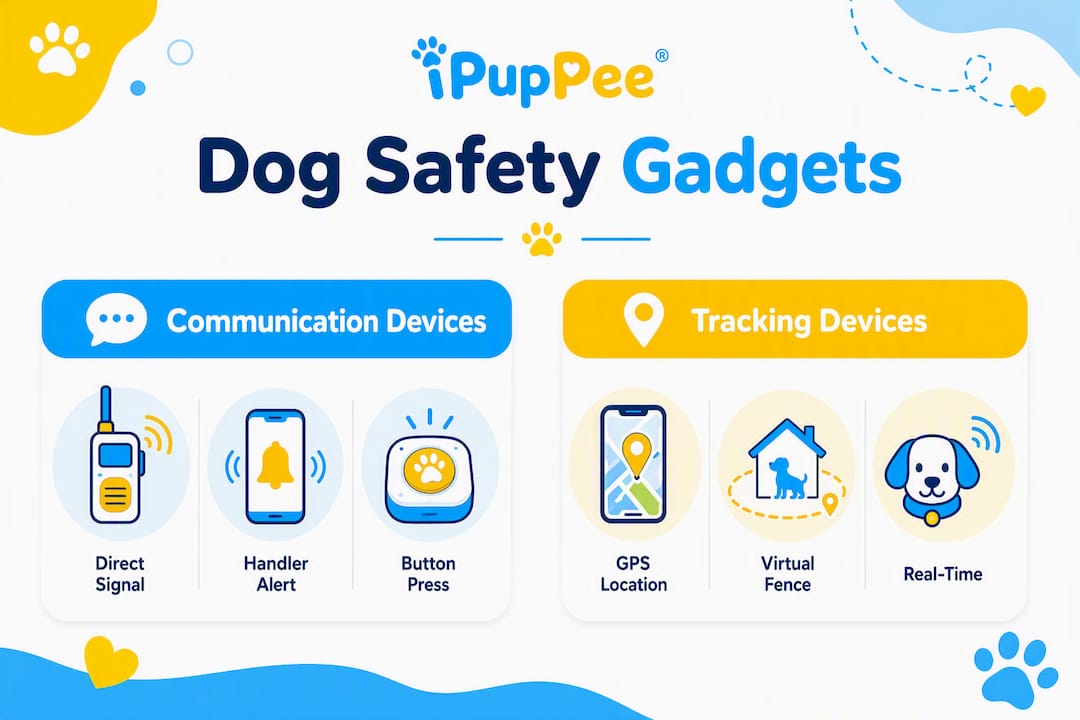
- Communication devices — alert buttons and two-way audio tools that let dogs signal handlers
- GPS trackers and virtual fences — real-time location and containment
- Visibility and lighting — LED collars, reflective gear, and light-up leashes
- Restraint and transport — crash-tested crates, harnesses, and carriers
Table of Contents
- What dog safety gadgets actually exist and what each one does
- How to pick the right safety device for your dog
- How to use pet safety devices without creating false confidence
- What service-dog handlers need to consider
- iPupPee: a communication-first safety device
- The case for putting communication first
- iPupPee gives you the communication layer other devices skip
- Key Takeaways
What dog safety gadgets actually exist and what each one does
The pet-safety market has expanded well beyond basic collars. Here is a plain-language breakdown of the main categories, what they do well, and where they fall short.
Communication devices let a dog signal a handler or caregiver by pressing a button or triggering an alert. They are especially useful for service-dog teams and owners with mobility or sensory limitations. Price range: roughly $30–$150 for entry-level alert buttons.
GPS trackers and virtual fences use cellular or satellite signals to show a dog’s location in real time and, in some cases, deliver a correction when the dog approaches a set boundary. Dual-frequency GPS models offer tighter boundary accuracy. Pet insurance providers typically treat these as non-medical equipment, so reimbursement is rare — confirm with your insurer before assuming coverage.
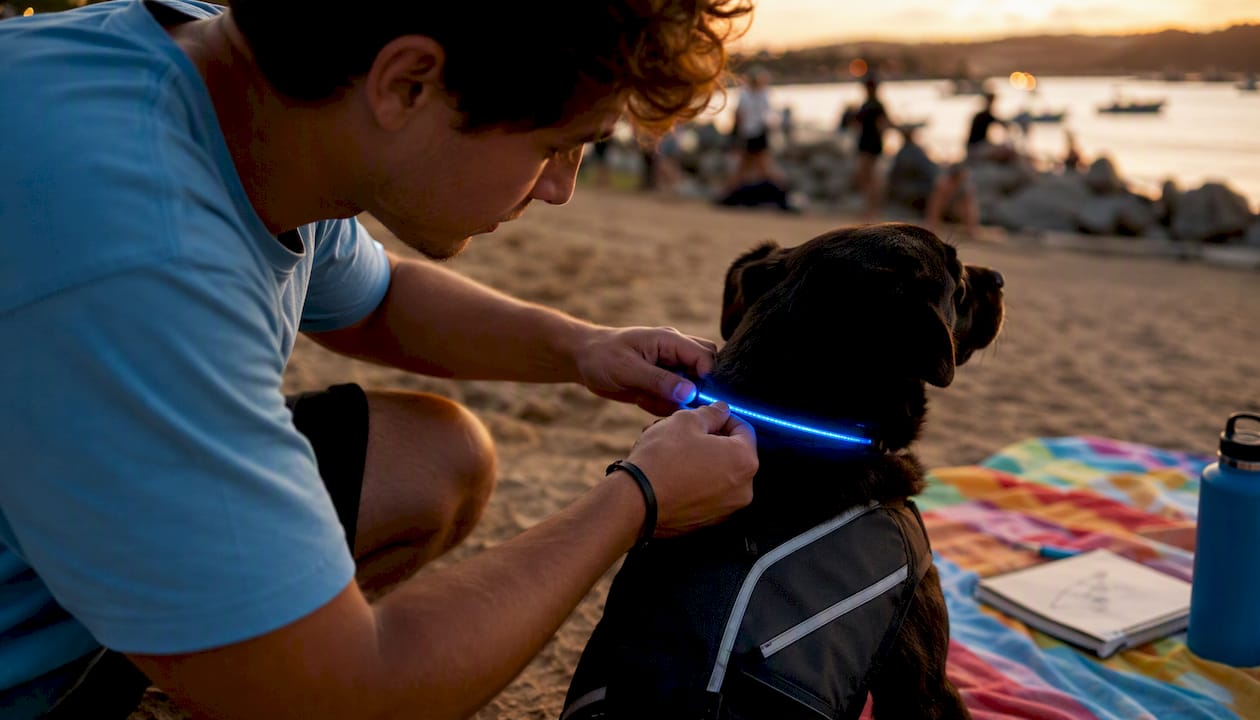
Visibility and lighting gear (LED collars, reflective vests, light-up leashes) costs very little and pays off immediately during low-light walks. No subscription, no battery anxiety beyond a quick charge.
In-car restraints and crash-tested crates protect dogs in vehicle accidents. Crash-tested crates built for impact absorption are the gold standard for road travel.
Monitoring cameras with two-way audio let owners check in remotely and, in some models, toss a treat. Dogster notes these work best alongside behavior training rather than as a standalone fix for separation anxiety.
Wearable health and activity monitors track sleep, movement, and early signs of illness. They are useful data tools, but they cannot diagnose heatstroke remotely — Cornell veterinary guidance is clear that monitoring devices do not replace immediate hands-on care.
Gates, barriers, and leashes are the lowest-tech options and often the most cost-effective. ASPCA Pet Insurance guidance lists leash use and physical barriers as core safety steps alongside microchipping and ID tags.
| Category | Key benefit | Main limitation |
|---|---|---|
| Communication devices | Direct handler–dog signaling | Requires training to use reliably |
| GPS trackers | Real-time location, recovery | Subscription costs; signal gaps |
| Virtual fences | Portable containment | GPS precision varies; needs training |
| Visibility gear | Immediate low-light safety | Passive only; no alert function |
| In-car restraints | Crash protection | Bulky; fit varies by breed |
| Monitoring cameras | Remote check-in, anxiety support | Wi-Fi dependent; not a training substitute |
| Health monitors | Early illness signals | Cannot replace veterinary diagnosis |
| Gates and barriers | Low-cost hazard prevention | Fixed; not portable |
Pro Tip: Check whether a GPS device distinguishes between containment and tracking — they are different functions. Some collars prioritize virtual fencing; others focus on location recovery. Confirm which one you actually need before buying.
How to pick the right safety device for your dog
Match the device to your primary need first. A dog who bolts needs a GPS tracker or virtual fence. A dog who needs to signal a handler needs a communication device. A dog who rides in the car daily needs a crash-rated restraint. Trying to solve every problem with one gadget usually means solving none of them well.
Once you know the primary function, run through this checklist:
- Attachment and fit — does the device stay secure without restricting movement or causing pressure points?
- Durability and water resistance — IP67 or IPX9K ratings hold up to rain and swimming; lower ratings may not
- Battery life and charging model — how long between charges, and what happens if the battery dies mid-day?
- Connectivity type — Bluetooth-only devices (like some containment systems) alert only when your phone is in range; GPS/LTE devices work at distance
- Offline behavior — does the device maintain its last-known fence boundary without a cellular signal, or does it go dark?
- Training compatibility — does the manufacturer provide a structured training guide, or are you on your own?
- Warranty and return policy — safety gear should come with at least a one-year warranty
- Subscription requirements — some advanced features require monthly fees; confirm what the device does if the subscription lapses
Pro Tip: Before relying on any subscription-dependent device, cancel the subscription in a test environment and see exactly what stops working. Some devices maintain stored fence boundaries offline; others lose all containment features. Know the failure mode before it matters.
For a deeper look at how wearable tech fits into a safety plan, the wearable tech overview at Ipuppee covers alerting features and independence use cases in detail.
Statistic to know: ASPCA Pet Insurance confirms that ID tags, microchipping, and leash use remain the foundation of outdoor safety — tech layers on top of these, not instead of them.
How to use pet safety devices without creating false confidence
Gadgets increase safety only when combined with training and supervision. A GPS collar on an untrained dog who bolts is a recovery tool, not a prevention tool. Start with the behavior; add the technology.
- Introduce the device during supervised training sessions — let the dog get comfortable with the fit, sound, and feedback before relying on it in the field.
- Confirm fit before every use — a collar that slips or pinches is worse than no collar.
- Test alerts and feedback in a safe, low-distraction area — verify the device responds as expected before using it near traffic or off-leash terrain.
- Verify offline behavior — confirm what the device does without a signal or subscription.
- Schedule battery and firmware checks weekly — a dead battery or outdated firmware is a common failure point.
- Keep low-tech identifiers current — a sturdy ID tag and a registered microchip are your fallback when electronics fail.
“Supervision, shade, water, and combining physical measures with tech for summer safety” — Riney Canine Health Center, Cornell University College of Veterinary Medicine. Technology is the extra layer, not the primary one.
Pro Tip: Never let a subscription lapse without a plan. If a device’s geofencing or live-tracking depends on an active plan, set a calendar reminder two weeks before renewal so you are never caught with a gap in coverage.
The smart technology use guide at Ipuppee walks through six practical ways to integrate devices into daily safety routines without over-relying on them.
What service-dog handlers need to consider
Choose communication devices that put handler control first, minimize distraction during task work, and behave predictably when connectivity drops. A device that buzzes unexpectedly mid-task or loses its settings after a firmware update is a liability, not an asset.
Public-access factors to evaluate:
- Visibility vs. discretion — some handlers prefer low-profile devices that do not draw attention; others need visible gear for public identification
- Feedback type — vibration and audio feedback are generally less disruptive to task performance than static; confirm the feedback mode before public use
- Non-interference evidence — test the device in a controlled environment that mimics the public-access setting before relying on it in the field
- Documentation — some venues ask for documentation of a device’s purpose; keep a brief written description of the device’s function
Handler checklist:
| Consideration | What to verify |
|---|---|
| Handler override | Can you silence or disable the device instantly? |
| Battery redundancy | Do you carry a backup power source or a charged spare? |
| Training integration | Is the device introduced in the dog’s existing training plan? |
| Predictable offline behavior | Does the device fail safely when signal drops? |
| Public-access compatibility | Does the device’s feedback interfere with task cues? |
The service-dog safety device guide at Ipuppee covers handler-specific requirements in detail, including public-access compatibility and training continuity.
iPupPee: a communication-first safety device
iPupPee is built around a single idea: give dogs a reliable way to signal their handlers. The device uses a button-press mechanism that triggers an alert, making it practical for service-dog teams, seniors living alone, and owners with disabilities who need clear, low-latency communication from their dog.
Key features relevant to the selection criteria above:
- Handler control — the alert goes directly to the handler; no third-party platform required
- Training support — Ipuppee provides instructional content and training guides on the website
- Communication reliability — the button-press mechanism is simple enough that dogs can learn it quickly with consistent training
- Independence focus — designed specifically for owners who need their dog to initiate contact, not just respond to commands
Pro Tip: Use Ipuppee’s training videos before the first live session. Dogs learn the button-press faster when the handler’s response is consistent from day one — the training resource library at ipuppee.com covers exactly that.
For a broader look at how communication devices fit into a dog safety technology framework, Ipuppee’s blog covers independence-focused use cases across different owner profiles.
Quick buy-and-setup checklist
- Verify offline behavior — confirm what the device does without signal or subscription.
- Check attachment and fit on your dog before leaving the store or opening the return window.
- Confirm battery life and have a charging plan for your typical day.
- Register your dog’s microchip and update the ID tag with current contact information.
- Note the warranty period and return policy in writing.
- Test all alerts in a safe, low-distraction area before first real use.
Subscription note: If the device requires a monthly or annual plan, confirm the exact features that lapse if the subscription is not renewed. Budget for recurring costs alongside the upfront price.
Key takeaways
- Gadgets supplement, not replace, supervision and training — veterinary guidance from Cornell is consistent on this point.
- Use the redundancy principle — ID tag plus microchip plus tech is the right stack; electronics fail.
- Match device to primary function — communication, recovery, containment, and health monitoring are different jobs that need different tools.
- Service-dog handlers should prioritize handler override, predictable offline behavior, and non-interference with task performance.
- Check insurance coverage — GPS trackers are typically non-medical equipment; verify with your insurer before assuming reimbursement.
The case for putting communication first
Most pet-safety conversations start with GPS and end with containment. That is the wrong order for a large share of dog owners, particularly those with service dogs or mobility limitations. The most dangerous gap is not “my dog escaped” — it is “my dog needed to tell me something and couldn’t.”
Communication-first devices address that gap directly. They shift the dynamic from owner-monitors-dog to dog-can-signal-owner, which matters enormously for handlers who depend on their dog for daily safety tasks. A GPS collar tells you where your dog went after the fact. A communication device changes what is possible before anything goes wrong.
The redundancy principle still applies: no single device is enough. But if you are choosing where to start, start with the device that opens a two-way channel.
iPupPee gives you the communication layer other devices skip
Most pet safety gear is built to monitor or contain. iPupPee is built to communicate. The device gives your dog a direct way to signal you, which is the one thing GPS trackers and virtual fences cannot do.
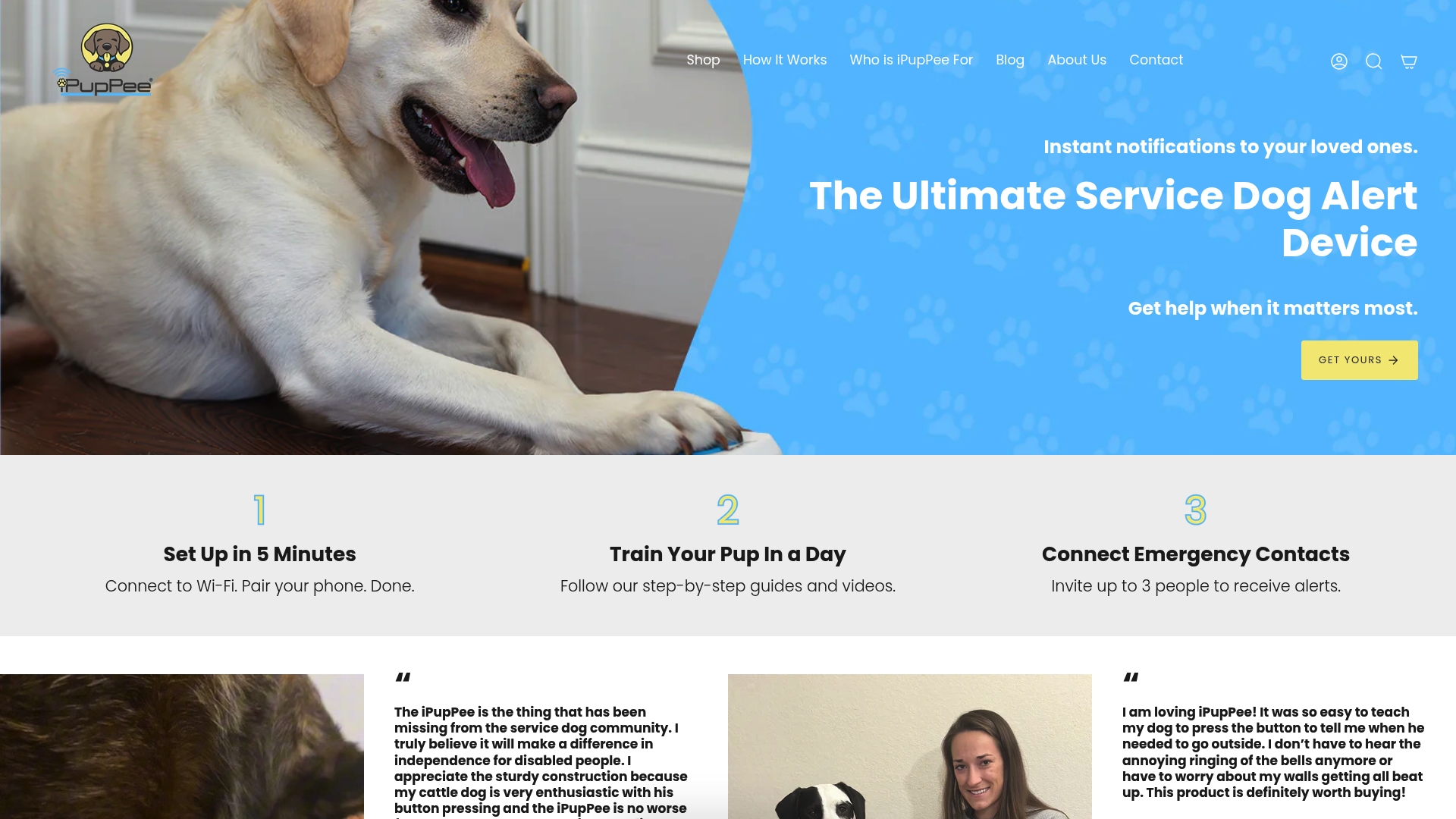
Three reasons it fits the criteria in this guide: the alert goes straight to the handler with no subscription platform in the middle, the training resources at ipuppee.com walk you through the setup step by step, and the button-press mechanism is simple enough for dogs at any training level to learn. If you are a service-dog handler, a senior living alone, or an owner who needs their dog to initiate contact, this is the device that fills the gap. Visit ipuppee.com to see the full product details and training library.
Trusted sources and further reading
- Riney Canine Health Center, Cornell Vet — veterinary guidance on supervision, heat safety, and the role of technology as a supplemental layer.
- ASPCA Pet Insurance — practical outdoor safety steps and insurance coverage notes for trackers and safety devices.
- Dogster — coverage of interactive cameras, separation anxiety tools, and home safety measures.
- Gunner Kennels — example of crash-tested crate standards for vehicle and travel safety.
Before relying on any device for high-stakes service-dog work, verify insurance coverage and confirm local rules with your insurer and a qualified professional. Device features and subscription terms change; always check current specifications directly with the manufacturer.
This article is general information, not professional veterinary or legal advice. Confirm current device specifications, insurance terms, and local regulations with the relevant professionals for your specific situation.
Key Takeaways
The most effective approach to dog safety combines communication-first devices with redundant low-tech identifiers and consistent training — no single gadget covers all three.
| Point | Details |
|---|---|
| Gadgets supplement training | Technology adds a safety layer; supervision and training remain the foundation per Cornell veterinary guidance. |
| Redundancy is non-negotiable | Always pair any tech device with a sturdy ID tag and a registered microchip — electronics fail. |
| Match device to function | Communication, GPS recovery, containment, and health monitoring are distinct needs requiring different tools. |
| Service-dog handlers need handler control | Prioritize devices with instant override, predictable offline behavior, and non-interference with task cues. |
| Ipuppee fills the communication gap | Ipuppee’s button-press alert device gives dogs a direct way to signal handlers — the function GPS and containment tools do not provide. |