

Caring for a disabled dog brings unique challenges but also deep rewards. Whether your pet faces mobility issues, sensory loss, or chronic conditions, providing proper support requires specialized knowledge and the right tools. Many owners feel overwhelmed at first, unsure how to adapt their homes or routines. This guide delivers practical, expert-backed strategies to help you create a safe environment, master daily care tasks, implement effective training, and troubleshoot common problems. You’ll discover actionable steps that improve your dog’s quality of life while strengthening your bond.
Table of Contents
- Preparing To Care For Your Disabled Dog: Tools And Environment
- Step-By-Step Caregiver Actions: Feeding, Hygiene, And Mobility Assistance
- Training And Communication Strategies For Disabled Dogs
- Common Challenges And Troubleshooting In Disabled Dog Care
- Find Trusted Support And Products For Caring Disabled Dogs
- How To Care For Disabled Dogs: Frequently Asked Questions
Key takeaways
| Point | Details |
|---|---|
| Environment preparation | Modify your home with ramps, non-slip surfaces, and accessible rest areas to prevent injuries and enhance mobility. |
| Daily care routines | Follow consistent feeding, hygiene, and mobility assistance protocols tailored to your dog’s specific disabilities. |
| Training adaptation | Use positive reinforcement and sensory-appropriate cues to maintain communication and behavioral responsiveness. |
| Proactive monitoring | Watch for pain signals, pressure sores, and medical changes while maintaining regular veterinary consultations. |
Preparing to care for your disabled dog: tools and environment
Before starting daily care routines, you need to assess your dog’s specific limitations and gather essential equipment. Begin by identifying whether your pet struggles with mobility, vision, hearing, or a combination of challenges. This evaluation shapes every decision you make about tools and home modifications.
Essential equipment includes adjustable harnesses for lifting support, ramps or stairs for furniture access, orthopedic beds that reduce pressure points, and non-slip mats for traction on smooth floors. Dogs with rear leg paralysis benefit from wheeled carts that restore independence. Vision-impaired pets need textured pathways and scent markers to navigate safely. Hearing-impaired dogs respond well to vibration collars for communication.
Home modifications prevent accidents and reduce strain on both you and your pet. Remove low furniture that creates tripping hazards. Block off stairs unless you install secure ramps. Place food and water bowls at comfortable heights, using raised stands if your dog has neck or back issues. Create a dedicated rest area with easy bathroom access, ideally on the ground floor to minimize lifting.
Adapting living spaces enhances safety and comfort for handicapped dogs. Secure loose rugs and electrical cords. Install baby gates to control access to dangerous areas like kitchens or steep staircases. Consider adding nightlights if your dog navigates in darkness.
Pro Tip: Create a checklist of your dog’s daily needs and post it in your care area. This helps family members maintain consistency and ensures nothing gets overlooked during busy days.
Your veterinarian plays a crucial role in preparation. Schedule a comprehensive exam to understand your dog’s prognosis and receive specific care recommendations. Ask about pain management options, physical therapy exercises, and warning signs that require immediate attention. Regular follow-ups every three to six months help you adapt care plans as conditions evolve.
Essential preparation checklist:
- Mobility aids: harnesses, slings, carts, ramps
- Comfort items: orthopedic bedding, heating pads, cooling mats
- Safety modifications: non-slip flooring, baby gates, secured hazards
- Hygiene supplies: waterless shampoo, absorbent pads, gentle wipes
- Monitoring tools: weight scale, medication organizer, symptom journal
Step-by-step caregiver actions: feeding, hygiene, and mobility assistance
Daily caregiving requires attention to detail and gentle consistency. Start each day by assessing your dog’s overall condition. Check for new wounds, swelling, or behavioral changes that signal discomfort. This quick evaluation helps you catch problems early.
Feeding disabled dogs often requires adjustments. Elevated bowls reduce neck strain for dogs with spinal issues. Pets with limited jaw mobility need softer foods or smaller kibble pieces. Follow your vet’s dietary recommendations precisely, as some disabilities increase nutritional needs while others require calorie restriction. Feed at consistent times to establish routine and monitor appetite changes that might indicate health problems.
Hygiene maintenance prevents infections and preserves dignity. Disabled dogs may struggle with self-cleaning, making your assistance essential. Brush your dog daily to prevent matting and stimulate circulation. Clean facial folds and ears weekly to avoid bacterial growth. For dogs with incontinence, use absorbent pads and change them frequently. Apply barrier creams to protect skin from moisture damage.
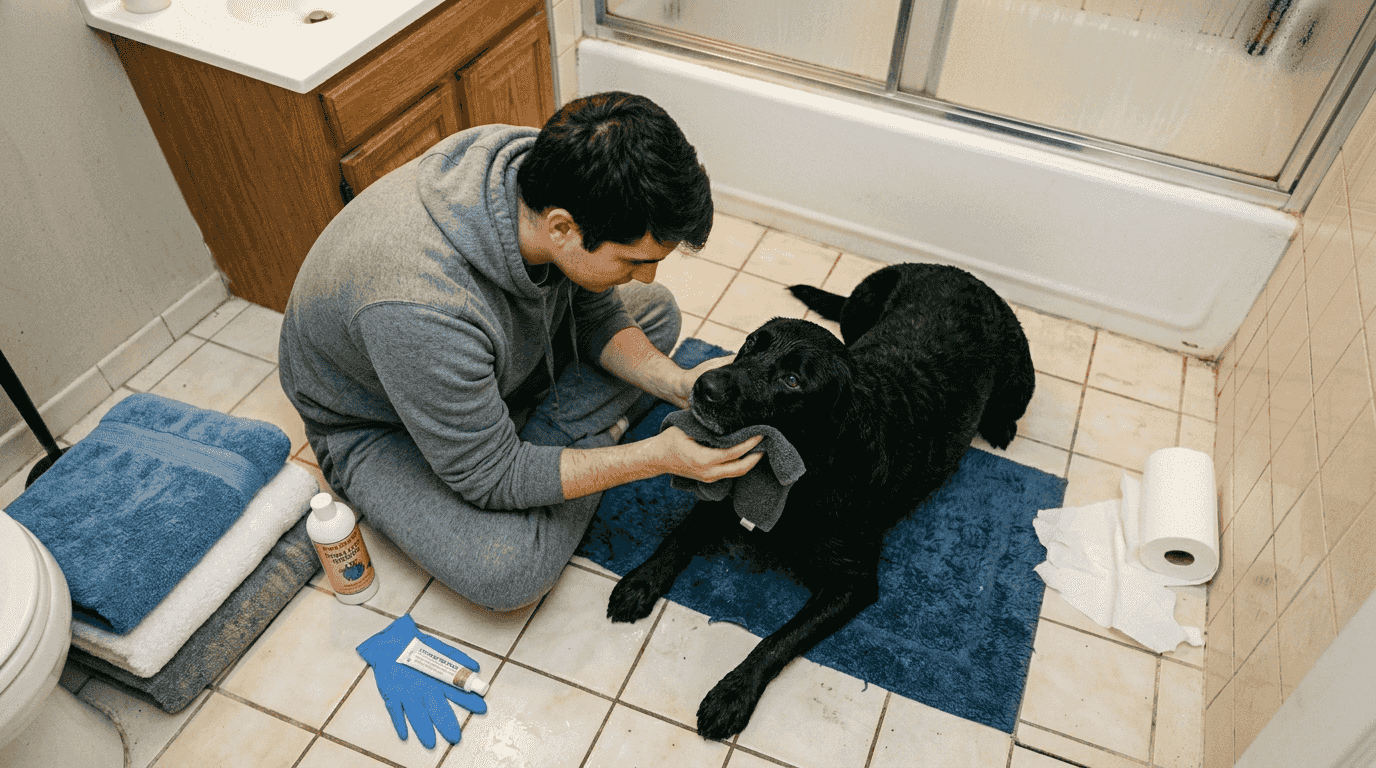
Understanding specialized care approaches includes feeding and hygiene best practices. Bathe your dog every two to four weeks using lukewarm water and gentle shampoo. Support their body throughout the process to prevent slipping. Dry thoroughly, paying special attention to skin folds where moisture traps.
Mobility assistance procedure:
- Approach calmly and announce your presence, especially for blind or deaf dogs.
- Position the harness or sling under the chest and hindquarters without twisting limbs.
- Lift smoothly using your legs, not your back, to avoid injury to both of you.
- Support your dog’s weight evenly and move at their pace.
- Lower gently and remove the harness once they’re stable.
Pressure sores develop quickly in immobile dogs. Reposition your pet every two to four hours if they cannot move independently. Massage bony prominences like hips and elbows to maintain blood flow. Use padded surfaces and rotate between different resting spots. Inspect skin daily for redness, warmth, or open wounds.
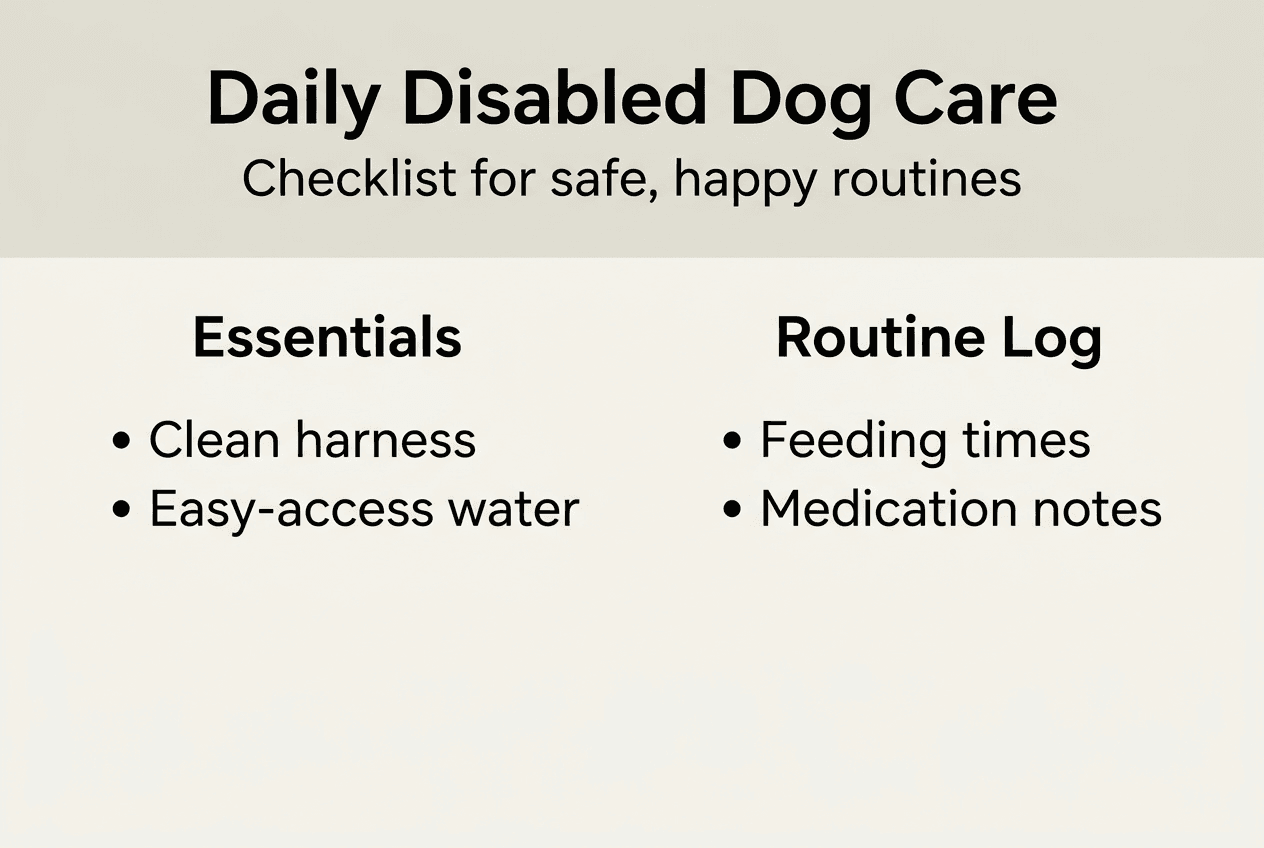
Pro Tip: Keep a care log noting feeding times, bathroom breaks, medication doses, and any unusual symptoms. This record proves invaluable during vet visits and helps you spot patterns in your dog’s condition.
Medication management requires strict adherence to schedules. Use pill pockets or soft treats to make administration easier. Never skip doses without veterinary approval. Store medications properly and check expiration dates monthly. If your dog resists taking pills, ask your vet about liquid alternatives or compounded formulations.
Training and communication strategies for disabled dogs
Disabled dogs remain capable of learning and responding to guidance when you adapt your approach. Training builds confidence, reinforces good behavior, and strengthens your relationship. The key lies in matching methods to your dog’s abilities rather than forcing traditional techniques.
Positive reinforcement works universally across disabilities. Reward desired behaviors immediately with treats, praise, or gentle petting. Timing matters more than intensity. A small treat delivered within two seconds of the action creates stronger associations than delayed rewards. Avoid punishment, which confuses disabled dogs and damages trust.
Specialized training methods improve communication and behavioral responses. For blind dogs, use consistent verbal cues paired with touch signals. Tap their shoulder before moving them. Create sound markers like bells on doorways to help them navigate. Deaf dogs excel with hand signals and vibration cues. Establish a unique signal for attention, such as a floor stomp or light flash.
Training aid comparison:
| Method | Best for | Advantages | Limitations |
|---|---|---|---|
| Clicker training | Hearing dogs | Precise timing, clear communication | Ineffective for deaf pets |
| Hand signals | Deaf or hearing dogs | Visual clarity, works at distance | Requires line of sight |
| Touch cues | Blind dogs | Direct, reassuring contact | Limited range, requires proximity |
| Vibration collars | Deaf dogs | Attention-getting, consistent | Requires proper introduction |
Consistency accelerates learning. Use the same cues every time and ensure all family members follow identical protocols. Practice in short sessions of five to ten minutes to prevent fatigue. Disabled dogs tire more quickly than able-bodied pets, so respect their limits.
Adapt expectations realistically. A paralyzed dog won’t perform traditional sit commands but can learn to respond to name calls or stay in position. Focus on behaviors that enhance safety and quality of life rather than impressive tricks. Teaching a blind dog to wait at doorways prevents dangerous escapes. Training a deaf dog to check in visually maintains connection during outdoor activities.
For owners with disabilities themselves, training requires creative problem solving. Use treat pouches mounted at waist height for easy access. Employ long-handled tools to deliver rewards without bending. Voice-activated devices can trigger sounds or lights for training cues. The goal remains mutual understanding and cooperation.
Pro Tip: Record short videos of successful training sessions. Reviewing these clips helps you identify what works and provides encouragement during challenging periods. Share them with your vet or trainer for additional feedback.
Common challenges and troubleshooting in disabled dog care
Even with excellent preparation, problems arise in disabled dog care. Recognizing issues early and responding appropriately prevents minor concerns from becoming serious complications. Pain management tops the list of ongoing challenges. Disabled dogs may hide discomfort instinctively, so watch for subtle signs like decreased appetite, reluctance to move, excessive panting, or changes in sleep patterns.
Medical complications require vigilant monitoring and timely intervention to prevent worsening conditions. Urinary tract infections occur frequently in incontinent dogs. Symptoms include straining, bloody urine, or accidents in unusual locations. Contact your vet immediately if you notice these signs. Skin infections develop rapidly in moist areas. Check daily for foul odors, discharge, or inflamed patches.
Pressure sores represent a constant threat for immobile pets. These wounds start as red spots and quickly progress to open ulcers if untreated. Prevention through frequent repositioning and padded surfaces works better than treatment. If sores develop, clean them gently with saline solution and apply prescribed ointments. Severe cases require veterinary debridement and antibiotics.
Injury prevention strategies:
- Supervise all movement, especially on stairs or slippery surfaces
- Use safety harnesses during outdoor activities
- Maintain clear pathways free of toys and clutter
- Secure furniture that could tip if bumped
- Keep toxic substances and sharp objects out of reach
Behavioral changes often signal underlying problems. Increased aggression or anxiety may indicate pain rather than temperament shifts. Withdrawal and lethargy suggest depression or illness. Address these changes promptly with veterinary consultation. Sometimes simple environmental modifications, like adding a companion pet or increasing mental stimulation, resolve behavioral issues.
Stress management benefits both you and your dog. Caring for a disabled pet demands significant time and emotional energy. Establish routines that include breaks for yourself. Join support groups where you can share experiences and gain practical tips from others facing similar challenges. Don’t hesitate to ask family or friends for help with daily tasks.
Adapting care plans becomes necessary as disabilities progress. What worked six months ago may no longer suit your dog’s current abilities. Schedule regular vet check-ups to reassess needs and adjust medications, therapies, or equipment. Stay flexible and willing to try new approaches when old methods stop working.
“The most successful disabled dog owners embrace change as part of the journey. They monitor closely, communicate openly with their veterinary team, and adjust care without guilt or hesitation. This mindset transforms challenges into manageable tasks.”
Safety devices require regular inspection. Check harness straps for fraying. Test ramp stability monthly. Replace worn non-slip mats before they become slippery. Clean wheelchairs and carts weekly to prevent mechanical failures. Properly maintained equipment protects your dog and extends product lifespan.
Find trusted support and products for caring disabled dogs
Navigating disabled dog care becomes easier with the right resources and community support. You don’t have to figure everything out alone. iPupPee specializes in innovative communication and safety solutions designed specifically for dogs with special needs and their owners. The platform offers devices that facilitate better interaction between you and your pet, particularly valuable when traditional training methods fall short.
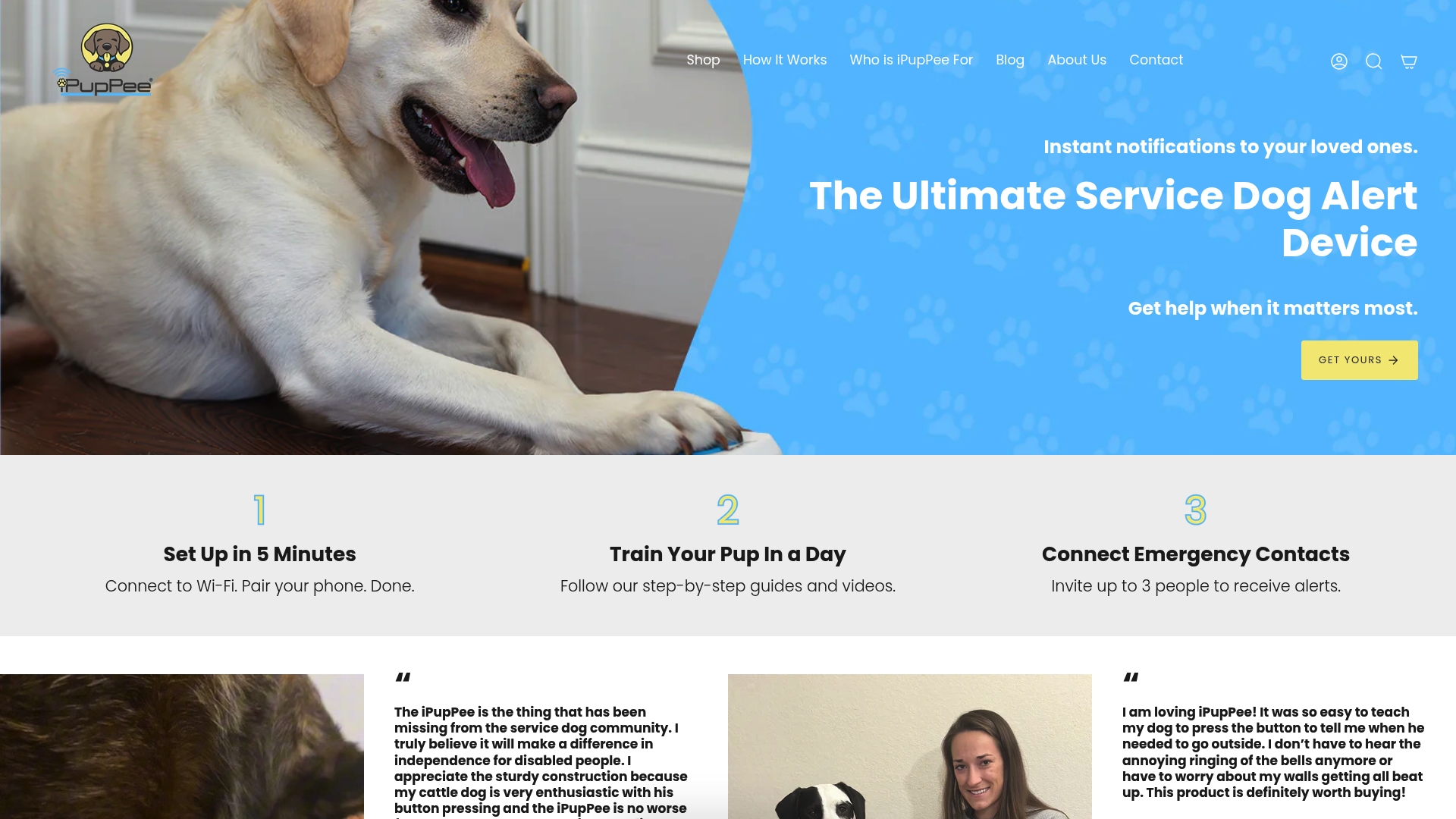
Explore curated products that address real caregiving challenges, from alert systems that help disabled owners respond quickly to their pets’ needs, to training aids that work with various sensory limitations. The site features detailed guides and articles covering advanced care topics, giving you ongoing education as your dog’s needs evolve. Tips for living with disabilities and dogs provide practical strategies from experienced owners and professionals.
Join a community dedicated to improving life quality for both pets and their caregivers. Access customer testimonials that share real experiences with different products and approaches. Learn about innovative safety solutions that combine technology with compassionate care principles. Whether you need immediate answers or long-term support, these resources help you provide the best possible care for your disabled companion.
How to care for disabled dogs: frequently asked questions
Can disabled dogs live happily for many years?
Yes, disabled dogs often enjoy long, fulfilling lives with proper care and adaptations. Their quality of life depends more on pain management, mental stimulation, and owner commitment than the disability itself. Many disabled pets remain playful, affectionate, and engaged well into their senior years when their specific needs are met consistently.
What are the best mobility aids for paralyzed dogs?
Wheeled carts work best for rear leg paralysis, allowing independent movement and exercise. Front support harnesses help dogs with forelimb weakness. Full-body slings assist with complete mobility loss during bathroom breaks and short walks. Choose adjustable options that grow with your dog and consult your vet for proper fitting to prevent chafing or circulation problems.
How can I tell if my disabled dog is in pain?
Watch for decreased appetite, reluctance to move, excessive panting, whimpering, or aggression when touched. Subtle signs include changes in sleep patterns, withdrawn behavior, or unusual postures. Disabled dogs often hide pain instinctively, so any behavioral shift warrants veterinary evaluation. Keep a symptom journal to track patterns and share detailed observations with your vet.
Is special training necessary for blind or deaf dogs?
Yes, but it’s highly effective and strengthens your bond. Blind dogs learn through consistent verbal cues, touch signals, and scent markers. Deaf dogs excel with hand signals and vibration-based communication. Both benefit from positive reinforcement and patience. Training builds confidence and ensures safety during daily activities, making it essential rather than optional.
How can I prevent pressure sores in immobile dogs?
Reposition your dog every two to four hours, rotating between different resting surfaces. Use thick orthopedic bedding that distributes weight evenly. Massage bony areas like hips and elbows daily to maintain circulation. Keep skin clean and dry, applying barrier creams to vulnerable spots. Inspect your dog’s body twice daily for early signs of redness or irritation that indicate developing sores.