

TL;DR:
- Connected pet homes integrate AI devices, wearables, and smart accessories for comprehensive monitoring and safety.
- Advanced sensors like IMU collars enable trained alert detection with high accuracy for service animals.
- Proper training, system integration, and contingency plans are essential to maximize safety and effectiveness.
Most pet owners think smart technology starts and ends with a GPS dot moving across their phone screen. That’s a reasonable assumption, but it misses most of the picture. Today’s connected pet homes bring together AI-powered doors, wearable health monitors, behavior-recognition collars, and alert communication devices that work together to create real safety nets, particularly for service animals, seniors, and people living alone with special needs. This guide walks you through what these systems actually do, which technologies perform best, and how to avoid the costly mistakes that trip up even enthusiastic early adopters.
Table of Contents
- What makes a pet home ‘connected’?
- The technology driving connected pet homes
- Benefits and challenges for safety and independence
- Expert insights: What’s next for connected pet homes?
- A fresh take: What most pet owners miss about connected homes
- Ready to take the next step in connecting your pet home?
- Frequently asked questions
Key Takeaways
| Point | Details |
|---|---|
| Integrated safety and communication | Connected pet homes use wearables, smart collars, and sensors to deliver real-time safety and improved owner-pet communication. |
| Crucial for service and special needs pets | AI wearables can detect service dog alerts with high accuracy, supporting greater independence. |
| Challenges require backup plans | Be prepared for WiFi, battery, and false alert issues—have manual safeguards in place. |
| Future is AI and proactive care | Next-gen systems detect problems before you do but require privacy awareness. |
| Tech supplements, not replaces training | The best results blend connected tech with training and hands-on care. |
What makes a pet home ‘connected’?
The phrase “connected pet home” gets tossed around loosely, so let’s pin it down. At its core, a connected pet home is any household where digital devices share information to monitor, protect, or respond to your pet’s needs automatically or on demand.
Connected pet home systems primarily use IoT wearables like smart collars, GPS trackers, AI pet doors, and cameras for monitoring location, health, activity, and access control. That is a wide technology stack, and it is growing fast.
Core device categories in a connected pet home:
- Smart collars with built-in sensors that track movement, sleep, calories, and behavioral patterns
- GPS and BLE (Bluetooth Low Energy) trackers for real-time location monitoring indoors and outdoors
- AI pet doors that recognize your specific pet by microchip or collar tag and only unlock for them
- Health wearables measuring heart rate variability, temperature, and respiratory rate
- Indoor cameras with motion detection, two-way audio, and pet-specific recognition
- Alert communication devices that let dogs press a button to signal a human need
Here is a simple comparison to visualize how these devices add different layers of value:
| Device type | Primary function | Extra capability | Best for |
|---|---|---|---|
| Smart collar | Activity tracking | Behavior recognition, alerts | Service dogs, health monitoring |
| GPS tracker | Location | Geofencing, live trail | Escape-prone dogs, outdoor dogs |
| AI pet door | Access control | Scheduled access, lockout | Multi-pet homes, indoor cats |
| Health wearable | Vitals monitoring | Early illness detection | Senior dogs, dogs with conditions |
| Alert button | Dog-to-human communication | Customizable signals | Service animals, trained dogs |
| Indoor camera | Visual monitoring | Two-way audio, event clips | Puppies, anxious dogs, home alone pets |
Most pet owners start with one device, usually a GPS tracker, and then layer in others as they see the value. For owners of service dogs or dogs with special roles, though, that layering is not optional. It is what turns a smart gadget into a genuine safety system.
How integration works in practice: imagine your service dog has a smart collar, an alert button, and a linked camera in your home. The collar logs a behavioral spike, the camera records the moment, and the alert button gives your dog an immediate way to signal you. That combination covers recognition, documentation, and communication in a way no single device can. You can also learn more about monitoring pet health and how wearables have changed the game for proactive care.
The technology driving connected pet homes
Smart devices sound great in a brochure, but what actually separates a reliable system from an overpriced gadget? It comes down to sensor quality, connectivity type, battery performance, and the accuracy of the algorithms interpreting the data.
| Device | Location accuracy | Battery life | Health metrics | Integration |
|---|---|---|---|---|
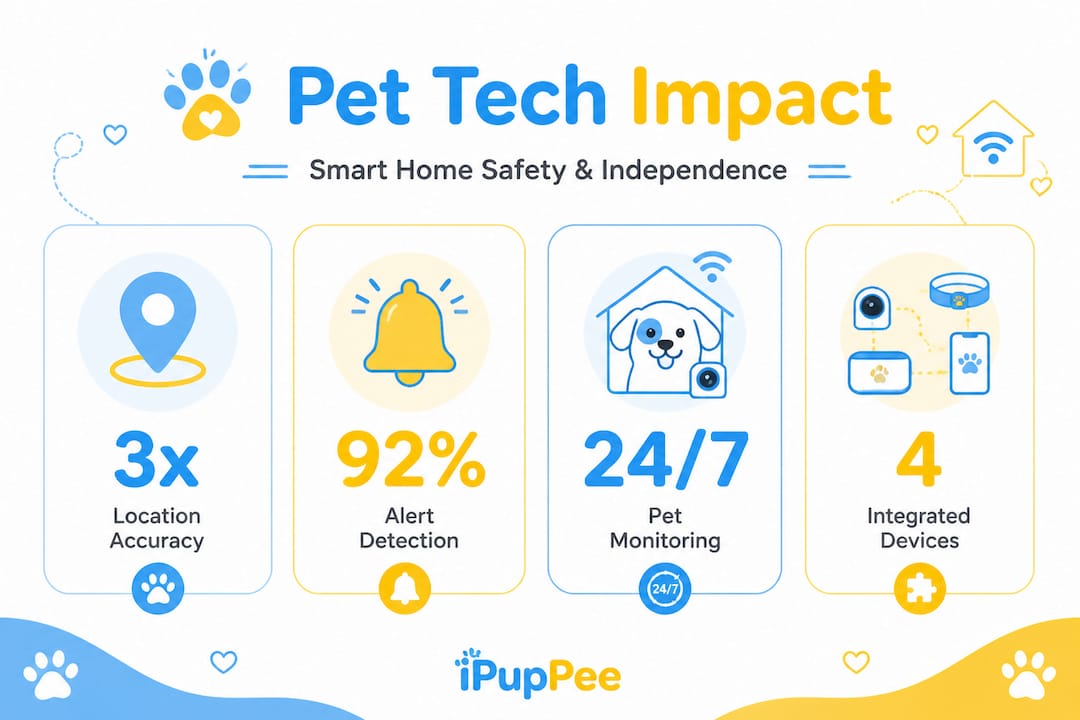
| Halo Precision+ GPS | High (3x competitors) | 20 hours | Basic activity | App, voice commands |
| PawSentry Tracker | Medium-High | Up to 30 days | Activity, GPS | App |
| IMU Smart Collar | N/A | 7 to 14 days | Movement, behavior | API, app |
| Basic GPS tag | Low | 3 to 5 days | None | App |
| Health wearable | N/A | 7 days | Heart rate, temp | App, vet platform |
One number that stands out: the Halo Precision+ GPS is 3x more accurate than competing trackers, and PawSentry delivers up to 30 days of battery life. That battery stat matters enormously if you rely on your dog’s tracker for daily safety monitoring. A dead tracker is a silent gap in your system.
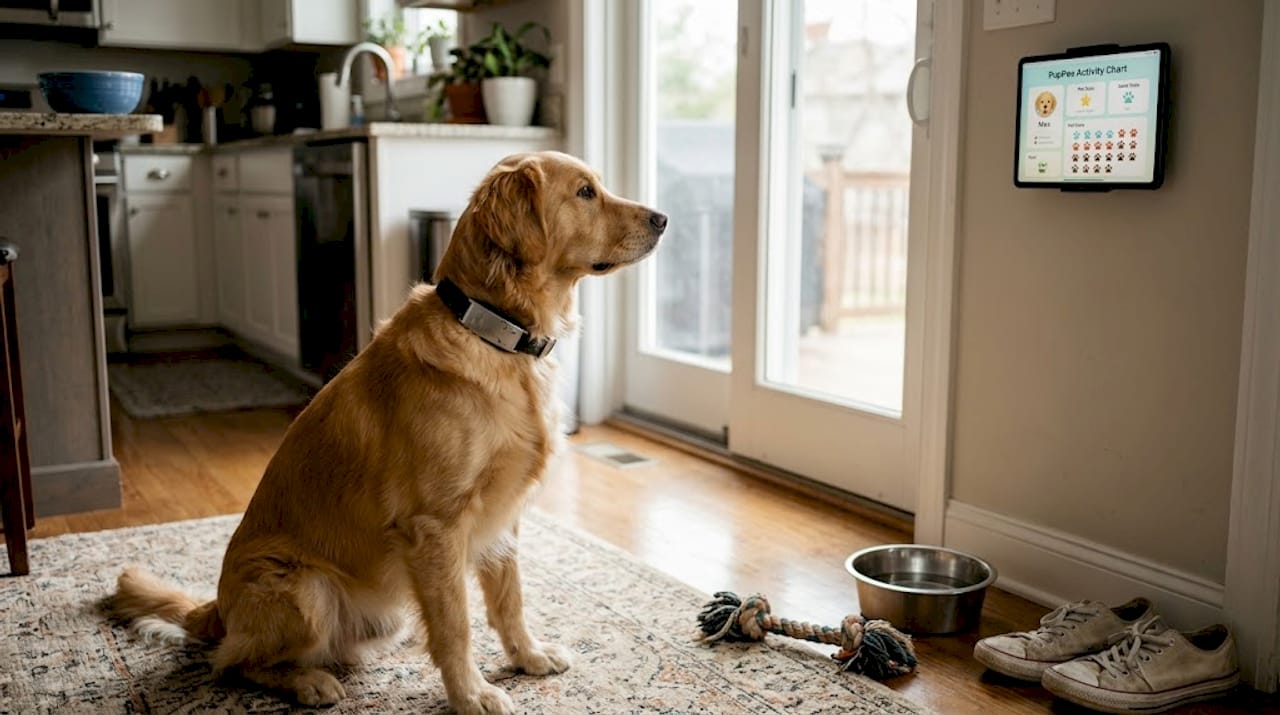
The most exciting advancement for service animal owners is the IMU (Inertial Measurement Unit) collar. Unlike standard GPS devices that only know where your dog is, an IMU collar knows what your dog is doing. IMU collars detect trained alert behaviors like seizure-detection spins with 92% accuracy using machine learning, specifically a Random Forest model with an F1 score of 0.65. That means a collar can recognize when your service dog performs its trained alert behavior and push a notification to your phone automatically, even if you are in the next room or momentarily distracted.
Understanding how alert devices for service dogs integrate with this kind of sensor data helps you make smarter purchasing decisions when comparing devices.
Pro Tip: Look for hybrid GPS/BLE/WiFi collar models when possible. GPS handles outdoor tracking, BLE connects to smart home hubs for indoor precision, and WiFi provides a fallback when cellular is weak. Each connectivity type has gaps; combining them fills most of them.
The interaction between these technologies is also accelerating. Some platforms now allow smart collars to trigger pet door lockouts, so if your dog’s collar detects unusual stress behaviors, the pet door automatically stays closed until you manually override it. That kind of cross-device automation was science fiction five years ago. Today it is available in consumer products.
Benefits and challenges for safety and independence
Understanding the technology is only half the story; real-world benefits and pitfalls matter most in day-to-day living.
Unique benefits for service dogs and special needs owners:
- Geo-fencing alerts the moment a service animal leaves a designated safe zone
- Trained alert behavior recognition on IMU collars reduces response time for health emergencies
- Alert communication devices allow dogs to independently signal their handler, increasing autonomy for both
- Automated health trend reporting lets veterinarians review weeks of data, not just a single exam snapshot
- Two-way camera audio lets you speak to and observe your dog when you cannot physically be present
For seniors or people living alone with a disability, these benefits are not about convenience. They are about independence. Being able to trust that your service dog’s alert will be logged, recorded, and pushed to your phone (or a secondary contact) can genuinely change the safety math of daily life.
The most common challenges fall into these categories:
- WiFi and power outages: A smart pet door that relies on WiFi may fail open or stay locked during an outage, creating either a security problem or an access problem for your pet.
- False positive alerts: IMU collars and geofence apps sometimes flag normal play behaviors as alert events, creating alarm fatigue over time.
- Training gaps: Virtual fences and alert behaviors only work if the dog is properly conditioned to respond to them. Tech cannot shortcut that process.
- Device interoperability: Not all smart collars talk to all smart home platforms. Buying devices from different ecosystems often means managing multiple apps with no data sharing.
- Battery management: A tracker or health collar with a dead battery is worse than having no device, because you assume you have coverage when you do not.
“Training required for virtual fences; false positives from normal activity; smart platforms must interoperate. WiFi outages can lock or unlock doors unexpectedly; battery and connectivity failures remain real-world risks.” Edge case considerations
Pro Tip: Always set up secondary safety layers before you fully depend on any connected device. This means maintaining a physical leash routine, registering a secondary emergency contact for alert notifications, and testing your system monthly by simulating an alert event. No technology is 100% reliable, and your contingency plan should not require any tech to function.
For a deeper look at how these tools specifically support dog safety and dog safety alert behavior, there are resources that go well beyond what any single device manual will tell you.
Expert insights: What’s next for connected pet homes?
To stay ahead, let’s look to the future and what you should know as adoption grows fast in new global markets.
One of the most compelling shifts already underway is early detection. Wearable health sensors can flag abnormal physiological patterns, like elevated resting heart rate or disrupted sleep cycles, before visible symptoms appear. This means your vet can act on data rather than waiting for your dog to show obvious signs of distress. Early detection via wearables is now preceding owner-noticed symptoms in clinical studies, which fundamentally changes how proactive pet health management can work.
The Internet of Pets (IoP) is also growing rapidly in Asia, with manufacturers there pushing multifunctional AI devices that combine GPS, health monitoring, behavior recognition, and even emotional state analysis in a single collar. Features that used to require three separate devices are consolidating. For wearables for early health detection, this consolidation trend is worth watching closely when you are budgeting for a connected home setup.
Key trends shaping the next generation of connected pet homes:
- AI-driven behavior analysis that can differentiate between anxiety, excitement, and illness based on movement signatures
- Voice-integrated pet monitoring that pipes into smart speakers like Alexa or Google Home for hands-free alerts
- Subscription health platforms connecting collar data directly to veterinary telehealth services
- Emotional state modeling using multiple physiological inputs, not just activity levels
- Automated medication reminders and dispensers linked to health wearable data
Privacy is the uncomfortable side of all this progress. Cloud-connected devices collect large volumes of behavioral and location data, and not every pet tech company has strong data security practices. Before you connect any device to your home network, review the privacy policy carefully. Ask specifically where data is stored, how long it is retained, whether it is sold to third parties, and how you can delete it. This is a non-negotiable step for households where the same smart home network controls personal or medical devices alongside your pet’s wearables.
A fresh take: What most pet owners miss about connected homes
We have covered what works and what is coming. Now let’s get honest about what connected homes can and cannot do, and where the real value actually lives.
The biggest mistake we see is owners treating smart devices as a substitute for foundational training. A $400 smart collar does not teach your dog anything. It observes what your dog already knows how to do. If you buy an IMU collar expecting it to detect seizures but your dog has never been trained for that behavior, the collar will produce noise, not insight.
Trackers supplement microchips and training, they do not replace them. This is the most consistent finding across experienced trainers, veterinarians, and technology reviewers: physiological metrics are only meaningful in context, and context comes from knowing your individual dog, not from an algorithm alone.
The second most common failure mode is over-automation. Owners set up geofences, smart doors, and auto-alerts and then become passive observers of their pet’s life rather than active participants in it. Technology should expand your attention, not replace it. The families who get the most from connected pet home systems are the ones who review the data regularly, adjust routines based on what they learn, and maintain consistent training habits alongside the tech.
For service animal scenarios specifically, the hybrid approach is not just better, it is essential. An alert button that your dog presses to communicate a need is only valuable if you have also invested time in training reliable alert dogs to use that device correctly and consistently. The technology and the training are not competitors. They are partners, and the partnership only works when both sides are strong.
Think of connected systems as smart supplements to your existing care routine. They sharpen your visibility, extend your reach, and fill in gaps. They do not build the foundation. You and your dog do that the old-fashioned way: with repetition, trust, and time together.
Ready to take the next step in connecting your pet home?
Building a connected pet home that genuinely supports safety, communication, and independence takes more than buying the right gadgets. It takes understanding which solutions match your dog’s specific needs, your household setup, and your own capabilities as a handler.
At iPupPee, we specialize in exactly that intersection: communication devices, alert training resources, and real-world guidance for pet owners who need more than a basic tracker. Whether you are setting up your first alert button, researching wearables for a senior dog, or navigating life as a service animal handler, the iPupPee blog and product resources are built around the questions you are actually asking. Explore our full range of tools and guides designed to help you and your pet live more safely, communicate more clearly, and stay more connected every single day.
Frequently asked questions
What devices are essential in a connected pet home?
The essentials are smart collars, GPS/BLE trackers, AI pet doors, and connected cameras, as these systems cover location, health, activity, and access control as a baseline.
Do wearables replace the need for professional dog training?
No. Wearables supplement training and monitoring but cannot replace it, since trackers complement microchips and professional training rather than standing in for them.
How accurate are smart collars for detecting service dog alerts?
IMU collars detect trained alert behaviors like seizure-detection spins with 92% accuracy using machine learning, making them a genuinely reliable tool when paired with proper training.
What are common risks or downsides to connected pet home tech?
The main risks include WiFi outages affecting smart doors, battery failures, false positive alerts, and the need for proper device setup, all of which require mitigation planning before you rely on the system.
Is my pet’s data secure in cloud-connected devices?
Data security varies significantly by brand, and privacy concerns with cloud apps are real, so always review a company’s data retention and sharing policies before connecting any device to your home network.
Recommended
- Senior Pet Safety: Keeping Aging Companions Secure – iPupPee
- Essential safety solutions for disabled pet owners: 5 key aids – iPupPee
- Pet Alert System Overview: Enhancing Safety and Independence – iPupPee
- Complete Guide to Pet Owner Safety Guidelines – iPupPee
- Holiday dog toy guide: Stay safe and have fun – Ascencion Gear