

TL;DR:
- Adaptive pet training customizes methods based on a dog’s specific role and needs.
- It emphasizes reliability in real-world conditions, using technology and ongoing adjustments.
- Essential for service dogs, dogs with disabilities, or those supporting vulnerable owners.
Most dog training methods were built for a world that no longer exists. They were designed long before service dogs carried life-saving responsibilities, before communication buttons let dogs signal urgent needs, and before seniors or disabled owners depended on their pets for daily safety. If you’re relying on a one-size-fits-all approach to train a dog with a specialized role, you’re likely leaving critical gaps in their reliability. This guide covers what adaptive pet training actually means, how it differs from traditional methods, when you need it most, and the specific strategies and tools that make it work in the real world.
Table of Contents
- Defining adaptive pet training
- How adaptive methods differ from traditional ones
- When to consider adaptive pet training
- Key adaptive strategies and tools
- Why adaptive pet training matters more than ever
- Explore proven adaptive training resources
- Frequently asked questions
Key Takeaways
| Point | Details |
|---|---|
| Flexible for all pets | Adaptive pet training customizes techniques to suit individual pet needs, including service dogs and those using communication aids. |
| Bridges training gaps | It combines positive and balanced approaches to ensure reliable behavior without harshness or over-dependence on medication. |
| Ideal for tech integration | Adaptive methods excel for pets using alert devices or communication technology, improving safety and independence. |
| Best for challenging cases | High-drive, aggressive, or disabled pets benefit most from adaptive strategies, especially when standard methods fail. |
Defining adaptive pet training
Adaptive pet training is a goal-driven approach that adjusts its methods based on the individual pet’s needs, abilities, and purpose. Rather than applying the same protocol to every dog, adaptive training starts with a question: what does this specific animal need to succeed at this specific task?
This matters enormously when your dog is using a communication device, acting as a service animal, or supporting someone with limited mobility. A standard obedience class can teach “sit” and “stay.” It cannot reliably teach a dog to press an alert button at the right moment, hold position under medical stress, or signal distress on behalf of an owner who cannot call for help.
Here’s what makes adaptive training distinct from traditional methods:
- Personalization by design. Every training plan is built around the dog’s sensory strengths, behavioral history, and the specific task they need to perform.
- Technology integration. Communication buttons, alert devices, and harnesses are treated as core training tools, not novelties.
- Real-world reliability. Behaviors are trained to perform under actual conditions, including noise, stress, and distraction.
- Ongoing adjustment. If a method isn’t working, it changes. There’s no commitment to one philosophy over the dog’s progress.
- Owner-centered design. The owner’s physical limitations, lifestyle, and support needs shape how training is structured.
Understanding pet training importance is the first step toward seeing why adaptive approaches have gained serious traction. Traditional positive-only training is powerful for pets with straightforward needs. Balanced training adds corrective cues. But neither was designed for the layered demands of a service dog using assistive technology.
As noted in a Scottish Government review of training devices, Adaptive Reliability™ bridges gap between purely positive and corrective approaches, avoiding over-reliance on either drugs or harsh compulsion. It functions as a “third way” that prioritizes consistency and practical outcomes above philosophical purity.
“Adaptive training isn’t about picking a side in the positive-vs-balanced debate. It’s about building behaviors that hold up when it matters most.”
If you’re new to training in general, dog training for beginners offers a solid foundation before layering adaptive strategies on top.
How adaptive methods differ from traditional ones
Traditional training usually falls into one of two camps. Purely positive training (often called R+) uses rewards exclusively to reinforce good behaviors. Balanced training mixes rewards with mild corrective cues like leash pressure or verbal corrections. Both approaches have genuine strengths. Neither is inherently wrong.
But they share a major blind spot: they assume the dog’s primary role is behavioral compliance. Adaptive training assumes the dog’s primary role is functional performance in a specific real-world context.
Here’s a side-by-side look at how the approaches compare:
| Feature | Positive-only (R+) | Balanced training | Adaptive training |
|---|---|---|---|
| Core focus | Reward-based behavior | Reward + mild correction | Task-specific reliability |
| Technology use | Rare | Occasional | Central |
| Adjusts to pet needs | Somewhat | Somewhat | Always |
| Works for service dogs | Partially | Partially | Designed for it |
| Suitable for disabled owners | Limited | Limited | Optimized |
As the Scottish Government’s review found, contrasting viewpoints between purely positive and balanced training leave a real gap that Adaptive Reliability™ bridges gap in meaningful ways. This is especially true for dogs performing critical behaviors, where “mostly reliable” is not acceptable.
Pro Tip: When evaluating alert training methods, ask yourself: would this behavior hold up if my dog were stressed, distracted, or in an unfamiliar environment? If the answer is uncertain, adaptive training is worth exploring.
Adaptive methods also allow trainers and owners to combine tools purposefully. For example, a communication button training plan might pair positive reinforcement for initial button pressing with environmental management to reduce false alerts. This flexible combination is rarely possible inside rigid traditional frameworks.
For owners ready to go deeper, proven training techniques that apply adaptive principles give you a structured path forward without abandoning what already works.
When to consider adaptive pet training
Not every dog needs adaptive training. A healthy puppy learning basic manners can thrive with straightforward positive methods. But certain situations call for a fundamentally different approach.
Here are the scenarios where standard techniques consistently fall short:
- Your dog uses an alert or communication device. Button-based communication tools require precise, reliable behavior that traditional training rarely develops without modification.
- Your dog has a disability or sensory limitation. Dogs with hearing loss, vision impairment, or anxiety disorders need methods adjusted to their actual sensory experience.
- Your dog supports a disabled or elderly owner. When a dog’s task performance directly affects human safety, reliability becomes non-negotiable.
- Your dog shows high-drive or reactive behavior. Standard methods may destabilize these dogs or fail to give them adequate guidance.
- Your dog operates in complex environments. Hospitals, crowded public spaces, and unpredictable home settings demand generalized, not just conditioned, behavior.
Research confirms that high-drive/aggressive dogs benefit significantly from conflict resolution strategies built into adaptive frameworks. These dogs need more than reward history. They need clear communication systems that reduce ambiguity and stress.
“When a dog’s behavior directly protects a person’s safety or independence, training is no longer optional. It’s infrastructure.”
For those facing disabled owner challenges, adaptive training isn’t a luxury option. It’s the approach that actually accounts for the owner’s reality and designs around it.
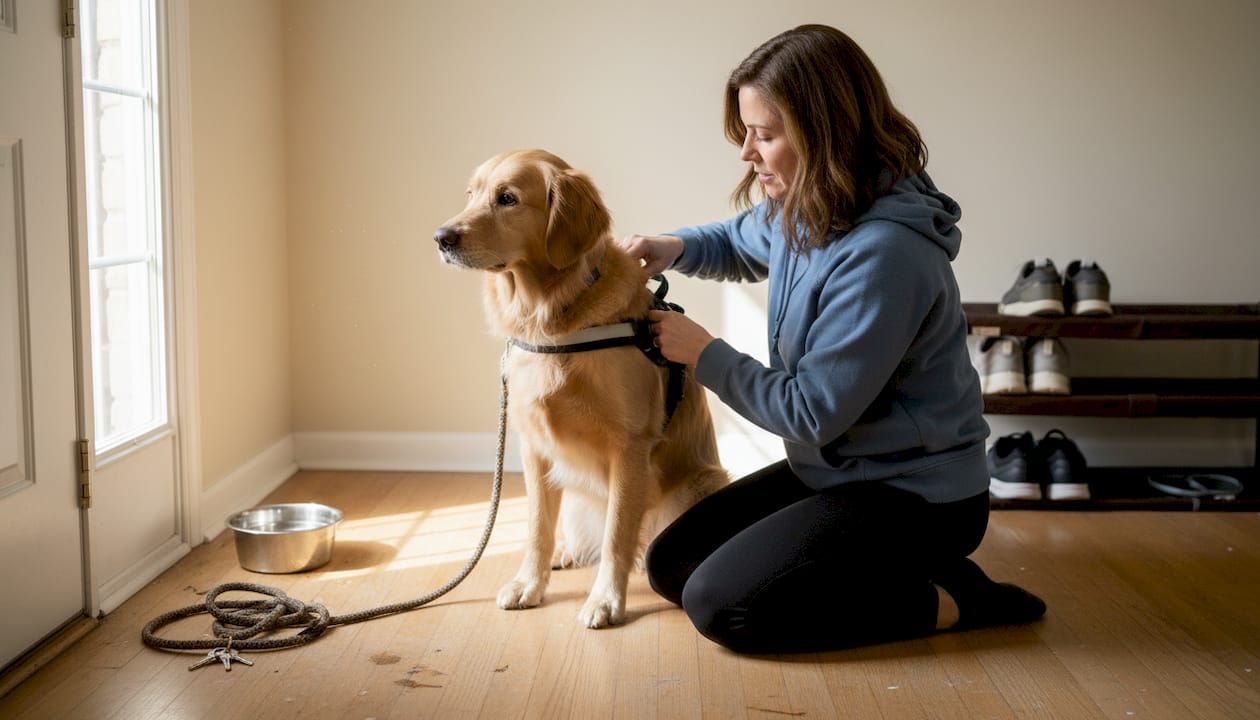
The behavioral training guide offers more detail on recognizing behavioral patterns that signal a need to shift strategies.
Key adaptive strategies and tools
Once you’ve recognized that adaptive training fits your situation, the next step is knowing which tools and strategies actually deliver results.
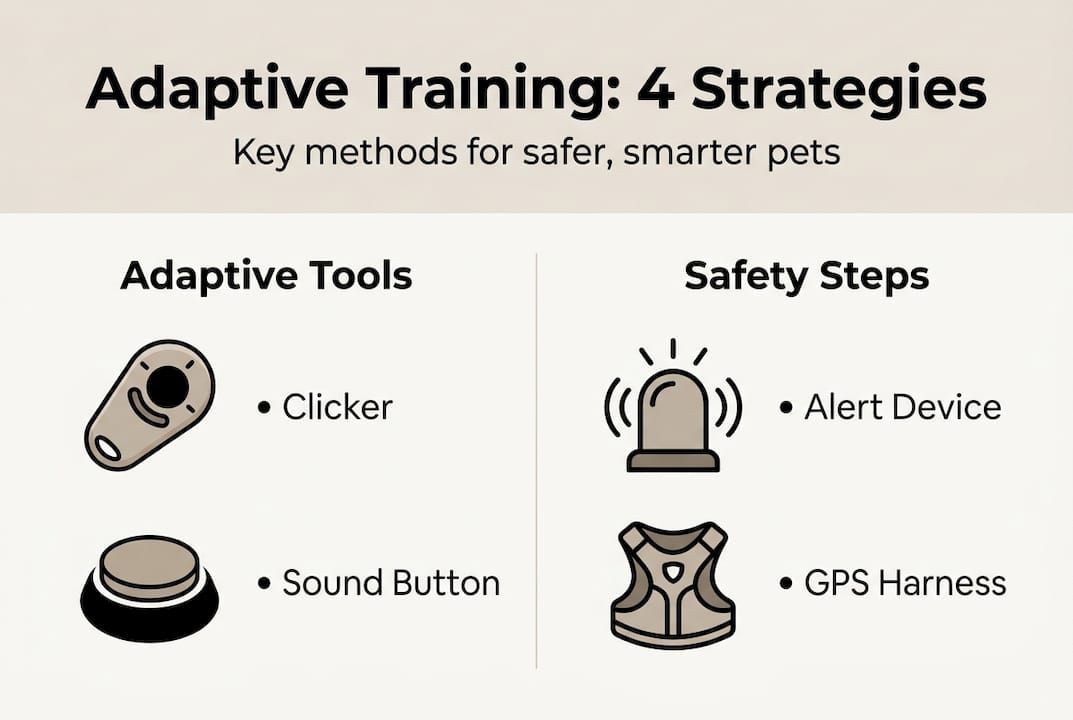
Here are the most effective adaptive training tools currently in use:
| Tool | Primary function | Best for |
|---|---|---|
| Communication buttons | Dog-initiated signals | Alert training, expressing needs |
| GPS/safety harnesses | Location and comfort | Service dogs, outdoor safety |
| Clicker apps | Consistent timing | Reward-based shaping |
| Alert devices (like iPupPee) | Urgent signals | Seniors, disabled owners, solo living |
| Progress tracking apps | Data-driven adjustment | Long-term behavior monitoring |
Beyond the tools themselves, strategy matters just as much. Here are the core practices that make adaptive training effective:
- Use clean, consistent cues. Mixed signals are the fastest way to undermine reliability. Every cue should mean one thing every time.
- Train to generalization, not just repetition. A behavior practiced only at home will fail in public. Practice in multiple environments early.
- Adjust for sensory needs. A dog with noise sensitivity needs alert training in quiet conditions first, then graduated exposure to busier environments.
- Track progress systematically. Without data, you’re guessing. Log successful repetitions, failure patterns, and environmental variables.
- Pair device training with natural behavior. Communication buttons work best when the training connects the button to a natural signal the dog already offers.
One important note: research on sound quality affecting recognition shows that acoustic input quality limits how reliably dogs respond to certain device-based cues. This means physical setup matters as much as training technique.
Pro Tip: Before starting device-based training, test your alert tool in the actual environment where your dog will use it. Background noise, room size, and surface type all affect how clearly a dog can perceive and respond to the cue.
For deeper guidance, canine assistance training and communication training methods both offer practical frameworks built around real-world service roles.
Why adaptive pet training matters more than ever
Here’s an uncomfortable truth that most training communities avoid: the frameworks most people use were built in an era when dogs had far simpler roles. Fetch the newspaper. Guard the yard. Walk nicely on a leash. The protocols haven’t meaningfully changed, even as dogs now support people with complex medical conditions, communicate through technology, and serve as primary safety systems for people living alone.
We see this every day. A well-meaning owner follows a traditional training plan faithfully, and their dog still fails at the one behavior that matters most because the method never accounted for the actual stakes. That’s not a training failure. It’s a framework failure.
Adaptive training isn’t a workaround for difficult dogs. It’s the honest acknowledgment that dogs in 2026 have different roles than dogs in 1986. Especially for seniors relying on their pets for training for seniors, the gap between traditional methods and actual needs is real, measurable, and costly. Ignoring adaptivity doesn’t preserve anything. It just keeps the gap open.
Explore proven adaptive training resources
If this guide has shifted how you think about your dog’s training, the next step is putting that thinking into action. At iPupPee, we’ve built our resources around the exact gap this article describes: the space between standard obedience and the real-world reliability that service dogs, communication device users, and safety-focused owners actually need.
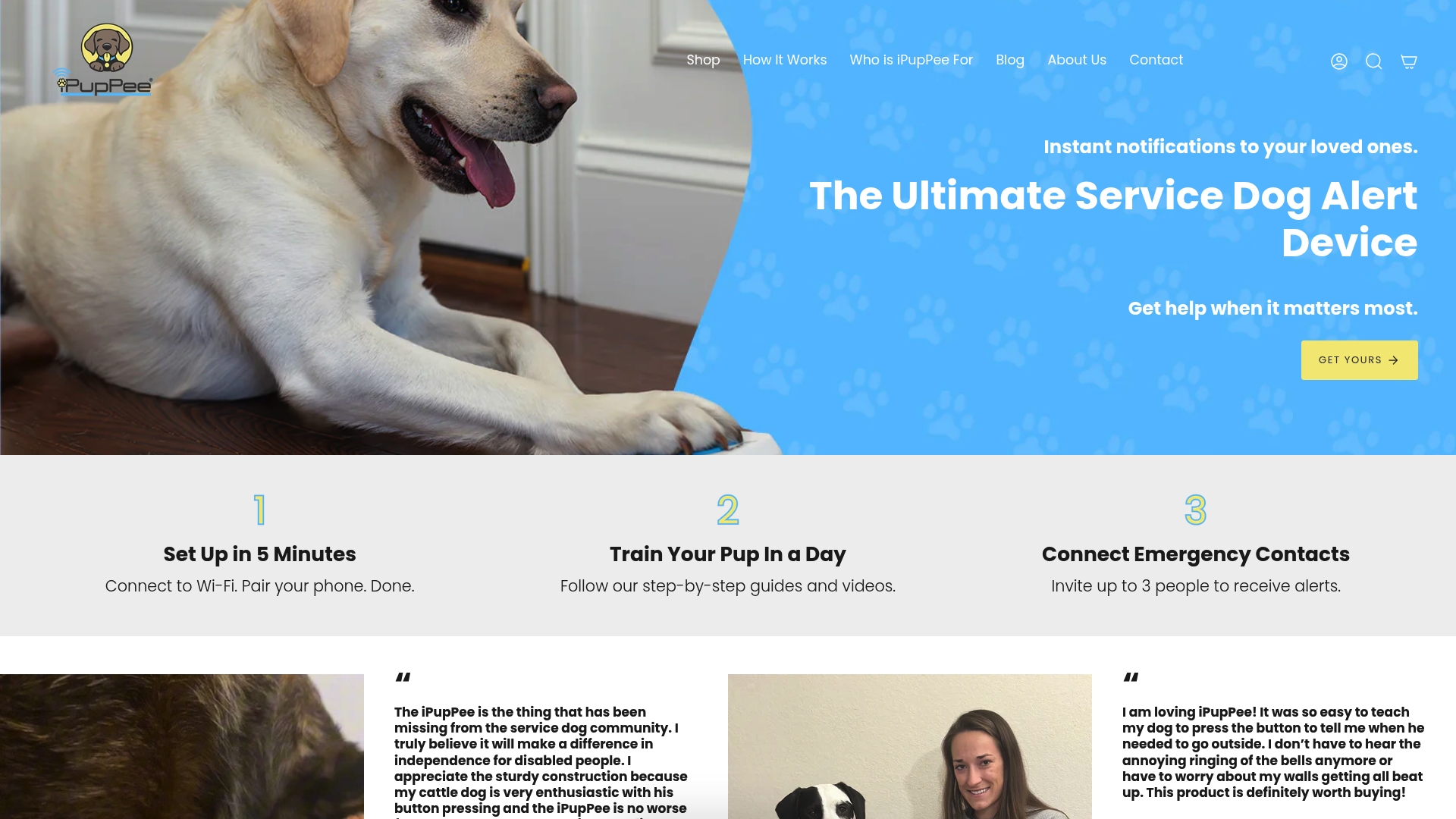
From the alert device training guide to hands-on product support, our platform is designed for owners who need more than theory. Whether you’re just starting out or refining an existing plan, explore the tools and guidance built specifically for adaptive training success. Your dog’s reliability depends on getting this right.
Frequently asked questions
What makes adaptive pet training better for service pets?
Adaptive training flexes its methods around each pet’s specific role, making it far more effective for service animals than fixed frameworks. As Adaptive Reliability™ bridges gap between purely positive and corrective approaches, it ensures critical behaviors hold up under real-world conditions.
Can adaptive training help with aggressive or difficult dogs?
Yes, and research shows it often outperforms traditional methods in these cases. Studies confirm that high-drive/aggressive dogs benefit from the conflict resolution strategies built into adaptive frameworks, reducing stress and improving behavioral consistency.
Are there technology tools for adaptive pet training?
Absolutely. Communication buttons, GPS harnesses, clicker apps, and alert devices like the iPupPee are all core tools in an adaptive training setup, each designed to extend what a dog can reliably communicate or perform.
When should I shift from traditional to adaptive methods?
Make the switch when basic obedience is no longer enough, especially if your dog uses assistive devices, supports a disabled or elderly owner, or needs to perform behaviors where failure has real safety consequences.