

TL;DR:
- Pet empowerment involves giving animals control and the ability to communicate their preferences. It improves their welfare by reducing stress, anxiety, and destructive behaviors. Owners can foster trust and better communication by observing signals and introducing simple choice-based routines daily.
Pet empowerment is the practice of granting animals agency to make choices that affect their environment, care, and daily interactions. This approach shifts the traditional owner-as-controller model toward a partnership where your pet’s preferences genuinely matter. The benefits are concrete: reduced anxiety, stronger human-animal bonds, and better behavior across grooming, training, and veterinary visits. Techniques like start-button behaviors, consent-based handling, and multi-modal communication tools form the practical backbone of this philosophy. Understanding pet empowerment meaning gives you a framework to read your pet more accurately and respond in ways that build lasting trust.
What is pet empowerment and why does it matter?
Pet empowerment is defined as any practice that gives an animal meaningful control over what happens to its body and environment. The industry term used by animal behaviorists is agency-based care, and it covers everything from letting a dog sniff freely on a walk to teaching a cat to signal when it wants to stop being handled.
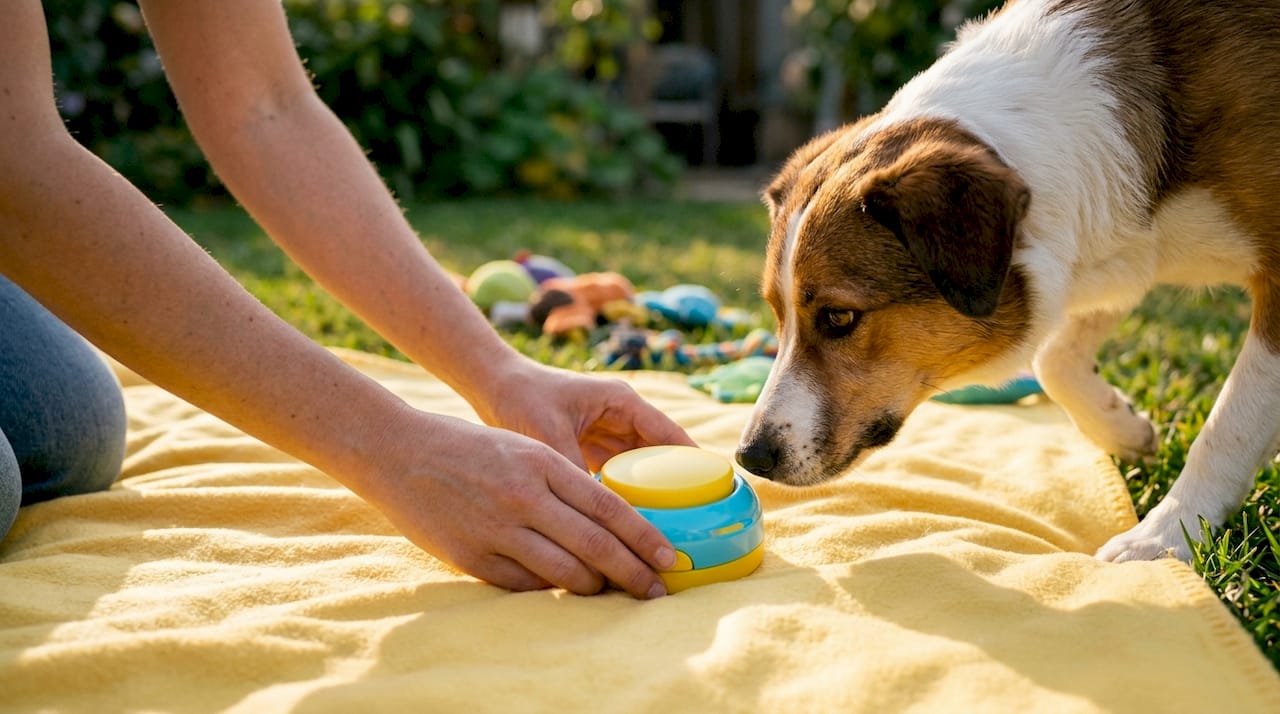
Empowerment strategies include start-button behaviors and multi-modal communication that allow dogs to express needs and consent. These are not tricks. They are structured signals your pet learns to give, and you learn to honor. That exchange is the foundation of the entire approach.
The importance of pet empowerment becomes clear when you consider what happens without it. Pets that have no control over their environment develop learned helplessness, a state where they stop trying to communicate because nothing they do changes the outcome. Learned helplessness is directly linked to chronic stress, destructive behavior, and aggression.
Animal welfare science in 2025 and 2026 has moved firmly toward recognizing pets as sentient beings with preferences. That recognition makes empowerment not just a training style but an ethical standard for responsible ownership.
What does pet empowerment look like in practice?
Empowerment in daily life takes several concrete forms. The most well-documented is cooperative care training, which teaches pets to actively participate in grooming, nail trims, and medical procedures rather than endure them.
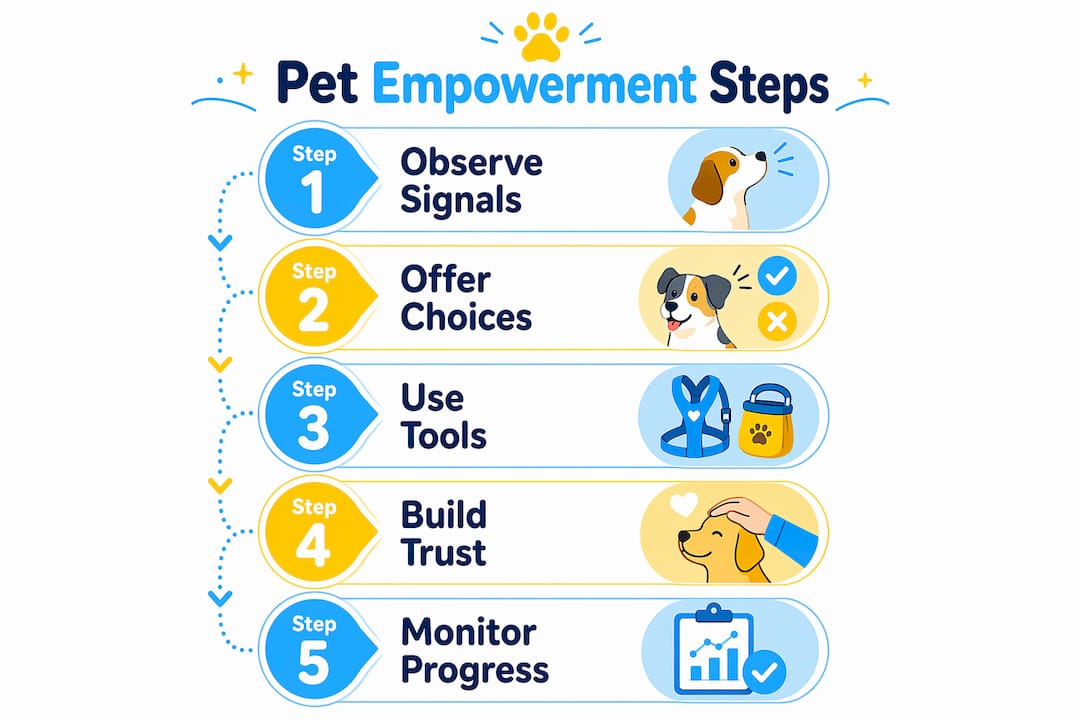
Cooperative care training allows pets to communicate consent through start-button behaviors like chin rests and paw lifts. A chin rest on your hand means “I’m ready, continue.” Lifting the chin away means “I need a break.” When you honor that signal consistently, your pet learns that its communication works. That learning builds trust faster than any reward-based shortcut.
Other practical methods include:
- Choice-based feeding: Offer two food options and observe which your pet gravitates toward. This is low-stakes but teaches your pet that its preferences register.
- Opt-out signals during play: Pause play every 30 seconds and wait for your pet to re-engage. If it walks away, the session ends. This prevents overstimulation and teaches consent.
- Button-based communication systems: Dogs trained with sound buttons can press a button labeled “outside” or “water” to express a specific need. Ipuppee’s alert device applies this same principle, letting dogs signal their owners with a simple button press.
- Sniff walks: Allow your dog to set the pace and direction for at least part of every walk. Sniffing is mentally exhausting in the best way and gives dogs genuine environmental control.
Pro Tip: Start with one empowerment technique at a time. Introducing chin rests during nail trims before you try anything else gives your pet a clear, repeatable signal to learn. Consistency in one area builds the communication foundation for all others.
What are the benefits of empowering pets for their welfare and behavior?
The benefits of pet empowerment show up in measurable behavioral changes, not just in theory. Consent-based handling allows pets to signal overwhelm, which enhances safety and cooperation during stressful procedures. Groomers and veterinarians who use empowerment protocols report fewer bites, less restraint, and shorter appointment times.
The behavioral gains go deeper than reduced reactivity:
- Anxiety reduction: Pets that control the pace of interactions show lower cortisol-linked stress behaviors, including panting, yawning, and lip licking during care routines.
- Increased confidence: Dogs that regularly make choices in training show greater resilience when faced with new environments or unfamiliar people.
- Reversal of learned helplessness: Rescue animals and chronically anxious pets benefit most. Positive reinforcement and choice-based training reduce learned helplessness and improve stress resilience by returning a sense of control to the animal.
- Improved cooperation: Dogs that feel in control recover from stress faster and demonstrate increased resilience across all care contexts.
The transformation is not just about the pet. Owners who apply empowerment techniques report feeling more connected to their animals because they understand what their pet is actually communicating. That shift from guessing to knowing changes the entire relationship dynamic.
Pro Tip: If your pet freezes, turns away, or yawns repeatedly during a care routine, treat those as clear opt-out signals. Stopping and giving your pet a moment to reset is more productive than pushing through. Forcing the interaction teaches your pet that its signals do not work.
How does understanding pet autonomy change the pet-owner relationship?
Understanding pet autonomy requires a fundamental shift in how you see your animal. Recognizing pets as sentient agents with rights reframes empowerment as a moral imperative, not just a training preference. This is the cultural shift that separates modern animal welfare from older ownership models.
The practical expression of this shift is what behaviorists call informed ownership. It means you do not just know your pet’s name and feeding schedule. You know its stress signals, its comfort thresholds, and the specific body language it uses to say yes or no. Subtle avoidance signals are crucial to respecting pet autonomy and preventing defensive behavior. Missing those signals is how well-meaning owners accidentally teach their pets that communication is pointless.
“Acknowledging animals’ agency promotes respect and better welfare by valuing their preferences and participation. The cultural shift to seeing pets as sentient agents rather than property elevates empowerment from training to an ethical standard.”
Psychology Today, “Beyond Pets: Recognizing Animals as Beings With Rights”
The emotional payoff for owners is real. Pets that trust their owners to listen show more affection, less reactivity, and greater willingness to engage in new experiences. That is not a coincidence. It is the direct result of a relationship built on mutual respect rather than compliance. Learning to read your pet’s body language signals is the single most practical skill you can develop as an informed owner.
The ethical dimension matters too. Pet rights and empowerment are increasingly discussed together in animal welfare policy. Treating your pet as a being with preferences is both the right thing to do and the most effective approach to long-term behavioral health.
Practical tips on how to empower your pet every day
Applying empowerment principles does not require a professional trainer. It requires observation, patience, and a willingness to slow down.
- Observe before you act. Spend five minutes watching your pet in a neutral environment before any care routine. Note its posture, ear position, and tail carriage. That baseline tells you when something is off.
- Introduce choice gradually. Start with low-stakes decisions like which toy to play with or which direction to walk first. Building a habit of offering choices makes higher-stakes consent training easier later.
- Use positive reinforcement consistently. Reward the behaviors you want to see more of. Avoid punishment, which suppresses communication and teaches pets to hide their stress signals rather than express them.
- Learn your pet’s specific signals. Every animal has an individual communication style. The sensory communication cues your dog uses may differ from textbook examples. Study your specific animal.
- Build daily routines that include choice. Predictable structure reduces baseline anxiety. Choice within that structure adds empowerment without chaos.
The table below maps common daily situations to specific empowerment techniques:
| Daily situation | Empowerment technique | What to watch for |
|---|---|---|
| Grooming session | Chin rest as start button | Pet lifts chin = pause and reward |
| Veterinary visit | Opt-out signal training | Turning away = stop and reset |
| Feeding time | Two-bowl choice offering | Consistent preference signals taste or health need |
| Walk time | Sniff-led navigation | Pulling toward a spot = let them explore |
| Training session | 30-second re-engagement pauses | Walking away = session ends, no pressure |
Gradual separation training and independence support help pets build confidence and reduce separation anxiety. Systematic desensitization to absence cues, paired with consistency, improves well-being and reduces destructive behaviors over time.
Pro Tip: Keep a simple log for two weeks. Note which situations trigger stress signals and which produce calm engagement. Patterns emerge quickly, and that data tells you exactly where to focus your empowerment efforts first.
Key Takeaways
Pet empowerment is the most direct path to a calmer, more communicative animal because it gives your pet the one thing that reduces stress most reliably: a sense of control over its own experience.
| Point | Details |
|---|---|
| Core definition | Pet empowerment grants animals agency over their environment, care, and daily interactions. |
| Start-button behaviors | Chin rests and paw lifts give pets a structured way to signal consent or opt out. |
| Anxiety reduction | Consent-based handling lowers stress during grooming, training, and veterinary visits. |
| Informed ownership | Reading subtle body language signals is the practical skill that makes empowerment work. |
| Ethical foundation | Recognizing pets as sentient agents makes empowerment a welfare standard, not just a technique. |
Why I think most pet owners are missing the most important part
Most articles on how to empower pets focus on techniques: the chin rest, the choice bowl, the sniff walk. Those tools matter. But the owners I have seen get the best results are not the ones who learned the most techniques. They are the ones who genuinely changed how they see their animal.
The shift is subtle but total. When you stop seeing your dog as a creature to be managed and start seeing it as a being trying to communicate, every interaction changes. You slow down. You watch more. You stop filling silence with commands and start listening for what your pet is already telling you.
The emotional benefits of empowerment-based training are real, and they flow in both directions. Your pet becomes calmer. You become more observant. The relationship stops being transactional and starts being genuinely reciprocal.
The hardest part is not learning the techniques. It is tolerating the discomfort of stopping a grooming session when your dog signals it needs a break, even when you are halfway through. That moment of restraint is where trust is actually built. Every time you honor your pet’s signal, you are teaching it that communication works. That lesson, repeated consistently, is what pet psychological health empowerment actually looks like in practice.
Start with one signal. Honor it every single time. The rest follows.
— Andrew
How Ipuppee supports pet communication and empowerment
Ipuppee was built around a simple idea: pets deserve tools that let them communicate clearly with the people who care for them.
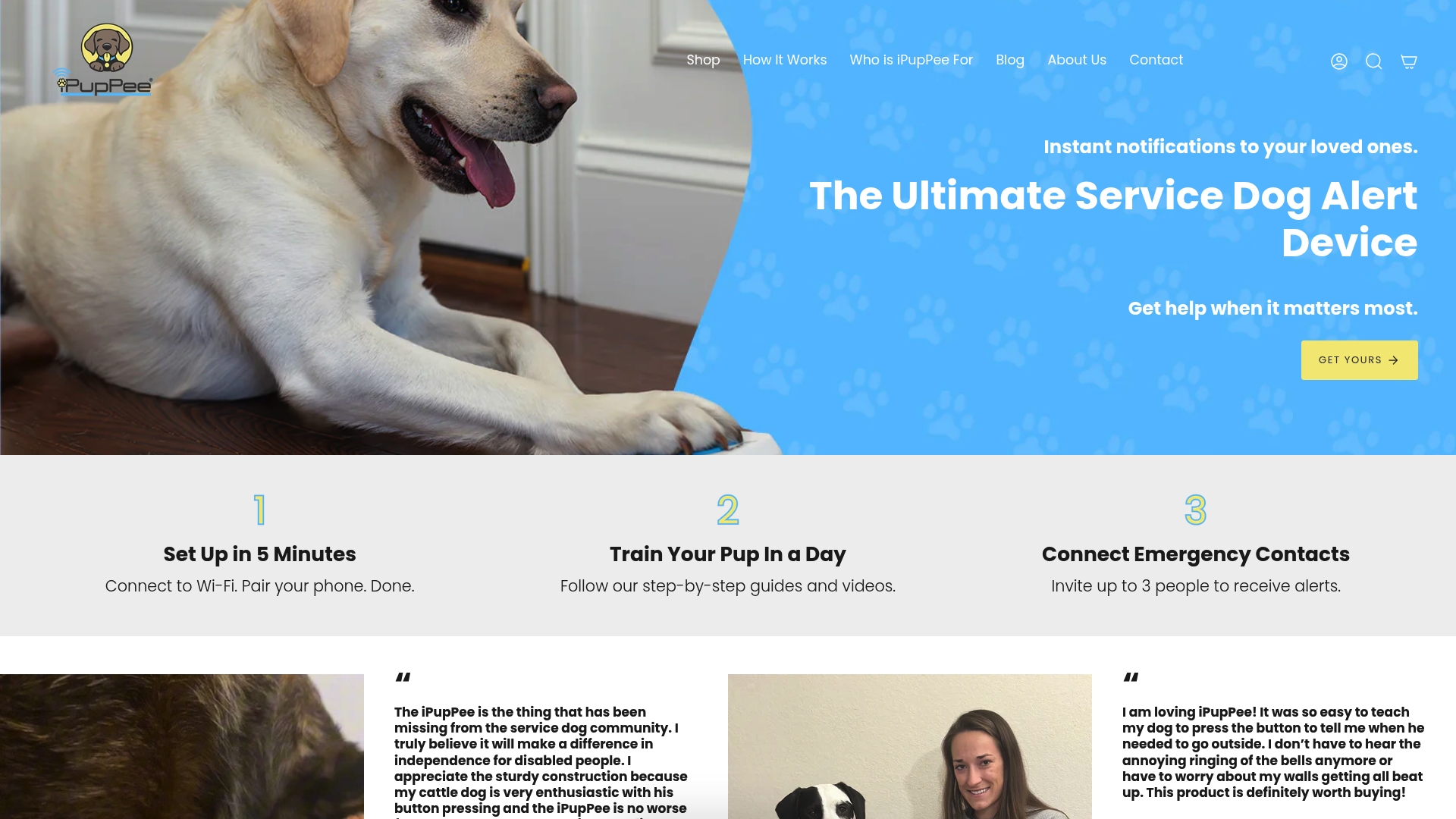
The iPupPee alert device gives dogs a physical button to press when they need attention, whether that is a bathroom break, water, or help. For owners living alone, seniors, or service dog handlers, that signal closes the communication gap that empowerment training opens. Ipuppee also publishes practical guides on pet body language and stress detection to help owners build the observation skills that make empowerment work. Visit ipuppee.com to explore the full range of communication tools and training resources designed for real pet owners with real daily challenges.
FAQ
What is the pet empowerment meaning in simple terms?
Pet empowerment means giving your animal genuine choices and the ability to signal consent or discomfort during care, training, and daily interactions. It treats your pet as a participant in its own life rather than a subject to be managed.
What are the most effective start-button behaviors?
Chin rests and paw lifts are the most widely used start-button behaviors in cooperative care training. The pet places its chin in your hand to signal readiness and lifts it away to signal a need for a break.
How does empowering pets reduce anxiety?
Consent-based handling reduces anxiety by giving pets a reliable way to signal overwhelm. When pets know their signals work, they stop escalating to defensive behaviors like growling or biting.
Can empowerment techniques work for rescue or anxious pets?
Rescue and anxious pets benefit most from empowerment because choice-based training directly reverses learned helplessness. Returning a sense of control to the animal is the most effective way to rebuild confidence and reduce chronic stress.
How do I start empowering my pet if I have no training experience?
Start by observing your pet’s body language for five minutes before any care routine, then introduce one low-stakes choice, such as which toy to engage with. Consistency in honoring your pet’s signals matters far more than technique complexity.