

City sidewalks and crowded parks can introduce stress, distractions, and hidden dangers for both service dog handlers and rescue dog owners. Achieving safe, reliable behavior from your dog matters even more with so many unpredictable variables, from speeding cars to sudden loud noises. By focusing on effective dog training rooted in positive reinforcement and understanding canine body language, you set the stage for clearer communication and greater independence amid the challenges of modern urban life.
Table of Contents
- Dog Training Safety Fundamentals Explained
- Types of Safety Risks in Urban Settings
- Essential Tools and Gear for Safe Training
- Communication Devices and Their Benefits
- Common Mistakes and Risk Prevention Techniques
Key Takeaways
| Point | Details |
|---|---|
| Foundation of Dog Training | Establish a trusting relationship through positive reinforcement and clear communication. |
| Urban Safety Risks | Be aware of environmental hazards like traffic and noise that can affect a dog’s training and behavior. |
| Essential Training Tools | Use appropriate equipment tailored to the training environment to enhance safety and learning. |
| Common Training Mistakes | Avoid repeating commands and inconsistent cues to improve responsiveness and reduce anxiety in dogs. |
Dog Training Safety Fundamentals Explained
Establishing a solid foundation in dog training is crucial for creating a safe, communicative relationship between handlers and their canine companions. Effective dog training goes beyond simple obedience - it builds trust, ensures mutual understanding, and prevents potentially dangerous situations.
At its core, dog training safety involves several critical components supported by scientific research from organizations like the Certification Council for Professional Dog Trainers. These fundamental principles include:
- Positive reinforcement techniques
- Consistent command structures
- Understanding canine body language
- Early socialization strategies
- Recognizing and managing potential stress triggers
Building a strong training framework requires understanding how dogs learn and communicate. Dogs respond best to clear, predictable interactions that help them feel secure while learning expected behaviors. Positive reinforcement methods create a collaborative environment where the dog views training as an engaging, rewarding experience rather than a threatening interaction.
The most successful training approaches focus on creating a partnership built on mutual respect and clear communication. By establishing consistent rules, using gentle correction techniques, and rewarding desired behaviors, handlers can effectively guide their dogs toward safe, reliable performance.
Pro tip: Always begin training sessions when both you and your dog are calm, well-rested, and in a distraction-free environment to maximize learning potential.
Types of Safety Risks in Urban Settings
Urban environments present unique challenges for dog training and safety that require careful navigation and proactive management. Environmental hazards can dramatically impact a dog’s ability to learn and perform safely, making it crucial for handlers to understand and mitigate potential risks.
Research from urban dog safety studies highlights several critical safety risks in city settings:
- Traffic and street-level dangers
- Loud noise and unexpected sound triggers
- Crowded pedestrian areas
- Unpredictable urban stimuli
- Potential aggressive interactions with other animals
Traffic represents one of the most significant threats in urban environments. Dogs can become easily distracted, potentially running into streets or reacting unpredictably to moving vehicles. Noise pollution also creates substantial stress, with constant urban sounds like sirens, construction, and heavy traffic potentially triggering anxiety or aggressive responses.
Psychological stressors are equally important to recognize. Urban dogs experience higher levels of environmental complexity that can overwhelm their sensory processing. Auditory and environmental stressors can create long-term behavioral challenges if not properly managed through systematic desensitization and positive reinforcement techniques.
Pro tip: Create a structured urban training plan that gradually exposes your dog to city environments, starting with short, controlled sessions and progressively increasing complexity and duration.
Essential Tools and Gear for Safe Training
Successful dog training relies heavily on selecting the right equipment that supports both safety and effective learning. Training gear is not just about control, but creating a positive, secure environment that helps dogs develop confidence and reliable behaviors.
Professional dog training resources recommend several essential tools for safe and effective training:
- Properly fitted harnesses and collars
- Durable, adjustable training leashes
- High-value treat pouches
- Comfortable training mats
- Clickers for positive reinforcement
- Protective gear for specialized training
The right harness and leash combination can dramatically improve communication and safety during training sessions. Different environments and training goals require specific equipment configurations, such as shorter control leashes for urban settings or longer leads for recall training in open spaces.
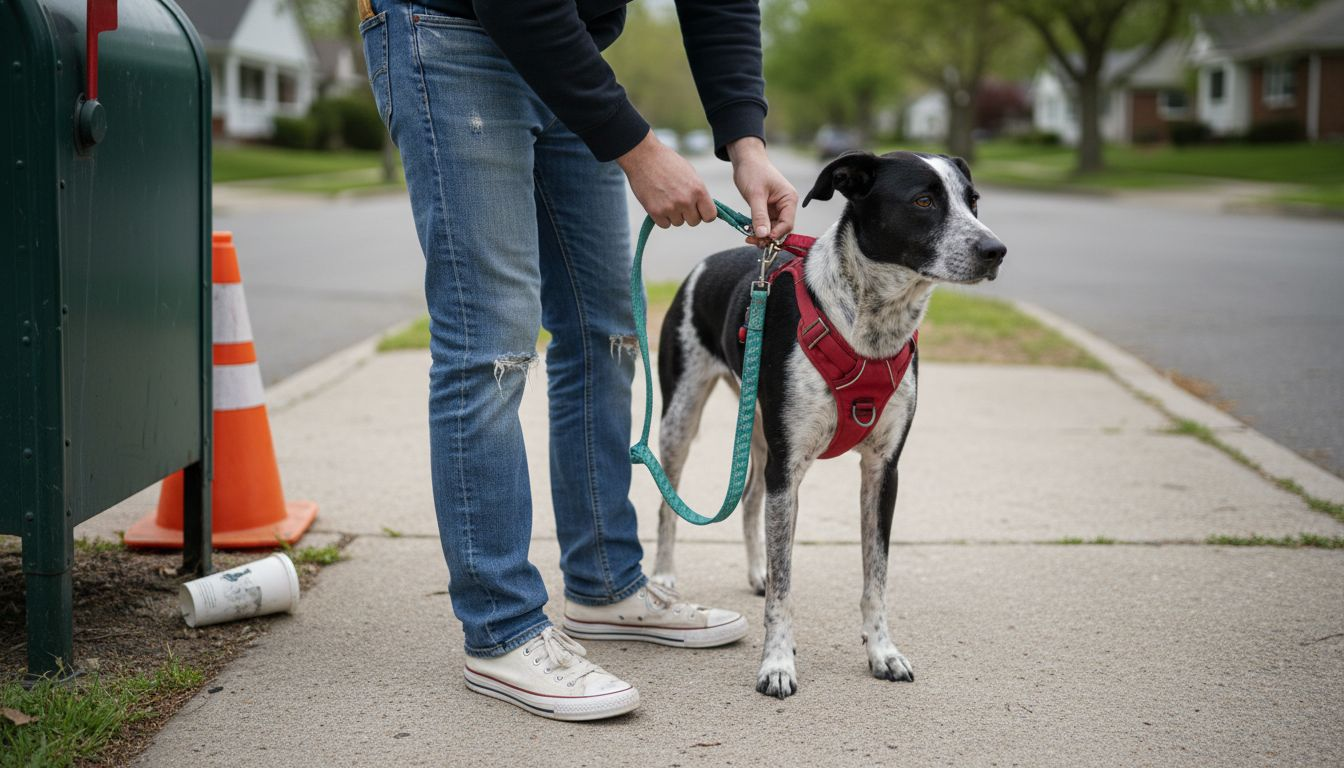
Specialized training environments, particularly for service or working dogs, demand additional safety considerations. Canine training programs emphasize the importance of robust, purpose-built equipment that can withstand intense training scenarios while protecting the dog from potential injuries.
Here’s a concise comparison of dog training safety tools for different environments:
| Training Setting | Recommended Gear | Primary Benefit |
|---|---|---|
| Home/Indoors | Clicker, treat pouch | Focus, minimal distractions |
| Urban environments | Harness, short leash | Control, safety in crowds |
| Parks/open spaces | Long training lead | Recall practice, freedom |
| Specialized/service | Protective, robust gear | Injury prevention, durability |
Pro tip: Invest in high-quality, adjustable training gear and replace equipment regularly to ensure maximum safety and effectiveness during training sessions.
Communication Devices and Their Benefits
Dog communication technology has revolutionized the way handlers interact with and understand their canine companions. Communication devices provide unprecedented opportunities to bridge the language gap between humans and dogs, enhancing safety, independence, and mutual understanding.
Innovative communication methods offer several remarkable advantages:
- Enhanced ability to express needs
- Reduced misunderstandings between dog and handler
- Increased safety through clear communication
- Support for dogs with special needs
- Improved emotional connection
Recordable buttons have emerged as a groundbreaking tool, allowing dogs to communicate complex thoughts by pressing pre-programmed buttons. These devices enable dogs to signal discomfort, request specific actions, or alert handlers to potential problems, dramatically improving their ability to communicate critical information.
Clicker training represents another powerful communication technique. Precise training methods use distinctive sound markers to create clear, consistent communication channels, helping dogs understand exactly which behaviors are desired and reducing confusion during training sessions.
Pro tip: Start with simple, consistent communication devices and gradually expand your dog’s communication vocabulary through patient, systematic training.
Common Mistakes and Risk Prevention Techniques
Dog training requires a strategic approach that minimizes potential risks and maximizes learning potential. Training mistakes can significantly compromise both handler and dog safety, making it crucial to understand and prevent common pitfalls that could lead to behavioral challenges or dangerous situations.
Common training mistakes often include several critical errors:
- Repeating commands multiple times
- Using inconsistent verbal or physical cues
- Failing to establish clear communication patterns
- Punishing dogs instead of redirecting behavior
- Neglecting to understand individual dog personalities
One of the most frequent mistakes is cue nagging, where handlers repeatedly issue commands, causing dogs to become desensitized and ignore instructions. This approach not only reduces training effectiveness but can create dangerous scenarios where critical commands might be overlooked in high-stress situations.
Positive reinforcement techniques provide a safer alternative to punishment-based training. Effective training strategies focus on building trust, understanding canine body language, and creating a collaborative learning environment that reduces anxiety and potential aggressive responses.
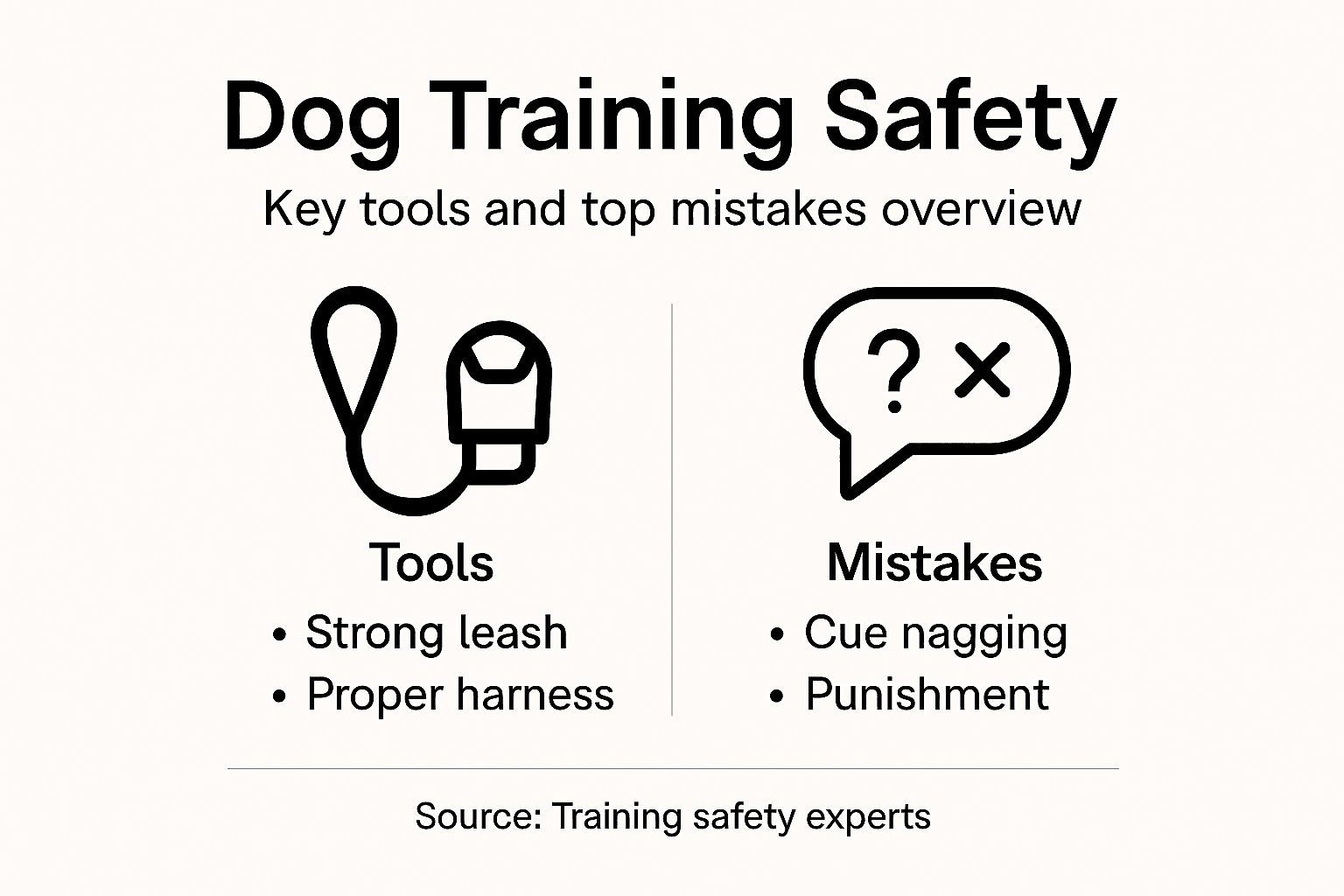
To clarify, here’s how common dog training mistakes impact safety and learning effectiveness:
| Mistake Type | Effect on Dog | Potential Consequence |
|---|---|---|
| Repeating commands | Confusion, desensitization | Slow response, missed cues |
| Inconsistent cues | Uncertainty | Unreliable behavior |
| Punishment instead of reward | Increased anxiety | Aggression, fear |
| Ignoring dog’s personality | Poor engagement | Training resistance |
Pro tip: Practice training in short, consistent sessions and always end on a positive note to maintain your dog’s motivation and trust.
Enhance Your Dog Training Safety and Communication Today
Training your dog for safety and independence requires more than just consistent commands and positive reinforcement. As highlighted in the article, understanding canine communication and managing urban risks are key challenges every responsible handler faces. If you are seeking reliable tools to strengthen your partnership and enhance your dog’s ability to communicate critical needs safely, the iPupPee device offers a trusted solution designed to bridge this gap.

Don’t let missed cues or stress from city life compromise your dog’s safety. With the iPupPee alert system, you create a clearer line of communication that empowers your dog to express needs and signals effectively. Explore detailed training instructions, customer testimonials, and the full offering on the official site and join countless pet owners who have elevated their training success and confidence. Act now to transform your dog’s independence and security with a simple button press—visit iPupPee today to learn more.
Frequently Asked Questions
What are some effective dog training safety techniques?
Effective dog training safety techniques include using positive reinforcement methods, establishing consistent command structures, understanding canine body language, and recognizing stress triggers to create a safe learning environment.
How can urban environments affect dog training and safety?
Urban environments present unique challenges such as traffic dangers, loud noises, crowded spaces, and unpredictable stimuli that can increase stress and affect dogs’ ability to learn and behave reliably.
What essential tools are recommended for safe dog training?
Recommended tools for safe dog training include properly fitted harnesses and collars, durable leashes, high-value treat pouches, clickers for positive reinforcement, and specialized gear for service or working dogs.
What are common mistakes to avoid during dog training?
Common mistakes during dog training include repeating commands excessively, using inconsistent cues, punishing rather than redirecting behavior, and neglecting to understand the individual dog’s personality, all of which can hinder learning and safety.
Recommended
- Independent Dog Behavior – Impact on Communication and Safety – iPupPee
- Safety Training for Puppies: Essential Guide for All Owners 2025 – iPupPee
- Understanding Dog Independence Benefits for Owners – iPupPee
- Master Training Dogs for Safety: A Step-by-Step Guide – iPupPee
- How A Quality Collar Improves Puppy Training
- Dog Training at Home: Achieve Calm, Obedient Companions