

The first days with a new dog in a busy city often feel exciting yet overwhelming, especially when every walk brings encounters with crowds, noise, and unpredictable challenges. Urban living means teaching your dog more than basic manners, guiding them through distractions and communicating clearly to keep everyone safe. Whether your companion is a resilient rescue or a focused service dog, understanding positive reinforcement methods helps you build trust and control from the start, so both you and your dog can thrive in your neighborhood.
Table of Contents
- Defining Dog Training For Beginners
- Core Training Methods And Philosophies
- Using Communication Devices For Dogs
- Safety, Legal, And Urban Considerations
- Common Mistakes And Troubleshooting
Key Takeaways
| Point | Details |
|---|---|
| Effective Dog Training Focuses on Communication | Clear communication and consistent practice are essential for successful dog training, especially in busy environments. |
| Positive Reinforcement is Key | Using reward-based methods leads to better outcomes and a stronger bond between you and your dog. |
| Safety and Legal Considerations are Crucial | Understanding local regulations and environmental hazards helps ensure the safety of both the dog and the community. |
| Common Training Mistakes Can Hinder Progress | Consistency in commands and practices across all family members is vital to avoid confusion and reinforce training. |
Defining Dog Training for Beginners
Dog training is the process of teaching your dog specific skills, behaviors, and responses to commands and cues. Unlike the old assumption that dogs simply “know what they did wrong,” modern training focuses on actively shaping how your dog behaves in response to their environment and your guidance. Whether you’re working with a rescue dog adjusting to city life, a service dog learning critical tasks, or a puppy experiencing their first apartment, the fundamentals remain consistent: clear communication, deliberate practice, and patience.
At its core, dog training involves two interconnected elements. First, there’s teaching specific commands like sit, stay, come, and leash walking, which form the foundation for safety and control. Second, there’s developing your dog’s ability to make good choices independently, even when distractions surround them. In urban environments, this independence matters enormously. Your dog needs to ignore a dropped sandwich on the sidewalk, maintain focus despite sirens and delivery trucks, and respond reliably when you’re navigating crowded parks or busy streets. Training methods have shifted significantly over recent decades. What once relied on punishment and dominance has evolved toward positive reinforcement approaches, which research consistently shows are both more effective and less likely to create anxiety or aggression.
For beginners, foundational training typically covers essential commands and behaviors. A well-trained dog understands recall (coming when called), heeling (walking calmly beside you), and basic impulse control. Beyond obedience, training creates something equally vital: a strong communication bond between you and your dog. When your dog learns to read your signals and respond accordingly, you’re building trust and understanding. This connection becomes especially critical if you’re relying on your dog for mobility assistance, emotional support, or simply navigating the unpredictable nature of urban living. The training process teaches you how to be a clearer communicator while your dog learns what behaviors earn your approval and create positive outcomes in their daily experience.
Pro tip: Start training sessions in quiet, low-distraction environments like your apartment or a small fenced yard, then gradually practice in busier urban spaces once your dog shows consistent understanding of commands.
Core Training Methods and Philosophies
Training approaches fall into distinct categories based on how dogs learn and what motivates them. Positive reinforcement is the foundation of modern training, meaning your dog receives something desirable (treats, praise, play) when they perform the behavior you want. This creates a simple equation in your dog’s mind: do this action, get rewarded. Clicker training, one popular positive reinforcement method, uses a small device that makes a consistent clicking sound to mark the exact moment your dog does something right, followed immediately by a reward. Another approach called model-rival training lets your dog watch another dog (or even you) perform the behavior correctly and get rewarded, which your dog then imitates. These methods work because they build trust and clarity. Your dog understands exactly what earns positive outcomes.
Conversely, punishment-based methods like electronic shock collars and dominance techniques have become increasingly controversial among trainers and behavioral scientists. Beyond ethical concerns, research shows these approaches often create anxiety, suppress behaviors without teaching alternatives, and can actually increase aggression. Dogs trained with punishment learn to avoid the behavior only when they think they’ll be caught, but they don’t understand what you actually want them to do instead. For urban living where your dog encounters constant stimulation, this matters tremendously. Your rescue dog or service dog needs to understand commands clearly, not react from fear. Science-based training practices prioritize humane treatment and validated techniques that respect your dog’s welfare while achieving reliable results.
The shift toward relationship-based training reflects a deeper understanding of how dogs think. Rather than viewing training as a dominance struggle, modern trainers see it as building communication and trust. Your dog learns that you’re predictable, clear, and worth paying attention to. In busy urban environments with delivery trucks, other dogs, and distractions everywhere, this bond becomes your dog’s anchor. A dog trained through positive methods stays connected to you mentally because they genuinely want to cooperate with you, not because they fear consequences. This difference profoundly affects how your dog handles the chaos of city living.
Pro tip: Choose a trainer or training method that aligns with positive reinforcement principles, and watch for consistency between what the trainer teaches you and what they actually practice with your dog.
Here’s a comparison of key dog training methods and their core characteristics:
| Training Method | Core Principle | Best For | Potential Drawbacks |
|---|---|---|---|
| Positive Reinforcement | Rewarding correct behavior | Most dogs, all ages | Requires consistency |
| Clicker Training | Marking behavior with sound | Precise timing, new skills | Needs training device |
| Model-Rival Training | Observational learning | Social or curious dogs | Requires model availability |
| Punishment-Based | Deterring undesired actions | Quick suppression of behavior | Risk of anxiety/aggression |
| Relationship-Based | Communication and trust | Service/therapy, urban dogs | Takes time and patience |
Using Communication Devices for Dogs
Communication devices bridge the gap between what your dog wants to express and what you can understand. Dogs naturally communicate through vocalizations, body language, and scent, but these signals don’t always translate clearly in busy urban environments. Communication devices amplify and clarify your dog’s attempts to reach you. The most basic example is a training clicker, a small mechanical device that makes a distinct sound marking the exact moment your dog performs a desired behavior. Beyond clickers, there are alert buttons that your dog can press to signal needs, collar-mounted devices that respond to voice commands, and specialized tools designed for service dogs to communicate specific alerts or responses.
One classic device worth understanding is the dog whistle, which produces ultrasonic sounds inaudible to human ears but clearly perceptible to dogs. These weren’t invented yesterday. They date back to the 19th century and remain effective because they deliver consistent, distraction-free signals in noisy urban settings. A dog whistle lets you call your dog from across a busy park without shouting over traffic or disturbing neighbors. Modern versions come with adjustable frequencies, so you can tailor the sound to your individual dog’s hearing. The advantage here is profound: you gain a quiet, reliable way to redirect attention or signal commands when your voice alone gets lost in the chaos of the city.
For dogs working as service animals or living with owners who have mobility challenges or hearing loss, specialized communication devices become essential tools. These devices allow dogs to alert handlers to specific situations like incoming calls, door activity, or medical emergencies. Dogs learn that pressing a button or activating a device communicates their message reliably. How dogs alert owners using communication devices shows the real-world application of these tools in daily life. Understanding how to use these devices correctly during training ensures your dog learns what each tool means and when to use it. The key is consistency. Every time your dog uses the device appropriately, they receive immediate, clear feedback that they’ve communicated successfully.
Pro tip: Introduce any communication device slowly and pair it with high-value rewards so your dog associates the device itself with positive outcomes, rather than viewing it as something confusing or frightening.
Here’s a quick guide to common communication devices for urban dog owners:
| Device Type | Primary Use | Urban Benefit |
|---|---|---|
| Clicker | Marking correct actions | Easy to use in busy settings |
| Dog Whistle | Long-distance recall | Works despite city noise |
| Alert Button | Dog signals needs | Ideal for apartments, disabilities |
| Collar-Mounted Tool | Responds to voice commands | Discreet commands in public |
| Service Dog Device | Specialized alerts | Supports owners with disabilities |
Safety, Legal, and Urban Considerations
Training your dog goes beyond behavioral commands. It also means understanding the legal framework and safety requirements that govern dog ownership in urban areas. Most cities have specific ordinances about leash laws, off-leash areas, licensing requirements, and liability. These rules exist to protect both your dog and the public. Before you begin intensive training, check your local municipality’s regulations. Some cities require proof of vaccination, current licensing, and sometimes proof of training completion for certain breeds. Understanding these requirements upfront prevents legal complications and shows responsible ownership. Your dog’s safety depends partly on staying within legal boundaries that keep everyone protected.

Urban environments present unique hazards that go beyond traditional training concerns. Your dog might encounter traffic, toxic substances on sidewalks, aggressive dogs, or people with phobias. Physical safety requires more than obedience. It demands awareness of environmental risks and preparation for emergencies. Safety and legal considerations for canine deployment emphasize that proper training and handler preparedness are fundamental to preventing incidents. If your dog works as a service animal or spends extended time in urban settings, understanding emergency protocols becomes critical. Dogs can be exposed to environmental hazards including extreme temperatures, contaminated water, loud noises causing stress responses, and vehicles. First aid knowledge for dogs, understanding heat exhaustion signs, and knowing what toxic substances look like on city streets all matter.
Liability is another consideration many new dog owners overlook. If your dog injures someone, you may face legal consequences and financial liability, even if your dog is well-trained. Some jurisdictions hold owners strictly liable for dog-related injuries, while others use a “one-bite” rule. Renters insurance or homeowners insurance often covers dog liability, but policies vary significantly. Having clear liability coverage protects both you and your dog. Additionally, if you’re working with a rescue dog or service dog, understanding trauma responses and behavioral triggers prevents situations where fear might cause your dog to react defensively. Training helps manage these responses, but awareness of your dog’s history and temperament is equally important.
The connection between proper training, legal compliance, and safety creates a protective framework. A well-trained dog who responds reliably to commands is less likely to encounter dangerous situations. A legally compliant dog owner avoids court complications and demonstrates responsibility. When these elements align, your dog thrives in urban settings with confidence and security.
Pro tip: Contact your city’s animal control or parks department to request a copy of all local dog ordinances, and ask specifically about training or certification requirements that might reduce liability or grant access to more off-leash areas.
Common Mistakes and Troubleshooting
Most beginning dog trainers encounter setbacks because they repeat predictable errors. The first major mistake is cue nagging, where you repeat a command multiple times instead of waiting for response. You say “sit, sit, sit” and your dog learns to respond only after hearing it three times. This weakens your command’s effectiveness, especially problematic in urban situations where you need immediate obedience. Similarly, poisoning cues happens when a command becomes associated with something unpleasant. If you repeatedly call your dog to come for nail trimming or a bath, the word “come” develops negative associations. Your dog will avoid responding. These mistakes seem small but create lasting damage to your dog’s responsiveness and your ability to communicate reliably when safety matters most.
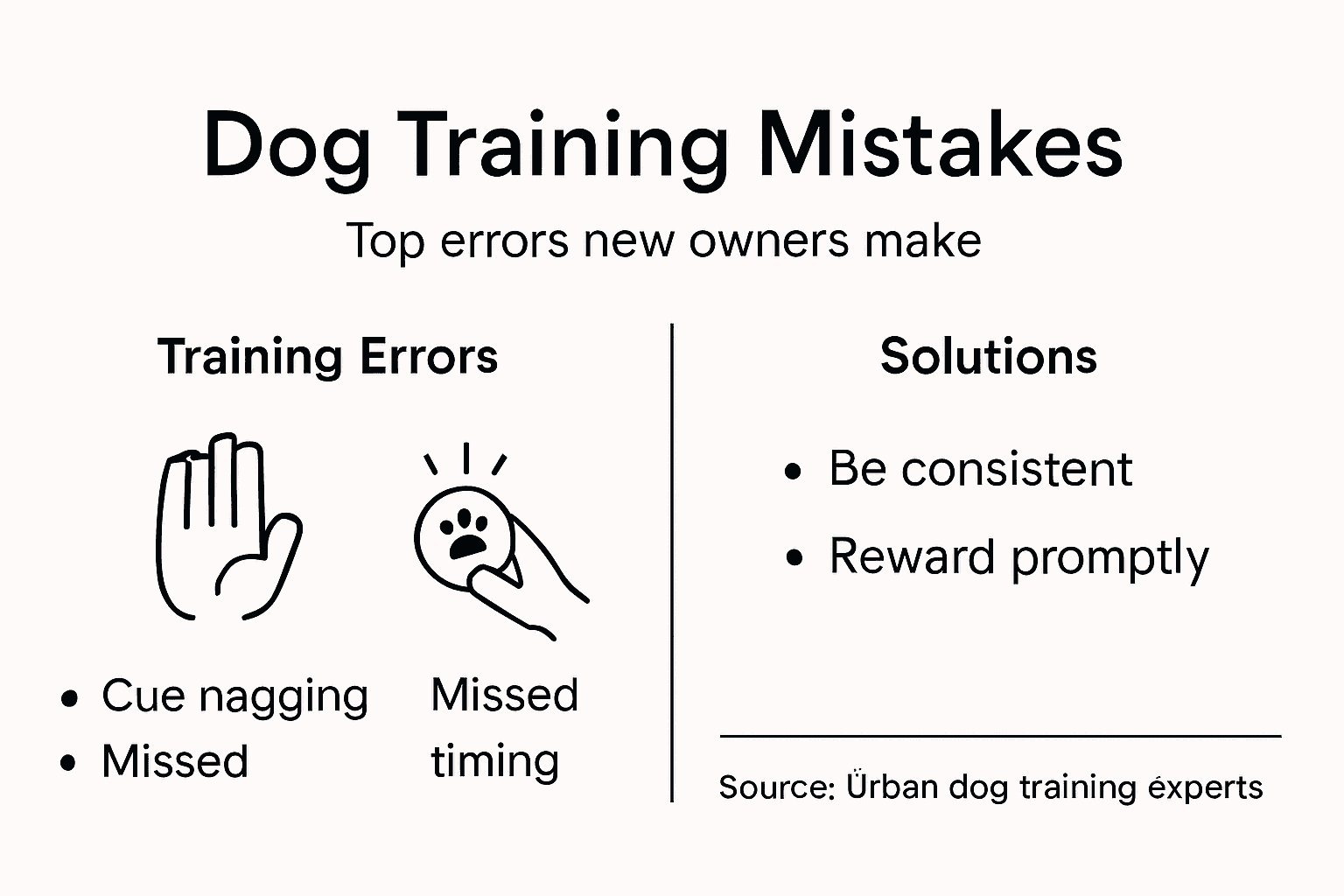
Another critical error is expecting consistency without providing it. Common dog training mistakes to avoid include lack of consistent practice between sessions and failing to maintain the same commands across family members. If you say “off” when your dog jumps on you but your partner says “down,” your dog becomes confused. Consistency means every person in your household uses identical commands, identical reward systems, and identical consequences. It also means practicing regularly. Skipping training for a week and expecting retention is unrealistic. Your dog’s brain works like yours: skills fade without practice. For urban dogs managing constant distractions, inconsistent training makes them less reliable precisely when you need them most.
Troubleshooting requires honest self-assessment. Most often, the issue isn’t your dog’s intelligence but your training approach. Move slower than you think necessary. If your dog struggles with a command in a distracting environment, go back to quiet spaces and rebuild confidence. Understand your individual dog’s motivators. Some dogs work for treats, others for praise, toys, or play. If treats don’t work, your training stalls. Pay attention to environmental distractions too. Teaching “stay” in a park full of other dogs when your dog hasn’t mastered it at home guarantees failure. Proceed incrementally, adding distractions only after your dog demonstrates reliable responses in controlled settings. Recognize setbacks as normal. Progress isn’t linear, and maintaining calm, positive energy during frustrating moments teaches your dog that training remains safe and rewarding even when things get hard.
Pro tip: Record yourself training your dog to identify patterns you might miss in the moment, such as inconsistent hand signals, timing delays between the command and reward, or unintentional repeating of cues.
Enhance Your Urban Dog Training with Clear Communication and Safety Solutions
Training your dog for busy city life requires more than just commands. The challenge is building strong communication and trust in distracting environments while ensuring safety for both you and your dog. This article highlights the importance of positive reinforcement and effective communication devices like clickers and alert buttons to foster independence and security.
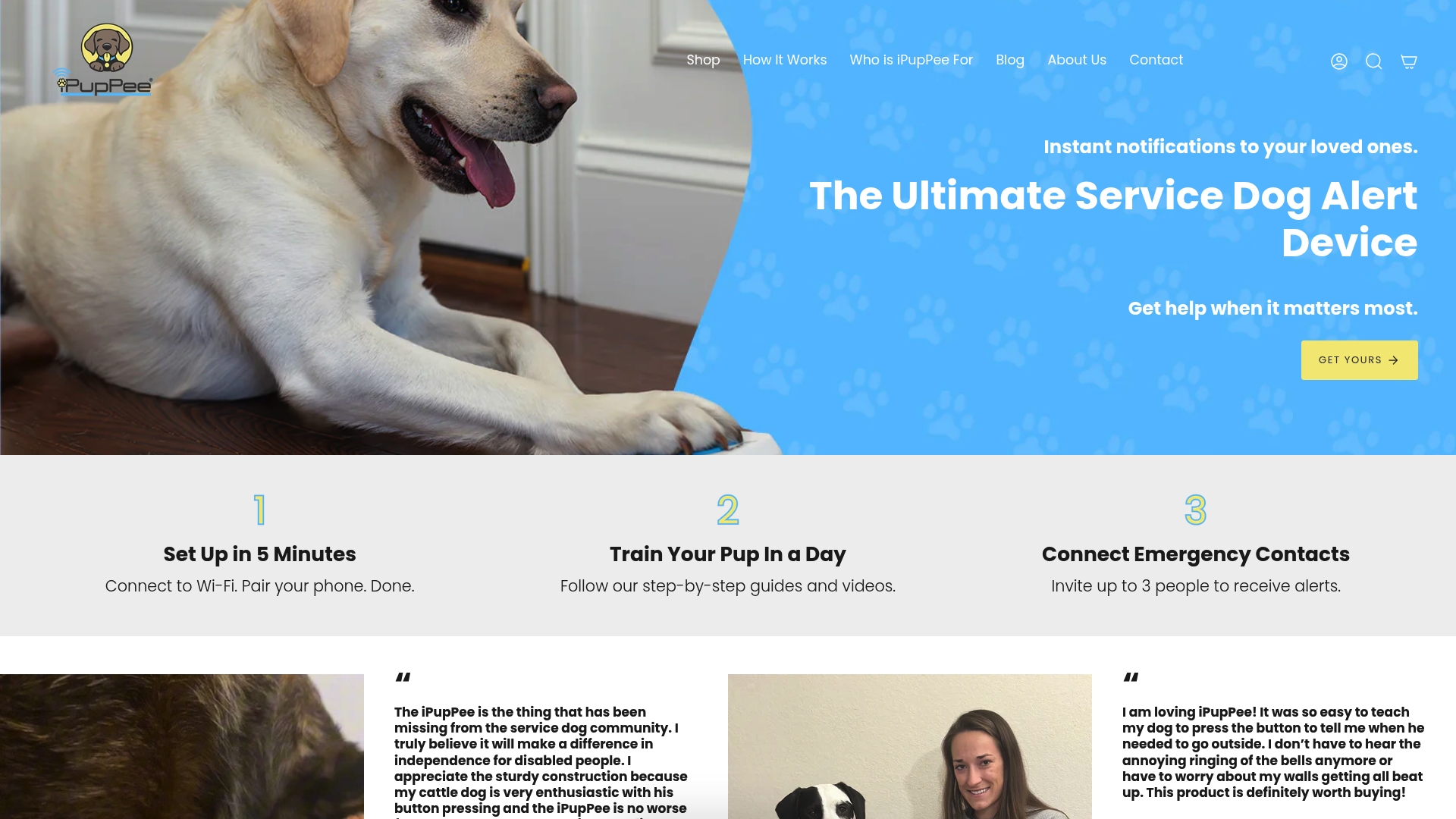
Discover how the innovative iPupPee device can elevate your dog training journey by providing a simple way for your dog to communicate needs through a button press. This solution supports not only new puppy owners or those with rescue dogs but also service dog handlers seeking reliable communication tools. Don’t wait to strengthen your bond and improve safety in your urban home. Visit iPupPee today and equip your dog with the tools to succeed in city living.
Frequently Asked Questions
What is positive reinforcement in dog training?
Positive reinforcement is a training approach that rewards your dog for performing the desired behavior. This creates a clear association in your dog’s mind: perform the action and receive a reward, such as treats, praise, or play.
How can I effectively use a clicker for dog training?
Using a clicker involves marking the exact moment your dog performs the desired behavior with a distinct sound, followed immediately by a reward. This helps convey to your dog what specific action earned the reward, reinforcing positive behavior effectively.
What are some common mistakes to avoid when training my dog?
Common mistakes include cue nagging (repeating commands multiple times), poisoning cues (creating negative associations), and not maintaining consistent commands among family members. Inconsistency can lead to confusion and diminish your dog’s responsiveness.
Why is it important to understand urban dog training considerations?
Urban environments pose unique challenges like traffic, noise, and distractions. Training your dog to navigate these elements safely requires understanding not just behavioral commands but also safety and legal considerations specific to urban living.
Recommended
- Dog Training and Bonding: Build Unbreakable Connections in 2025 – iPupPee
- Urban Dog Safety Tips 2025: Protect Your Pet in the City – iPupPee
- Safety Training for Puppies: Essential Guide for All Owners 2025 – iPupPee
- Top Service Dog Handler Tips for Success and Bonding – iPupPee
- How to Remove Pet Hair From Your Home | Simple Neat Home
- Engagement Photos With Dog Tips And Ideas | Candid Studios | Candid Studios