

TL;DR:
- Accessible pet training adapts communication methods for owners with various disabilities.
- It uses assistive tools like vibrating collars and long-handled dispensers for effective results.
- Proper implementation boosts safety, confidence, and bonding for both owners and dogs.
Most people assume that training a dog well requires two fully functional hands, a loud voice, and the ability to bend down on command. That assumption leaves out millions of pet owners who live with disabilities, seniors, service dog handlers, and anyone who communicates differently. Accessible pet training refers to dog training methods adapted for pet owners with disabilities, enabling them to effectively train their dogs using assistive tools and modified techniques. This guide walks you through every core concept, practical tool, and expert strategy you need to build real safety and independence with your dog.
Table of Contents
- What is accessible pet training?
- Core methods and popular tools for accessible pet training
- Training for owners and pets with unique needs
- Best practices and expert tips for accessible training success
- The real impact of accessible pet training: Why it’s more than just convenience
- Discover more accessible pet care solutions
- Frequently asked questions
Key Takeaways
| Point | Details |
|---|---|
| Accessible training empowers owners | Adapted methods make dog training possible for people with every degree of ability. |
| Tools enhance success | Assistive devices like vibrating collars and remote reward systems help overcome training barriers. |
| Adaptation is key | Custom plans for both disabled owners and pets ensure effective, safe training outcomes. |
| Short, positive sessions work | Frequent, short practice with rewards leads to lasting results and a confident bond. |
What is accessible pet training?
Accessible pet training means adapting how you communicate with and reward your dog based on your physical, sensory, or communication needs. It is not a workaround or a lesser version of traditional training. It is a smarter, more personalized approach that starts with one honest question: what works for you right now?
“Adapted methods and tools empower pet owners with disabilities to train confidently and effectively without compromising results.”
People who benefit from accessible pet training include:
- Service dog handlers who need precise, reliable signals and consistent responses from their dog
- Pet owners with mobility limitations who cannot physically demonstrate commands or hold standard equipment
- Deaf or hard-of-hearing owners who rely on visual cues instead of verbal commands
- Owners with cognitive or communication differences who benefit from simplified, repetitive training routines
- Seniors who want a calm, low-strain relationship with their dog without sacrificing safety
Why does this matter? Because when training breaks down, the consequences are not just frustrating. They can be genuinely dangerous. A dog that does not respond to a stop command near traffic, or one that jumps on a wheelchair user, creates real safety risks. Accessible training builds the communication bridge that protects both of you.
The core principles behind every accessible training approach are inclusivity, positive reinforcement, and adaptability. You do not punish what the dog cannot understand. You reward what the dog does right, clearly and immediately. And you adjust the method to fit the situation, not the other way around. If you want to see how other dog training challenges solutions look in practice, real-world examples show just how creative and effective these adaptations can be. Understanding how dog communication for disabilities actually works will also shift how you think about every interaction with your pet.
Core methods and popular tools for accessible pet training
Knowing the right tools and techniques is where accessible training gets practical. The foundation stays the same for every dog owner: positive reinforcement, clear cues, and consistency. What changes is how you deliver those cues.
Key methodologies include positive reinforcement, voice commands, hand signals, vibrating collars, long-handled treat dispensers, remote reward systems, and designated training spots. Each of these solves a specific problem for a specific type of owner.
Here is a comparison of common tools matched to training needs:
| Tool | Best for | Key benefit |
|---|---|---|
| Vibrating collar | Deaf dogs or low-voice owners | Delivers tactile cues without sound |
| Long-handled treat dispenser | Limited mobility or reach | Rewards dog without bending or reaching |
| Remote reward system | Distance training, mobility issues | Marks and rewards from across the room |
| Hand signal cards | Non-verbal owners | Consistent visual cues dog can learn |
| Clicker with wrist strap | Limited hand grip | Frees up fingers, keeps tool accessible |
Here is a simple numbered approach to introducing tools without overwhelming yourself or your dog:
- Choose one tool that addresses your single biggest challenge first
- Pair it with a high-value reward your dog genuinely gets excited about
- Practice one cue for three to five minutes per session, twice a day
- Add a second tool or cue only after the first feels natural and reliable
If you are exploring hand signals specifically, a detailed hand signal training guide covers how to introduce and sequence them effectively. For service dog owners who need reliable, life-critical signals, service dog signal training goes deeper into what works under real conditions. You can also review a broader set of dog disability aids to find what fits your specific situation.
Pro Tip: Start with just one cue, such as “sit,” and one tool. Mastering one thing completely will always produce better results than partially learning five things at once.
Training for owners and pets with unique needs
Some situations require an extra layer of customization. Whether you are an owner with significant physical limitations or you are training a dog with its own sensory impairment, the principles stay consistent. Assess what is actually possible, build a safe environment, and use alternative cues that make sense given the dog’s abilities.
Training sensory-impaired pets requires assessing their remaining abilities, creating a safe and predictable environment, and building customized plans with alternative cues like vibrations or scents. A deaf dog, for example, can learn a full vocabulary of hand signals or respond to a vibrating collar instead of a verbal marker. A visually impaired dog often leans heavily on scent and touch, so scented treat trails or gentle physical contact become the primary language.
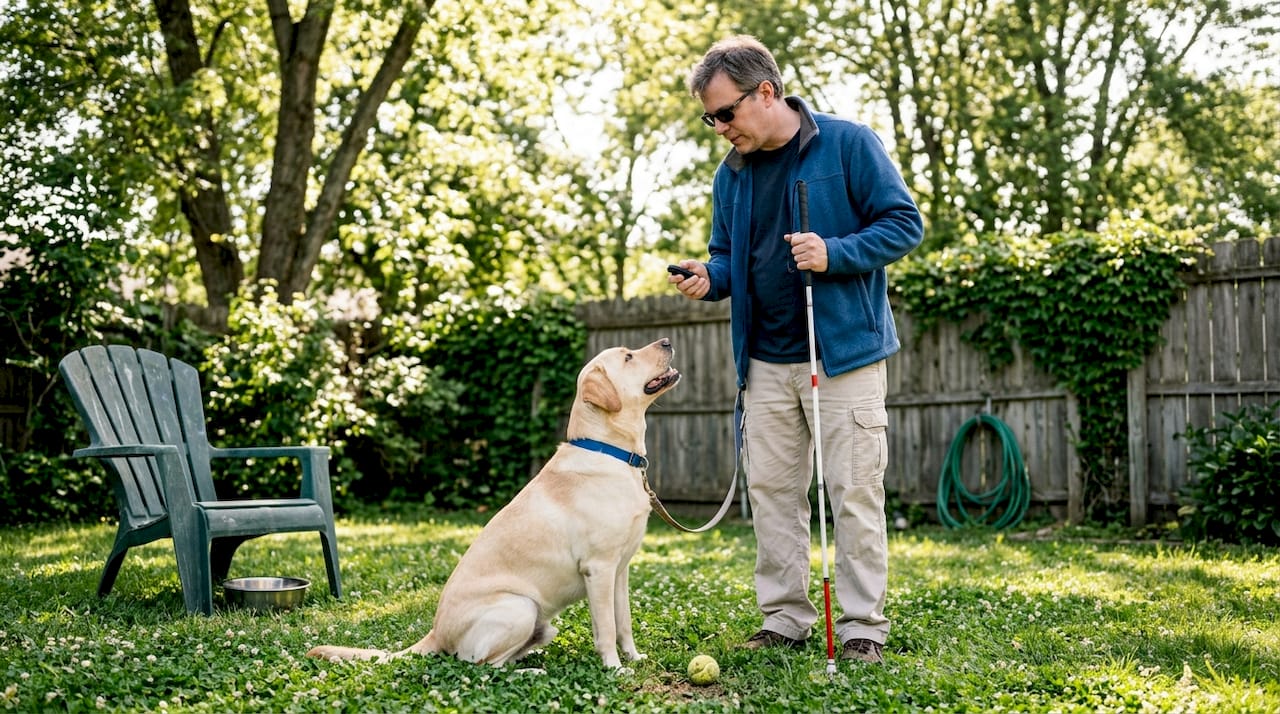
Here is how common challenges map to practical solutions:
| Challenge | Adaptive solution |
|---|---|
| Owner cannot bend or kneel | Long-handled treat dispenser, training from a seated position |
| Owner has limited hand strength | Wrist-strap clicker, voice-activated devices |
| Deaf dog | Hand signals, vibrating collar, light-based cues |
| Visually impaired dog | Scent markers, tactile cues, audio reward systems |
| Dog with anxiety | Short sessions, consistent environment, calm reward delivery |
For owners managing physical barriers, a few additional strategies make a real difference:
- Use your environment. Furniture, walls, and ramps can help position your dog without requiring you to move extensively.
- Leverage repetition. Dogs with sensory impairments thrive on predictable routines more than most, so consistency becomes your most powerful tool.
- Record sessions. Short video clips let you review what worked without relying on memory alone.
- Work with your vet first. Especially for dogs with neurological or physical conditions, a veterinary check confirms what the dog can safely do before training begins.
For more guidance on puppy training for disabilities, starting early with adaptive methods saves a significant amount of retraining later. And if you are looking for broader dog care for disabled owners, combining training with daily care routines creates the strongest foundation.
Best practices and expert tips for accessible training success
Having the right tools gets you started. Building the right habits keeps you succeeding long-term. The most common mistake in accessible pet training is not choosing the wrong tool. It is inconsistency, usually caused by sessions that run too long or become too frustrating for both owner and dog.
Short sessions, high-value rewards, and seeking professional help when needed enhance independence for disabled owners by reducing physical and emotional demands on every session.
“A three-minute session done daily beats a twenty-minute session done once a week. Every time.”
Here are four proven steps for building accessible training success that actually lasts:
- Set a consistent schedule. Same time, same place, same cue order. Predictability accelerates learning for both of you.
- Match the reward to the moment. Use your dog’s highest-value reward for new or difficult behaviors, and lower-value treats for already-mastered cues.
- Document your progress. A simple notebook or phone note tracking what worked removes guesswork from future sessions.
- Know when to ask for help. A certified professional dog trainer with experience in accessibility needs is not a last resort. They are a time-saving resource.
For practical, situation-specific strategies, tips for disabled owners covers how to manage daily routines alongside training without burning out. For innovation-driven solutions that extend into broader daily care, pet care for disability shows how new tools are reshaping what is possible.
Pro Tip: Celebrate every small win out loud. Tell your dog it did well, and give yourself credit too. Confidence builds on itself, and that momentum matters more than any single training session.
Avoid over-relying on any single device. If your dog only responds when the vibrating collar is on, the tool has become a crutch rather than a bridge. The goal is always to fade the tool gradually so the dog responds to the underlying cue, not just the device.
The real impact of accessible pet training: Why it’s more than just convenience
Here is what most articles miss: accessible pet training is not just about managing a dog. It is a form of self-advocacy. When you adapt a training method to fit your life, you are telling yourself and your dog that your needs are valid and your relationship matters.
The ripple effect goes further than obedience. Owners who train successfully with adaptive tools report higher confidence, reduced anxiety, stronger daily routines, and a deeper bond with their dog. Safety improves. Social participation increases. Many report feeling genuinely less isolated. The dog aids and independence connection is real and measurable in everyday life, not just in therapy settings.
The persistent misconception that accessible tools are somehow less effective or only necessary for the most severe disabilities is simply wrong. A long-handled treat dispenser is a better tool for any owner who wants to reward precisely from a standing position. A vibrating collar is a clearer signal for any dog, not just a deaf one. These tools raise the standard for everyone.
Discover more accessible pet care solutions
If you have been putting off training because it felt too complicated or inaccessible, this is the moment to change that. The tools exist. The methods are proven. The only step left is finding the right starting point for your specific situation.
At iPupPee, we have built a platform specifically for pet owners who need communication and safety solutions that work in real life, not just ideal conditions. From adaptive training guides to devices designed around independence, we are here to support your journey. Explore our accessible training solutions and discover tools that genuinely fit the way you and your dog communicate.
Frequently asked questions
Who benefits most from accessible pet training?
Accessible pet training is ideal for owners with disabilities, service dog handlers, seniors, and anyone needing adaptable methods for clearer, safer dog communication.
What types of tools are available for accessible pet training?
Available tools include vibrating collars, long-handled treat dispensers, training whistles, and remote reward systems, each designed to support different physical or sensory needs.
How can accessible pet training help a dog with disabilities?
Training plans for sensory-impaired dogs use alternative cues like vibrations or scent markers to replace standard verbal or visual commands, making learning fully achievable.
Are accessible pet training methods effective for regular pet owners?
Absolutely. Many accessible techniques, such as hand signals and remote reward systems, improve communication and reliability for all dog owners, regardless of disability status.