

TL;DR:
- Small, targeted home adjustments and routines significantly improve senior dogs’ comfort and safety.
- Regular veterinary visits and proactive care are essential for detecting health issues early.
- Focusing on your dog’s current needs and simplifying routines enhances both pet and owner well-being.
Your dog has been your loyal companion through countless mornings, walks, and quiet evenings. But as both of you grow older, the daily rhythm of care can shift in ways that feel overwhelming. Mobility changes, new safety concerns, and evolving routines can make even the most devoted senior dog owner second-guess their approach. The good news is that small, targeted adjustments make a real difference. This guide walks you through practical, evidence-based steps to keep your aging dog comfortable, safe, and happy while fitting realistically into your own lifestyle.
Table of Contents
- Understand your dog’s changing needs
- Prepare your home for safety and comfort
- Establish healthy routines for aging dogs
- Create a supportive, low-stress environment
- Our perspective: Why every small care adjustment matters more for senior dog owners
- Discover more ways to support your senior dog
- Frequently asked questions
Key Takeaways
| Point | Details |
|---|---|
| Prioritize regular vet care | Senior dogs need twice-yearly veterinary checkups with bloodwork to catch problems early. |
| Adapt your home intelligently | Non-slip surfaces, ramps, and supportive bedding keep your aging dog safe and comfortable. |
| Adjust routines thoughtfully | Feed, walk, and play on a predictable schedule adapted to your dog’s abilities and your own. |
| Lower stress for both | Quiet, draft-free spaces and stable routines reduce anxiety and boost your senior dog’s daily comfort. |
Understand your dog’s changing needs
Aging dogs don’t announce their needs with a memo. Instead, you’ll notice gradual shifts that are easy to dismiss as “just getting older.” Catching these changes early is one of the most powerful things you can do for your dog’s quality of life.
Common signs of aging in dogs include:
- Reduced mobility or stiffness, especially after rest
- Changes in appetite, either eating less or becoming pickier
- Weight gain or loss without an obvious cause
- Behavioral shifts like increased anxiety, confusion, or withdrawal
- Cloudy eyes or hearing loss, which can affect responsiveness
- More frequent urination, which may signal kidney or bladder issues
Not every dog ages the same way. A 10-year-old Chihuahua may still sprint around the yard, while a 7-year-old Great Dane may already show significant joint stiffness. Breed, weight, and prior health history all shape how aging unfolds. This is why cookie-cutter advice often falls short.
One critical point many owners overlook: mobility decline is not always just arthritis. Sudden lameness, dragging of limbs, or reluctance to climb stairs can signal neurological issues, spinal problems, or even tumors. If the change is sudden rather than gradual, call your vet the same day.
Senior dogs should have twice-yearly veterinary visits with senior panel bloodwork to detect issues early, catching kidney disease, thyroid problems, and diabetes before symptoms become severe. These visits are not optional extras. They are your best early-warning system.
Nutrition matters just as much as vet care. Your dog’s caloric needs, protein requirements, and digestive capacity all shift with age. A good senior dog health guide can help you understand what to watch for and when to ask your vet about dietary changes.
| Age range | Typical changes | Vet visit frequency |
|---|---|---|
| 7 to 9 years | Early joint stiffness, mild weight shifts | Twice yearly |
| 10 to 12 years | Reduced stamina, dental issues, vision changes | Twice yearly or more |
| 13+ years | Significant mobility limits, cognitive changes | Every 3 to 4 months |
Pro Tip: Keep a simple weekly log of your dog’s appetite, energy level, and bathroom habits. Even a few notes on your phone can help your vet spot patterns you might otherwise miss.
For a deeper look at what to prioritize, the essential senior dog care tips on our blog break down the most impactful actions by life stage.
Prepare your home for safety and comfort
Once you recognize your dog’s changing needs, the next step is making your home safer and more comfortable. You don’t need a full renovation. Targeted changes in the right spots do most of the heavy lifting.
Start by walking through your home at your dog’s eye level, literally. Get low and look for clutter on the floor, slippery tile or hardwood, sharp furniture corners at nose height, and any stairs your dog must navigate daily. These are your priority zones.
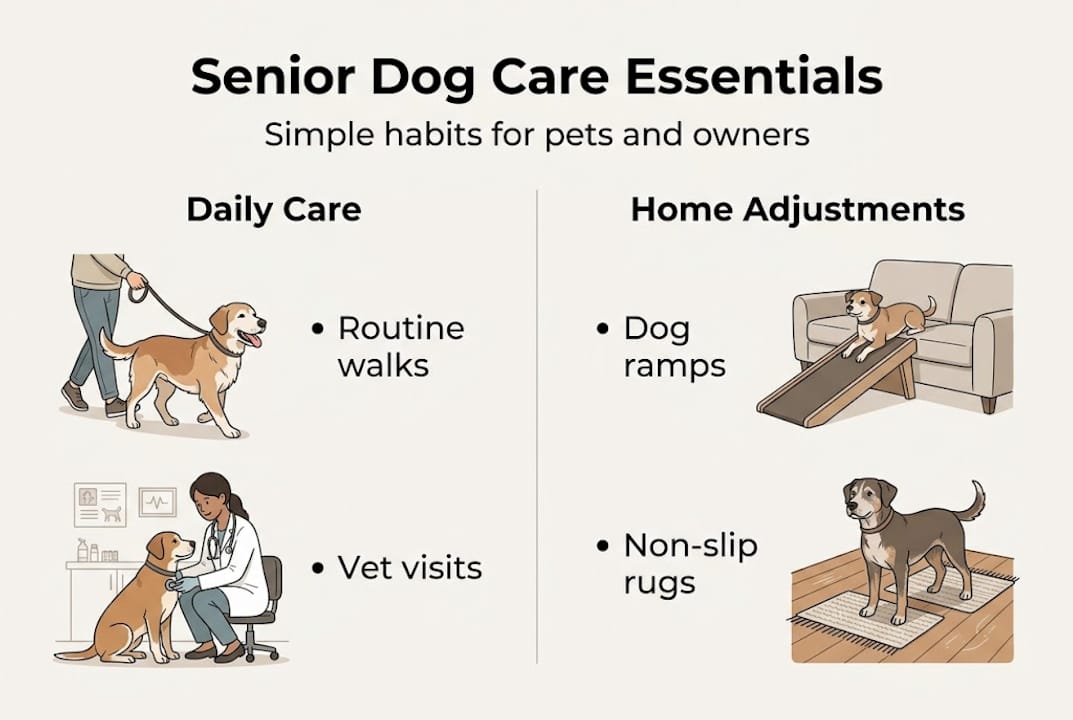
Traction, non-slip surfaces, ramps, and supportive bedding help reduce risks and boost comfort for mobility-limited pets. A simple rubber-backed runner along a hallway can prevent a painful slip that sets your dog back weeks.
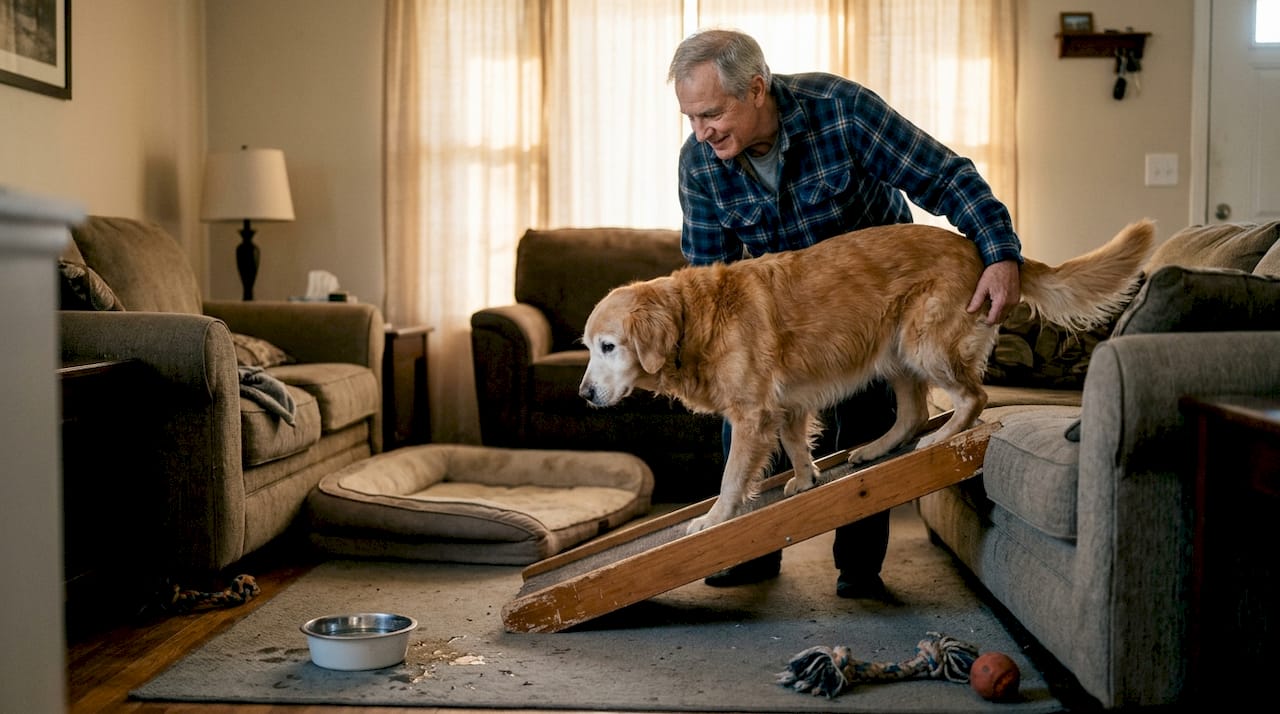
Here’s a comparison of common mobility aids and when each one helps most:
| Mobility aid | Best for | When to introduce |
|---|---|---|
| Non-slip rugs or runners | Slippery floors | As soon as stiffness appears |
| Pet ramp or steps | Couch, bed, or car access | When jumping causes hesitation |
| Orthopedic dog bed | Joint pain and pressure relief | Any senior dog, especially large breeds |
| Assistive gear for mobility | Dogs with severe mobility limits | After vet assessment |
| Night lights | Nighttime navigation, vision loss | When dog seems disoriented at night |
Here’s a simple order to tackle home changes:
- Lay non-slip rugs in hallways, near food bowls, and at entry points
- Add a ramp or pet steps to the furniture your dog uses most
- Replace a flat dog bed with an orthopedic or memory foam option
- Install a night light near your dog’s sleeping area
- Remove clutter from walking paths your dog uses daily
Pro Tip: Focus on high-traffic areas first. The hallway, the spot near the food bowl, and the path to the back door will give you the biggest safety return for your effort.
A safety reminder: Sudden changes in how your dog moves, like a new limp or reluctance to stand, are not just comfort issues. They can signal serious problems that need prompt veterinary attention. Don’t wait to see if it improves on its own.
For more targeted help, our guides on arthritis relief and support and dog-friendly senior living tips walk through specific solutions for common challenges.
Establish healthy routines for aging dogs
With your home set up, daily routines are the foundation for maintaining your dog’s wellness. Aging dogs thrive on predictability. When mealtimes, walks, and rest periods happen at consistent times, your dog’s body and mind adjust more easily to the slower pace of senior life.
Daily routines and gentle activity, paired with predictable environments, can boost senior dogs’ wellbeing significantly. This isn’t just about physical health. Routine reduces anxiety and helps dogs with early cognitive decline feel more secure.
Here’s what a realistic daily routine might look like for a senior dog:
- Morning: Short 10 to 15 minute walk at a gentle pace, then breakfast
- Midday: A brief sniff-and-explore session in the yard or a quiet indoor play session
- Afternoon: Rest time with access to fresh water and a comfortable resting spot
- Evening: Another short walk, dinner, and calm wind-down time
When it comes to feeding senior dogs, the timing and portion size matter as much as the food itself. Splitting meals into two smaller servings helps digestion and prevents bloating, which is a real risk for larger breeds.
Here’s a simple daily monitoring checklist to help you stay on top of changes:
- Did your dog finish their meal?
- Did they drink a normal amount of water?
- How was their energy on the walk? Better, worse, or the same?
- Any limping, stumbling, or unusual posture?
- Normal bathroom habits, or any changes?
Pro Tip: Set a phone alarm or use a pill organizer to track medications and feeding times. Consistency matters more than perfection, and a simple reminder system removes the mental load from your day.
Not all senior dog food is better food. Some formulas marketed for seniors are simply lower in calories, which can actually cause muscle loss in dogs who need protein to maintain strength. Always get your vet’s input before switching formulas. Our senior pet owner tips and training tips for seniors offer more guidance on adapting your approach as your dog’s needs evolve.
Create a supportive, low-stress environment
Healthy habits go hand-in-hand with creating the right environment for calm, restful days. Stress in older dogs is often invisible until it becomes a problem. Panting without heat, pacing, hiding, or sudden clinginess are all signs your dog may be overwhelmed.
Common stress triggers for senior dogs include:
- Loud noises like TV at high volume, construction, or thunderstorms
- Unfamiliar visitors or changes in household members
- Moving furniture or rearranging familiar spaces
- Inconsistent schedules that disrupt sleep and meal timing
- Loss of a companion animal or human family member
A quiet, draft-free resting spot with supportive bedding, stable routines, and low-stress environments helps older dogs function better day to day. This means designating one consistent area in your home as your dog’s safe zone, away from foot traffic and noise.
Practical steps to lower your dog’s daily stress:
- Place their bed in a corner or against a wall so they feel sheltered
- Use a white noise machine or soft music during loud events
- Avoid rearranging furniture your dog navigates by memory
- Introduce any new people or pets gradually and calmly
- Maintain the same sleep and wake schedule seven days a week
The ripple effect here is real. A calmer dog means fewer nighttime disruptions for you, less anxious behavior to manage, and a more peaceful shared home. Research on companion dog benefits shows that the emotional bond between seniors and their dogs is a two-way street. When your dog feels secure, you feel it too.
For seniors who live alone or have limited social contact, staying socially active is also part of the picture. A calm, well-cared-for dog makes it easier to get out, connect with neighbors, and maintain your own wellbeing.
Our perspective: Why every small care adjustment matters more for senior dog owners
Most advice about senior dog care reads like a checklist written for someone with unlimited time and energy. It misses the real challenge: you and your dog are aging together, and what works for a 50-year-old owner with a 7-year-old dog may not work for a 75-year-old owner with a 12-year-old dog.
The truth is, tiny adjustments carry outsized weight. One less throw rug that you trip over. A ramp that means your dog stops straining to get on the couch. A slightly shorter walk that you both actually enjoy instead of dreading. These are not compromises. They are smart adaptations.
We’ve seen that seniors who stop measuring success by old standards, like how far they used to walk or what their dog used to eat, and start measuring by today’s comfort and connection, report feeling far more confident as caregivers. There is no universal solution. What matters is what works for your daily life and your dog’s current body.
Celebrate every win. A good appetite day. A pain-free afternoon nap. A tail wag at the door. Explore more on pet wellness and owner health to see how these small moments add up to something significant.
Discover more ways to support your senior dog
For those eager to go further, the journey doesn’t stop here. At iPupPee, we’ve built a library of resources specifically for seniors navigating the rewarding and sometimes challenging experience of caring for an aging dog.

From communication tools that help your dog signal their needs to guides on safety, nutrition, and daily routines, iPupPee senior dog care resources are designed with your real-life constraints in mind. Whether you’re just noticing the first signs of aging in your dog or you’re deep into managing complex needs, you’ll find practical next steps that fit your pace. Visit our blog for more senior dog tips and keep building on what you’ve started today.
Frequently asked questions
How often should a senior dog see the vet?
Senior dogs benefit from twice-yearly vet visits and regular bloodwork to catch health changes before they become serious problems.
What is the most important home adjustment for an older dog?
Orthopedic bedding and floor traction minimize falls and boost comfort, making them the highest-impact changes you can make quickly.
Should all senior dogs switch to special ‘senior’ dog food?
Not always. Senior dog diets should be approved by a vet, not chosen based on age alone, since nutritional needs vary widely between individual dogs.
How can I make my older dog’s days less stressful?
Predictable routines and quiet spaces lower stress for older dogs. Keep their environment consistent and minimize sudden changes to their schedule or surroundings.
What early signs of health decline should I watch for?
Subtle changes in mobility, eating, and behavior often mark early health problems, so track these weekly and share any shifts with your vet promptly.
Recommended
- 7 Essential Senior Dog Care Tips for Health and Happiness – iPupPee
- 7 Essential Senior Pet Owner Tips for Safer, Happier Dogs – iPupPee
- Senior pet health guide 2026: care tips for elderly dogs – iPupPee
- Senior Pet Companionship: Enhancing Life for Aging Dogs – iPupPee
- Best ways to stay socially active after 60 - Social Souls