

TL;DR:
- Dogs can learn to press buttons to communicate needs like outside or food.
- Button use may reflect meaningful intent, showing structured communication attempts.
- Training provides safety, independence, and daily routine improvements for service dogs, seniors, and disabled handlers.
Some dogs now press a button to ask for a walk, request food, or signal they need attention, and that single behavior is quietly reshaping what we thought was possible between dogs and humans. Button communication devices record a word or short phrase that plays back when your dog presses the pad, giving your dog a reliable, repeatable way to express a need. Dogs can associate button presses with meaningful concepts like “outside” or “food,” and that simple fact opens a world of practical possibilities, especially for service dog handlers, seniors living alone, and people with disabilities who rely on their dogs for safety every day.
Table of Contents
- How button devices bridge the gap in dog communication
- What evidence shows about how dogs use buttons
- Why button training matters for service dogs, seniors, and people with disabilities
- What to expect: Limitations, debates, and realistic results
- A realistic perspective: Why button training is worth it (even if it’s imperfect)
- Discover more solutions for training and communication
- Frequently asked questions
Key Takeaways
| Point | Details |
|---|---|
| Real communication tool | Button devices enable many dogs to share needs and intentions more clearly with their owners. |
| Backed by research | Studies show dogs form meaningful button combinations, supporting their use for intentional communication. |
| Enhances safety | Service dogs, disabled individuals, and seniors benefit from button devices for urgent alerts and home independence. |
| Set realistic expectations | Button training doesn’t create full language but fosters important, practical improvements. |
How button devices bridge the gap in dog communication
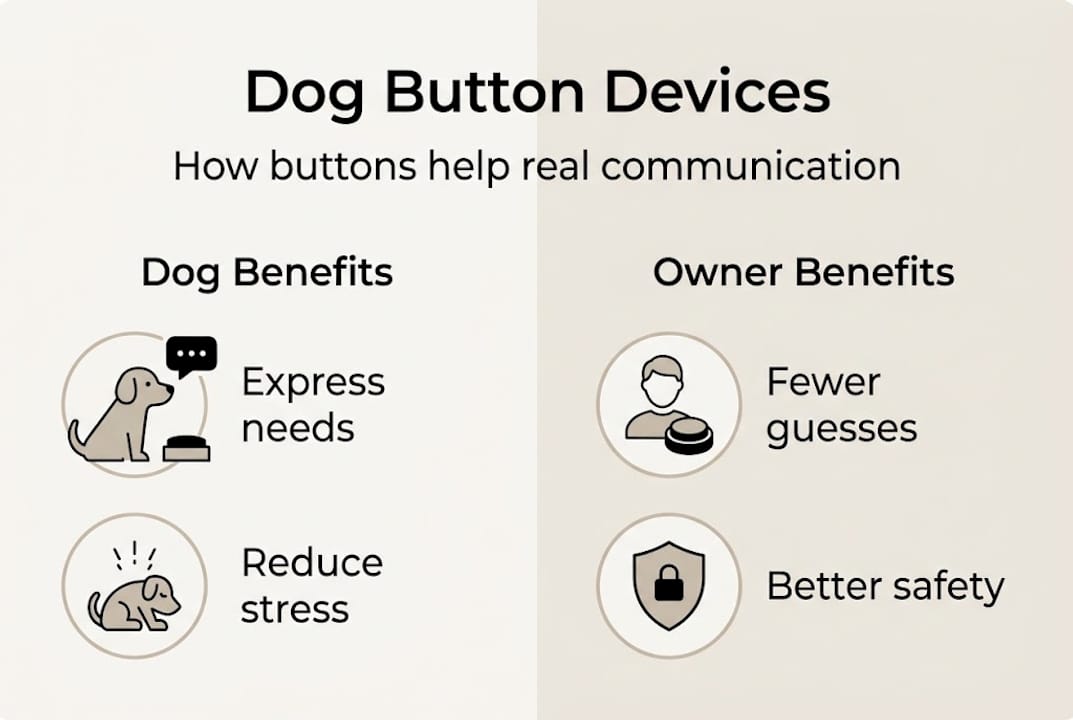
Button devices are pre-recorded sound pads, each assigned a single word or short phrase. When your dog steps on or nudges the button, it plays back your recorded voice. Dogs learn through repetition and reward that pressing a specific button produces a specific outcome. That outcome, whether it is a walk, a treat, or a play session, reinforces the behavior, and over time your dog starts choosing the right button intentionally.
Button devices allow association between each pad and a specific outcome like “play” or “food,” and that learned connection is the engine behind everything that follows. The good news is that this is not reserved for exceptionally intelligent breeds. Most dogs, with patient and consistent handling, can pick it up.
Who benefits most from button devices?
- Service dogs use buttons to alert handlers or request specific assistance tasks
- Seniors benefit when dogs can signal meal times, bathroom needs, or safety concerns
- Disabled handlers gain a clearer communication channel that reduces guesswork
- Family pets learn to express needs rather than resorting to barking or destructive behavior
Here is a quick look at how button training outcomes compare across different starting points:
| User group | Primary benefit | Typical timeline to first button |
|---|---|---|
| Service dogs | Safety signaling | 2 to 4 weeks |
| Seniors’ pets | Daily routine clarity | 3 to 6 weeks |
| Disabled handlers | Independence support | 2 to 5 weeks |
| Family pets | Reduced problem behaviors | 4 to 8 weeks |
For a detailed walkthrough on where to start, the teaching dogs buttons guide on iPupPee walks you through building a vocabulary from scratch. If your dog has never seen a device before, the process of introducing devices to dogs is simpler than most people expect.
Pro Tip: Start with only two buttons, “outside” and “food.” Add a new word only after your dog uses the existing ones consistently for at least one week. Overloading a dog with choices early on slows progress significantly.
What evidence shows about how dogs use buttons
After understanding the device basics, it is natural to wonder: how much do dogs truly grasp, and what does the research say?
The science is genuinely surprising. A UC San Diego study analyzed over 260,000 button presses and found that dogs produce non-random multi-word button combinations, meaning the presses were not just accidental. That is a significant finding, because it suggests dogs are choosing button sequences in ways that reflect intent, not random pawing.
“The combinations dogs produced were not random, suggesting meaningful, structured communication attempts rather than simple trial-and-error.” — Findings from the UC San Diego button communication study
Here is how researchers distinguish between different types of button use:
- Associative learning: The dog presses “food” because it has learned that pressing it leads to a meal. Simple cause and effect.
- Sequential association: The dog presses “outside” then “play,” having learned that combination leads to a specific kind of outdoor activity.
- Intentional communication: The dog uses buttons in new or unpredictable contexts to express a need not yet satisfied, showing flexibility beyond basic conditioning.
- Spontaneous combination: The dog combines buttons it has never been explicitly trained to pair, suggesting internal processing beyond rote repetition.
Not every dog reaches levels three or four, and researchers are careful not to over-interpret results. But the data is compelling enough that the dog button communication guide developed for handlers reflects these real-world findings rather than optimistic assumptions.
For anyone interested in building on these insights, teaching dog communication step by step is the most reliable way to see genuine behavioral progress rather than surface-level novelty.
Why button training matters for service dogs, seniors, and people with disabilities
Beyond research, the real-world value of buttons shines in homes with special communication or safety needs.
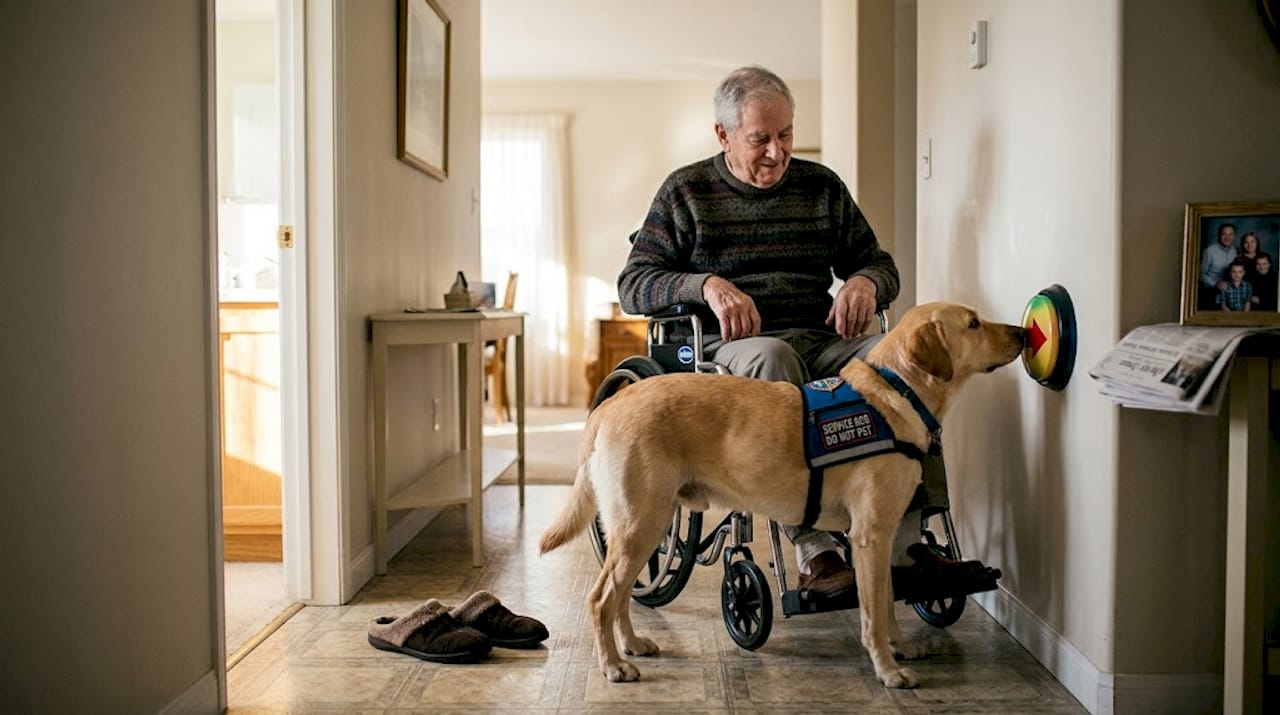
For service dogs, buttons represent something more than a party trick. Buttons let service dogs signal urgent needs and even activate appliances through specialized connected systems. A dog trained to press an “alert” button can trigger a speaker, a phone notification, or a light-based alarm, giving a non-verbal disabled handler an extra layer of protection that does not depend on the dog barking or pulling at clothing.
For seniors living alone, the stakes are just as real. A dog that can press “help” or “sick” during a fall or medical event provides a meaningful safety layer. Even simpler applications, like a button for “water” that reminds a senior with memory challenges to hydrate, add genuine daily living support.
Key features to look for by user group:
- Large, easy-press surface for seniors or handlers with limited hand mobility
- Loud, clear playback for users with hearing challenges
- Durable, chew-resistant casing for working dogs in demanding environments
- Simple setup and re-recording for handlers who need to update vocabulary over time
| Feature | Best for | Why it matters |
|---|---|---|
| Large button surface | Seniors, large breeds | Easier to press with a paw or nose |
| High-volume playback | Hearing-impaired handlers | Ensures the message is heard |
| Connected alert systems | Disabled individuals | Activates safety devices automatically |
| Compact, portable design | Travel, service dog work | Usable across different environments |
The best devices for disabled owners guide breaks down which features matter most for specific situations, and training service dogs for button use follows a slightly different protocol than training a family pet.
Pro Tip: For seniors and disabled handlers, choose buttons with the largest possible surface area and record your own voice rather than using a digital default. Dogs respond faster and more reliably to a familiar voice they already trust.
What to expect: Limitations, debates, and realistic results
While button training offers big benefits, it is essential to recognize where the science ends and practical realities begin.
Not every dog becomes a fluent “button talker.” Results vary by individual dog, handler consistency, and the training environment. A dog in a chaotic household with inconsistent reinforcement will progress much more slowly than one in a calm, structured setting with a committed handler.
“The risk with button training is projecting language onto behavior. Dogs are learning associations, not grammar. Treating button use as equivalent to human speech can lead handlers to misinterpret what their dog actually needs.” — Behavioral science perspective on dog button interpretation
Common pitfalls to avoid:
- Introducing too many buttons too quickly before earlier ones are solid
- Pressing buttons for the dog to “show” them, which teaches imitation rather than intentional use
- Rewarding any button press rather than the correct one in context
- Expecting complex sentences when single-word reliability is still being established
- Interpreting all button use as deeply meaningful rather than sometimes habitual
The honest picture is this: most dogs will reliably use three to five buttons within a few months of consistent training. Some will develop richer, more flexible communication. A few will plateau early, and that is okay. The goal is not fluency in the way humans use language. The goal is a clearer channel between you and your dog.
For anyone wondering whether the effort is worthwhile, why training matters goes into the behavioral and safety benefits in greater depth. And if the process feels overwhelming, easy training methods make the starting point much more accessible.
A realistic perspective: Why button training is worth it (even if it’s imperfect)
Here is something the research does not always say clearly enough: your dog does not need to “speak” for button training to change your life.
We have seen handlers get discouraged because their dog is not producing novel word combinations after eight weeks. That is the wrong measuring stick entirely. For a senior living alone, a dog that reliably presses one button when it senses distress is an emergency response system. For a person with a disability, a dog that signals “outside” before an accident prevents a daily frustration that compounds over months and years.
The mistake most handlers make is waiting for something impressive rather than measuring daily stress reduction. Has guesswork about your dog’s needs gone down? Are you sleeping better? Is your dog less anxious because it finally has a way to communicate? Those outcomes matter far more than vocabulary size.
For practical next steps that focus on real-world safety and communication quality, the steps for effective communication guide is built around exactly this kind of progress. Measure your results in life quality, not button count.
Discover more solutions for training and communication
If this article has sparked ideas about how button devices could work in your home or daily routine, iPupPee has the resources to take you from curiosity to confident training. Whether you are a first-time handler or an experienced service dog trainer, the tools and guides available at iPupPee are built specifically for people who take dog communication seriously.
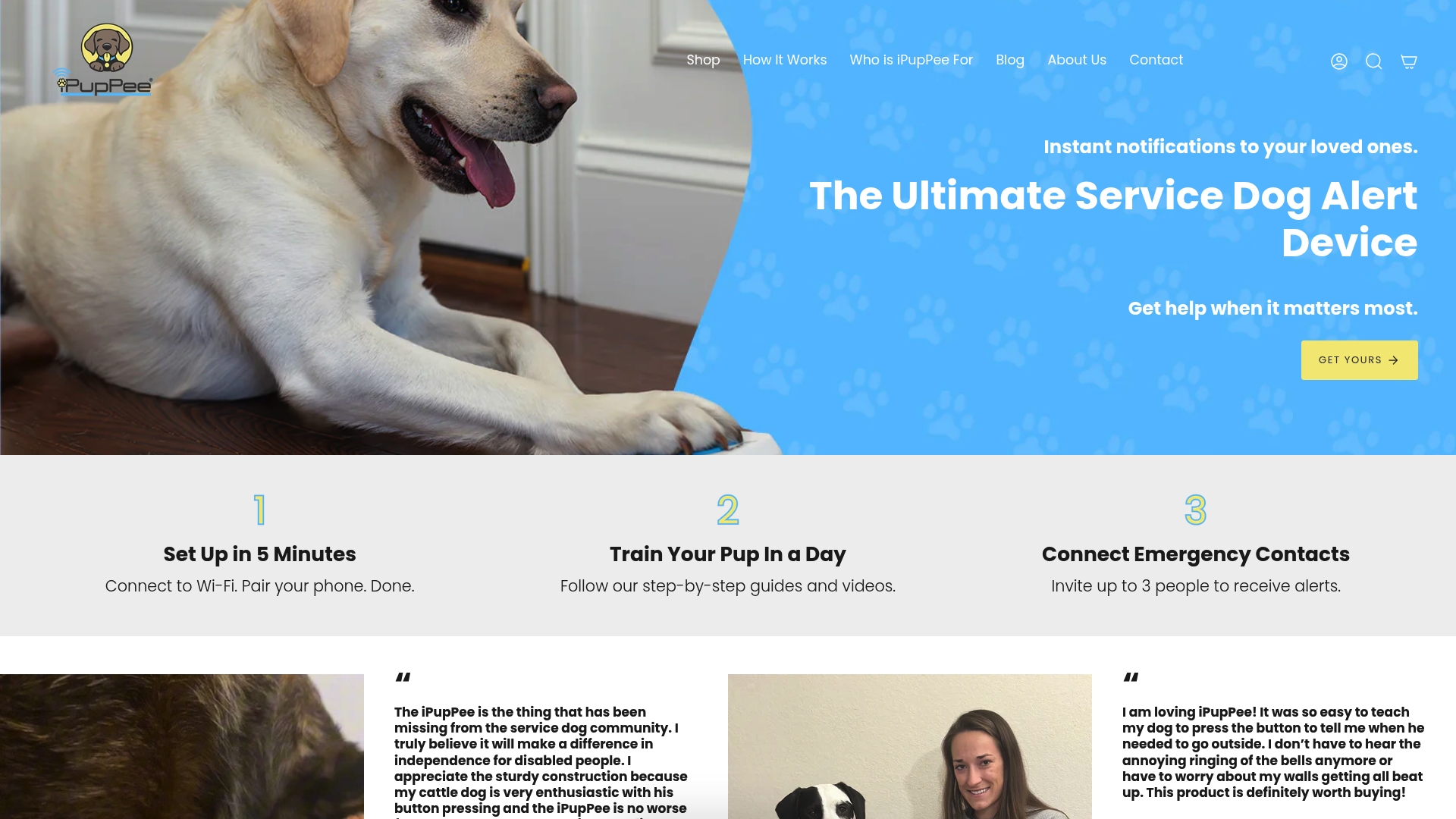
From step-by-step teaching dogs buttons guides to real user stories and device comparisons, the site brings together everything you need to build a communication system that fits your unique situation. Explore product options, read how others have used button devices for safety and independence, and find a starting point that matches your dog’s current level. The next step in better communication is closer than you think.
Frequently asked questions
Can all dogs learn to use button devices?
Many dogs can learn with consistent training, though results depend on the dog’s age, learning style, and the handler’s patience. Starting simple and staying consistent gives every dog the best chance.
Is there scientific proof dogs understand what buttons mean?
Research shows many dogs use non-random button combinations, but expert debate remains on whether this reflects true comprehension or highly sophisticated association. Both interpretations support the practical value of training.
How can button devices enhance safety for seniors or disabled individuals?
Specialized buttons enable service dogs to alert handlers to urgent needs or activate connected appliances, providing greater independence and a meaningful safety net in daily life.
What is a common mistake when training with button devices?
Expecting immediate, complex communication rather than incremental behavioral progress is the most frequent error. Celebrate small wins, like one reliably used button, before expanding the vocabulary.