

TL;DR:
- Dog mobility support includes devices, therapies, and environmental changes that help dogs move safely when their physical function is limited. Starting mobility aids early improves muscle retention, adapts better, and results in a quicker recovery for dogs with conditions like arthritis or neurological impairments. Proper fitting, combining physical devices with joint supplements, and daily management are essential for maintaining mobility and quality of life.
Dog mobility support is the use of devices, therapies, and environmental changes that help dogs move safely when age, injury, or disease limits their physical function. It covers everything from orthopedic beds and ramps to wheelchairs, harnesses, and joint supplements. Dogs with arthritis, spinal conditions, or post-surgical weakness all benefit from some form of canine mobility aid. The right combination of tools can restore independence, reduce pain, and keep your dog engaged in daily life far longer than rest alone.
What is dog mobility support and why does it matter?
Dog mobility support is a category of care that addresses reduced movement caused by arthritis, degenerative joint disease, neurological conditions, or injury. It is not a single product. It is a system of assistive devices and therapies that work together to keep a dog functional and comfortable. The goal is to reduce joint stress, prevent muscle loss, and maintain quality of life.
Most owners think of mobility support only when a dog can no longer walk without help. That is too late. Dogs that receive support early adapt faster, retain more muscle, and respond better to rehabilitation. The difference between early and late intervention is significant, both for the dog’s physical condition and for the owner’s ability to manage care at home.
The conditions that most commonly require mobility support include hip dysplasia, elbow dysplasia, intervertebral disc disease (IVDD), degenerative myelopathy, and osteoarthritis. Each condition affects movement differently, which is why the type of support must match the specific deficit rather than a general idea of “helping the dog walk.”
What types of canine mobility aids are available?
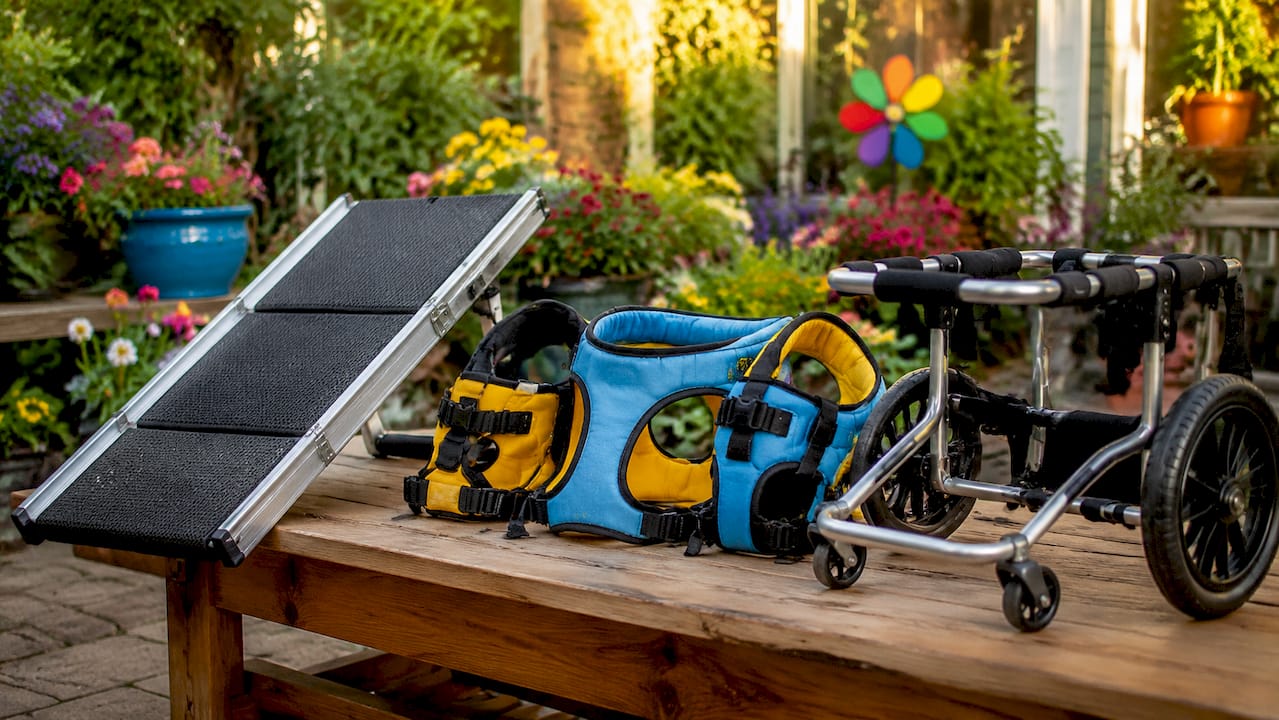
Canine mobility aids fall into four main categories: wearable support devices, mobility carts, home environment aids, and foundational comfort products. Each category serves a different level of need.
Wearable support devices
Harnesses and slings are the most common starting point. A rear-support sling works for dogs with hind-leg weakness. A full-body hybrid sling supports dogs with weakness in multiple limbs. Braces stabilize specific joints like the carpus (wrist) or stifle (knee) after injury or surgery. The key rule: match the harness style to the dog’s specific gait deficit, not to what looks good or costs the most.
Mobility carts and wheelchairs
Wheelchairs support dogs with severe hind limb paralysis or extreme weakness. Most dogs show confidence using mobility carts within a week of consistent training. That adaptation speed surprises most owners. Carts allow dogs to move independently, which reduces depression and muscle atrophy that come with prolonged immobility.
Home environment aids
Ramps and stairs let dogs access furniture or vehicles without jumping, which protects joints from repeated impact. Traction aids like toe grips and paw wax prevent slipping on hardwood or tile floors. Slipping is a major source of secondary injury in dogs with existing mobility problems. A non-slip mat at the base of every staircase costs almost nothing and prevents falls that could set back weeks of rehabilitation.
Orthopedic beds
Orthopedic memory foam beds protect bony pressure points and reduce joint stiffness by keeping dogs off cold, hard surfaces. They are the most impactful foundational support for dogs with joint issues. A dog that sleeps well on a supportive surface starts each day with less stiffness and more willingness to move.
Pro Tip: Place orthopedic beds in multiple rooms so your dog always has a comfortable resting spot nearby. Forcing a stiff dog to walk across the house to reach its bed adds unnecessary strain.
| Mobility Aid | Best For | Key Benefit | Limitation |
|---|---|---|---|
| Rear sling | Hind limb weakness | Easy to use at home | Requires owner assistance |
| Full-body harness | Multi-limb weakness | Full support during movement | Needs careful fitting |
| Wheelchair/cart | Hind limb paralysis | Restores independent movement | Requires training period |
| Ramp or stairs | Joint protection | Reduces impact on joints | Needs space in home |
| Orthopedic bed | All mobility conditions | Reduces stiffness and pressure | Ongoing replacement cost |
| Toe grips/paw wax | Slipping on hard floors | Prevents falls and injury | Requires regular reapplication |
How do you properly choose and fit mobility devices?
Fitting matters as much as the device itself. Improperly sized mobility devices can cause pressure sores, secondary injuries, and gait abnormalities. A harness that rubs under the armpit for six hours causes skin damage that sidelines your dog from the very rehabilitation it was meant to support.
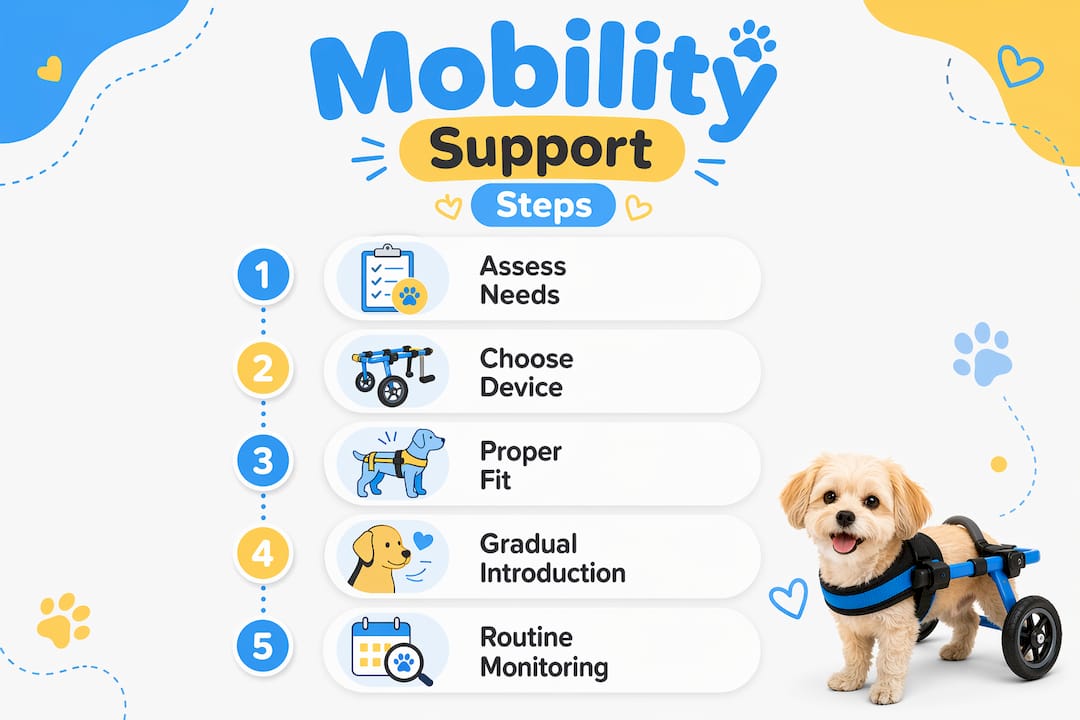
Work with a veterinarian or a certified canine rehabilitation therapist when fitting wheelchairs or custom braces. These devices require precise measurement and often need adjustment after the first few uses. Harnesses and slings can often be sized at home using the manufacturer’s measurement guide, but a vet check after the first fitting session is worth the visit.
Key fitting considerations include:
- Breathable materials: Perforated mesh with antimicrobial properties prevents hotspots and skin irritation during extended wear. Avoid fleece or felt for dogs wearing harnesses for more than an hour at a time.
- Strap placement: Straps must not press on the spine, sternum, or armpits. Check for redness or hair loss after each session.
- Urination clearance: Male dogs need harness designs with a U-band or cutout to prevent interference with urination. Check whether the dog’s anatomy is visible from the side before selecting a model.
- Range of motion: The device should support without restricting natural movement. If your dog’s gait looks more awkward in the harness than without it, the fit is wrong.
Pro Tip: Introduce any new device for 10–15 minutes at a time before building to full sessions. Gradual exposure prevents stress and gives you time to spot fit problems before they cause injury.
What role do supplements play in supporting dog joint health?
Joint supplements are a complement to physical aids and rehabilitation, not a replacement. They address the biochemical side of joint health while devices address the mechanical side. Used together, they produce better outcomes than either approach alone.
The most studied supplements for dog joint support include:
- Glucosamine: A building block for cartilage. Structural improvements typically take several weeks to become noticeable, so owners need patience before judging effectiveness.
- Hyaluronic acid: Reaches joints within two hours to lubricate and cushion them. This fast action makes it useful for dogs with acute stiffness.
- Omega-3 fatty acids: Reduce joint inflammation. Fish oil is the most bioavailable source for dogs. Look for products formulated for joint health with documented EPA and DHA levels.
Supplements work best when started before severe joint damage occurs. Once cartilage is significantly degraded, supplements can slow further loss but cannot rebuild what is gone. Pain management, including veterinary-prescribed anti-inflammatories, often needs to run alongside supplements for dogs with moderate to severe arthritis. Never adjust pain medication without veterinary guidance.
Why does early intervention with mobility support improve outcomes?
Delaying aid introduction makes adaptation harder and reduces the benefits your dog can gain. A dog that has lost significant muscle mass from months of inactivity takes far longer to regain function than one that received support at the first signs of weakness. Early intervention preserves the muscle that makes rehabilitation possible.
“Mobility aids are not a last resort. They are a tool to keep dogs active during the period when activity itself is what prevents further decline.”
The most common owner mistake is waiting for a dog to “really need” a wheelchair or harness before introducing one. By that point, the dog may be too weak to benefit fully from the device. A dog with moderate hind limb weakness that starts using a rear sling can continue walking, which maintains cardiovascular fitness and muscle tone. That same dog, left unsupported for another three months, may need a full wheelchair and face a much longer rehabilitation timeline.
A practical progression for improving dog mobility looks like this:
- Start with orthopedic bedding and floor traction aids at the first sign of stiffness
- Add a rear sling or harness when the dog begins stumbling or struggling on stairs
- Introduce a mobility cart if hind limb function deteriorates further
- Combine all physical aids with supplements, pain management, and professional rehabilitation
Mobility aids do not replace veterinary care. Complementary use of devices, pain management, and rehabilitation produces the best outcomes. Think of the aids as the scaffolding that keeps the dog moving while medical treatment addresses the underlying condition.
What practical steps can dog owners take every day?
Daily consistency matters more than any single product. A harness used correctly every day produces better results than the most expensive wheelchair used occasionally.
Practical daily steps include:
- Use ramps consistently: Every time your dog jumps off the couch or into the car, it loads damaged joints. Ramps eliminate that impact entirely.
- Check harness fit daily: Swelling, muscle changes, and weight shifts can alter fit within days. Run two fingers under every strap before each use.
- Warm up before walks: A slow five-minute walk before any exercise session loosens stiff joints and reduces injury risk.
- Monitor for discomfort: Watch for flinching, reluctance to move, or changes in posture. These signal that the device needs adjustment or that pain management needs review.
- Maintain warm resting spots: Cold surfaces increase joint stiffness. Orthopedic beds in warm areas of the home reduce morning stiffness significantly.
Pro Tip: Keep a simple weekly log of your dog’s mobility. Note how far it walks, how it rises from rest, and any signs of pain. This record helps your vet track progress and adjust the care plan accurately.
Seek veterinary or certified rehabilitation guidance whenever you see a sudden change in gait, new reluctance to bear weight, or signs that a device is causing discomfort. Home management is effective, but professional oversight catches problems that owners miss.
Key Takeaways
Dog mobility support works best when physical aids, joint supplements, pain management, and rehabilitation are combined early rather than introduced one at a time after severe decline.
| Point | Details |
|---|---|
| Start support early | Introducing aids before severe decline preserves muscle and speeds adaptation. |
| Match the aid to the deficit | Choose harness style and device type based on specific gait problems, not appearance. |
| Fit devices correctly | Poorly fitted devices cause pressure sores and gait abnormalities; get a vet check after first fitting. |
| Combine supplements and devices | Hyaluronic acid and glucosamine complement physical aids but cannot replace them. |
| Monitor and adjust daily | Check harness fit, track mobility changes, and report sudden shifts to your vet promptly. |
What I’ve learned from watching owners wait too long
Most owners I speak with share the same regret: they waited. They saw the stiffness, the hesitation on stairs, the slower rise from sleep, and they told themselves the dog was “just getting older.” By the time they sought help, the dog had lost muscle, developed compensatory injuries in other limbs, and faced a much harder road back.
The hardest part of advising on canine mobility is not the device selection or the supplement choices. It is convincing owners that a harness or a ramp is not an admission of failure. It is a tool, the same way glasses correct vision without meaning the eyes have given up.
The emotional shift that happens when a dog regains movement is remarkable. Dogs that were withdrawn and reluctant to engage become playful again within days of using a well-fitted cart or harness. That change is not just physical. It affects the owner as much as the dog. Watching your dog move freely again, even with assistance, changes the entire dynamic of care from grief to management.
My honest advice: if your dog is showing any sign of mobility difficulty, talk to your vet this week. Not next month. Ask specifically about adaptive pet aids and rehabilitation options. The earlier you act, the more options you have and the better your dog’s outcome will be.
— Andrew
Supporting your dog’s mobility with Ipuppee
Ipuppee supports dog owners who want practical, well-designed solutions for dogs with mobility challenges.
Whether your dog needs communication tools, assistive devices, or guidance on daily care, Ipuppee’s resources are built for owners who take their dog’s independence seriously. The Ipuppee blog covers practical dog care tips for dogs at every stage of life, including senior dogs managing arthritis and dogs recovering from injury. Visit Ipuppee to find products and guides that match your dog’s specific needs and help you build a care routine that works every day.
FAQ
What is dog mobility support?
Dog mobility support is a system of devices, therapies, and environmental changes that help dogs with reduced movement function safely and comfortably. It includes harnesses, wheelchairs, ramps, orthopedic beds, and joint supplements.
When should I start using mobility aids for my dog?
Start at the first sign of stiffness, stumbling, or reluctance to climb stairs. Early introduction preserves muscle strength and makes adaptation to devices much easier.
Can mobility aids replace veterinary treatment?
No. Mobility aids complement medical treatment and rehabilitation but do not replace them. The best outcomes come from combining physical aids with veterinary-prescribed pain management and professional rehabilitation.
How do I know if a harness fits my dog correctly?
You should be able to slide two fingers under every strap. Check for redness, hair loss, or skin irritation after each session. Male dogs need a harness with urination clearance built into the design.
Do joint supplements actually help dogs with arthritis?
Yes, when used consistently and started before severe joint damage occurs. Hyaluronic acid reaches joints within two hours to provide lubrication, while glucosamine takes several weeks to show structural benefits. Supplements work best alongside physical aids and veterinary pain management.