

TL;DR:
- Assistance dogs serve as active caregivers, providing physical support, medical alerts, and emotional companionship that enhance independent living. They make judgment-based decisions, such as overriding commands to protect handlers, and help reduce loneliness and social isolation. Technological advancements improve robotic monitoring, but biological dogs remain irreplaceable for medical and emotional support in autonomous living.
Dogs are active caregivers in autonomous living, not passive helpers. For people with disabilities and seniors, a well-trained assistance dog provides physical support, medical alerts, and emotional companionship that directly enables independent daily life. Organizations like the Canadian Assistance Dog Institute and programs such as Retrieving Independence have documented how the role of dogs in autonomous living extends far beyond simple task completion. These animals monitor their handlers continuously, respond to subtle physical cues, and build trust-based partnerships that no other tool or technology fully replicates.
How do dogs support daily living tasks for independence?
The practical assistance dogs provide covers a wide range of daily activities that most people perform without thinking. For someone with a spinal cord injury, limited mobility, or a neurological condition, those same tasks can represent significant barriers to living independently.
Trained assistance dogs perform tasks including:
- Opening and closing doors, including refrigerators and cabinets
- Retrieving dropped objects such as phones, keys, and medications
- Activating light switches and pressing elevator buttons
- Alerting handlers to sounds like doorbells, smoke alarms, or crying infants
- Providing physical stability for people with balance or gait impairments
Medical alert functions represent one of the most significant assistance dogs benefits. Dogs detect physiological changes through posture, breathing, and subtle body movements, giving handlers a 20–30 minute warning before a seizure or hypoglycemic episode occurs. That lead time allows a person to sit down safely, take medication, or call for help before a crisis develops.
Research also shows that canine-assisted interventions reduce muscle activity in wheelchair users during propulsion tasks. Less physical effort means less fatigue over the course of a day, which directly supports longer periods of independent activity.

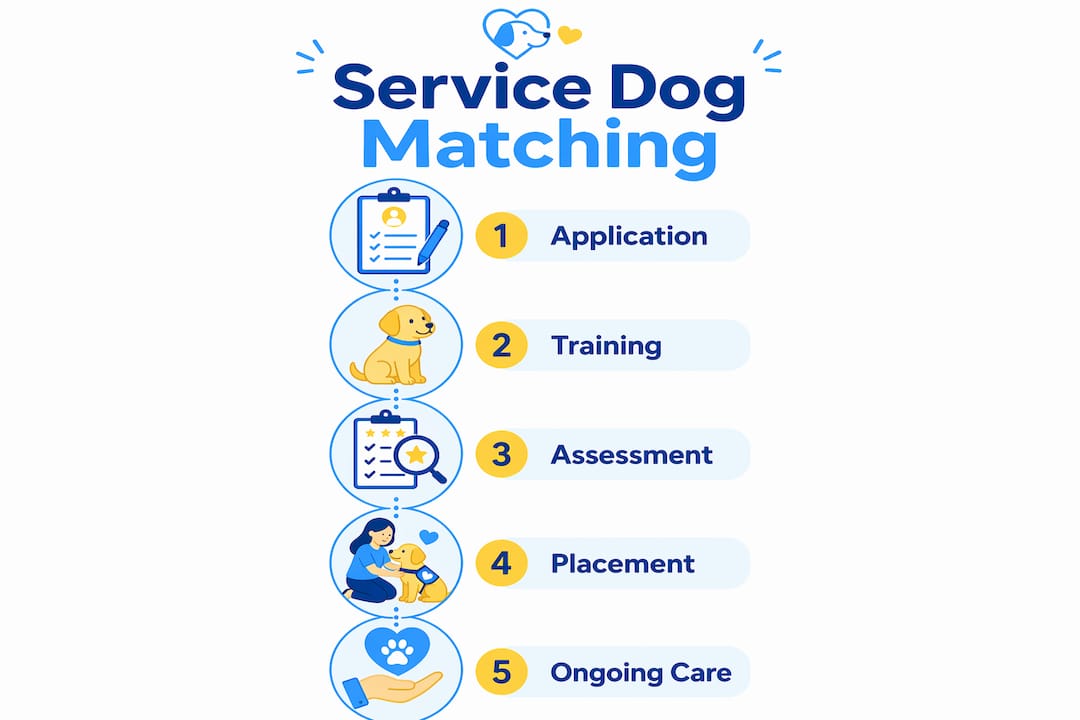
The matching process between a dog and handler typically takes 3–6 months, and service dog applications generally require handlers to be 18 or older, though skilled companion programs may accept applicants as young as 5. That timeline reflects the depth of training required and the importance of pairing the right dog with the right person.
Pro Tip: The handler-dog relationship requires consistent daily interaction to build mutual trust. Spend structured time with your dog outside of task work. Play, grooming, and calm companionship reinforce the bond that makes alert and assistance behaviors more reliable.
What emotional and social benefits do dogs provide?
The emotional dimension of canine companionship for autonomy is just as significant as the physical one. Loneliness and social isolation are serious health risks for seniors and people with disabilities, and dogs address both directly.
Dogs provide structure to daily life. A morning feeding schedule, a midday walk, and an evening routine give handlers a framework that supports mental health and reduces anxiety. Psychiatric service dog programs have shown significant reductions in PTSD symptoms among veterans and trauma survivors, demonstrating that the emotional support role is clinically meaningful, not just anecdotal.
The social benefits extend beyond the home. People with assistance dogs report more frequent conversations with strangers and greater confidence in public settings. A dog acts as a social bridge in environments that might otherwise feel isolating.
Key emotional and social benefits include:
- Reduced anxiety and depression through consistent physical contact and companionship
- Improved daily structure from routine care responsibilities
- Greater social confidence in public spaces and community settings
- Reduced loneliness through constant, attentive presence
- Increased motivation to leave home and engage with the community
For seniors living alone, a dog’s presence can be the difference between a day spent in isolation and one that includes purpose, movement, and connection. That shift in daily experience has a measurable effect on long-term health outcomes.
What does research say about dogs as active caregivers?
The most important reframe in understanding dogs aiding disabled individuals is moving away from the idea that they are tools. Research describes assistance dogs as having relational care agency, meaning they make context-sensitive decisions based on their handler’s needs rather than simply executing commands.
The clearest example is a guide dog refusing a command to step into traffic. The dog overrides the handler’s instruction because it has assessed the environment and determined the action is unsafe. That is not obedience. That is judgment. Assistance dogs make decisions that protect their handlers even when those decisions contradict what they were asked to do.
Researchers have described assistance dogs as “educated, vulnerable workers.” They perform demanding cognitive and physical labor continuously, yet they remain dependent on their handlers for food, shelter, and care. This creates a genuinely reciprocal relationship. The dog cares for the person. The person cares for the dog. Neither is simply serving the other.
Nonverbal communication between dog and handler operates through posture, breathing patterns, and micro-movements. Dogs learn to read these signals with precision that no wearable sensor currently matches. That continuous, wordless attentiveness is what makes biological dogs irreplaceable in high-stakes caregiving situations.
Biological dogs vs. robotic dogs in autonomous living
| Feature | Biological Dog | Robotic Dog |
|---|---|---|
| Emotional connection | Deep, reciprocal bond | None currently |
| Medical alert capability | Detects changes 20–30 min early | Not yet possible |
| 24/7 monitoring | Yes, with rest periods | Yes, continuous |
| Privacy impact | Minimal | Moderate to high |
| Maintenance cost | Ongoing (food, vet care) | Hardware and software updates |
| Override capability | Yes, context-sensitive judgment | Rule-based only |
Pro Tip: If you are evaluating whether a biological dog or a robotic assistant better fits your situation, consider the nature of your primary need. For medical alerts and emotional support, biological dogs have no current equivalent. For non-intrusive home monitoring, robotic options are improving rapidly.
How is technology drawing from canine behavior?
Robotics researchers are actively studying how dogs interpret human intent and applying those findings to build better assistive machines. The results are producing a measurable improvement in how robots interact with people in home environments.
The core insight comes from how dogs read pointing gestures. Robots traditionally struggled to identify which object a person was pointing at in a cluttered room. Researchers developed a “pointing cone” model inspired by canine intention recognition, using eye gaze, elbow angle, and wrist alignment together. This approach produced an 89% task success rate in robotic object location. That is a significant improvement over earlier geometric models that relied on a single data point.
Robotic vs. biological assistance: key comparisons
| Capability | Robotic Assistant | Biological Dog |
|---|---|---|
| Object retrieval accuracy | 89% with canine heuristics | Very high with training |
| Human intent recognition | Improving via pointing cone model | Naturally intuitive |
| Home monitoring | Continuous, non-intrusive | Attentive but needs rest |
| Cost over 10 years | High upfront, lower ongoing | Moderate, consistent |
| Dignity and privacy | Requires careful design | Naturally respectful |
Hybrid autonomous living models are emerging as a practical solution for seniors who want safety monitoring without the full commitment of caring for a biological dog. A robotic home dog can provide 24/7 presence and fall detection without the emotional complexity or physical demands of a living animal. The two approaches are not competing. They are complementary.
Privacy and dignity remain real concerns with home robotics. A robotic dog that monitors movement and behavior collects data. Families and individuals need to evaluate what data is stored, who accesses it, and how it is used before adopting these systems.
What should you know before getting an assistance dog?
Integrating a dog into an autonomous living situation requires planning, realistic expectations, and access to the right support systems. The process is rewarding, but it is not simple.
- Start the application early. Processing takes 3–6 months on average. Contact organizations like Canine Companions, NEADS, or your regional assistance dog provider well in advance of when you need the dog.
- Confirm eligibility requirements. Most programs require handlers to be 18 or older. Some skilled companion programs accept younger applicants. Verify requirements before applying.
- Prepare your living environment. Assistance dogs need space, routine, and access to outdoor areas. Assess your home before the dog arrives.
- Plan for the caregiving relationship. Handlers often experience a sense of responsibility and occasional guilt about the dog’s workload. Understanding the reciprocal nature of the relationship from the start helps manage that emotional dynamic.
- Access ongoing training support. The initial training period is not the end. Regular refresher sessions with a certified trainer keep skills sharp and address new challenges as your needs evolve.
- Connect with a support community. Organizations like the Indian Kennel Club and regional assistance dog networks offer peer support, resources, and advocacy for service dogs for independence.
The welfare of the dog is inseparable from the quality of the partnership. A dog that is well cared for, mentally stimulated, and given appropriate rest performs better and lives longer. Treating the dog as a professional partner rather than a piece of equipment is both ethically right and practically smart.
Key takeaways
Dogs in autonomous living function as active caregivers whose physical, medical, and emotional contributions are irreplaceable by any current technology.
| Point | Details |
|---|---|
| Active caregiving role | Dogs make context-sensitive decisions, including overriding unsafe commands, not just following instructions. |
| Medical alert advantage | Assistance dogs detect health crises 20–30 minutes early, giving handlers time to respond safely. |
| Emotional and social impact | Dogs reduce anxiety, combat loneliness, and increase social confidence in daily community life. |
| Technology is complementary | Robotic dogs improve with canine-inspired models but cannot replace biological dogs for emotional or medical support. |
| Application takes time | Service dog programs require 3–6 months to process applications, so planning ahead is critical. |
What i’ve learned watching these partnerships up close
Most people underestimate what an assistance dog actually does. They see the vest and assume the dog is a well-trained helper. What I’ve observed is something closer to a working partnership between two individuals who have developed a shared language without words.
The thing that strikes me most is the direction of care. The dog watches the handler constantly. Not waiting for a command. Watching. Monitoring breathing, posture, mood. That level of attentiveness is something most humans cannot sustain for more than a few minutes. These dogs do it for years.
I also think the conversation about robotic dogs is being framed wrong. The question is not whether robots will replace biological dogs. They will not, at least not for anything that requires genuine emotional attunement. The better question is how the two can work together. A robotic monitor that handles overnight safety checks while a biological dog handles daytime alerting and companionship is a model worth taking seriously.
What I’d encourage anyone exploring this path to recognize is that getting an assistance dog is not just acquiring a tool. You are entering a caregiving relationship. The dog gives you independence. You give the dog a good life. That exchange deserves respect from both sides.
— Andrew
How Ipuppee supports your canine companion journey
If you are exploring how a dog can support your independence or that of someone you care for, Ipuppee is built for exactly that conversation.
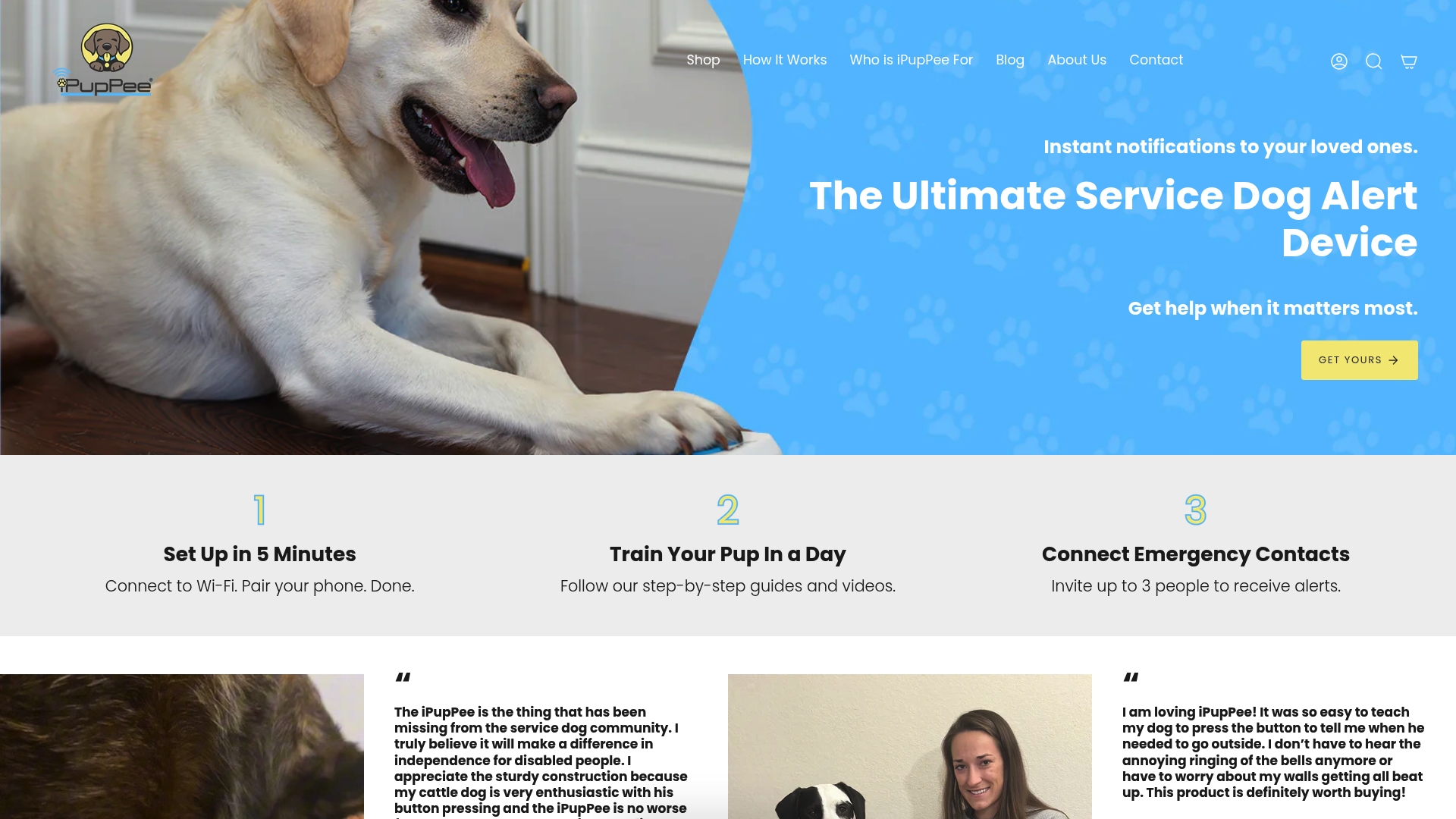
Ipuppee specializes in communication and safety tools for service dog handlers, seniors, and people with disabilities. The iPupPee alert device gives dogs a way to signal their handlers through a simple button press, adding a layer of communication that supports daily living with dogs. Whether you are just starting to research assistance dogs or already working with a trained partner, Ipuppee’s blog covers training guides, application advice, and real-world benefits. Visit ipuppee.com to explore resources designed to help you and your dog build a stronger, safer partnership.
FAQ
What is the primary role of dogs in autonomous living?
Dogs in autonomous living serve as active caregivers who provide physical task assistance, medical alerts, and emotional companionship. Their role goes beyond simple help, as they make judgment-based decisions to protect their handlers’ safety and well-being.
How early can a dog detect a medical emergency?
Medical alert dogs detect physiological changes 20–30 minutes before symptoms like seizures or hypoglycemia appear. This early warning gives handlers time to take preventive action before a crisis occurs.
Can seniors benefit from assistance dogs?
Seniors benefit significantly from assistance dogs through reduced loneliness, improved daily structure, and physical support with mobility and task completion. Dogs also increase social engagement and provide a consistent sense of purpose and companionship.
How long does it take to get a service dog?
The application process for a service dog typically takes 3–6 months, with most programs requiring handlers to be at least 18 years old. Starting the process early gives you the best chance of a timely placement.
Are robotic dogs a replacement for biological assistance dogs?
Robotic dogs are not a replacement for biological assistance dogs. They offer non-intrusive home monitoring and are improving through canine-inspired robotics, but they cannot replicate the emotional bond, medical alert capability, or relational judgment that biological dogs provide.