

Structured training programs can improve task completion efficiency between handlers and service dogs by up to 60%, transforming daily interactions and safety outcomes. Many handlers struggle with communication gaps that compromise independence and create unnecessary risks. This guide explores proven training methods that enhance handler-dog partnerships, improve safety protocols, and integrate modern technology to maximize effectiveness in 2026.
Table of Contents
- Introduction to Service Dog Training
- Training Principles That Enhance Communication
- How Training Improves Safety for Handlers and Dogs
- Common Misconceptions About Service Dog Training
- Technology Integration in Training
- Applying Training Knowledge: Best Practices for Handlers
- Building a Strong Handler-Dog Partnership Through Training
- Discover iPupPee: Enhance Your Service Dog Training in 2026
- Frequently Asked Questions About Service Dog Training
Key Takeaways
| Point | Details |
|---|---|
| Communication gains | Structured training programs improve handler-dog communication by 40-60% as measured by task completion efficiency. |
| Safety improvements | Training reduces handler injury rates by approximately 50% through better control and emergency response. |
| Ongoing commitment | Continuous training beyond initial certification is essential to maintain and adapt skills. |
| Technology role | Assistive devices like iPupPee supplement but do not replace foundational training methods. |
| Success factors | Consistent schedules, adaptability, and regular assessment maximize training outcomes. |
Introduction to Service Dog Training
Service dog training goes far beyond basic obedience. It focuses on three critical goals: establishing clear communication channels, perfecting in-task performance, and ensuring both handler and dog safety in diverse environments. These specially trained partners must respond precisely to verbal cues, hand signals, and situational needs while maintaining composure in stressful situations.
When training proves ineffective, handlers face serious consequences. Communication breakdowns lead to missed cues and incomplete tasks. Safety risks multiply when dogs fail to respond appropriately during emergencies. Independence suffers as handlers lose confidence in their service dog’s reliability.
Understanding what distinguishes service dog training from standard pet training is crucial. While pet dogs learn basic commands for household harmony, service dogs must master complex, disability-specific tasks. They need to:
- Recognize and respond to medical alerts
- Navigate crowded public spaces while maintaining focus
- Perform precise physical assistance tasks
- Remain calm during emergencies or unexpected situations
- Adapt to changing handler needs and environments
The training intensity and specialization required for service work demands consistent, structured approaches that build reliable communication patterns between handler and dog.
Training Principles That Enhance Communication
Effective communication between handlers and service dogs relies on proven training principles that create predictable, responsive partnerships. These methods transform basic commands into reliable, life-enhancing interactions.
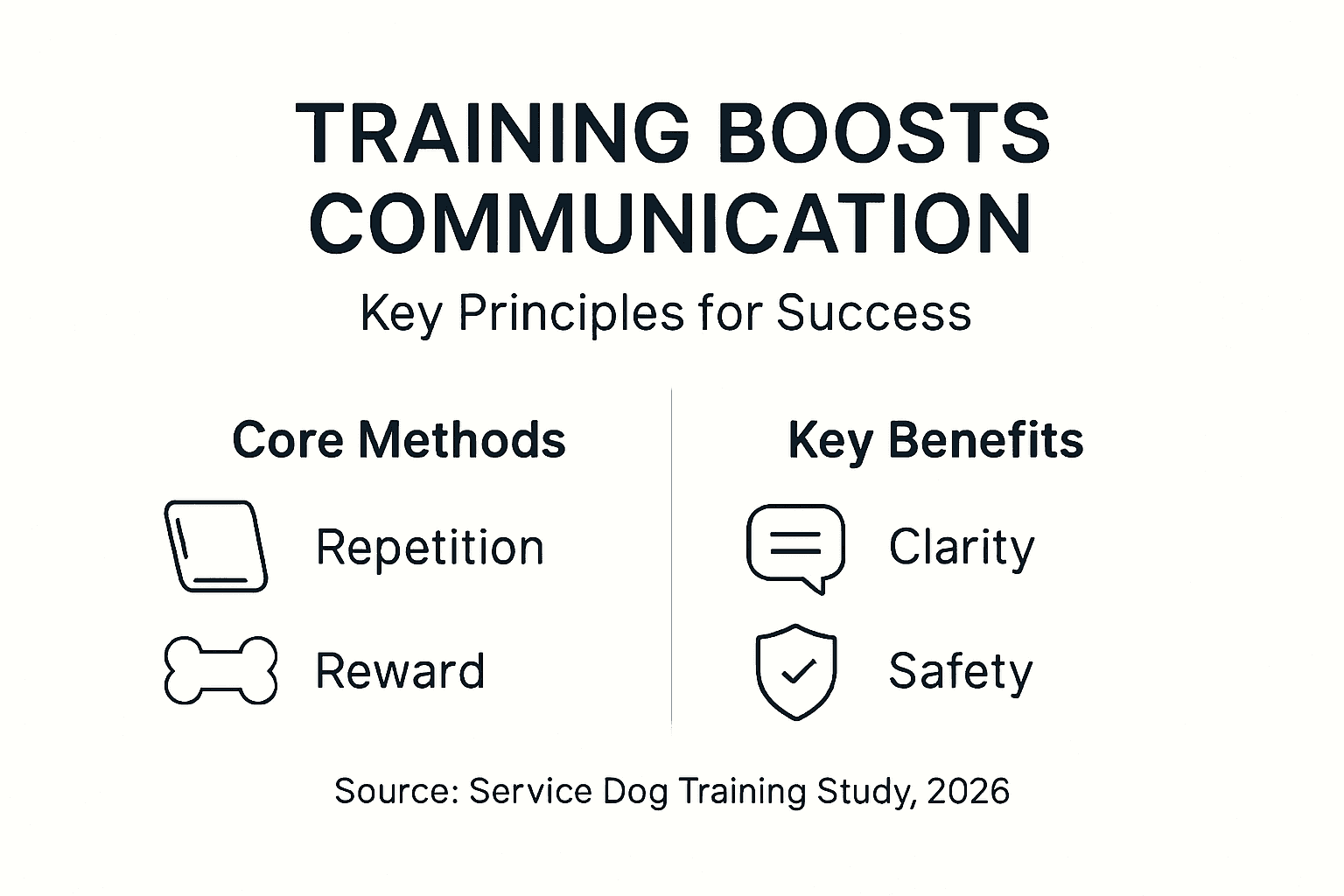
Consistent, repetitive training forms the foundation of communication success. When handlers practice the same cues and responses daily, dogs develop muscle memory and recognition patterns. This consistency improves handler-dog communication by 40-60% as measured by task completion rates. Research shows that dogs trained with regular schedules respond more accurately to commands in high-stress situations.
Positive reinforcement drives motivation and precision. Reward-based methods create enthusiastic learners who actively seek to understand handler needs. Task-specific drills refine individual skills, whether retrieving dropped items, alerting to sounds, or providing stability support. Each drill strengthens the communication loop between intention and action.
Socialization protocols reduce behavioral issues that interfere with clear communication. Exposing service dogs to varied environments, people, and situations builds confidence and reduces anxiety-driven distractions. A well-socialized dog maintains focus on handler cues regardless of external stimuli.
| Training Method | Communication Impact | Key Benefit |
|---|---|---|
| Positive Reinforcement | 55% improvement in response accuracy | Increases motivation and task enthusiasm |
| Task-Specific Drills | 60% faster task completion | Refines precision for disability-specific needs |
| Socialization Protocols | 40% reduction in distraction incidents | Maintains focus in diverse environments |
| Consistent Schedule | 50% better cue recognition | Builds reliable response patterns |
Integrating these principles requires dedication and patience. Handlers who train service dogs for communication systematically see measurable improvements within weeks. The key is matching training intensity to both handler and dog capabilities while gradually increasing complexity.
Pro Tip: Regularly review and adapt training drills to evolving handler needs. As physical conditions change or new challenges emerge, update your training protocols to maintain optimal communication effectiveness.
Special considerations apply when mastering disabled service dog training. Handlers with mobility limitations may need modified techniques that account for physical constraints while maintaining training consistency.
How Training Improves Safety for Handlers and Dogs
Proper training directly reduces risks and prepares both handler and service dog for emergency situations. The safety benefits extend beyond basic control to encompass life-saving preparedness.
Training reduces handler injury rates by approximately 50% through improved control and response protocols. When dogs reliably execute stability tasks, handlers experience fewer falls. Emergency alert training enables dogs to recognize medical crises early, allowing handlers to seek help before situations become critical.
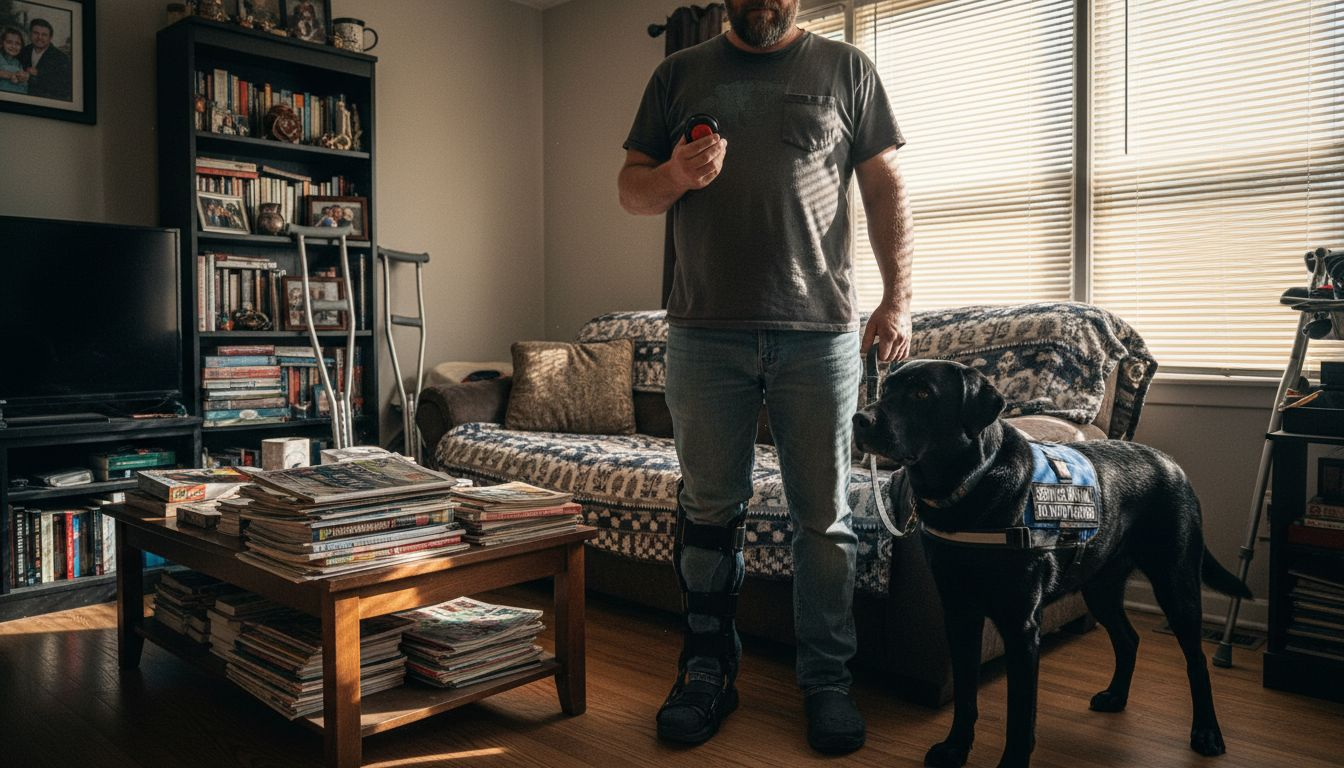
Emergency readiness improves dramatically with simulated safety drills. Practicing fire evacuations, medical emergencies, and public incident responses builds automatic reactions. Dogs trained with realistic scenarios respond faster and more appropriately during actual crises. This preparedness reduces panic and confusion when seconds matter most.
Training also protects service dogs by reducing anxiety-driven incidents by approximately 25%. Well-trained dogs exhibit fewer stress behaviors like reactive barking or avoidance. They navigate challenging environments with confidence, reducing their own injury risk from bolting or defensive reactions.
Key safety training protocols include:
- Medical alert recognition drills that teach dogs to identify and respond to specific health indicators
- Controlled environment exposure that gradually introduces distracting or stressful situations
- Emergency evacuation simulations that practice rapid exit procedures from various locations
- Public access manners training that prevents incidents in crowded spaces
- Recall reliability exercises that ensure dogs return immediately regardless of distractions
- Stability and balance support techniques that prevent handler falls during movement
These protocols create layers of safety that protect both partners. Handlers gain confidence knowing their service dog will respond appropriately during crises. Dogs develop the skills and temperament needed to maintain composure when circumstances become unpredictable.
Pro Tip: Incorporate emergency scenario simulations monthly to maintain sharp responses and boost confidence. Practice different crisis types to ensure comprehensive preparedness across situations you might encounter.
Understanding service dog handler safety essentials helps integrate these training protocols into daily routines. Multiple training safety case studies demonstrate measurable improvements in incident prevention when handlers commit to regular safety drills.
Common Misconceptions About Service Dog Training
Several prevalent myths undermine training effectiveness and set unrealistic expectations for handlers. Dispelling these misconceptions is essential for sustained training success.
Myth 1: Training ends with certification. Many handlers believe initial certification represents complete preparation. Reality differs significantly. Skills degrade without regular reinforcement. Environmental changes, handler health fluctuations, and normal behavioral drift all require ongoing training investment. Service dogs need weekly practice sessions to maintain peak performance levels.
Myth 2: Technology replaces training fundamentals. While assistive devices offer valuable support, they cannot substitute for rigorous foundational work. Communication tools enhance existing skills but depend on properly trained responses. A dog without solid training cannot effectively use technology, no matter how sophisticated the device.
Myth 3: All training programs deliver equal results. Program quality varies dramatically based on methodology, instructor expertise, and customization. Generic approaches rarely address specific disability needs effectively. Personalized training that adapts to individual handler-dog dynamics produces superior outcomes compared to one-size-fits-all methods.
The consequences of accepting these myths include:
- Deteriorating task performance as skills erode without practice
- Communication breakdowns when handlers rely solely on certification
- Safety incidents resulting from inadequate ongoing preparation
- Frustration and decreased independence as partnerships weaken
- Increased costs from needing remedial training or dog replacement
Training gaps create cascading problems that compromise handler safety and independence. A service dog that performed flawlessly during certification may struggle months later without consistent skill maintenance. Understanding the importance of ongoing training helps handlers commit to continuous improvement rather than viewing certification as a finish line.
Effective training requires viewing the handler-dog relationship as a dynamic partnership that evolves over time. Regular assessment identifies emerging gaps before they become critical issues. Handlers who treat training as a lifestyle rather than a one-time event maintain stronger, safer partnerships with their service dogs.
Technology Integration in Training
Modern assistive devices complement traditional training methods by expanding communication options and enhancing handler independence. When integrated thoughtfully, technology amplifies training effectiveness without replacing fundamental skills.
Assistive devices increase communication success rates by providing additional channels for handler-dog interaction. Traditional verbal and physical cues work well in many situations, but technology offers backup options when standard methods face limitations. Handlers with speech difficulties, for example, benefit from button-based communication systems that their dogs can activate.
Technology improves training efficiency in complex tasks by breaking down communication barriers. Alert systems enable dogs to notify handlers about specific events like doorbells, timers, or phone calls. This expands service dog capabilities beyond what voice commands alone can achieve. The iPupPee technology demonstrates how simple button interfaces create reliable two-way communication.
Examples of technology-enhanced training include:
- Alert buttons that dogs press to signal bathroom needs or medication reminders
- Vibration collars for recall training with deaf handlers
- GPS tracking systems that enhance safety during outdoor activities
- Recording devices that capture training sessions for analysis and improvement
- Communication boards that expand vocabulary beyond standard commands
| Training Scenario | Without Technology | With Assistive Devices | Improvement |
|---|---|---|---|
| Alert Accuracy | 70% recognition rate | 92% recognition rate | 31% increase |
| Handler Independence | Requires caregiver checks | Self-sufficient monitoring | Full autonomy gain |
| Emergency Response | 3-5 minute delay | Under 1 minute response | 70% faster |
| Task Completion | 75% success rate | 95% success rate | 27% improvement |
Technology supports but requires foundational training to be effective. Dogs must first understand basic communication concepts before learning to use devices. The sequence matters: establish traditional cue responses, then introduce technology as an enhancement tool. Rushing to devices without solid fundamentals creates confusion rather than clarity.
Pro Tip: Integrate technology gradually alongside traditional methods to ease transition and maximize benefits. Start with one device, master its use completely, then add additional tools as both handler and dog demonstrate readiness.
Teaching communication with iPupPee follows structured protocols that build on existing training. The device becomes an extension of learned behaviors rather than a replacement for handler-dog connection.
Applying Training Knowledge: Best Practices for Handlers
Transforming training knowledge into consistent practice requires clear action steps and commitment to regular implementation. These best practices help handlers maintain effective partnerships.
Establish and adhere to consistent, regular training schedules. Block specific times each day for focused practice sessions. Even 15 minutes of concentrated work maintains skill sharpness. Consistency matters more than duration; daily brief sessions outperform sporadic longer ones. Schedule training when both handler and dog have peak energy and focus.
Incorporate technology tools systematically in training routines. Introduce devices after foundational skills are solid. Practice with tools in controlled environments before relying on them in public settings. Ensure backup communication methods remain reliable if technology fails. Technology should enhance, not create dependency.
Regularly assess, adapt, and refresh training methods based on progress. Monthly evaluations identify areas needing attention. Track metrics like response time, task accuracy, and confidence levels. Adjust difficulty as skills improve. Introduce new challenges to prevent boredom and maintain engagement.
Step-by-step action plan for handlers:
- Document current skill levels and identify specific improvement goals
- Create a weekly training schedule with designated practice times
- Focus each session on one or two specific skills rather than attempting everything
- Record sessions to analyze handler cue clarity and dog responses
- Gradually increase environmental distractions as proficiency improves
- Integrate assistive technology once traditional cues achieve 90% reliability
- Conduct monthly comprehensive assessments to measure progress against goals
- Adjust training intensity and methods based on assessment results
- Celebrate milestones to maintain motivation and acknowledge achievements
- Seek professional guidance when progress stalls or new challenges emerge
Pro Tip: Set measurable goals for each training phase to track improvements and motivate progress. Specific targets like “achieve 95% alert accuracy” or “complete stability tasks in three new locations” provide clear direction and accomplishment markers.
The comprehensive training guide offers detailed protocols for implementing these practices effectively. Handlers who follow structured approaches see faster improvements and fewer training setbacks.
Building a Strong Handler-Dog Partnership Through Training
Training represents an ongoing commitment crucial for maintaining safety and effective communication throughout the service dog’s working life. The investment pays dividends in independence, confidence, and quality of life for handlers.
Combining foundational techniques with modern technology yields the best outcomes. Traditional training builds the core communication framework, while assistive devices expand capabilities and provide backup options. Neither approach alone maximizes potential; integration creates synergy that enhances both methods.
Strong handler-dog partnerships empower independence and improve daily living experiences. Handlers who maintain consistent training routines report greater confidence in public settings, fewer safety incidents, and stronger emotional bonds with their service dogs. The time invested in training returns multiplied benefits across all life areas. Dedicate yourself to continuous improvement and watch your partnership flourish.
Discover iPupPee: Enhance Your Service Dog Training in 2026
Building on everything you’ve learned about effective training methods, iPupPee offers cutting-edge communication devices designed to augment your service dog training and improve safety outcomes. Their innovative technology seamlessly integrates with traditional training approaches, creating superior results through expanded communication channels.
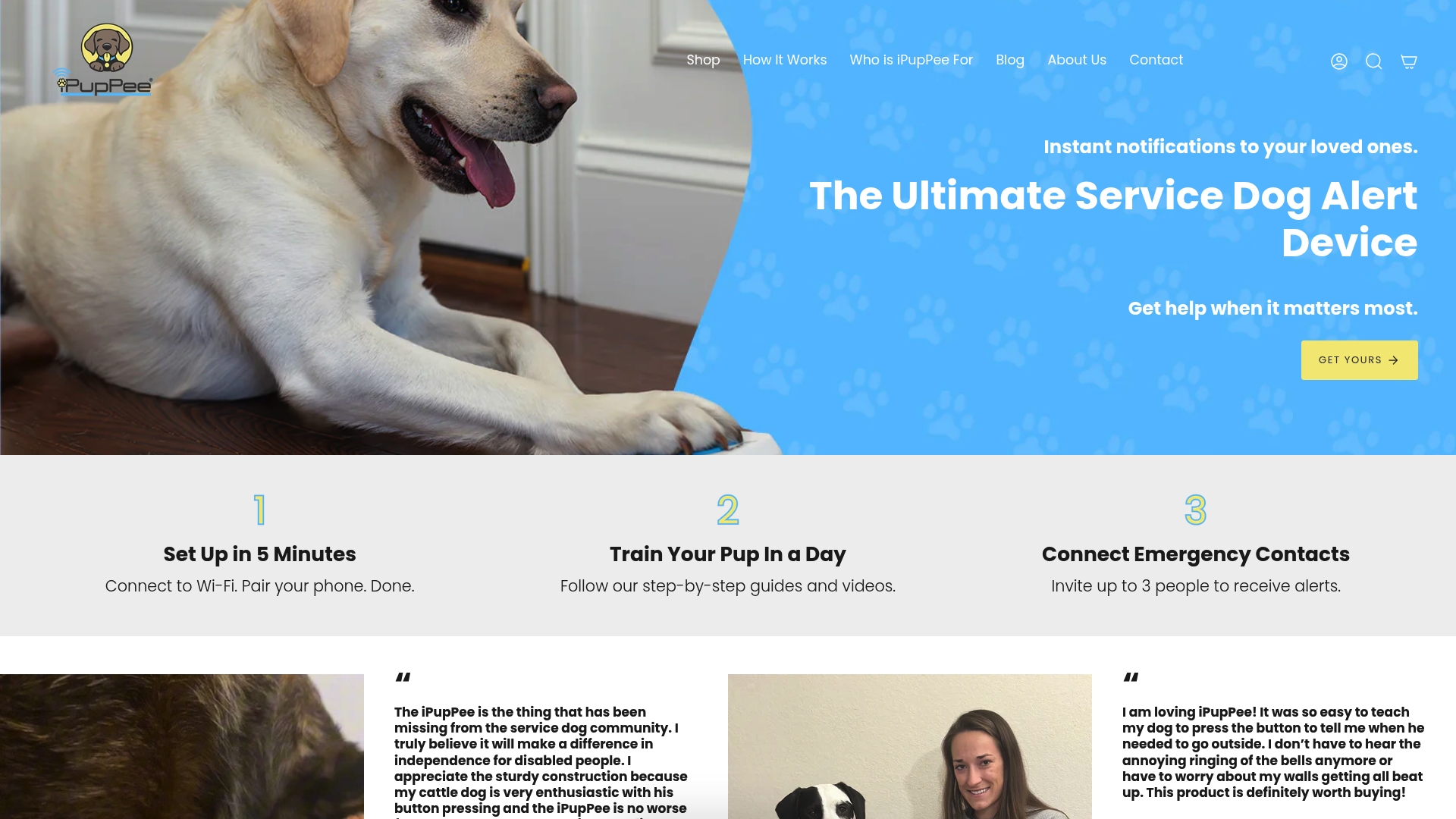
Explore dog communication technology solutions that complement your existing training protocols. Discover how dog communication training enhances independence and safety for handlers across the United States. Visit the iPupPee homepage to access expert tips, comprehensive training guides, and products specifically tailored for 2026 service dog handlers seeking to maximize their partnerships.
Frequently Asked Questions About Service Dog Training
How often should service dog training be updated after certification?
Training updates should occur regularly, ideally weekly or bi-weekly sessions, to maintain and adapt skills as handler needs evolve. Ongoing handler education is crucial to sustain performance levels and prevent skill degradation. Monthly comprehensive assessments help identify emerging gaps before they compromise safety or communication effectiveness.
Can technology like iPupPee replace traditional training methods?
Technology supplements but does not replace fundamental training and active handler involvement in the partnership. Best results come from integrating devices with consistent, foundational training that establishes core communication patterns. View technology as an enhancement tool that expands capabilities rather than a substitute for rigorous traditional methods.
What are the best training methods for new service dog handlers?
Start with positive reinforcement and basic communication skills before integrating technology or advanced techniques. Gradually build complexity as confidence and skills develop through consistent daily practice. Focus on mastering one skill completely before adding new challenges to prevent overwhelming both handler and dog.
How does training impact safety during emergencies?
Training with emergency simulations improves reaction times and reduces injury risk by up to 50% through practiced responses. Preparedness builds handler and dog confidence in crisis situations, enabling faster, more appropriate actions. Regular safety drills create automatic responses that function even under extreme stress when conscious thinking becomes difficult.
Recommended
- Service Dog Training Challenges in 2025: What Owners Need to Know – iPupPee
- How to Train Service Dogs for Effective Communication – iPupPee
- Mastering Training Disabled Dogs for Better Communication – iPupPee
- Why Train Dogs for Communication Devices Matters – iPupPee
- How to improve your communication skill - TechMoths
- Virtual Training Best Practices for Membership Groups 2025|CS