

TL;DR:
- Dog sensory communication involves scent, body language, sound, and touch working together to convey nuanced emotional and social signals. Owners who learn to interpret all four channels improve safety, reduce stress, and strengthen bonds with their dogs. Recognizing the full spectrum of signals enhances mutual understanding and transforms interactions into genuine dialogue.
Dog sensory communication is the multi-modal system dogs use to share emotions, intentions, and social information through scent, body language, sound, and touch. Most owners focus on tail wags and barks, but research from Scientific Reports and PetMD confirms that canine communication runs far deeper than any single signal. Understanding how dogs communicate across all four sensory channels transforms your relationship from guesswork into genuine dialogue. This guide breaks down each channel with science-backed evidence and practical strategies you can apply today.
What is dog sensory communication and why does it matter?
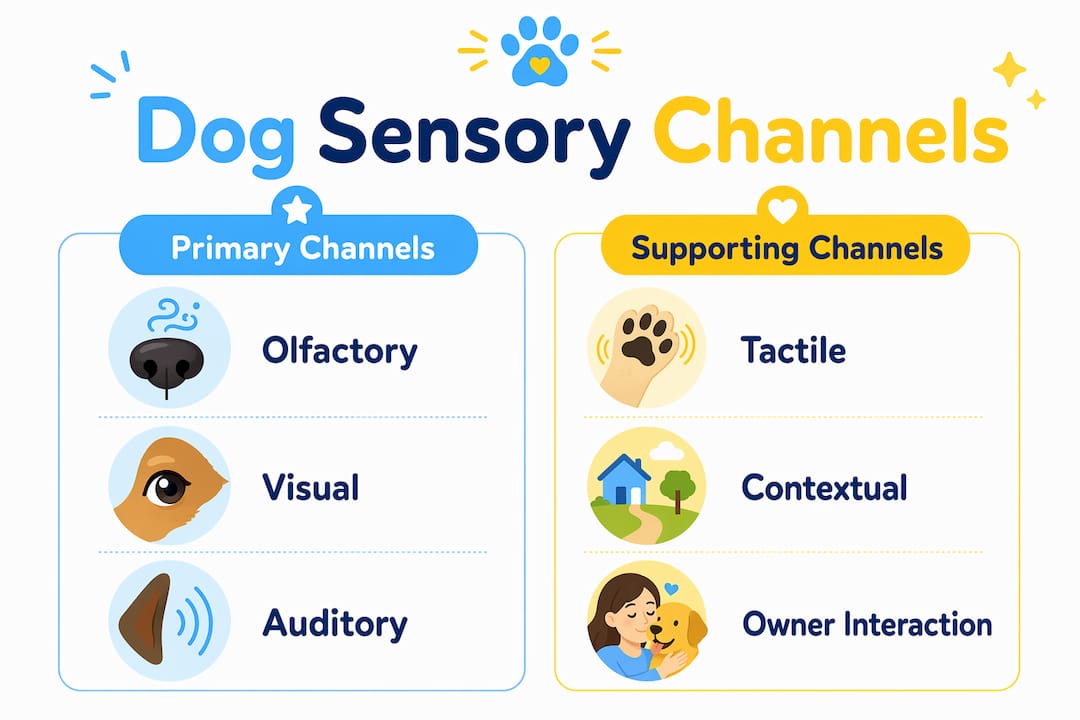
Dog sensory communication is not a single behavior. It is a layered system where olfactory, visual, auditory, and tactile signals work together to convey nuanced emotional states. A dog that appears calm by one measure may be broadcasting stress through another channel entirely. Owners who learn to read the full system rather than isolated cues make faster, safer decisions and build stronger bonds with their dogs.
The practical payoff is significant. Dogs that feel understood by their owners show lower stress responses, engage more readily in training, and display fewer behavioral problems over time. Recognizing the full range of canine communication signals is the single most effective thing you can do to improve your dog’s quality of life and your own experience as an owner.
How do dogs use olfactory signals in communication?
Scent is the primary sensory channel for dogs, and its role in communication goes far beyond sniffing fire hydrants. A 2026 study in Scientific Reports with 43 dogs demonstrated that dogs distinguish conspecific emotional odors, specifically joy, stress, and baseline states, and adjust their behavior accordingly. Dogs exposed to stress odors from other dogs moved closer to their owners and farther from strangers. Dogs exposed to joy odors showed more relaxed, affiliative behavior. This is emotional contagion through chemistry, and it happens constantly in your home.
The implications for owners are direct. Your own emotional state produces detectable chemical signals. Consistent emotional regulation in handlers creates more reliable scent profiles for dogs, which strengthens bonding and reduces anxiety. A dog living with a chronically stressed owner is literally inhaling that stress every day.
Urine marking adds another layer of complexity. A 2025 PubMed study found that male dogs’ marking behavior correlates with hormone and neurotransmitter changes triggered by specific emotional odor stimuli, including female estrus and agonistic male urine. Marking is not simply territorial aggression. It reflects cognitive and emotional processing of social information gathered through scent.
Key olfactory signals owners should recognize:
- Excessive sniffing of a specific spot signals that another animal has left an emotional chemical message there
- Sniffing the air with a raised head indicates the dog is processing distant scent information before deciding how to respond
- Reduced interest in food or treats during a walk often means the dog is scent-overloaded and processing social information
- Rolling in a scent is a form of scent-marking in reverse, where the dog carries information back to its social group
Pro Tip: Before a training session, take five minutes to calm your own nervous system. Your dog reads your emotional chemistry before you say a single command. A regulated handler produces a more readable scent profile, and your dog will respond with noticeably more focus.
What role does visual body language play in a dog’s sensory communication?
Visual signals are the channel most owners try to read, and also the channel most often misread. PetMD’s canine body language guide is explicit on this point: body language must be read as a whole. A wagging tail does not mean a happy dog. A wagging tail combined with a stiff body, whale eye, and flattened ears means a dog on the edge of a stress response.

The following table shows how the same signal reads differently depending on context:
| Signal | Relaxed context | Tense context |
|---|---|---|
| Tail wagging | Loose, wide sweep; dog is engaged and friendly | Stiff, high, rapid flick; dog is aroused and potentially reactive |
| Ears forward | Alert and curious about a sound or object | Fixed forward with hard stare; dog is assessing a threat |
| Yawning | Tired or content after exercise | Stress signal in a new or overstimulating environment |
| Lip licking | Post-meal contentment | Appeasement signal during conflict or discomfort |
| Soft eyes | Relaxed and trusting | Whale eye (whites visible) indicates fear or stress |
Reading multiple behavioral cues simultaneously is a skill that takes practice, but the payoff is immediate. Owners who scan the full body within seconds of an interaction are far less likely to misread a dog’s intent and far more likely to intervene before a stress response escalates.
Common misinterpretations owners make include treating a play bow as always meaning “let’s play” without checking whether the other dog is reciprocating, and assuming a dog that approaches a stranger is automatically friendly. Approach speed, body angle, and ear position all modify what an approach actually communicates.
Pro Tip: Practice the “three-second scan” every time you greet your dog or introduce them to a new situation. Check ears, tail, body posture, and eye softness in rapid sequence. This habit rewires your instinct to read clusters instead of single signals, and it takes less than a month to become automatic.
How do auditory and tactile cues support dog communication?
Vocalizations carry more specific information than most owners realize. Research from Eötvös Loránd University found that dogs decode motivation behind conspecific vocalizations rather than just emotional tone. Dogs approached distress calls more rapidly than agonistic ones, which means they are processing the why behind a sound, not just the emotional charge. This is species-specific decoding that human and chimpanzee voices do not trigger in the same way.
Vocal categories owners should distinguish:
- Distress vocalizations (high-pitched whines, yelps) signal pain, fear, or separation anxiety and call for immediate attention
- Agonistic vocalizations (low growls, barks with a hard edge) communicate threat assessment and should never be punished, as they are a dog’s warning system
- Playful vocalizations (mid-pitched, rhythmic barks; play growls with loose body) indicate positive arousal and social engagement
- Contact calls (soft whines or short barks directed at owners) are requests for social connection or guidance in an uncertain situation
Tactile communication is the least studied channel but one of the most powerful for bonding. Dogs use body contact, leaning, pawing, and licking to regulate their own emotional states and to signal attachment. A dog that leans against your leg during a thunderstorm is not being clingy. It is using tactile input to co-regulate its stress response, a behavior rooted in the same social bonding mechanisms seen in wolf packs.
Owners can use tactile communication intentionally. Slow, firm strokes along the dog’s back activate the parasympathetic nervous system and reduce cortisol. Rapid, patting contact does the opposite. The pressure, speed, and location of touch all carry communicative meaning to your dog.
How does context and owner interaction shape what dogs understand?
Dogs are exquisitely sensitive to human communicative style, and this sensitivity shapes how they learn and respond. A 2026 Science study comparing dogs, wolves, and human infants found that dogs make more search errors in social ostensive communicative tasks than in noncommunicative or nonsocial contexts. Dogs are so attuned to human social cues that those cues can actually override the dog’s own memory and problem-solving. This is not a flaw. It is evidence of deep co-evolutionary attunement.
What this means practically is that your body language, eye contact, and tone of voice directly influence your dog’s cognitive performance. Inconsistent signals from owners create confusion that looks like disobedience but is actually a communication failure on the human side.
Steps to improve communication clarity with your dog:
- Use consistent body posture for commands. If “sit” sometimes comes with a hand signal and sometimes without, your dog is decoding two different messages. Pick one and hold it.
- Match your emotional tone to the situation. Excited praise for a calm behavior reinforces arousal, not the behavior itself. Calm, warm praise for calm behavior communicates what you actually want.
- Reduce environmental noise before training. Dogs process multi-modal sensory input simultaneously. A high-distraction environment splits their attention across olfactory, visual, and auditory channels at once.
- Observe before intervening. Give your dog three to five seconds to process a new situation before you redirect. Premature intervention interrupts the dog’s own sensory assessment and teaches dependence rather than confidence.
- Track patterns over time. A dog that consistently shows stress signals in one environment is telling you something specific about that environment. One observation is noise. A pattern is data.
Pro Tip: Video your dog during a typical day when you are not actively interacting. You will catch dozens of communication signals you miss in real time. Reviewing even ten minutes of footage teaches you more about your dog’s baseline sensory state than a month of casual observation.
Key takeaways
Dogs communicate through a four-channel sensory system, and reading any single signal in isolation produces unreliable conclusions that can damage trust and safety.
| Point | Details |
|---|---|
| Scent carries emotional data | Dogs detect joy and stress odors from other dogs and adjust social behavior in response. |
| Body language requires cluster reading | Scan ears, tail, eyes, and posture together within seconds to avoid dangerous misreads. |
| Vocalizations encode motivation | Dogs decode the why behind calls, not just emotional tone, so context determines meaning. |
| Owner emotional state is a signal | Your stress chemistry is detectable by your dog; regulated handlers produce clearer communication. |
| Context overrides single cues | The same signal means different things in different situations, so always factor in environment and motivation. |
Why most owners are only reading half the conversation
Most dog owners I have worked with are fluent in one channel and nearly blind to the others. They watch the tail and miss the scent signals entirely. Or they hear the bark and ignore the body posture that explains exactly what the bark means. The honest truth is that dogs are communicating in full sentences and most of us are catching every third word.
What changed my own understanding was treating scent as a real-time emotional broadcast rather than background noise. Once I started paying attention to when my dog sniffed me versus when he avoided contact, I realized he was reading my emotional state before I had consciously registered it myself. That is not mystical. It is chemistry, and the Scientific Reports research on emotional chemosignals confirms it.
The other shift that matters is slowing down. Rapid multi-signal scanning sounds fast, but it actually requires you to pause before reacting. Most communication breakdowns between dogs and owners happen because the owner responded to the first signal they noticed instead of waiting two seconds to read the full picture. Patience is not passive. It is the most active communication skill you can develop.
Every dog is also an individual. The research gives you the framework, but your specific dog has its own baseline, its own sensory sensitivities, and its own history. The communication tips from Ipuppee are a strong starting point, but the real work is in daily observation of your particular dog across all four sensory channels.
— Andrew
Strengthen your bond with Ipuppee’s communication resources
Understanding your dog’s sensory signals is the foundation of every safe, rewarding interaction you will ever have together. Ipuppee builds on that foundation with practical tools and guides designed specifically for owners who want to go beyond basic obedience.
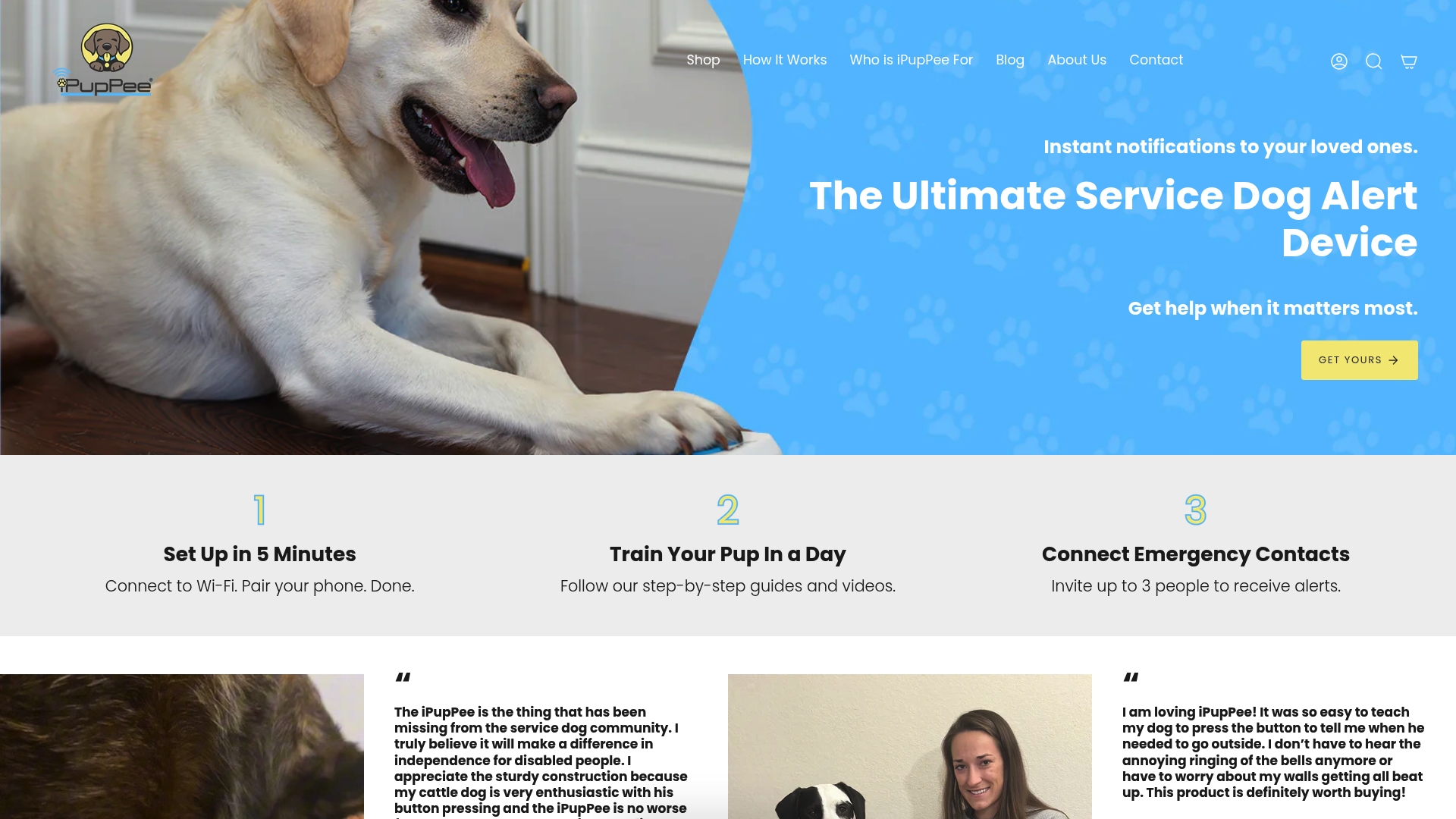
At Ipuppee, you will find resources covering everything from reading behavioral signals accurately to training your dog to communicate needs through simple, reliable cues. The iPupPee alert device is built on exactly this principle: giving dogs a clear, consistent way to signal their needs to owners, including those with disabilities or seniors living alone. When your dog has a reliable communication channel and you have the knowledge to read their sensory signals, the relationship changes completely. Explore Ipuppee’s full resource library to take the next step.
FAQ
What is dog sensory communication?
Dog sensory communication is the system dogs use to share emotions and intentions through scent, body language, vocalizations, and touch. It operates across all four channels simultaneously rather than through any single signal.
How do dogs use scent to communicate emotions?
Dogs produce and detect emotional chemosignals that convey states like joy and stress. A 2026 Scientific Reports study found that dogs exposed to stress odors from other dogs moved closer to their owners, showing direct behavioral responses to scent-based emotional information.
Why is tail wagging not always a sign of happiness?
Tail wagging indicates arousal, not necessarily friendliness. PetMD’s body language guidance confirms that a stiff, high tail wag combined with a rigid body and hard stare signals threat assessment, not a friendly greeting.
How do dogs decode other dogs’ vocalizations?
Research from Eötvös Loránd University shows that dogs process the motivational meaning behind calls rather than just emotional tone. Dogs approached distress calls faster than agonistic ones, indicating they understand the why behind a sound.
How does my behavior affect my dog’s communication?
Your body language, tone, and emotional state directly shape how your dog processes and responds to you. A Science study on ostensive cues found that dogs are so sensitive to human social signals that those signals can override the dog’s own memory in problem-solving tasks.