

Living with a disability or facing the challenges of aging brings unique worries about your dog’s safety and your own independence. It’s not always easy to keep track of your dog’s needs, health, and security when daily routines can be unpredictable or physically demanding. You want tools that make life safer and easier for both you and your best friend.
The latest advances in pet technology offer practical solutions. From talking buttons that let your dog ‘speak’ their needs, to smart wearables that track vital signs like heart rate and activity, these innovations put better care and communication within your reach. When you use the right devices and training strategies, your dog can alert you to emergencies, and you gain peace of mind knowing real-time health data is always available.
Get ready to discover how modern pet tech and smart training methods can transform care for disabled and senior pet owners. Each insight in this list is designed to help you create a safer, more connected life with your dog.
Table of Contents
- Choose the Right Dog Communication Devices
- Train Your Dog to Use Alert Buttons Safely
- Monitor Your Dog’s Health with Smart Wearables
- Enhance Home Safety with Connected Devices
- Use GPS Trackers for Urban Dog Walks
- Support Independence with Automated Feeders
Quick Summary
| Takeaway | Explanation |
|---|---|
| 1. Choose appropriate communication devices for your dog. | Select devices like talking buttons that suit your dog’s needs and your environment for effective communication. |
| 2. Train your dog consistently and patiently. | Establish connections between button presses and rewards through continued practice to enhance your dog’s communication skills. |
| 3. Invest in smart wearables for health monitoring. | Utilize devices that track your dog’s vital signs and activity levels, allowing for early detection of potential health issues. |
| 4. Implement connected devices for home safety. | Create a safety network at home with smart cameras and locks to monitor your dog’s well-being and ensure security. |
| 5. Use automated feeders for easy meal management. | Automated feeders provide consistent meal portions, allowing for stress-free feeding while maintaining your dog’s health. |
1. Choose the Right Dog Communication Devices
Your dog’s safety depends on selecting the right communication tool. The device you choose will determine how effectively your dog can alert you to needs, emergencies, or important information.
Understanding Your Options
Dog communication devices range from simple recording buttons to more advanced alert systems. The most popular choice for pet owners involves talking buttons, which record your voice and play the message when your dog presses them.
These recordable devices work by capturing your spoken words and storing them digitally. When your dog presses the button with their paw or nose, the pre-recorded message plays back immediately.
How Dogs Learn to Use These Devices
Research shows that talking button technology enables dogs to communicate their needs through interactive, dynamic use. Your dog doesn’t need language skills—they simply learn that pressing the button produces a response from you.
This collaborative communication works best when you teach your dog the connection between the button press and the outcome. Each time your dog interacts with the device, they’re building understanding through repeated positive experiences.
Key Features to Look for
- Clear audio quality so your recorded messages play back distinctly
- Durable construction that withstands repeated paw presses from daily use
- Weather-resistant design if your device will be used outdoors
- Easy-to-change batteries or reliable charging systems
- Buttons sized appropriately for your dog’s paw size and strength
Practical Application for Your Situation
If you’re a disabled or senior pet owner living alone, communication devices provide essential safety tools. Your dog can press a button to alert you to bathroom needs, request help, or signal emergencies. For service dog handlers, these devices add another layer of communication beyond traditional training.
Selecting the right device means choosing one that fits your dog’s size, your living environment, and your specific safety needs.
Consider whether you need a device for indoor use only or one that functions reliably in various weather conditions. Think about button size relative to your dog’s paw—larger buttons work better for dogs with less precise control.
Pro tip: Start by testing the device’s button responsiveness and audio volume at the location where you’ll use it most, ensuring your dog can activate it reliably and you’ll hear the message from anywhere in your home.
2. Train Your Dog to Use Alert Buttons Safely
Training your dog to use alert buttons requires patience, consistency, and a clear understanding of how your dog learns. The process transforms a simple device into a reliable communication tool that keeps you both safer.
Start With the Basics
Your dog doesn’t instinctively understand that pressing a button produces results. You’ll need to teach this connection through repetition and positive reinforcement. This foundational step makes all future training smoother.
Begin by introducing the button in a calm environment where your dog feels comfortable. Let them explore it naturally without pressure. Some dogs nose the button immediately, while others need gentle encouragement.
Build the Association Slowly
When your dog accidentally touches the button, immediately reward them with treats, praise, or play. This creates a positive connection between the button press and the reward. Repeat this 5 to 10 times per training session.
Gradually shape the behavior by rewarding only deliberate button presses. Your dog will start seeking out the button for the reward. This takes time, so don’t rush the process.
Establish Consistent Training Sessions
Short, frequent training works better than long marathon sessions. Dogs learn through repetition, and 5 to 10-minute sessions several times daily are ideal. Consistency matters more than duration.
Use the same location for training initially, then gradually move to different areas. This helps your dog generalize the behavior beyond one specific spot.
Progressive Training Steps
- Introduce the button in a quiet, distraction-free space
- Reward every accidental or encouraged button press
- Gradually require more deliberate presses before rewarding
- Practice in different rooms and environments
- Introduce the button during natural activities like feeding time
- Teach your dog to press when requesting specific things
Safety Considerations During Training
Monitor your dog’s paw health if they’re pressing buttons repeatedly. Watch for signs of fatigue or frustration. If your dog seems disinterested, take a break and try again later.
For disabled and senior owners, position buttons at heights your dog can comfortably reach without straining. This prevents injury and encourages consistent use. Accessibility for your dog ensures long-term success.
Understanding alert button training methods helps you avoid common mistakes and accelerate your dog’s learning.
Successful button training depends on making the experience rewarding and stress-free for your dog.
Never force your dog to press the button or punish them for not using it correctly. Patience and positive reinforcement create a dog who actively wants to communicate with you.
Pro tip: Keep training sessions at the same time each day and in the same location initially, as dogs thrive on routine and will more quickly understand the connection between button presses and outcomes.
3. Monitor Your Dog’s Health with Smart Wearables
Smart wearable devices have transformed how pet owners track their dog’s wellbeing in real time. These innovative tools provide continuous health data that helps you catch problems early and keep your dog safer.
What Smart Wearables Actually Do
Dog wearables are small devices that collect biometric information throughout the day. They track vital signs like heart rate, temperature, and activity levels continuously without requiring constant attention from you.
This data flows directly to your smartphone or connected device, giving you instant access to your dog’s health trends. Unlike occasional vet visits, wearables provide ongoing insights into your dog’s daily patterns and potential health changes.
Real-Time Health Monitoring Benefits
Real-time data on vital signs allows early detection of health issues before they become serious problems. This is especially valuable for senior dogs or those with existing health conditions.
You’ll notice when your dog’s heart rate increases unexpectedly, when activity drops significantly, or when temperature patterns change. These early warning signs help you contact your veterinarian before a small issue becomes a major emergency.
Key Features to Look For
- Continuous monitoring of heart rate and respiratory rates throughout the day
- Activity tracking that shows changes in movement and exercise patterns
- Comfortable fit designed for dogs with fur and sensitive skin
- GPS location tracking for added safety if your dog gets lost
- Long battery life that doesn’t require constant charging
- Easy-to-read app interface that displays health data clearly
Practical Applications for Your Situation
If you’re a disabled or senior pet owner, these devices add an essential layer of health oversight. They provide reassurance that your dog is staying active and healthy without requiring strenuous monitoring activities.
For service dogs, wearables ensure your dog remains in optimal condition to perform their critical tasks. They help you schedule rest days based on activity data, preventing overwork and burnout.
You can share wearable data directly with your veterinarian during appointments, giving them precise health information. This leads to more informed medical decisions and better overall care.
Smart wearables transform your dog from an observed pet into an actively monitored family member with documented health records.
The data helps you recognize patterns specific to your individual dog rather than relying on general breed information.
Pro tip: Pair your wearable device with regular vet visits to establish baseline health metrics, then use the continuous data to spot deviations that warrant veterinary attention.
4. Enhance Home Safety with Connected Devices
Connected smart devices create a safety network throughout your home that works 24/7 to protect your dog and give you peace of mind. These tools help you monitor what’s happening even when you can’t be in every room.
How Connected Devices Work Together
Smart home technology allows multiple devices to communicate with each other through a central hub or smartphone app. Your dog’s safety improves when you can see, hear, and respond to situations in real time.
Think of it like having extra eyes and ears throughout your home. Smart cameras let you watch your dog, smart door locks prevent accidental escapes, and connected water bowls ensure hydration levels stay optimal.
Essential Connected Devices for Dog Safety
- Smart cameras with night vision and two-way audio so you can monitor and communicate
- Smart door locks that prevent unauthorized access and unwanted escapes
- Smart feeding systems that dispense meals on schedule and track eating patterns
- Temperature monitors that alert you if your home gets too hot or cold for your dog
- Motion sensors that detect unusual activity and notify you immediately
- Smart water dispensers that track hydration and maintain fresh water availability
Understanding Connected Device Security
Connected devices offer convenience, but they also require careful attention to security and privacy. IoT pet devices introduce potential vulnerabilities that you need to understand and protect against.
Security risks in connected pet devices emphasize the importance of choosing devices from reputable manufacturers and regularly updating their software.
Weak passwords and outdated apps create security holes that compromise your home network. Take time to set strong, unique passwords for each device and change them regularly.
Practical Implementation for Your Needs
If you’re a disabled or senior pet owner, connected devices reduce the physical demands of pet care. You can monitor your dog’s well-being without constant movement around your home.
For service dog handlers, these devices provide documentation that your service dog is safely cared for when you’re managing other responsibilities. Camera footage proves your dog had access to water, food, and appropriate rest.
Connected devices work best when you prioritize security as much as convenience.
Start small by adding one or two devices, then expand once you’re comfortable managing them. This prevents overwhelming yourself with too much technology at once.
Pro tip: Enable two-factor authentication on all connected device apps and set calendar reminders to update device software monthly, protecting your home network and your dog’s safety simultaneously.
5. Use GPS Trackers for Urban Dog Walks
GPS trackers transform urban dog walks into safer experiences by letting you know exactly where your dog is at all times. For disabled and senior pet owners in cities, these devices provide peace of mind and independence.
How GPS Trackers Keep Your Dog Safe
A GPS tracker is a small device that attaches to your dog’s collar and communicates with satellites to pinpoint their location. Real-time tracking updates appear on your smartphone, giving you constant awareness of your dog’s whereabouts.
This technology becomes lifesaving if your dog gets loose in heavy traffic or disappears in a crowded urban area. Instead of searching frantically, you can see exactly where your dog went and retrieve them quickly.
Essential Features for Urban Use
The best urban trackers combine several key capabilities to handle city environments effectively. You’ll want devices with accurate GPS, reliable cellular connectivity, and durable, waterproof construction.
Advanced GPS and cellular technologies provide precise location tracking that works reliably in urban settings with tall buildings and dense networks.
Look for these important features when selecting a tracker:
- Geofencing alerts that notify you if your dog leaves a designated safe area
- Long battery life lasting several days between charges
- Waterproof design that survives rain, puddles, and humid city conditions
- Lightweight construction that doesn’t burden your dog during walks
- User-friendly app with clear maps and easy navigation
- Activity tracking that monitors your dog’s movement and exercise levels
Practical Benefits for Your Situation
If mobility challenges make it difficult to chase after a loose dog, GPS trackers eliminate that struggle entirely. You locate your dog through the app instead of pursuing them physically.
For service dog handlers, these devices add documentation that your service dog was safely controlled during outings. The location history proves your dog stayed with you and responded to commands.
Senior pet owners benefit from reduced stress and increased independence. Your dog can enjoy more freedom on walks while you maintain complete oversight of their location and safety.
GPS trackers transform your dog’s movements from a mystery into a transparent, trackable reality.
Urban environments present unique challenges with busy streets, crowded sidewalks, and multiple escape routes. GPS technology addresses these challenges directly.
Pro tip: Set up geofence boundaries around your home and regular walking routes before your first urban walk, so you’ll receive instant alerts if your dog wanders beyond safe zones.
6. Support Independence with Automated Feeders
Automated feeders remove the physical burden of feeding from your daily routine and ensure your dog eats on schedule, every single day. For disabled and senior pet owners, this technology transforms pet care from a demanding task into a simple, managed process.
How Automated Feeders Work
These smart devices store dry food and dispense precise portions at times you set through a smartphone app or built-in timer. Your dog receives consistent meals without you needing to measure, pour, or hand-deliver food each time.
The feeder releases a predetermined amount of food into a bowl when the scheduled time arrives. Your dog learns to expect meals at the same time daily, creating healthy eating habits and digestive stability.
Key Benefits for Your Situation
If you have limited mobility or strength, you eliminate the repetitive lifting, bending, and reaching that traditional feeding requires. This protects your joints and conserves energy for activities you genuinely enjoy with your dog.
Automated feeders prevent overfeeding by controlling portion sizes precisely. This keeps your dog at a healthy weight and reduces obesity-related health problems that become increasingly serious as your dog ages.
Essential Features to Look For
Automated feeding systems with IoT connectivity enable remote monitoring and scheduling from anywhere using your phone. Look for these important capabilities:
- Portion control that measures exact amounts down to the ounce
- Programmable schedules allowing multiple meals per day at different times
- Food level sensors that alert you when food is running low
- App connectivity for remote monitoring and adjustments
- Backup power that maintains schedule during power outages
- Easy cleaning with removable bowls and accessible compartments
- Durable construction that resists your dog’s attempts to force the lid open
Real-World Scenarios Where This Helps
You’re managing medication or medical equipment and need your hands free. The feeder handles meals independently while you focus on your health needs.
You have unpredictable energy levels and some days struggle with basic tasks. The feeder ensures your dog never misses meals regardless of how you’re feeling.
You want your service dog well-fed and energized throughout the day without stopping work to feed them. Multiple scheduled meals maintain consistent nutrition and performance.
Automated feeders transform feeding from a daily responsibility into a background system that runs itself.
Your dog’s nutrition becomes reliable and consistent, supporting better health outcomes and giving you genuine independence in pet care.
Pro tip: Start by setting the feeder to your dog’s current feeding times, then adjust portions based on your veterinarian’s recommendations to prevent weight gain during the transition to automated feeding.
Below is a comprehensive table summarizing the main points, strategies, and tools discussed throughout the article regarding enhancing communication and safety for dogs.
| Topic | Details | Key Considerations |
|---|---|---|
| Dog Communication Devices | Includes talking buttons for dogs to communicate their needs; requires training and positive reinforcement. | Select devices with durable constructions, clear audio, and sizes appropriate for your dog. |
| Training Dogs for Alert Buttons | Requires consistent training through positive reinforcement. Gradually introduces button use and generalizes behavior to multiple environments. | Monitor dog’s physical and emotional condition during training to ensure effectiveness. |
| Monitoring Health with Wearables | Smart devices provide continuous monitoring of vital signs and activity levels; data accessible via apps. | Look for devices with GPS, comfortable designs, long battery life, and reliable connectivity. |
| Connected Home Safety Devices | Smart technology enhances pet safety and convenience through devices like cameras, locks, and feeders. Allows remote monitoring. | Prioritize device security to ensure home network safety while implementing these systems. |
| GPS Trackers for Urban Walks | Collars with GPS show real-time location for added security in crowded or urban areas. | Choose trackers with waterproof designs, geofencing alerts, and user-friendly apps. |
| Automated Feeders | Dispense predetermined food portions at scheduled intervals. Beneficial for disabled or senior pet owners by relieving physical effort. | Requires durable construction, reliable scheduling, and easy maintenance. |
Enhance Your Dog’s Safety and Communication with iPupPee Technology
The article highlights key challenges pet owners face when trying to keep their dogs safe and connected, especially those living alone or with mobility challenges. If you have ever worried about how your dog can alert you to needs or emergencies or wished for an easier way to communicate, you are not alone. Understanding concepts like talking buttons and smart wearables is a great start, but putting them into practice requires a trusted, easy-to-use solution.
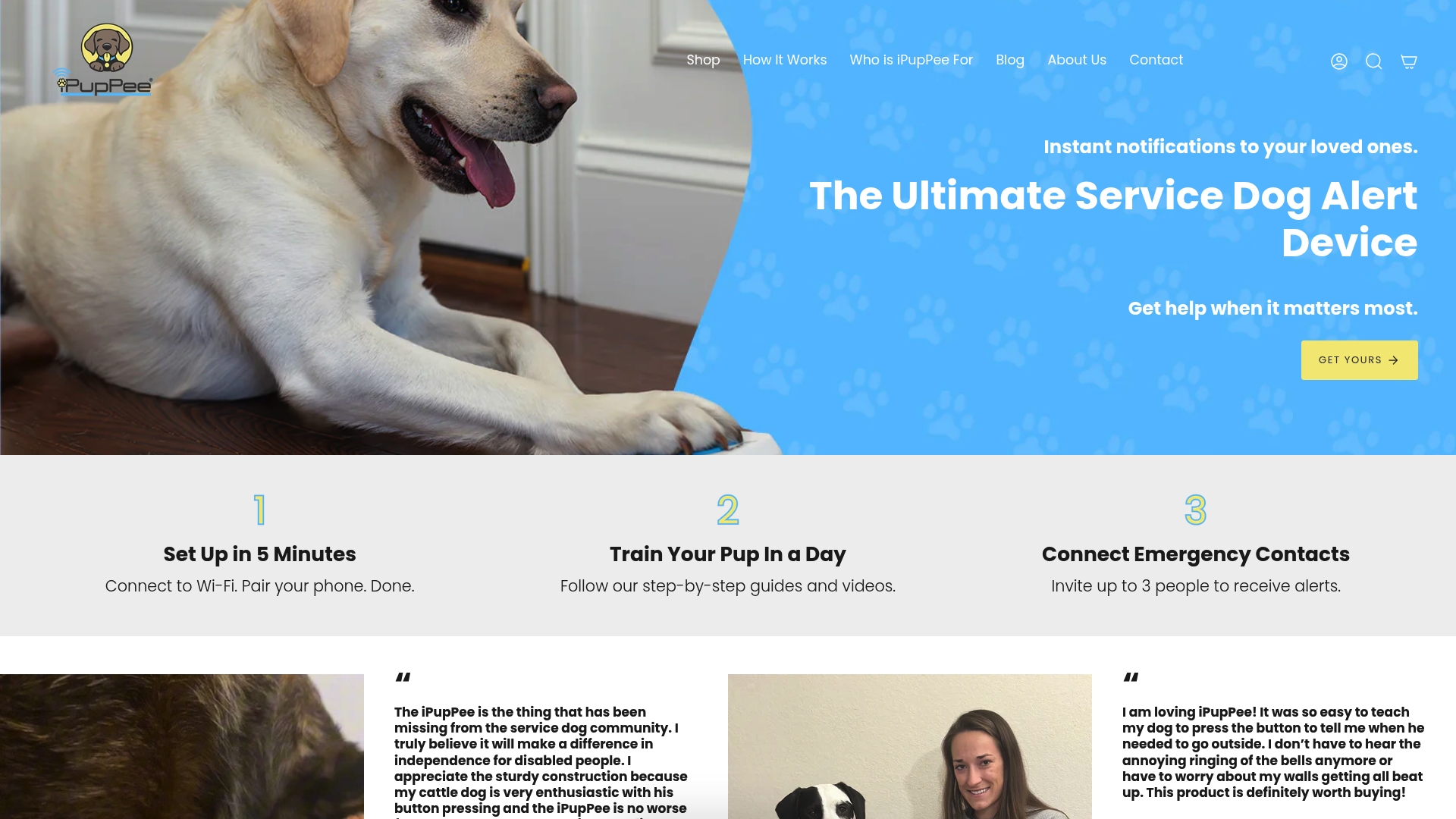
Discover how the iPupPee device can transform your dog’s safety through simple button presses that let your dog communicate effectively with you. Designed for disabled and senior pet owners as well as service dog handlers, iPupPee makes alert button training straightforward and reliable. Explore how you can integrate technology from the article, like alert buttons and smart communication devices, into daily life with your dog. Visit iPupPee today and experience peace of mind knowing you and your companion are connected like never before.
Frequently Asked Questions
How can I effectively train my dog to use alert buttons?
To train your dog to use alert buttons effectively, start by introducing the button in a calm environment and encourage your dog to explore it. Use positive reinforcement, rewarding your dog for any interaction with the button, and gradually shape the behavior to require deliberate presses before rewarding.
What features should I look for in a smart wearable device for my dog?
When selecting a smart wearable device for your dog, look for continuous monitoring of vital signs, comfortable fit, GPS location tracking, and an easy-to-read app interface. Prioritize devices with long battery life and reliable comfort to ensure your dog wears it without discomfort.
What are the benefits of using automated feeders for my dog?
Automated feeders provide consistent feeding schedules and portion control, reducing the risk of overfeeding while ensuring your dog eats at regular intervals. These devices help maintain healthy eating habits and give you more independence in managing your dog’s care without the physical burden of manual feeding.
How do connected devices enhance home safety for dogs?
Connected devices enhance home safety by creating a network that monitors your dog through smart cameras, door locks, and feeding systems. These tools allow you to oversee your dog’s activities remotely, ensuring they are safe and secure even when you’re not in the same room.
How do GPS trackers help during urban dog walks?
GPS trackers help during urban dog walks by providing real-time location updates on your dog’s whereabouts. This technology gives you peace of mind and enables quick retrieval if your dog gets loose by showing you exactly where they are on your smartphone.
Can I monitor my dog’s health trends with smart technology?
Yes, you can monitor your dog’s health trends using smart wearable devices that track vital signs and activity levels. This ongoing data helps you detect health issues early, allowing for timely veterinary care, and supports better overall health management for your pet.
Recommended
- How to Increase Dog Safety with Advanced Communication Devices – iPupPee
- 7 Essential Pet Safety Tips for Smarter Dog Owners – iPupPee
- Dog Safety Technology: Elevating Independence for Owners – iPupPee
- Dog Communication Technology: Enhancing Safety and Independence – iPupPee
- 7 Essential Pet Safety Tips Every New Owner Should Know – Pawfect Picks