

TL;DR:
- Most dog owners prioritize their pets during disasters but lack proper emergency plans. Proper preparation includes a well-stocked, waterproof kit with supplies for at least 10 days and a clear, practiced evacuation plan. Owners of service or special needs dogs require additional documentation, specialized gear, and training to safely handle emergencies.
When disaster strikes, most dog owners refuse to leave without their pet. In fact, 83% of US dog owners say they would not evacuate without their dog, yet the majority have no plan in place. That gap is dangerous. Whether you are facing a wildfire, flood, or sudden medical crisis, the difference between a safe outcome and a tragic one often comes down to preparation made weeks before the emergency happens. This guide gives you a clear, actionable path to protect your dog, including special steps for service animals and pets with medical needs.
Table of Contents
- Critical supplies and tools for emergency dog safety
- Step-by-step emergency plan for dog owners
- Special protocols for service and special needs dogs
- First aid and crisis response for injured dogs
- Why owner education is the missing ingredient in emergency dog safety
- Next steps for proactive dog safety
- Frequently asked questions
Key Takeaways
| Point | Details |
|---|---|
| Prepare an emergency kit | Every dog owner should keep a 10-day supply kit with food, water, IDs, and necessities ready. |
| Practice your safety plan | Rehearse emergency procedures and crating to reduce stress for both you and your dog. |
| Customize for your dog’s needs | Service and special needs dogs may require extra protocols and medical supplies in emergencies. |
| Know first aid basics | Learn essential first aid, including CPR and when to seek urgent veterinary help. |
| Ongoing owner education | Regular training and learning boost your preparedness and your dog’s chances of survival in crises. |
Critical supplies and tools for emergency dog safety
Knowing what is at stake, the first step is making sure you have the right tools and supplies in place. A well-stocked kit is not optional. It is the foundation of every decision you will make during a crisis, and the time to build it is long before you ever need it.
FEMA recommends a waterproof kit containing at least 10 days’ worth of food, water, and medications for your pet. That timeline surprises most people. Many owners think three days is enough, but extended evacuations or infrastructure failures can stretch much longer. Your kit needs to be genuinely ready, not just started.
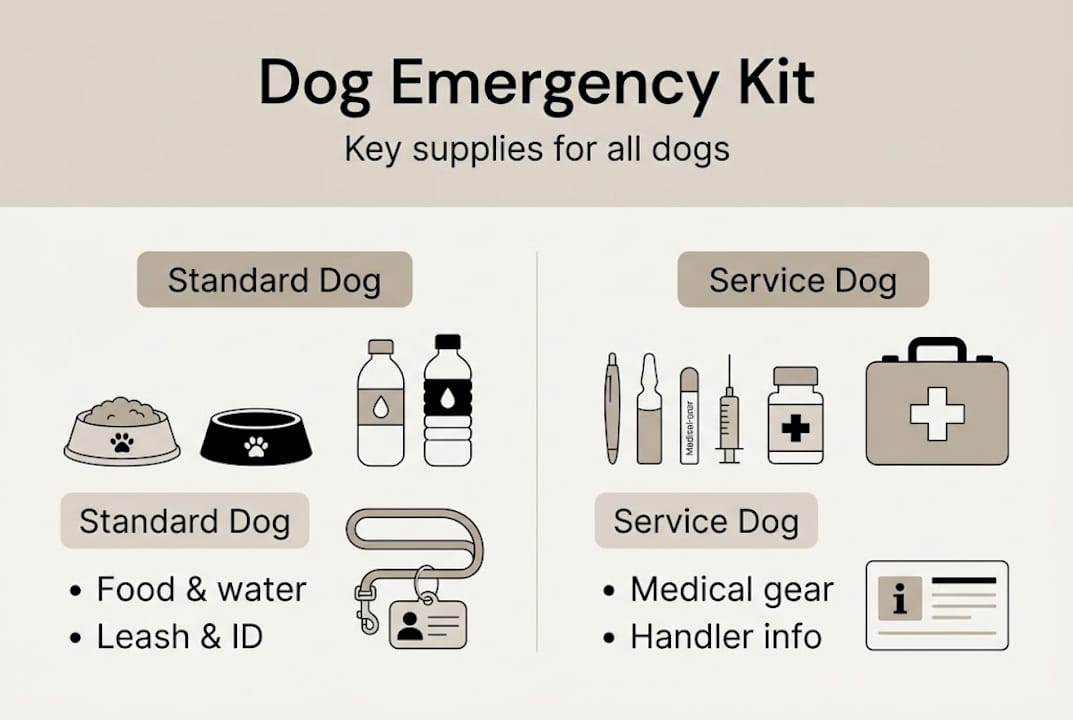
Essential supplies for every dog’s emergency kit:
- Dry or canned food (10-day supply, sealed and rotated every 6 months)
- Bottled water and a portable bowl
- All prescription medications with dosing instructions
- Copies of vaccination records and vet contact info
- A current photo of you with your dog for identification
- Collar with ID tags and a backup leash
- Crate or collapsible carrier
- Familiar toy or blanket to reduce stress
- Waste bags and basic cleaning supplies
- A small first aid kit sized for dogs
Service dogs and dogs with special needs require additional preparation. Service dogs need emergency go-bags that include visible ID patches, task-specific equipment, medical records, and documentation proving their service animal status. If your dog wears a mobility harness or uses specialized gear, pack a backup. A malfunctioning piece of equipment during a disaster is a serious problem with no easy fix.
| Kit category | Standard dog | Service or special needs dog |
|---|---|---|
| Food and water | 10-day supply | 10-day supply, diet-specific |
| Medications | Prescriptions only | Full seizure or condition kit |
| ID and records | Tags, vet records | Legal documentation, task gear |
| Comfort items | Toy, blanket | Familiar scent items, handler info |
| Equipment | Leash, crate | Backup harness, vest, signal device |
Pro Tip: Store your kit in a waterproof bin near your exit point, and set a phone reminder every six months to swap out expired food, check medications, and update records. A kit that is outdated is almost as dangerous as no kit at all. You can find more detail in this dog emergency preparedness guide and review pet safety emergency steps to build your full strategy.
Step-by-step emergency plan for dog owners
Now that you know what to have on hand, you need a plan that is easy to follow under pressure. When adrenaline kicks in, you will not think clearly. A written, practiced plan removes the guesswork.
Before an emergency:
- Identify two evacuation routes from your home and mark them on a printed map.
- Research pet-friendly shelters and hotels within 50 miles in each direction.
- Designate an out-of-area contact who can coordinate if you and your dog get separated.
- Register your dog with your local emergency management office if your area offers that option.
- Train your dog to enter their crate on command. Some shelters require containment, and a dog that panics in a crate creates real problems during an already stressful situation.
During an emergency:
- Grab your pre-packed kit and leash your dog immediately, before gathering personal items.
- Never leave your dog chained outside. FEMA explicitly warns that pets left restrained outdoors during disasters face severe injury or death.
- Keep your dog in the crate or on a short leash throughout the evacuation.
- Check in with your designated contact as soon as you reach safety.
After an emergency:
- Watch your dog closely for stress behaviors like panting, hiding, or refusing food.
- Contact your vet within 24 hours if you notice any physical symptoms.
| Situation | Companion dog approach | Service dog approach |
|---|---|---|
| Evacuation trigger | Grab kit, leash, go | Gear up dog, alert support network |
| Shelter arrival | Standard pet area | Request accessible, handler-adjacent space |
| Record verification | Vet card, photo ID | Legal documentation, task certification |
| Stranger handling | Basic obedience | Pre-trained stranger command protocols |
Pro Tip: Store a waterproof photo ID card in both your wallet and your dog’s go-bag. Include your dog’s name, your contact info, their vet’s number, and any medications. If you get separated, whoever finds your dog has everything they need. Explore dog emergency training skills and learn how dog emergency alert systems can add another layer of protection.

Special protocols for service and special needs dogs
If your dog is a service animal or has unique medical needs, your plan needs a few extra layers. The standard approach simply does not cover the specific situations these dogs face.
For dogs with epilepsy, you need more than general first aid knowledge. A seizure that lasts over five minutes, a cluster of repeated seizures, or gums that turn blue are all medical emergencies requiring immediate intervention. Your kit should include a seizure action plan written by your vet, any prescribed rescue medications like diazepam, a timer to track seizure duration, and the 24-hour emergency vet contact.
Key protocols for special needs dogs:
- Keep a laminated copy of your dog’s medical conditions and medications on their crate and in your wallet.
- Train your dog to accept handling from unfamiliar people in calm, low-stress practice sessions before any emergency occurs.
- Pack your dog’s regular bedding and a worn shirt with your scent. Familiar smells lower anxiety dramatically during displacement.
- If your dog takes medications on a strict schedule, set phone alarms for every dose time, even during chaos.
- Carry a short written summary of your dog’s task work so responders understand the dog’s role.
“First responders may not understand service dog protocols. Proactively informing first responders about your dog’s role and legal rights can prevent unnecessary separation and reduce the risk of your dog being mishandled or taken to a standard shelter.”
Separation is one of the most serious risks for service dog handlers. If you are incapacitated, who takes over? Designate a trained backup handler and make sure your dog has had repeated positive interactions with that person before any crisis. Review the full service dog protocol guide to understand your rights in emergency settings. You can also use the dog alert response guide and dog handler support tips to build a more complete plan.
Pro Tip: Create a one-page emergency card for your service dog that includes their name, task type, handler info, backup handler contact, and a note that reads “This dog is a trained service animal. Please do not separate from handler without documented consent.”
First aid and crisis response for injured dogs
Even with a plan, emergencies still bring injury risks, so you must know what to do in the critical moments. Acting quickly and correctly can be the difference between recovery and permanent harm.
How to help an injured dog step by step:
- Stay calm. Dogs read your stress. A panicked handler makes an injured dog harder to manage.
- Approach slowly and avoid direct eye contact, which can feel threatening to a frightened dog.
- If the dog is in pain, muzzle them before moving. Even the gentlest dog may bite when hurt. The only exceptions are dogs with facial injuries, chest wounds, or flat-faced breeds with breathing difficulty.
- Slide the dog onto a rigid surface like a board or stiff mat to transport without bending the spine.
- Apply direct pressure to any bleeding wound using a clean cloth and maintain it without lifting to check.
- For suspected heatstroke, move the dog to shade, apply cool (not cold) water to the paws and belly, and get to a vet immediately.
“If your dog is unresponsive and not breathing, begin CPR. Use 100 to 120 compressions per minute on the chest. Do not muzzle a dog receiving CPR, and use extra caution with chest injuries.”
Knowing when to call the vet matters as much as knowing what to do. Signs that require an immediate call include sustained unconsciousness, seizures, breathing that is labored or rattling, pale or blue gums, suspected poisoning, or any wound that is deep or bleeding without stopping.
Stat to know: Only 46% of dog owners have a disaster kit ready. That means more than half of all dogs face emergencies with an owner who has nothing prepared. Do not be in that group. Start with dog emergency alert signs to recognize distress early, and build on that with dog safety best practices for a full picture.
Why owner education is the missing ingredient in emergency dog safety
Here is the uncomfortable truth most preparedness content skips: checklists do not save dogs. Educated, practiced owners do. You can have the perfect kit packed and still freeze in a crisis if you have never thought through the scenario. Drills feel silly until the moment they become essential.
Research backs this up in a sobering way. Younger, more educated owners showed significantly better disaster preparedness outcomes, but 63.9% of all dog owners still miss critical health warning signs in their dogs. That is not a supplies problem. That is a knowledge gap. A dog showing early signs of heatstroke or toxic ingestion can look like a tired dog to an untrained eye. By the time it is obvious, the window for easy intervention has already closed.
We believe the real work of dog safety happens between emergencies, not during them. Set a quarterly calendar reminder to run through a five-minute family drill. Walk your exit route. Practice crate loading. Check your dog’s how dogs detect emergencies awareness and your own ability to read their signals. Preparedness is a habit, not a one-time event.
Next steps for proactive dog safety
To turn these steps into habits and get extra support, tap into trusted resources built specifically for dog owners.
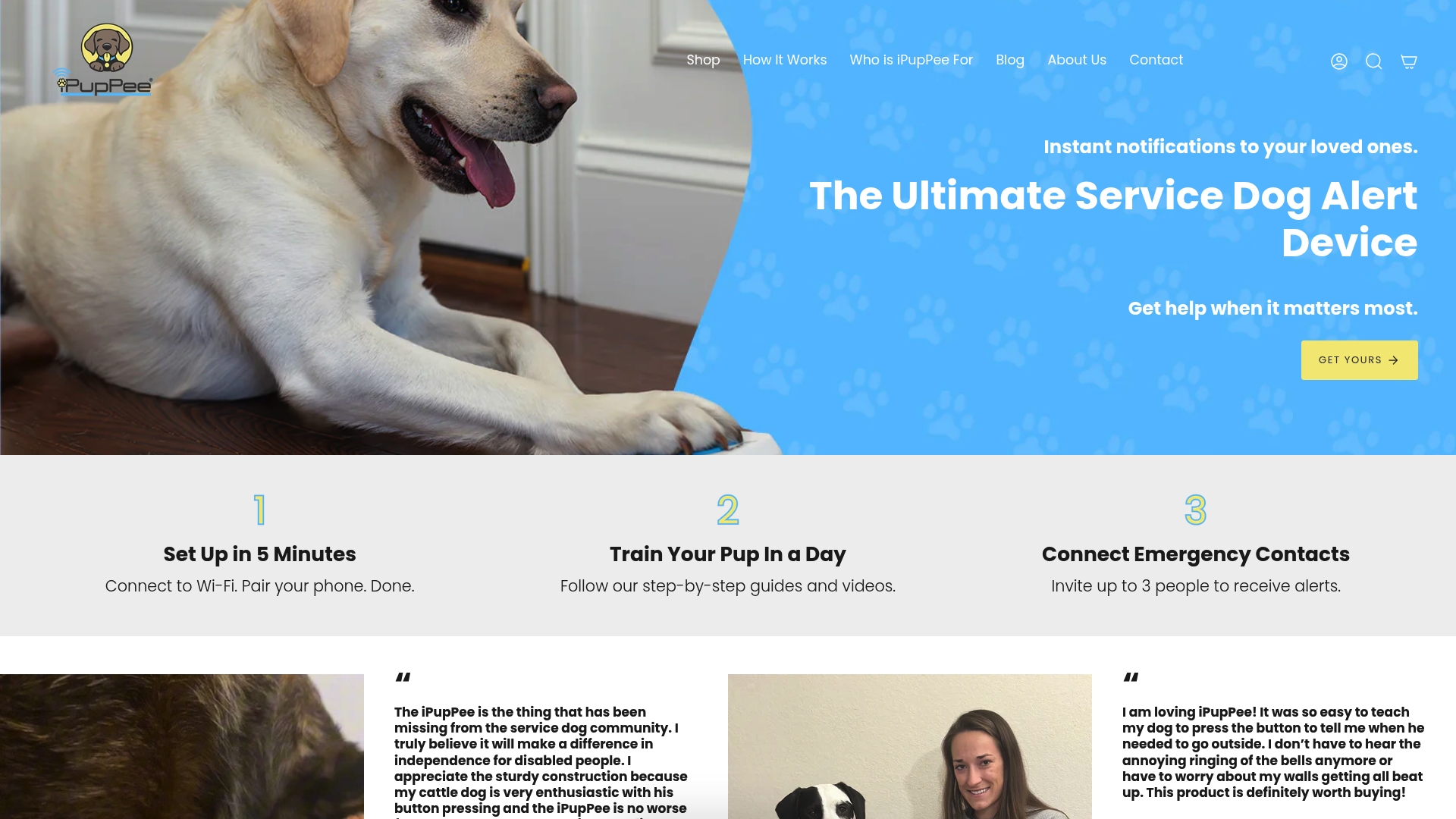
At iPupPee, we build tools and educational content specifically for dog owners who take safety seriously, especially those with service animals or dogs with special needs. From communication devices that let your dog signal for help to a growing library of safety guides, we are here to make sure you are never caught without a plan. Visit iPupPee dog safety resources to explore everything we offer, and bookmark our dog safety best practices page to keep your knowledge sharp. Sign up for our newsletter and get the latest tips delivered straight to your inbox before the next emergency season arrives.
Frequently asked questions
What should be in a dog emergency kit?
A kit should include at least 10 days of food, water, medications, ID tags, vet records, a photo with your dog, and a crate or carrier. Refresh the contents every six months so nothing expires.
How do I keep my service dog safe in a disaster?
Service dogs need visible ID patches, training for handling by unfamiliar people, and a go-bag with gear, medications, and official records. Naming a trained backup handler is just as important as packing the bag.
What qualifies as a medical emergency for dogs with epilepsy?
A seizure over five minutes, repeated back-to-back seizures, or gums that turn blue all signal a true medical emergency requiring immediate veterinary care. Have your action plan and rescue medications ready before any crisis happens.
How do I perform CPR on a dog in crisis?
Only begin CPR if the dog is unresponsive and not breathing. Deliver 100 to 120 compressions per minute on the chest and call your vet or emergency animal hospital immediately while continuing.