

It’s 3 a.m. when your smoke alarm blares, waking you from deep sleep. You grab your phone and keys, but panic sets in as you realize you have no plan for evacuating with your dog. Where’s the leash? Does your emergency kit include pet supplies? Which shelters accept animals? These frantic questions highlight why emergency preparedness for dogs isn’t optional. This guide walks you through building a complete emergency plan, from assembling essential supplies to training your dog for crisis situations, ensuring you’re both ready when disaster strikes.
Table of Contents
- Assembling Essential Emergency Supplies For Your Dog
- Training Your Dog For Effective Emergency Response
- Creating A Comprehensive Evacuation And Communication Plan
- Recognizing And Responding To Your Dog’s Emergency Signals
- Keep Your Dog Safe With iPupPee’s Expert Resources
- Frequently Asked Questions
Key takeaways
| Point | Details |
|---|---|
| Emergency kit essentials | Pack food, water, medications, medical records, and comfort items in a portable container |
| Training for safety | Teach core commands and practice emergency drills to help your dog respond calmly during crises |
| Evacuation planning | Create a detailed plan including pet-friendly shelters, transport options, and emergency contacts |
| Recognizing distress signals | Learn to identify behavioral and physical signs that your dog needs immediate help |
Assembling essential emergency supplies for your dog
Your dog’s emergency kit serves as a lifeline during disasters. Building a comprehensive emergency kit including food, water, medical documents, and comfort items is crucial for dog safety during disasters. Start with the basics: store at least seven days of food in airtight containers, rotating stock every six months to maintain freshness. Include one gallon of water per day for drinking and potential wound cleaning.
Medical preparedness separates adequate kits from exceptional ones. Pack a two-week supply of all medications your dog takes, along with copies of vaccination records, prescriptions, and your veterinarian’s contact information. Keep these documents in waterproof bags or sealed plastic containers. Include a recent photo of your dog with distinctive markings visible, which proves ownership if you’re separated during evacuation.
Must-have emergency supplies:
- Sturdy leash and backup collar with ID tags
- Portable water and food bowls
- First aid kit with gauze, antiseptic, and tweezers
- Blanket or familiar bedding for comfort
- Waste bags and cleaning supplies
- Flashlight with extra batteries
- Contact list of emergency veterinarians
Comfort items reduce stress significantly during chaotic situations. Pack your dog’s favorite toy or blanket, something that carries familiar scents from home. These objects provide psychological anchoring when everything else feels uncertain. For dogs with separation anxiety or noise sensitivities, consider including calming wraps or pheromone sprays.
| Supply Category | Items | Replacement Schedule |
|---|---|---|
| Food & Water | 7 days food, 7 gallons water | Every 6 months |
| Medical | Medications, records, first aid | Check monthly |
| Comfort | Toys, bedding, calming aids | As needed |
| Safety | Leash, collar, carrier | Check quarterly |
Pro Tip: Store your emergency kit in a clearly labeled, waterproof container near your exit door. Run through the entire kit every six months, checking expiration dates on food and medications. Set calendar reminders so this critical task doesn’t slip through the cracks.
Consider your dog’s unique needs when customizing supplies. Senior dogs might require joint supplements or special prescription diets. Puppies need different nutritional formulas than adult dogs. Service dogs may need backup gear specific to their working roles. The paws preparedness guide offers detailed checklists for different dog types and sizes.
Training your dog for effective emergency response
Supplies alone won’t keep your dog safe without proper training. Training dogs in emergency situations improves their safety and helps owners manage crises effectively. Emergency training builds muscle memory, allowing your dog to respond correctly even when scared or disoriented. Start this process early, but know that dogs of any age can learn these vital skills.
Core commands form the foundation of emergency response. Your dog must reliably respond to “come,” “stay,” and “quiet” in high-stress situations. Practice these commands with increasing distractions: turn on loud music, have family members run around, or create unexpected noises. Reward immediate compliance generously. The goal is automatic response regardless of environmental chaos.
Essential emergency training steps:
- Teach crate or carrier comfort by feeding meals inside and gradually increasing door-closed time
- Practice leash walking in crowded, noisy environments to build confidence
- Desensitize your dog to sirens, alarms, and unusual sounds through gradual exposure
- Train your dog to accept handling from strangers, crucial if first responders must assist
- Rehearse evacuation routes, walking your dog through the actual path you’d take during emergencies
- Simulate nighttime evacuations using only flashlights to prepare for power outages
Consistency matters more than duration. Short, focused training sessions of 10 to 15 minutes work better than marathon practice. Conduct emergency drills monthly, treating them like fire drills for your household. Make the experience positive by ending with treats and praise, building positive associations with emergency procedures.
Service dogs and special needs pets require tailored approaches. These dogs often have established routines that emergencies disrupt dramatically. Work with professional trainers familiar with training dogs for emergencies to develop protocols that account for your dog’s working responsibilities or medical conditions. Practice scenarios where your dog must perform tasks in unfamiliar locations or with backup handlers.
Pro Tip: Record your training sessions on video. Review footage to identify gaps in your dog’s responses or areas where your commands lack clarity. This objective assessment reveals patterns you might miss in the moment and helps track progress over time.
Young dogs absorb training faster, but older dogs bring advantages too. Senior dogs typically have calmer temperaments and stronger bonds with owners, making them more responsive during actual emergencies. Adjust physical demands based on age and health, focusing on mental preparedness and reliable command response rather than speed or agility.

Creating a comprehensive evacuation and communication plan
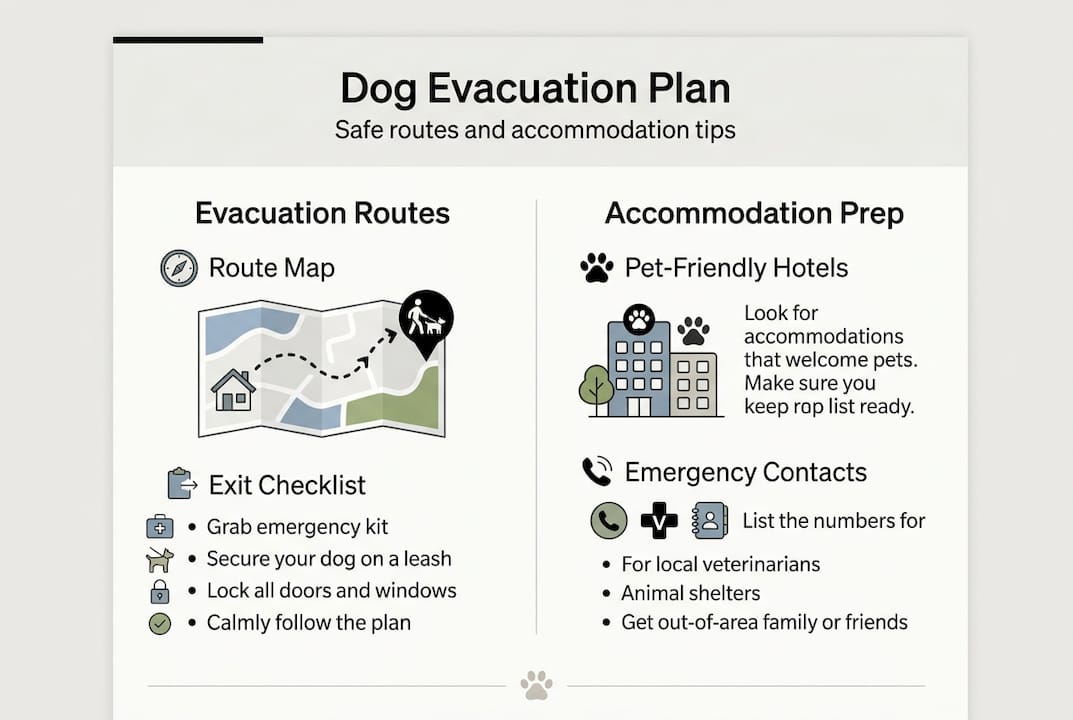
Training prepares your dog, but logistics determine whether you can actually evacuate together. A well-structured evacuation plan including pet logistics and emergency contacts increases chances of safely evacuating pets during disasters. Map multiple routes from your home, identifying pet-friendly hotels, shelters, and veterinary clinics along each path. Not all emergency shelters accept animals, so research options now rather than during crisis.
Your communication strategy needs multiple layers. Create a contact card listing your name, phone number, emergency contacts, and your dog’s medical needs. Laminate this card and attach it to your dog’s collar alongside standard ID tags. Include an out-of-state contact person who can coordinate if local networks fail. Share your evacuation plan with neighbors who might need to help if you’re not home when disaster strikes.
Critical evacuation planning elements:
- Identify three pet-friendly evacuation destinations at varying distances
- Arrange backup caregivers who can retrieve your dog if you’re unable
- Keep carriers or crates accessible for quick loading
- Store leashes and harnesses near multiple exits
- Photograph your dog monthly to document current appearance
- Microchip your dog and keep registration information current
Transportation considerations vary by dog size and temperament. Large dogs need secure vehicle restraints or barriers preventing movement during sudden stops. Anxious dogs might require sedation for long trips, something to discuss with your veterinarian before emergencies occur. Keep a spare leash and collar in your vehicle always, separate from your home emergency kit.
| Planning Component | Action Required | Review Frequency |
|---|---|---|
| Evacuation routes | Map 3 routes, note pet shelters | Annually |
| Emergency contacts | List 5 people, include out-of-state | Every 6 months |
| Pet identification | Update photos, check microchip | Monthly |
| Transport readiness | Test carriers, check vehicle gear | Quarterly |
Accommodation research prevents last-minute scrambling. Compile a list of hotels within 50, 100, and 200 miles that accept pets, noting their size restrictions and deposit requirements. Some chains waive pet fees during declared emergencies, information worth confirming in advance. Bookmark the dog emergency alert systems guide for quick reference during actual events.
Communicating your pet’s needs to first responders saves precious time. Place window stickers indicating how many pets live in your home, visible from outside. Include species and locations where animals typically stay. If you must leave your dog behind temporarily, secure them in a safe room with food, water, and a note describing temperament, medical needs, and your contact information.
Recognizing and responding to your dog’s emergency signals
Even perfect planning fails if you miss signs your dog is in trouble. Recognizing seven key dog alerts can save lives by prompting timely intervention during emergencies. Dogs communicate distress through subtle behavioral changes that escalate if ignored. Learning this language transforms you from reactive to proactive, catching problems before they become crises.
Physical symptoms often appear first. Excessive panting unrelated to heat or exercise signals pain, anxiety, or respiratory distress. Lethargy or reluctance to move suggests injury or illness requiring immediate veterinary attention. Watch for trembling, drooling, or vomiting, especially if your dog ingested something dangerous during evacuation chaos. Pale gums indicate poor circulation or shock, a true emergency demanding professional help.
Behavioral changes reveal emotional distress. Hiding behavior shows your dog feels unsafe and needs reassurance or removal from the stressor. Excessive whining or barking communicates fear, pain, or urgent needs your dog cannot meet independently. Uncharacteristic aggression often stems from pain or fear, warning you to approach carefully and assess the situation before intervening.
Common emergency distress signals:
- Rapid, shallow breathing or gasping for air
- Refusal to eat or drink for more than 12 hours
- Disorientation or inability to stand steadily
- Bleeding that doesn’t stop within five minutes of pressure
- Seizures or loss of consciousness
- Extreme restlessness or inability to settle
Your response must balance urgency with calmness. Panicking transfers anxiety to your dog, escalating the situation. Speak in low, soothing tones while assessing visible injuries or symptoms. Move your dog to a quiet, safe space away from ongoing chaos. Contact your veterinarian or emergency animal hospital immediately, describing symptoms clearly and following their triage instructions.
“During emergencies, your dog looks to you for cues on how to react. Maintaining calm, confident energy while addressing their needs creates a stabilizing influence that helps both of you navigate the crisis more effectively.”
Preventive measures reduce emergency frequency. Keep your dog leashed in unfamiliar environments during evacuations, preventing escapes or injuries from hidden hazards. Monitor stress levels throughout the crisis, offering breaks, water, and comfort as needed. Familiar routines provide psychological stability, so maintain feeding schedules and walk times as much as circumstances allow.
The key dog emergency alerts resource provides detailed guidance on interpreting your dog’s signals and responding appropriately. Bookmark this information on your phone for quick access when you’re managing multiple priorities simultaneously. Trust your instincts as well. You know your dog’s normal behavior better than anyone, so unusual patterns deserve investigation even if they don’t match textbook symptoms.
Keep your dog safe with iPupPee’s expert resources
Emergency preparedness is an ongoing journey, not a one-time checklist. iPupPee provides comprehensive resources to support your commitment to keeping your dog safe through any crisis. Our platform combines innovative communication devices with expert educational content, empowering you to build truly resilient emergency plans.

Explore our detailed dog emergency training guide for step-by-step protocols tailored to different dog types and temperaments. Access our dog emergency preparedness tips to refine your supplies and planning. Join our community of responsible pet owners who prioritize safety and preparedness, sharing experiences and strategies that strengthen everyone’s readiness. Your dog depends on you, and we’re here to ensure you have every tool and insight needed to protect them when it matters most.
Frequently asked questions
What should be included in a dog emergency kit?
Your dog’s emergency kit must contain seven days of food and water, current medical records, medications, a first aid kit, and identification documents. Include comfort items like familiar toys or bedding to reduce stress. Add a sturdy leash, collar with updated tags, waste bags, and a recent photo of your dog. Store everything in a waterproof, portable container near your primary exit.
How often should I update my dog’s emergency plan and supplies?
Review your emergency supplies every six months, checking expiration dates on food, medications, and first aid items. Update contact information and photos whenever changes occur. Practice evacuation drills monthly to keep training fresh and identify plan weaknesses. Replace any used items immediately and adjust supplies as your dog ages or their needs change.
Can service dogs require special emergency preparedness?
Service dogs need tailored emergency plans accounting for their working responsibilities and specialized equipment. Pack backup gear specific to their tasks, extra identification documenting their service status, and protocols for maintaining routines during displacement. Train alternative handlers in case you’re incapacitated. Explore emergency training for service dogs to develop comprehensive strategies addressing unique service dog needs during crises.
What are the top signs my dog is in distress during an emergency?
Watch for excessive panting, trembling, hiding, or unusual aggression as primary distress indicators. Lethargy, refusal to eat or drink, disorientation, and persistent whining signal your dog needs immediate attention. Physical symptoms like pale gums, bleeding, vomiting, or difficulty breathing require emergency veterinary care. Learn to recognize these dog distress signs before crises occur so you can respond quickly and appropriately when your dog needs help most.